

Spider-Proofing a Parkland Home: The Longer Checklist for Bigger Lots
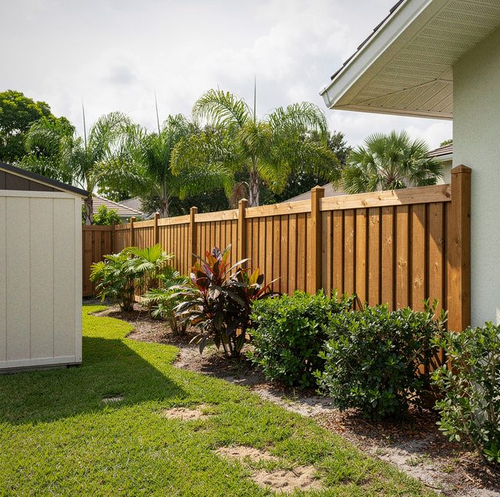
Quick Answer: Parkland's bigger lots need a longer spider-proofing sequence: clear vegetation along the fence line, check any outbuildings for the same gaps as the house, cut prey-insect draw at the extended perimeter lighting, then seal entry points across the full soffit run.
A standard spider-proofing checklist assumes a compact lot: five or six steps, seal the obvious gaps, knock down the webs by the door, done. On a typical suburban quarter-acre that's usually enough. Many Parkland lots, especially in the acreage and equestrian-trail neighborhoods, run larger than a standard West Boca or Coral Springs suburban lot, often with heavier plantings along a longer fence line and, on some streets, direct adjacency to horse property, which brings its own insect pressure across the fence line. More ground means more perimeter to walk, more vegetation producing the insects spiders are actually after, and in some cases a shed or detached garage a generic checklist never mentions at all. What follows is the longer version: a sequence that walks a Parkland property from the fence line inward, sized for the lot instead of the average one.
Start at the Fence Line, Not the Front Door
A standard checklist usually opens at the door because that's where a compact lot's exterior effectively ends. On a bigger property, the fence line is where the real work starts, because that's where the densest plantings usually sit. Spiders don't build webs at random; they build where the flying and crawling insects they eat concentrate, and thick shrubs, mulch beds, and stacked yard debris hold exactly that kind of insect activity. A longer fence run, common on Parkland's larger lots, means more linear feet of hedge, more shaded mulch, and more places for a web to go unnoticed until it's dense.
Pull hedges and ornamental plantings back from the exterior wall so there's a working gap, at least a foot where the shape of the shrub allows it, between the foliage and the siding or stucco. A web strung in that gap is a web you'll never see from inside.
Two spider species worth knowing by sight show up specifically in this zone. House spiders build the loose, irregular webs low in shrubs and corners; orb weavers, common along lanai edges and dense plantings here, spin the classic wheel-shaped web at eye level between two anchor points, often a fence post and a branch. Piled firewood, stacked pavers, and clustered potted plants are other repeat offenders: anything stacked and left undisturbed for more than a few days becomes a harborage. Break up the piles, or at minimum move them away from the exterior wall, and the fence-line population thins out considerably before you ever reach the house itself.
A Shed or Detached Garage Gets the Same Pass
If the property includes a shed, detached garage, or other outbuilding, that structure needs the same exclusion pass the house gets, not a separate one. The logic doesn't change: check door sweeps and sliding-door tracks for gaps, look at roof vents and eave openings, and check where utility lines enter the structure. A second building on the property is simply a second envelope to seal.
Outbuildings tend to run darker and less disturbed than a house, which is exactly what makes them attractive. Stored yard equipment, stacked bins, and low storage corners that don't get walked through daily build up undisturbed webbing fast because nobody's there to knock it down. A detached garage with a workbench along one wall, or a shed used mainly for overflow storage, is the classic case: plenty of shaded clutter and not much daily foot traffic. None of this means the structure needs a different kind of treatment; it means the same walkthrough, applied a second time, matters more on a property where the house isn't the only building on the lot.
Extend the Perimeter Lighting Check
Light draws insects, and insects draw spiders. That's the whole mechanism, and it's the same one whether the lot is a fifth of an acre or well over an acre. What changes on a bigger property is how much perimeter lighting there is to check. A compact lot might have a porch light and a garage fixture. A larger Parkland property often runs driveway lights, gate lighting, and fixtures around a detached structure, which adds up to a lot more lit perimeter drawing prey insects over a much longer stretch of exterior than a standard checklist accounts for.
Where fixtures allow it, aim the light source toward the structure rather than mounting it flush on a wall. A spider that would otherwise anchor a web directly beside a bright, insect-heavy fixture has less reason to build there.
Bulb color makes a real difference here too. Bright white and mercury-vapor lighting throws more of the light spectrum that flying insects are drawn to; amber or warm-toned LED fixtures pull noticeably fewer of them in. Swapping bulb type at the fixtures farthest from the house, the ones along a long driveway or at a side gate, is a low-effort way to cut prey volume across a perimeter that's simply longer than average.
Finish with Exclusion Points Across the Full Structure
By the time you reach the house itself, the goal is a systematic pass across a bigger footprint, not a quick check of the front elevation. A larger home means a longer run of soffit and fascia, more windows and screens, and often a bigger lanai or pool cage, all of which multiply the entry points a smaller-house checklist assumes don't exist.
Walk the full soffit-fascia line looking for gaps at the seams, not just at the corners. Check every window and door screen for tears or loose frames, not only the ones nearest the entertaining areas. Weep holes, hose bib penetrations, and any spot where cable or electrical lines enter the wall are worth a second look, since these small gaps are exactly where insects, and the spiders following them, get past the exterior. Lanai and pool-cage screening deserves its own pass separate from the house: check the screen tension at the corners and along the door track, since a sagging panel or a gap at a track guide is where orb weavers set up along a lanai edge more often than anywhere else on the structure.
What a Bigger Property Actually Requires
None of this means Parkland has more spiders per square foot than anywhere else in the service area. It means a bigger lot has proportionally more fence line, more plantings, more lit perimeter, and sometimes more buildings, so the checklist that covers all of it runs longer by necessity. Working the sequence in order- fence line, outbuildings, lighting, then the structure itself- catches what a shorter, generic list built for an average lot misses. Insect populations rebuild along a perimeter this size faster than a one-time pass accounts for, so the same walkthrough is worth repeating on a regular schedule rather than treating it as a project to finish once and forget.
Frequently Asked Questions
It changes the anchoring options more than it changes whether spiders show up at all. A wood shadowbox fence gives orb weavers two solid posts at a consistent height every six to eight feet, which is close to ideal anchor spacing, so webs tend to cluster at the seams between panels. An aluminum picket or PVC fence has thinner, more widely spaced verticals, so a web is more likely to end up strung between a rail and the nearest shrub instead of post to post. Either way, the fix is the same: clear the vegetation near the anchor points, since the fence material only decides where the web goes, not whether the insects that draw it are there.
Brown widows are established across South Florida and tend to hide in low, undisturbed spots rather than open webs at eye level: under patio furniture, inside mailboxes, behind meter boxes, and tucked into stacked planters. Their egg sac is the giveaway feature, a spiky, tufted ball unlike the smooth sac other spiders produce. On a bigger lot, check anything stacked or rarely moved, folded pool covers, stored planters, outdoor storage bins, since those are exactly the low-disturbance spots brown widows favor.
Check it whenever fixtures are added, or a bulb burns out and gets replaced, since a mismatched replacement bulb can undo a warm-toned setup fixture by fixture. Beyond that, a seasonal look, roughly every couple of months, is enough to catch fixtures that have drifted back to bright white or a burned-out motion sensor that's left a light running continuously, which pulls in far more insects than the same fixture on a motion trigger.
Yes, and it's easy to skip since it isn't the main structure. Walk it on the same day as the rest of the perimeter, checking the door sweep, any vents, and the spot where a utility line enters the wall, the same three areas that matter on the house. A shed used mainly for overflow storage is often higher risk than the garage, since boxes and bins that don't get moved for months are prime undisturbed harborage. If the structure sits at the far end of a long lot, it's also worth checking whether it has its own light fixture; a single bulb running all night on an outbuilding draws in prey insects just as a porch light does.
It can, especially on an acre-plus lot that runs its own well or a zoned irrigation system rather than relying on rainfall alone. A zone that keeps a planting bed consistently moist supports more of the crickets, roaches, and other moisture-loving insects that spiders feed on than a comparable bed on a smaller, municipal-water lot watered on a restricted schedule. It's not a reason to cut back on irrigation, since established landscaping usually needs it, but a heavily irrigated stretch of the fence line is worth walking a little more often than a drier stretch of the same perimeter.
Don't expect the perimeter to go quiet after one pass. Vegetation regrowth, lighting drift, and rebuilt webs mean the fence line and structure need re-checking on a regular cycle, not a single sweep. Expect gradual improvement rather than a single-pass fix, because vegetation regrowth and rebuilt webs restore part of the prey supply between passes, so each walkthrough should turn up fewer fresh webs than the one before it rather than a clean break after the first pass.
Schedule a full perimeter walkthrough — get a source-first spider inspection that covers the fence line, any outbuildings, exterior lighting, and the full structure. Buggify Pest Solutions serves Boca Raton, West Boca, and communities across Palm Beach and northern Broward. Call Tyler: (561) 672-0200.
