

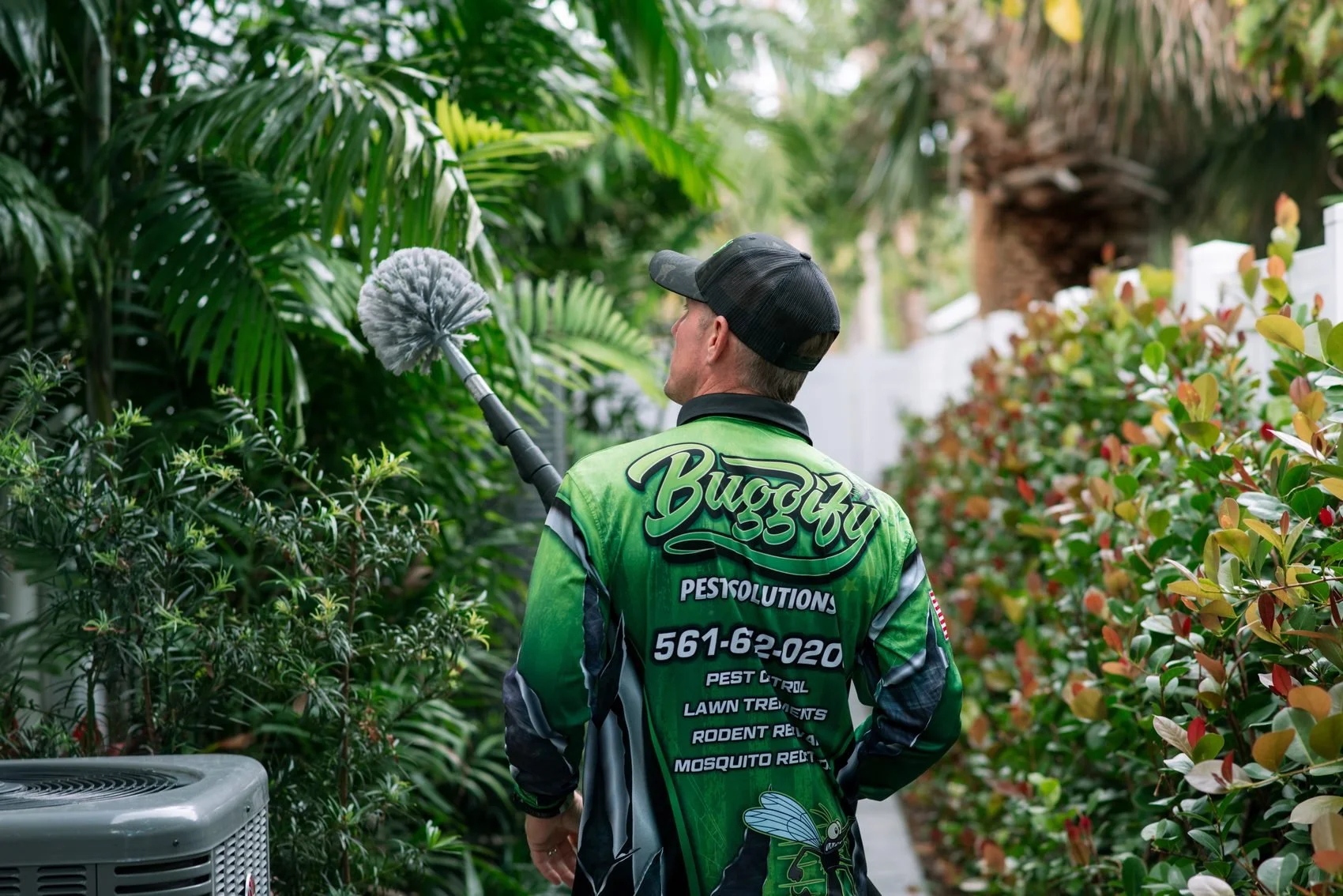
Bee Removal in Boca Raton
Professional bee + stinging-colony removal when the colony poses a risk. Same technician every visit.
Bee work is one of Buggify's specialty service categories. The protocol is calibrated to the specific situation — Tyler does not provide live bee relocation, but when bee or stinging insect colonies pose a risk to residents or structures, Buggify performs safe, professional removal in accordance with Florida pest control standards. The page below covers what Buggify handles, what gets referred elsewhere, and how pricing works on bee jobs.
every call himself
Risk-based colony removal, one local technician
Professional Removal When Risk Is Present
When a colony poses a risk to residents or structures, Buggify removes it safely under Florida pest-control standards.
No Live Bee Relocation
Buggify isn't a beekeeper. If the colony is healthy and accessible to a licensed beekeeper, that's the right path — Tyler refers.
Same-Day When Scheduling Allows
Stinging-insect and bee emergencies are prioritized over scheduled visits in the core area when you call before noon.
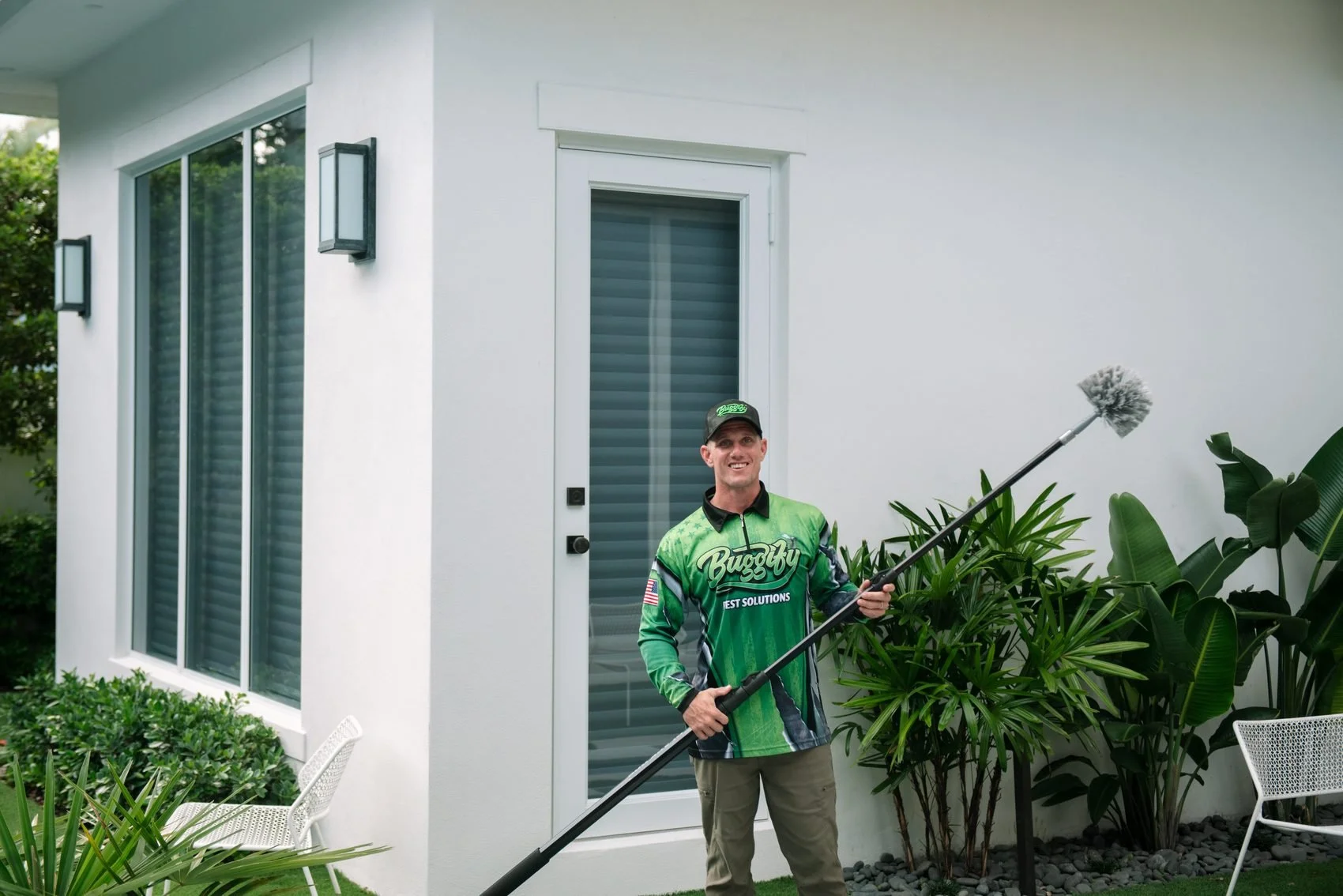
Ladder Access to 40 Feet
Roof-overhang and eave colonies reachable. Above 32 feet is referred to a bucket-lift contractor, with Buggify diagnosing and quoting.
Carpenter Bee Disambiguation
Carpenter bees are commonly confused with bumblebees and reported as 'bee' calls. Different treatment — wood-grain bait + plug, not colony removal.
Tyler Answers Directly
Mon–Fri 8 am – 5 pm. Same technician every visit — inspects, IDs the species, and does the work.
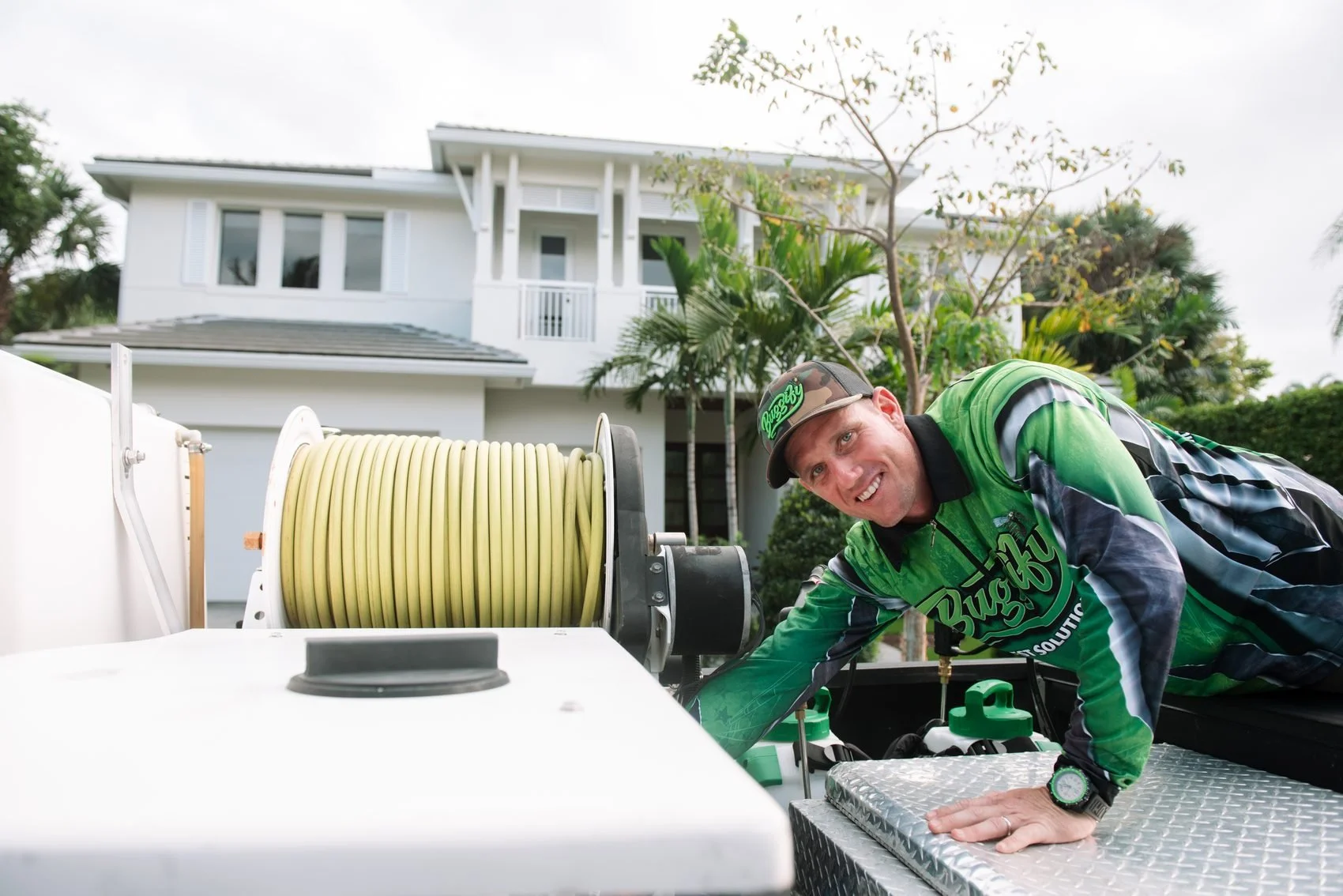
“We do not provide live bee relocation services. When bee or stinging insect colonies pose a risk to residents or structures, we perform safe, professional removal in accordance with Florida pest control standards.”
What that means in practice: Buggify is a pest-control operator, not a beekeeper or bee-relocation service. Licensed beekeepers in South Florida will sometimes remove healthy, accessible colonies for relocation — that's the right path when the colony is reachable, and the resident wants the bees preserved. Tyler can refer to local beekeepers when the situation fits. But when a colony is inaccessible (inside a wall cavity, in a chimney, in a structural void) or when residents face active stinging risk (allergic family members, frequent stings, aggressive defense), live relocation often isn't viable. In those situations, professional pest-control removal under Florida pest control standards is the path Buggify operates in.
Buggify also handles stinging insects that aren't bees — paper wasps, yellow jackets, bald-faced hornets, and (separately) carpenter bees. Carpenter bees in particular are commonly misreported as 'bee' calls; they're wood-boring bees that drill holes in soft wood (fascia, deck rails, cedar siding) and require a different protocol from honeybee colony removal. Tyler identifies the species on the first visit and selects the correct protocol from there.
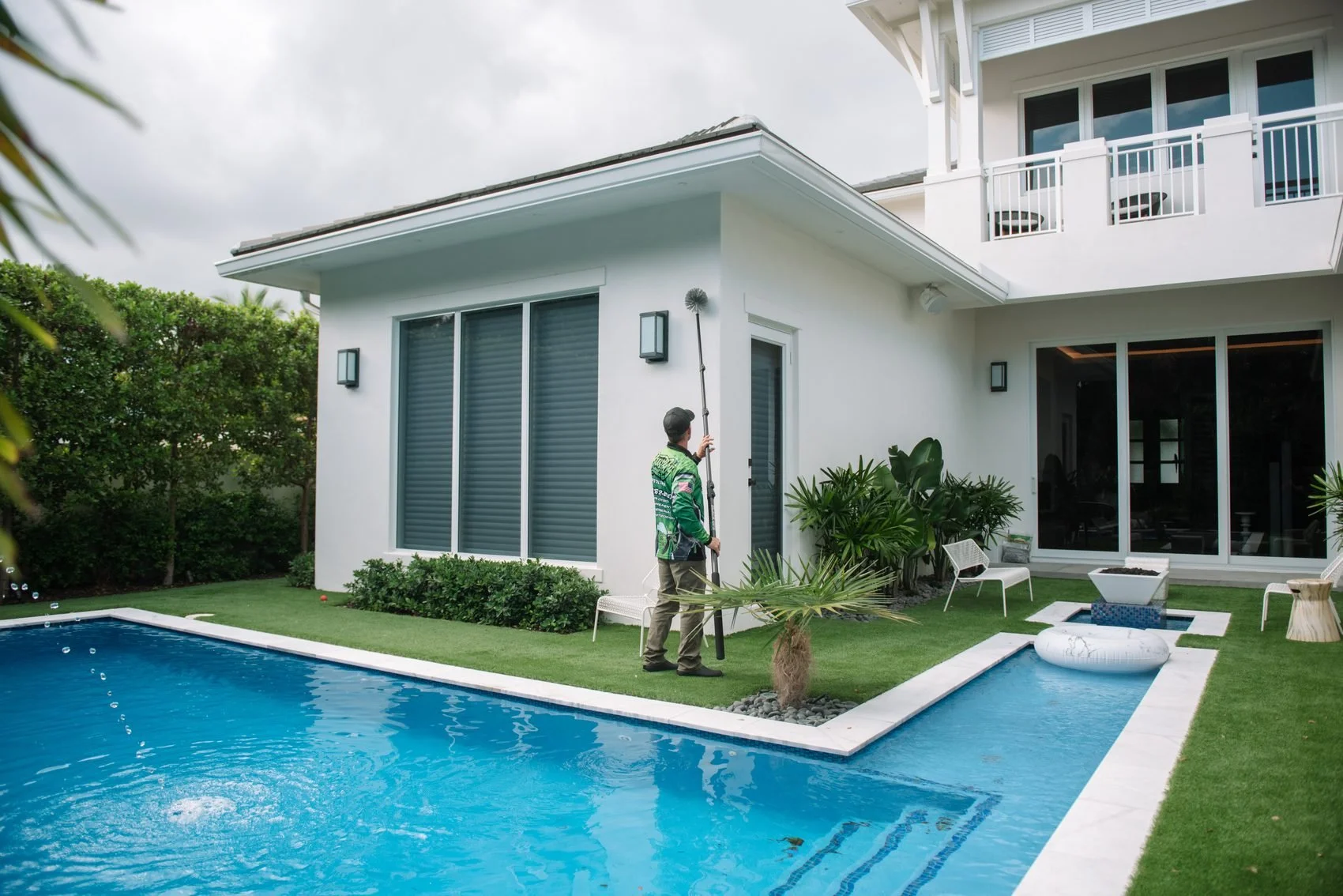
What Buggify handles + what gets referred
Bee calls cover distinct situations — each with its own protocol. Tyler IDs on-site.
Indoor pests — roaches, ants, spiders, silverfish
German and American cockroach harborages. Carpenter, fire, sugar/ghost, pharaoh, and big-headed ants (each needs a different bait + barrier strategy). House spiders, lanai-edge orb weavers, and brown widow exclusion. Silverfish in older humid homes. Earwigs and millipedes during the rainy season.
Outdoor pests — mosquitoes, wasps, hornets, yellow jackets
Mosquito yard barrier on a monthly cadence, May–October. Paper wasp, mud dauber, yellow jacket, and bald-faced hornet nest removal — same-day response when scheduling allows. Carpenter bee identification and removal (often confused with honey bees — they need a different treatment). Stinging-insect emergencies prioritized over scheduled visits.
Rodent control — roof rats, Norway rats, mice
Roof rats dominate South Florida (tile-roof entry geometry); Norway rats are secondary, canal-adjacent only. Trapping for active populations, baiting for ongoing pressure, copper mesh + polyurethane exclusion for the long-term fix. Attic and wall-cavity work both in scope.
Whole-home pest exclusion + specialty work
Entry-point sealing (copper mesh + Tremco/GE polyurethane). Soffit-fascia gap repair, plumbing-vent screening, slab-crack treatment, pest-grade vent screening. Bee removal ($250–1,200+ by hive size and access). Commercial / HOA / property management (50–200 home communities preferred). Luxury home pest management (gated communities). Lawn care (HOA + luxury-estate add-on only).
Exactly what happens, start to finish
Most pest companies won't tell you the plan. Here's ours — proven, source-first, and transparent — so you can spot anyone cutting corners.
You call Tyler. He picks up.
Direct line, Mon–Fri 8 am – 5 pm. He asks what you're seeing, where, and how long. Free phone estimate range, then a $175 on-site inspection if needed (credited toward your first treatment when you book ongoing service).
Same-day or next-day inspection.
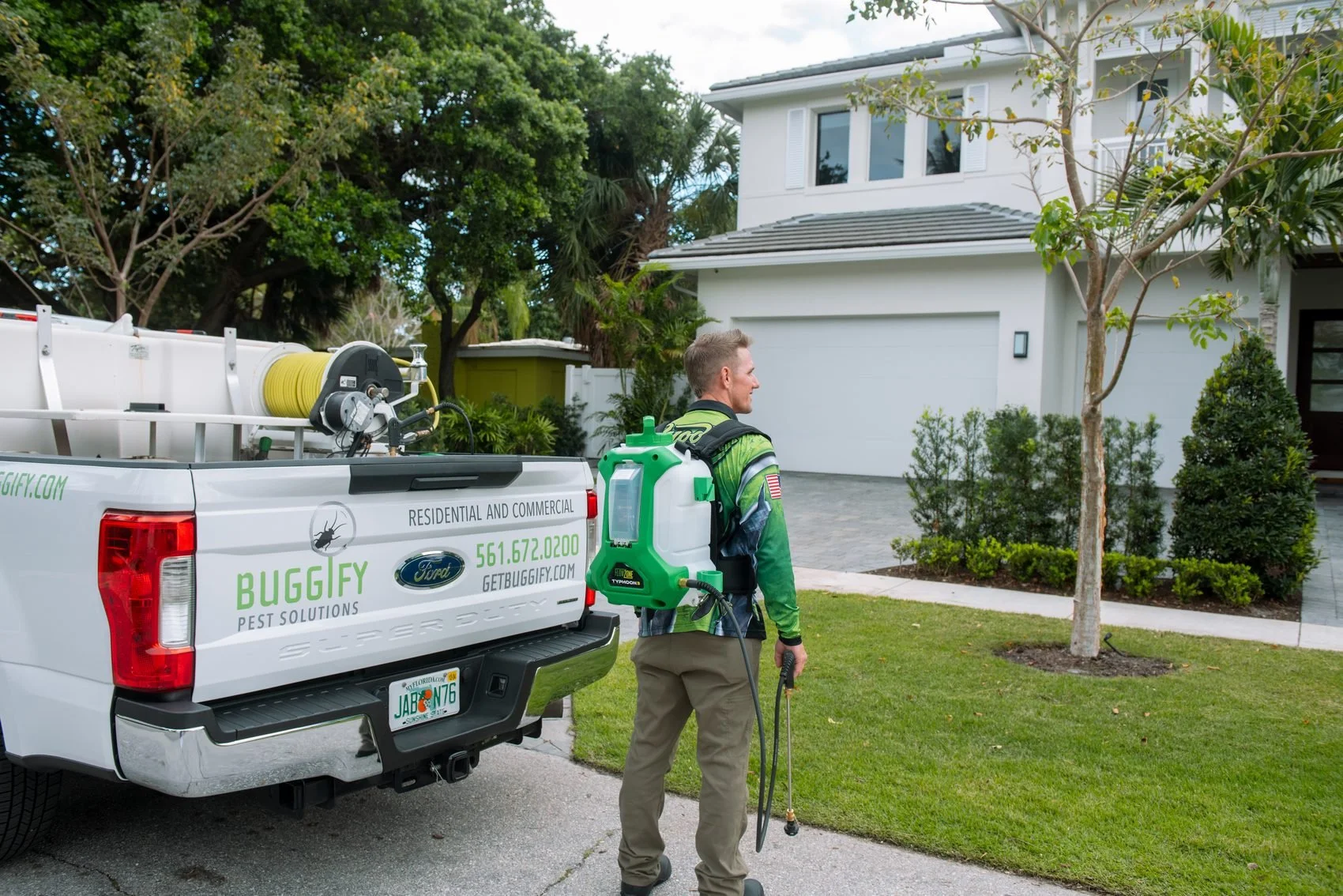
Same-day routine in the core area when you call before noon. Tyler arrives in the white Buggify truck and inspects the colony location, access, and species — honeybee, carpenter bee, or a non-bee stinging insect.
Species ID + the right pathway.
Established in-wall colony with resident risk → professional removal. Accessible swarm or exposed hive → beekeeper referral. Wood-boring carpenter bees → bait + plug. Tyler explains which situation you have and why, in plain language.
Treatment or referral.
For removal: full PPE, dusk timing, approach from below, Florida pest-control-standard protocol. For carpenter bees: wood-grain bait + plug at each hole. For a fitting swarm: a beekeeper referral at no Buggify charge. SDS on request.
Documentation + follow-up.
Written findings, photos of colony location and access, and a compliance statement for HOA/insurance. Tyler recommends wax/honey extraction and cavity sealing (referred to a contractor) to prevent re-colonization. 30-day callback on same-spot return.
A local owner beats a route tech
Bi-monthly plans, every 8 weeks
Three tiers, same cadence. They differ in scope, not frequency. Bills per visit — cancel anytime.
Basic
General pest — perimeter, entry-point, crack-and-crevice.
- ✓Every-8-week service
- ✓Perimeter + entry-point treatment
- ✓Crack-and-crevice work
- ✓Free re-service between visits
Full Home Protection
The standard for typical Boca / Parkland / West Boca homes.
- ✓Everything in Basic
- ✓Interior on request
- ✓Rodent + ant monitoring
- ✓Termite-sign check + licensed WDO referral
Complete
Built for luxury, gated, or high-pressure properties.
- ✓Everything in Full Home
- ✓Mosquito barrier
- ✓Attic + exclusion monitoring
- ✓Lanai treatment + termite-sign referral
Scales with hive size, colony depth, and access. Visible eave colonies at the lower end; deep in-wall or structural-void colonies at the upper end. Above 32 ft, bucket-lift referred out.
Wood-grain bait + plug at each hole (typically 5–15 on a deck or fascia run). Single-visit standard; recurring inspections under bi-monthly plans catch new holes early.
When a swarm has landed on an accessible branch or structure, Tyler refers a local beekeeper for cut-out and relocation. The beekeeper keeps the colony; Buggify doesn't bill for the referral.
Recurring carpenter-bee inspection is bundled into Full Home Protection and Complete bi-monthly plans. See the plan tiers →
13 cities, two counties, one local guy
Buggify runs out of the West Boca shop at 22617 Middletown Dr. Same-day service is routine in the core area when you call before noon.
Outer zones by appointment — Highland Beach, Wellington, Lake Worth Beach & Tamarac case-by-case. Travel surcharge may apply beyond a 15-mile radius.
Why Boca pest pressure isn't like anywhere else
National playbooks are built for four-season climates with a real off-season. South Florida has none — seven local factors that change the whole approach.
Africanized genetics in established colonies
In South Florida, established colonies in structural voids should be assumed at least partially Africanized. Defensive behavior can be elevated, so removal uses Africanized-aware safety protocols regardless of species ID.
Cedar architecture drives carpenter bees
Carpenter bees prefer soft, untreated wood — cedar fascia, untreated deck rails, fence posts. Older neighborhoods with original cedar (Old Floresta, Camino Gardens, Pearl City) see higher carpenter-bee pressure than newer concrete construction.
Allergic-reaction risk in multi-gen households
Heavy 55+ representation and multi-generational households mean a resident may have a bee/wasp allergy. When allergic family members are home, the protocol prioritizes risk reduction over preservation.
Hurricane-season swarm activity (May–Oct)
Storm activity disturbs existing colonies and can drive swarming; post-storm swarm reports increase. Tyler's May–October response pattern accommodates this.
Local beekeeper network for relocation
South Florida has a network of licensed beekeepers who perform live cut-out and relocation when situations fit — swarms, accessible exposed colonies, recently-established hives. Tyler maintains active referral relationships.
Tile-roof & soffit void colony sites
Boca's tile-roof and soffit architecture creates the enclosed voids honeybee colonies establish in. Access and structural repair coordination are part of most in-wall removal jobs.
Year-round outdoor viability
The climate keeps colonies viable year-round, so bee and carpenter-bee activity isn't limited to a spring season the way it is up north — calls come in across the calendar.
Not sure what's driving it on your street?
Tyler knows the pressure block by block. Get a free read on the phone.
(561) 672-0200
The technical depth behind every visit
Seven things most route techs are never trained on — each tied to a real outcome for your home.
Africanized honeybee safety protocol
Established colonies in structural voids are assumed at least partially Africanized. Full bee suit, sealed seams, gauntlet gloves, approach from below (not above, where defenders concentrate), dusk timing when foragers are back. Multi-sting risk is real and the PPE is non-negotiable.
Wall-cavity colony removal sequence
Three phases: chemical treatment of the colony in the void (Buggify), wax/honey extraction (recommended — left in place it attracts secondary pests and causes structural damage), and structural repair/sealing (referred to a contractor). Order matters: repair before removal traps the wax; removal without sealing invites re-colonization.
Carpenter bee wood-grain bait + plug
Carpenter bees drill round half-inch holes and tunnel along the grain to lay eggs. Bait dust into the hole (the worker carries it deeper; the transfer effect treats larvae), then a physical plug + finish coat to prevent re-drilling. Bi-monthly customers get new holes caught before larvae mature.
Bucket-lift referral for high-access colonies
Standard ladder reach is 32 ft. Higher colonies — multi-story estate eaves, tall pine hives, multi-story tile-roof voids — need a bucket lift. Tyler inspects, diagnoses the species, and quotes; the homeowner pays the lift contractor for access while Buggify does the treatment.
Documentation for HOA, insurance & claims
Removal comes with written inspection findings, photos of colony location and access, removal-procedure documentation, and a pest-control-standards compliance statement — the primary records adjusters, HOA boards, and repair contractors use.
Live-relocation referral — when beekeeping fits
Swarms, exposed recently-established hives, and unestablished colonies caught early often fit a licensed beekeeper cut-out. The beekeeper keeps the colony and the homeowner avoids chemical treatment. Tyler refers; Buggify doesn't bill for it.
Why 'save the bees' isn't always live relocation
Established in-wall colonies, Africanized colonies in residential voids, and colonies posing active sting risk to allergic residents rarely allow live relocation — professional removal under Florida standards is the correct path for safety. Supporting local beekeepers and pollinator gardens saves bees through other means.
SDS available on request
Every product, every time — full transparency, no "proprietary blends."
homes served
What our customers say about Buggify
Verified 5-star reviews from Boca Raton, Parkland & Coral Springs families — straight from Google.
Ten questions Tyler gets about bee removal
If yours isn't here, call (561) 672-0200 — Tyler answers directly.
Are the bees in my walls Africanized?
–In South Florida, established colonies in structural voids should be assumed at least partially Africanized. Defensive behavior can be elevated, so treatment uses Africanized-aware safety protocols (full PPE, dusk timing, approach from below). Species ID isn't critical — the protocol assumes elevated risk regardless.
How much does bee removal cost?
+$250–$1,200+. Visible eave colonies at the lower end; deep in-wall or structural-void colonies at the upper end. Pricing scales with hive size, colony access, and ladder access. The free phone estimate gives a range; firm pricing comes after on-site inspection.
I see big black bees drilling holes in my fascia — same thing?
+Probably carpenter bees, not honeybees. They're wood-boring (half-inch holes tunneled along the grain), generally non-aggressive, and structurally damaging over time. Different treatment — wood-grain bait + plug at each hole. Standard one-time service, $175–$300.
What happens to the honey and wax after removal?
+Tyler recommends extraction by a contractor after chemical removal. Left in place, wax and honey attract secondary pests and can cause structural damage (honey leaking through drywall). Buggify documents the location and removal; the homeowner coordinates extraction and repair.
I'm allergic — can you remove the bees safely while I'm home?
+Best practice is to vacate during the treatment window. Tyler works out timing — typically dusk application followed by 24-hour avoidance of the treated zone. Allergic family members should stay clear for 24–48 hours. Discuss timing on the call.
Can you remove a bee colony from a chimney?
+Yes. Chimney colonies need specific access — Tyler inspects to locate the colony in the flue, treats from the right access point, and documents for chimney-cleaning/repair coordination. Tall chimneys above 32 feet may need a bucket-lift referral.
My HOA requires documentation of the removal — can you provide that?
+Yes — written inspection findings, photo records, removal-procedure documentation, and a pest-control-standards compliance statement. HOAs, property management, and homeowner insurance use these as primary documentation.
How fast can you respond to a bee emergency?
+Same-day routine in the core service area (Boca, West Boca, Parkland, Coral Springs, Deerfield Beach) when you call before noon. Bee and stinging-insect emergencies are prioritized over scheduled visits when scheduling allows.
Will the bees come back to the same spot?
+The colony is gone after removal. Re-colonization at the same spot can happen if the void isn't sealed after wax/honey extraction. Tyler's recommendation: extract and seal the cavity. The 30-day callback covers same-spot return in that window.
Do you treat wasps and hornets too?
+Yes — paper wasps, mud daubers, yellow jackets, and bald-faced hornets are handled with species-specific protocols on the wasp/hornet page. Same-day response when scheduling allows.
Three things Buggify will never do to you
Quote a real price without inspecting first
The phone gives a range; firm pricing comes after an on-site walkthrough, so the scope matches what's actually driving the activity.
Spray indoors when the source is outside
Most South Florida pest pressure is driven by outdoor harborage. Indoor-only work is a short-term cover-up, not a fix.
Lock you into a long-term contract
Bi-monthly plans bill per visit and cancel anytime, no fees. Service should be based on need, not contractual obligation.
Call Tyler. Get a price range on the first call.
No contract, no sales pitch, no callback queue — in most cases, on the schedule the same day or next morning.