
Pest Control in Parkland
Estate-lot specialized protocols. Same technician every visit. Source-first treatment, no contracts.
Parkland is geographically the closest Broward city to Buggify's West Boca shop — the city's northern border IS the Broward / Palm Beach county line. The Wikipedia-confirmed motto is "Environmentally Proud," and Parkland's zoning is designed to protect the city's park-like character. The result is the lowest-density single-family inventory in Buggify's service area: 1-3 acre estate lots, equestrian-heritage communities (Pine Tree Estates, The Ranches), mature tropical canopies, and the highest median household income in the service area. The named-community list below covers Heron Bay, Parkland Golf & Country Club, Cascata at MiraLago, Parkland Reserve, Parkland Isles, Parkland Bay, Pine Tree Estates, The Ranches, and 40+ other communities Tyler treats on a daily basis.
every call himself
Six reasons Parkland homeowners choose Buggify
Estate-Lot Specialized
Parkland's lowest-density single-family construction means 1 to 3 acre estate lots, and Buggify calibrates every treatment plan, from carpenter ants to roof rats, to that estate-lot scope.
Closest Broward City to Shop
Parkland's northern border IS the Broward/Palm Beach county line. Buggify's West Boca shop is just north of it — drive time 12-18 minutes.
"Environmentally Proud" Motto
Parkland's zoning laws protect the park-like character. Pest protocols respect environmental priorities — pet-safe products, mosquito work that minimizes pollinator impact.
Equestrian-Heritage Density
Parkland's early history had horses outnumbering residents. Several estate communities (Pine Tree Estates, The Ranches) maintain equestrian properties — barn pest pressure handled.
Tyler Answers Directly
Mon–Fri 8 am – 5 pm. Same technician every visit — knows your estate, your barn (if applicable), your HOA's coordination process.
No Multi-Year Contracts
Bi-monthly plans bill per visit. Cancel anytime, no fees, no auto-renewal.
“Spray a trail of ants and you kill the scouts — and trigger the colony to bud into new satellite nests. Species ID first, then bait. That's the whole game with ants.”
Carpenter ants need a non-repellent residual plus a moisture fix. Fire ants need granular bait plus mound injection. Pharaoh and ghost ants bud when you spray them wrong — one nest becomes five. The species dictates the entire protocol.
Buggify identifies the species on arrival, baits at the trail source so workers carry it back to the queen, and treats the moisture or entry point feeding the colony — so it collapses instead of relocating.
Every pest issue Buggify handles in Parkland
Same three-tier bi-monthly structure, calibrated to Parkland's estate-lot, low-density single-family construction.
Indoor pests — roaches, ants, spiders, silverfish
German cockroach harborages in the Heron Bay and Parkland Golf & Country Club kitchen renovations. Carpenter ants are heavier in Parkland than elsewhere — wood-frame deck construction in the older Pine Tree Estates and The Ranches sections plus estate-lot mature trees create extensive moist-wood habitat. Six South Florida ant species also active. Brown widow nests in estate pool-cage corners.
Outdoor pests — mosquitoes, wasps, hornets, yellow jackets
Estate-lot scale amplifies outdoor pest pressure. Mosquito work on monthly cadence May–October across most properties. Paper wasp nests under estate lanai overhangs and pool-cage rafters. Yellow jacket ground colonies in disturbed-soil zones (new pool installations, landscape renovations). Bald-faced hornet nests in the mature tree canopy across Pine Tree Estates and The Ranches.
Rodent control — roof rats with estate-scale perimeter
Tile-roof architecture standard across Parkland; roof rats dominant. Estate-lot scale means longer perimeters per inspection — 1.5-2 hour initial walkthrough on larger Heron Bay, Cascata, and Parkland G&CC properties. Trap-out + copper-mesh + polyurethane exclusion is the standard protocol. Barn-adjacent residential properties (Pine Tree Estates, The Ranches) get integrated barn + house rodent protocols.
Whole-home pest exclusion + specialty work
Copper mesh + polyurethane sealants. Bee removal across the city. Commercial / HOA work at Heron Bay, Parkland G&CC, Cascata at MiraLago, Parkland Reserve. Luxury home pest management — Cascata at MiraLago and Pine Tree Estates ultra-luxury estates. Lawn care (HOA + estate add-on only). Equestrian / barn pest work for properties with horses.
Exactly what happens, start to finish
Most pest companies won't tell you the plan. Here's ours — proven, source-first, and transparent — so you can spot anyone cutting corners.
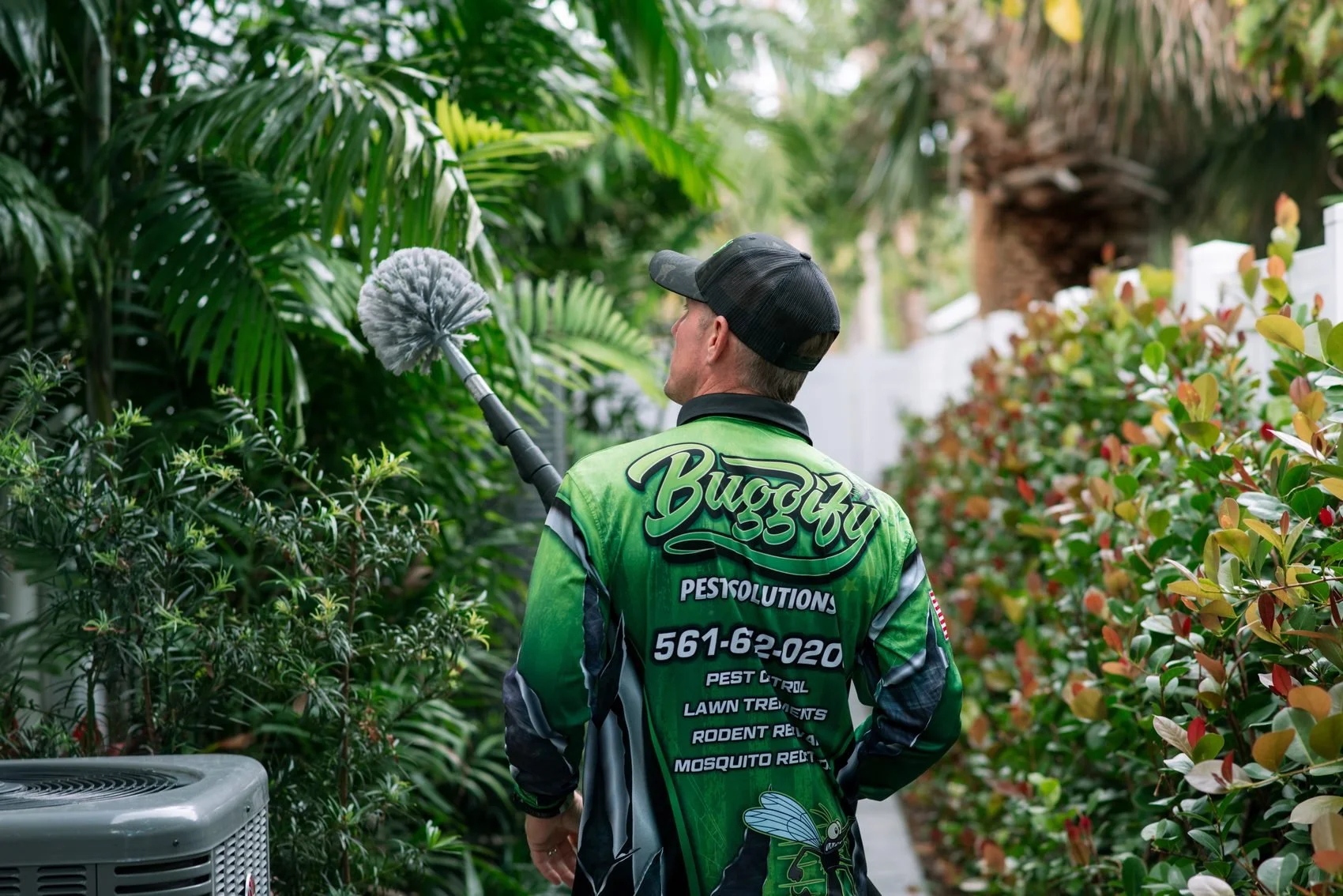
You call. Tyler picks up.
Direct line, Mon–Fri 8 am – 5 pm. Free phone estimate range, then a $175 on-site inspection if needed (credited toward your first treatment). No pressure to commit on the call.
Free initial inspection — plan recommended on-site.
A 30–60 minute walkthrough: perimeter, interior, attic/roofline when relevant. Tyler recommends Basic, Full Home Protection, or Complete based on the property's actual condition — not a sales script.
Initial treatment — more thorough than ongoing visits.
The first visit is heavier: full perimeter + interior crack-and-crevice + harborage work + lanai zones + any active-issue treatment. $150–300 by tier; subsequent visits are perimeter-focused with spot interior work.
Bi-monthly visits — same tech, every 8 weeks.
Tyler returns every 8 weeks (20–40 min for a typical home): perimeter refresh, exterior crack-and-crevice, lanai, mulch-line, and interior touch-up where reported. Termidor, FMC residuals, gel baits, IGRs.
Free re-service between visits.
If activity shows up between scheduled visits, Tyler returns at no additional cost — built into every tier. Just call (561) 672-0200.
A local owner beats a route tech
Bi-monthly plans, every 8 weeks
Three tiers, same cadence. They differ in scope, not frequency. Bills per visit — cancel anytime.
Basic
General pest — perimeter, entry-point, crack-and-crevice.
- ✓Every-8-week service
- ✓Perimeter + entry-point treatment
- ✓Crack-and-crevice work
- ✓Free re-service between visits
Full Home Protection
The standard for typical Boca / Parkland / West Boca homes.
- ✓Everything in Basic
- ✓Interior on request
- ✓Rodent + ant monitoring
- ✓Termite-sign check + licensed WDO referral
Complete
Built for luxury, gated, or high-pressure properties.
- ✓Everything in Full Home
- ✓Mosquito barrier
- ✓Attic + exclusion monitoring
- ✓Lanai treatment + termite-sign referral
Single visit for a localized trail (sugar/ghost) or an active fire-ant mound cluster. Includes species ID, treatment, and a 30-day callback warranty. Larger/multi-zone priced higher.
Adds interior on request, rodent + ant monitoring, and a termite-sign check with licensed WDO referral. The default for typical Parkland homes. $120–160/visit, $200–300 initial. Free re-service.
Full coverage + monthly mosquito barrier (May–Oct) + attic + exclusion monitoring + lanai treatment, with termite signs flagged for licensed WDO referral. For luxury, gated, canal-adjacent, or chronic-pressure homes. $150–180/visit.
One-time treatments for isolated issues: Ant from $175 · Cockroach $195 · Spider $195 · Rodent $200–600 · Wasp/Hornet $175 · Mosquito $125–200 · Other $175–250. No commitment. Back to home →
13 cities, two counties, one local guy
Buggify runs out of the West Boca shop at 22617 Middletown Dr. Same-day service is routine in the core area when you call before noon.
Outer zones by appointment — Highland Beach, Wellington, Lake Worth Beach & Tamarac case-by-case. Travel surcharge may apply beyond a 15-mile radius.
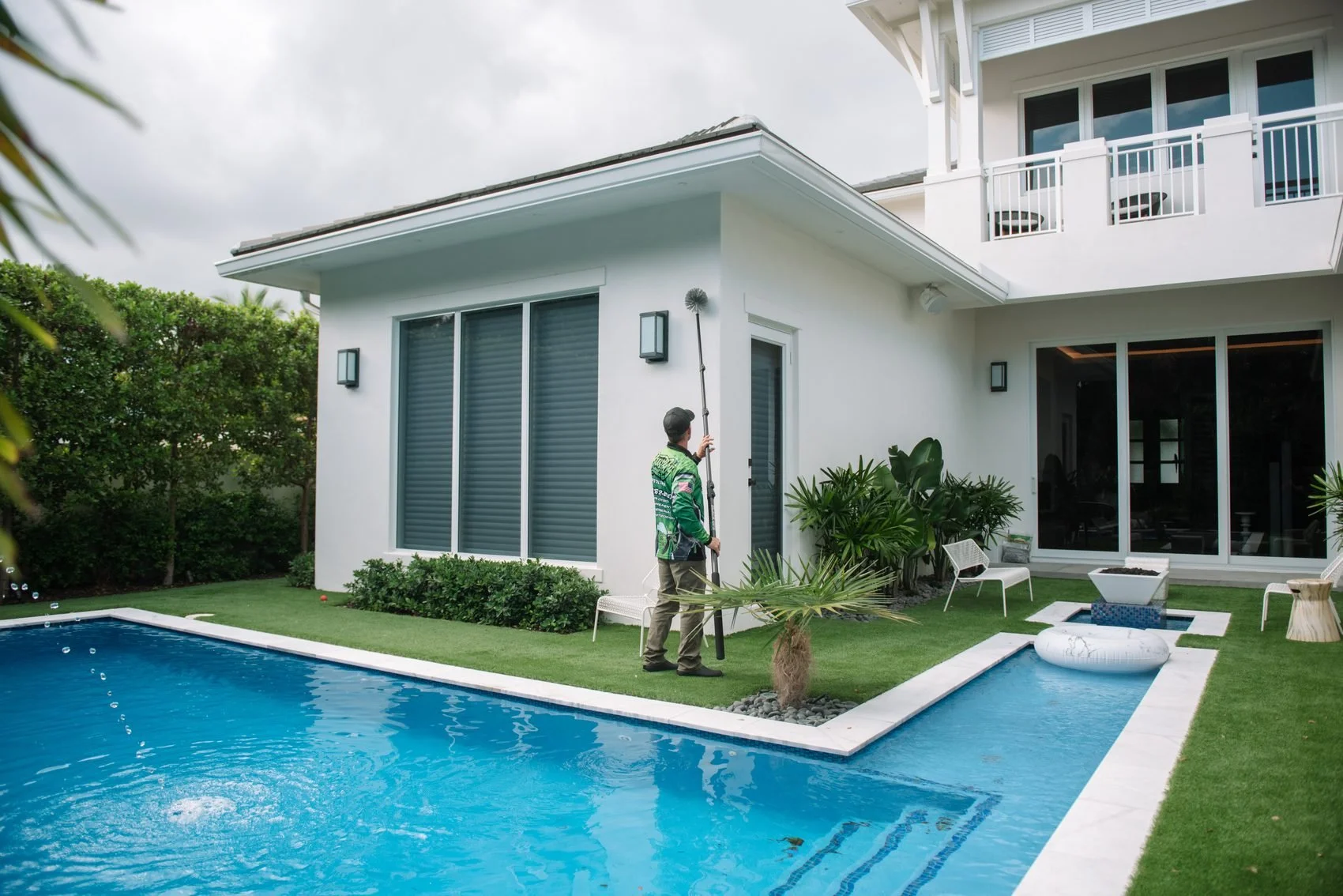
Why Parkland estate-lot pest pressure is different
National playbooks are built for four-season climates with a real off-season. South Florida has none — seven local factors that change the whole approach.
Estate-Lot Scale Amplifies Outdoor Pest Pressure
1-3 acre lots mean longer property perimeters, more entry-point surface area, mature tropical canopies providing elevated harborage, larger outdoor lighting attracting more prey insects, and broader irrigation footprints supporting outdoor harborage. Buggify's estate-lot inspection runs 1.5-2 hours (vs 30-60 min on a typical single-family) to cover the full perimeter properly.
Closest Broward City to the Buggify Shop
Parkland's northern border IS the Broward / Palm Beach county line. Buggify's West Boca shop is just north of it. Drive time 12-18 minutes — the closest Broward city by far. Same-day appointments routine; post-storm response immediate during hurricane season.
Post-1995 Modern-Code Construction Inventory
Most Parkland housing dates post-1995 (post-Hurricane Andrew Florida Building Code revisions). Generally tighter envelopes than older South Florida housing — fewer slab cracks, better weatherstripping, modern soffit construction. But estate-lot scale offsets the envelope advantage by providing more exterior surface area.
Mature Tropical Canopy + Tree-Nesting Pest Pressure
Mature oak canopies, palm clusters, and dense landscaping across Parkland support tree-nesting wasps (bald-faced hornet, paper wasp under tree-attached structures), squirrel-and-rat tree-to-roof transfer paths, and carpenter ant satellite-colony habitat in damp wood. Tree-canopy-aware inspection is part of every Parkland estate visit.
Equestrian / Barn-Adjacent Properties
Pine Tree Estates, The Ranches, and several other communities maintain working barns. Barn pest pressure (rodent activity in feed-storage areas, stable fly populations, occasional roof rat migration to adjacent residence) is integrated into Buggify residential service on these properties.
MSD High School District + Family-Heavy Demographic
Parkland's demographics skew family-heavy — 52.2% of households have children under 18 (highest in Buggify cluster). Pet-safe and child-safe treatment standards aren't optional. Every product label-compliant; application timing coordinated around school pickup / family schedules.
Hurricane Season Pest Displacement (May–October)
Heavy summer storms displace rodent populations, mosquito breeding zones, and stinging-insect colonies across Parkland. Tyler's May–October protocol includes a post-storm inspection offer for active plan customers — soffit damage, lifted tiles, water-pooling zones, harborage shifts after every named storm. Parkland's mature tree canopy means heavier post-storm displacement than denser markets.
Not sure what's driving it on your street?
Tyler knows the pressure block by block. Get a free read on the phone.
(561) 672-0200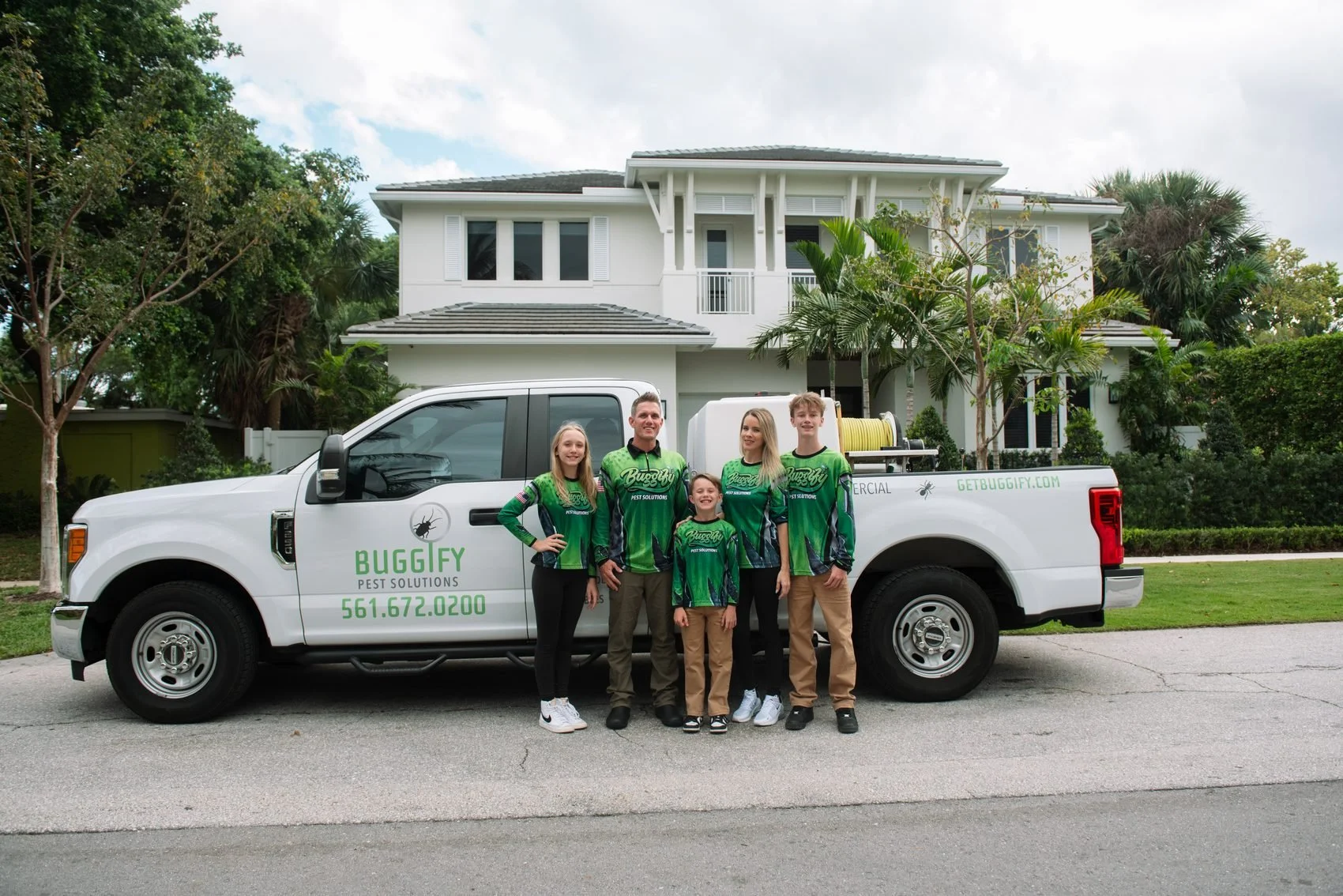
The technical depth behind every visit
Seven things most route techs are never trained on — each tied to a real outcome for your home.
Estate-Lot Inspection Methodology
1-3 acre lots require a different inspection protocol than typical suburban single-family work. Tyler's Parkland estate inspection runs 1.5-2 hours: full property perimeter walk identifying every entry-point candidate, attic and roofline check (typically 2-story), mature-tree-canopy harborage assessment, lanai / pool-cage zone inspection, equestrian/barn-adjacent residential check (where applicable), and outdoor lighting audit. The longer inspection upfront prevents the recurring re-service calls that estate properties typically generate under chain service.
Carpenter Ant Moisture-Source Integration
Parkland's mature wood-frame construction and lanai-heavy architecture create carpenter ant habitat in damp wood — deck posts, fascia, lanai support beams. Treatment without moisture-source fix = activity returns. Tyler's protocol: identifies the moisture source (irrigation overspray, gutter overflow, slow plumbing leak in wall cavity), homeowner addresses the moisture, Buggify applies non-repellent Termidor residual + colony injection if accessible. The combined approach ends the activity; spray-only doesn't.
Tile-Roof Multi-Story Rodent Exclusion at Estate-Scale
Parkland's 2-story estate homes have complex tile rooflines — multiple roof returns, dormer-to-fascia transitions, gable-vent penetrations on multi-elevation rooflines. Tyler's protocol on these properties typically requires borescope inspection of multiple soffit segments, snap-trap deployment across multiple attic zones, and exclusion sealing priced at the upper end of the standard band ($800-1,500+). Tall-ladder access above 32 feet referred to bucket-lift contractor.
Fire Ant Granular + Mound-Injection Yard Protocol
Estate lots can host 10-20+ fire ant mounds across acreage. Tyler's protocol: yard-wide granular bait broadcast for sustained baseline pressure, direct mound injection at active mounds (granular alone misses the queen 4-6 inches below surface). Heavier scope and higher pricing than suburban-lot fire ant work, but the methodology is the same — broadcast + direct injection together is what reaches the queen.
Equestrian + Barn-Adjacent Residential Integration
Pine Tree Estates and The Ranches working barn properties require integrated rodent and fly work coordinated with the resident's existing barn management. Tyler's protocol: feed-storage area rodent monitoring, stable fly source-reduction recommendations, copper-mesh + polyurethane sealing at barn-to-residence migration paths (utility lines, attached garages, breezeways). Buggify handles the residential side; recommends specialty barn-pest vendors for in-stall work as needed.
SDS available on request
Every product, every time — full transparency, no "proprietary blends."
homes served
What our customers say about Buggify
Verified 5-star reviews from Parkland, Heron Bay & Pine Tree Estates families — straight from Google.
Common Parkland pest questions
If yours isn't here, call (561) 672-0200 — Tyler answers directly.
I have a barn on my Pine Tree Estates / The Ranches property — can you handle barn pest work?
–Yes — barn-adjacent residential pest work is integrated into Buggify service on equestrian properties. Tyler handles feed-storage area rodent monitoring, stable fly source-reduction recommendations, and copper-mesh + polyurethane sealing at barn-to-residence migration paths. For in-stall barn pest work (stable fly population control, specialty equine pest protocols), Buggify refers to a specialty barn pest vendor.
My Heron Bay home has carpenter ants in the lanai deck — what's the protocol?
+Three-part: (1) identify the moisture source feeding the ants (irrigation overspray on deck post, gutter overflow, slow plumbing leak), (2) homeowner addresses the moisture (often a simple gutter adjustment or irrigation re-route), (3) Buggify applies non-repellent Termidor residual at the post + surrounding perimeter + colony injection if accessible. Activity typically ends in 14-21 days once moisture is fixed.
We have small children — are your treatments safe?
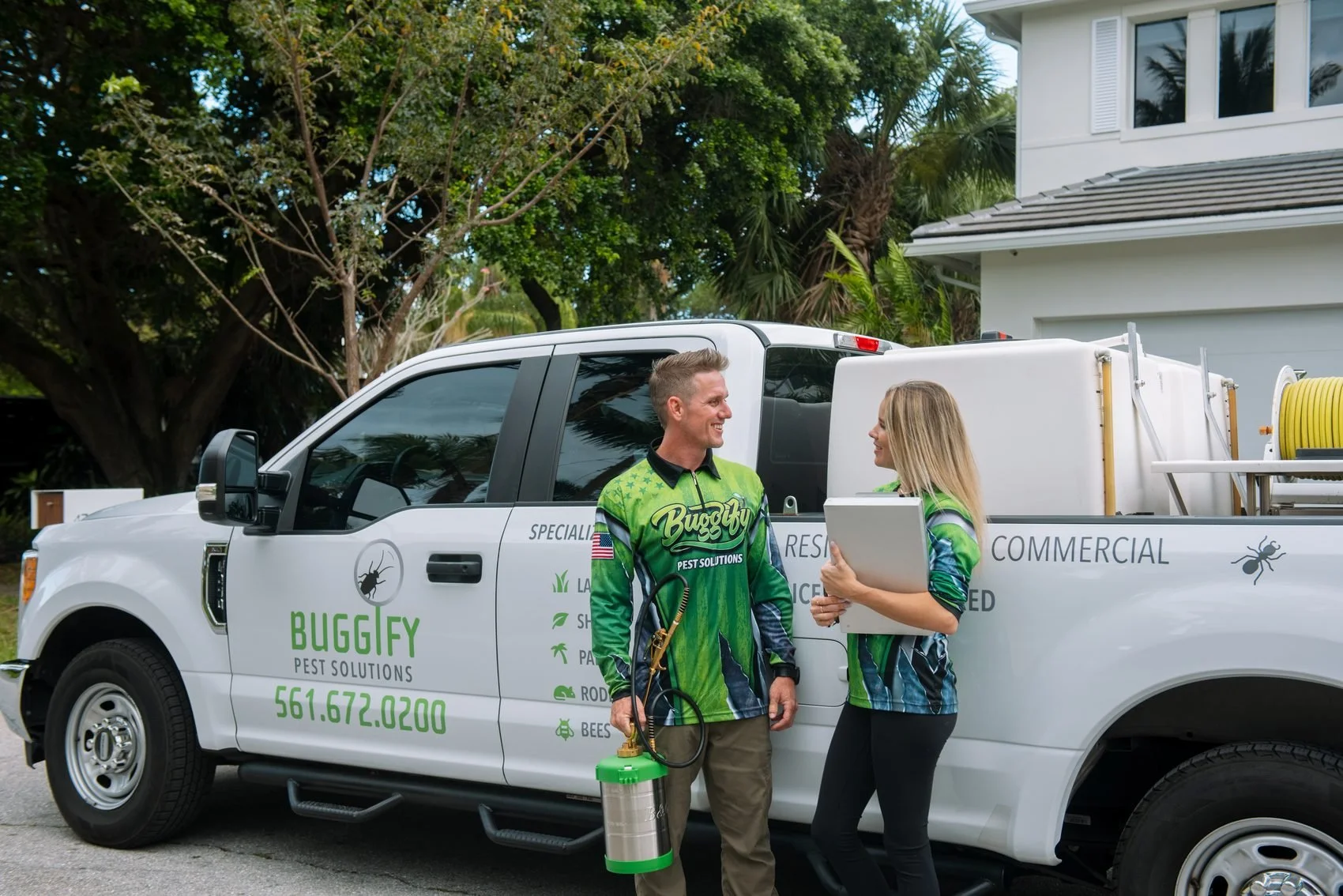
+Yes — every Buggify product is label-compliant pet-safe and child-safe when applied per label. Tyler has three kids himself, an American Bulldog, and an outdoor cat — same standards he uses at home. Application timing coordinated around your family schedule (school pickup, outdoor playtime). Products and methods always disclosed before treatment starts.
How fast can you get to my Parkland property?
+12-18 minutes from the West Boca shop — Parkland is the closest Broward city to Buggify's dispatch center. Same-day appointments routine when you call before noon. Post-storm response immediate during hurricane season.
I'm in Cascata at MiraLago — do you handle ultra-luxury estate work?
+Yes. Cascata is one of Parkland's ultra-luxury communities and Buggify maintains active vendor coordination with the HOA. Initial inspection on 2-3 story estate homes runs 1.5-2 hours; pricing at the upper end of the standard band. Vendor registration and gate-coordination handled directly with the HOA office at onboarding.
My HOA requires vendor registration — does Buggify have one?
+Active vendor registrations at the major Parkland communities (Heron Bay, Parkland Golf & Country Club, Cascata at MiraLago, Parkland Reserve, Parkland Isles). If Buggify isn't on your community's vendor list yet, Tyler handles the registration paperwork directly with the HOA at onboarding.
What plan tier is right for a typical Parkland single-family home?
+Full Home Protection ($720–960/year, $120–160/visit) is the most common Parkland plan tier — covers perimeter + interior on request + rodent + ant monitoring + a termite-sign check with licensed WDO referral. Estate-lot, luxury, or high-pressure properties often move to Complete ($900–1,400/year). Smaller post-2000 builds can run on Basic ($525–660/year).
Three things Buggify will never do to you
Quote a real price without inspecting first
The phone gives a range; firm pricing comes after an on-site walkthrough, so the scope matches what's actually driving the activity.
Indoor spraying when the source is outside
Most South Florida pest pressure is driven by outdoor harborage. Indoor-only work is a short-term cover-up, not a fix.
Lock you into a long-term contract
Bi-monthly plans bill per visit and cancel anytime, no fees. Service should be based on need, not contractual obligation.
Call Tyler. Get a price range on the first call.
No contract, no sales pitch, no callback queue — in most cases, on the schedule the same day or next morning.