
Boca Raton Wasp / Hornet / Yellow Jacket Removal — Same-Day Response
Same-day response. Species-specific protocol. Proper PPE for the dangerous work.
Stinging-insect calls are the only pest issues Buggify treats as emergencies. A paper-wasp nest under a lanai overhang, a yellow-jacket ground colony at the edge of a back patio, or a bald-faced hornet nest above the front entry can't wait for a bi-monthly visit, especially when allergic family members, kids, or pets are in the household. Same-day inspection is routine in the core service area when you call before noon, and the removal protocol changes by species — yellow jackets require dusk timing so the foragers are back in the colony, bald-faced hornets require a full bee suit and longer-range standoff equipment, and paper wasps respond to direct injection at the nest cells.
every call himself
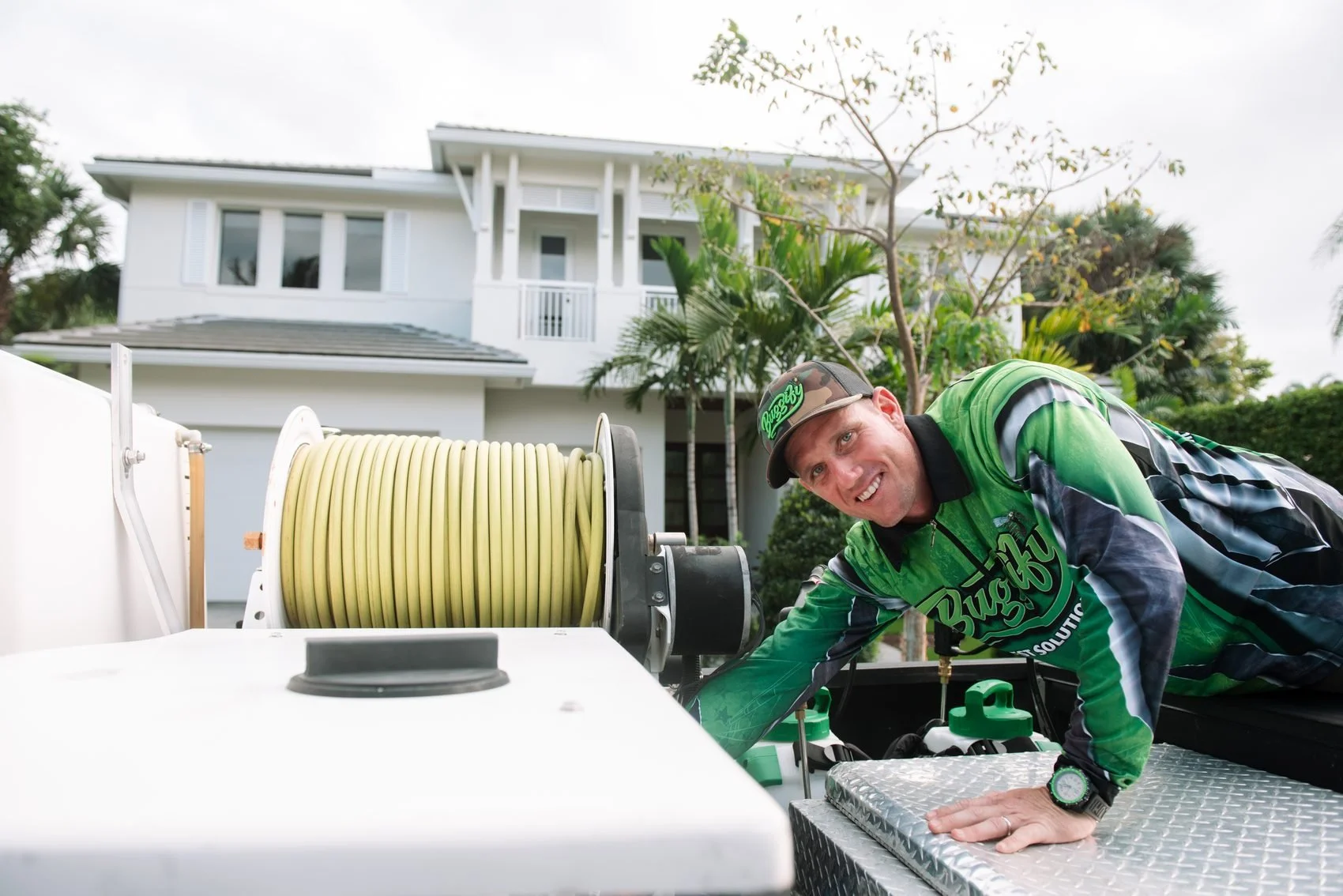
Same-day stinging-insect response, one local technician
Same-Day Response
Call before noon and Tyler is usually there the same day in the core area. Stinging-insect calls get prioritized over scheduled visits.
Species ID Matters
Paper wasp, mud dauber, yellow jacket, bald-faced hornet, cicada killer — each needs a different protocol. The wrong one is dangerous.
Ladder Access to 40 Feet
Eave and roof-overhang nests reachable. Pricing scales with ladder access and nest accessibility.
Protective Equipment Standards
Full bee suit, gauntlet gloves, sealed-seam protocol on yellow jacket and bald-faced hornet work. This is dangerous work done right.
Carpenter Bee Disambiguation
Carpenter bees are commonly confused with bumblebees and called in as wasps. Different treatment — Tyler IDs and cross-refers to bee removal.
No Multi-Visit Contract
Stinging-insect removal is single-visit work for most cases (yellow jackets and hornets get a short follow-up). No lock-in.
“Stinging-insect calls don't wait for a bi-monthly schedule. A yellow-jacket colony by the back door is a real emergency — call before noon and same-day inspection is routine.”
A paper-wasp nest under the lanai overhang is a problem you can manage by avoiding that zone for a few days. A yellow-jacket ground colony next to the back-door walkway is a real emergency — yellow jackets defend the colony aggressively, multi-sting incidents are common, and the colony can grow to 1,000–5,000 individuals over a single season. A bald-faced hornet nest above the front entry is an immediate threat to anyone walking under it.
The removal protocol depends on species and nest location. Paper wasps and mud daubers are typically straightforward — direct treatment + nest removal with standard residual. Yellow jackets in a ground colony require different equipment (volume injection of a non-foaming residual into the entry hole, then sealing). Bald-faced hornets in a paper nest require longer-range treatment from a safe standoff distance. Tyler carries the equipment range for all four common species, plus the less-common cicada killer.
Every pest we handle, one local technician
Every pest needs its own approach. Tyler handles the full range and starts each visit with an on-site diagnosis.
Indoor pests — roaches, ants, spiders, silverfish
German and American cockroach harborages. Carpenter, fire, sugar/ghost, pharaoh, and big-headed ants (each needs a different bait + barrier strategy). House spiders, lanai-edge orb weavers, and brown widow exclusion. Silverfish in older humid homes. Earwigs and millipedes during the rainy season.
Outdoor pests — mosquitoes, wasps, hornets, yellow jackets
Mosquito yard barrier on a monthly cadence, May–October. Paper wasp, mud dauber, yellow jacket, and bald-faced hornet nest removal — same-day response when scheduling allows. Carpenter bee identification and removal (often confused with honey bees — they need a different treatment). Stinging-insect emergencies prioritized over scheduled visits.
Rodent control — roof rats, Norway rats, mice
Roof rats dominate South Florida (tile-roof entry geometry); Norway rats are secondary, canal-adjacent only. Trapping for active populations, baiting for ongoing pressure, copper mesh + polyurethane exclusion for the long-term fix. Attic and wall-cavity work both in scope.
Whole-home pest exclusion + specialty work
Entry-point sealing (copper mesh + Tremco/GE polyurethane). Soffit-fascia gap repair, plumbing-vent screening, slab-crack treatment, pest-grade vent screening. Bee removal ($250–1,200+ by hive size and access). Commercial / HOA / property management (50–200 home communities preferred). Luxury home pest management (gated communities). Lawn care (HOA + luxury-estate add-on only).
Exactly what happens, start to finish
Most pest companies won't tell you the plan. Here's ours — proven, source-first, and transparent — so you can spot anyone cutting corners.

You call Tyler. He picks up.
Direct line, Mon–Fri 8 am – 5 pm. He asks what you're seeing, where, and how long. Multi-sting calls get a no-charge same-day inspection; otherwise a free phone estimate range and a $175 on-site if needed (credited when you book).
Same-day response — stinging insects are prioritized.
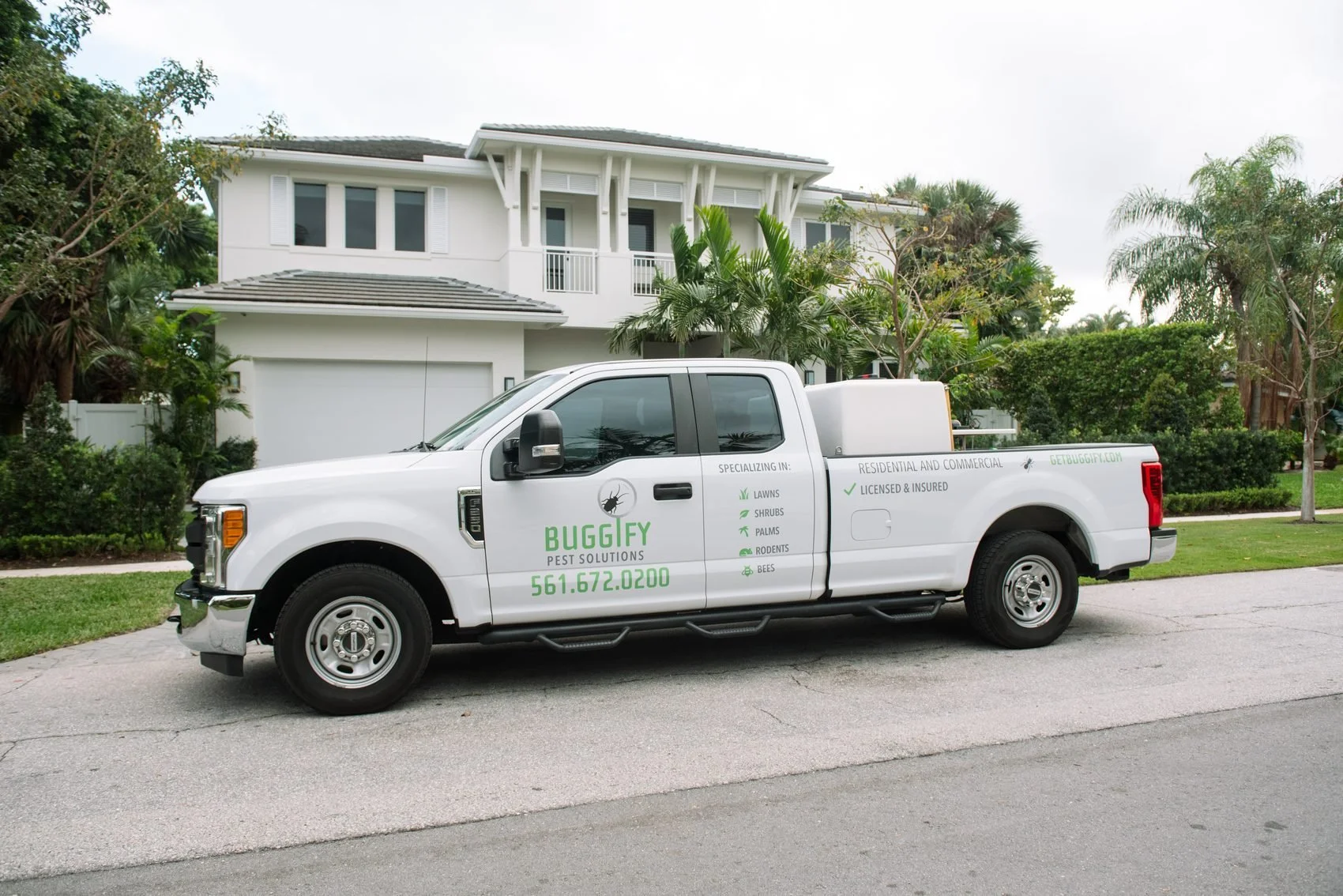
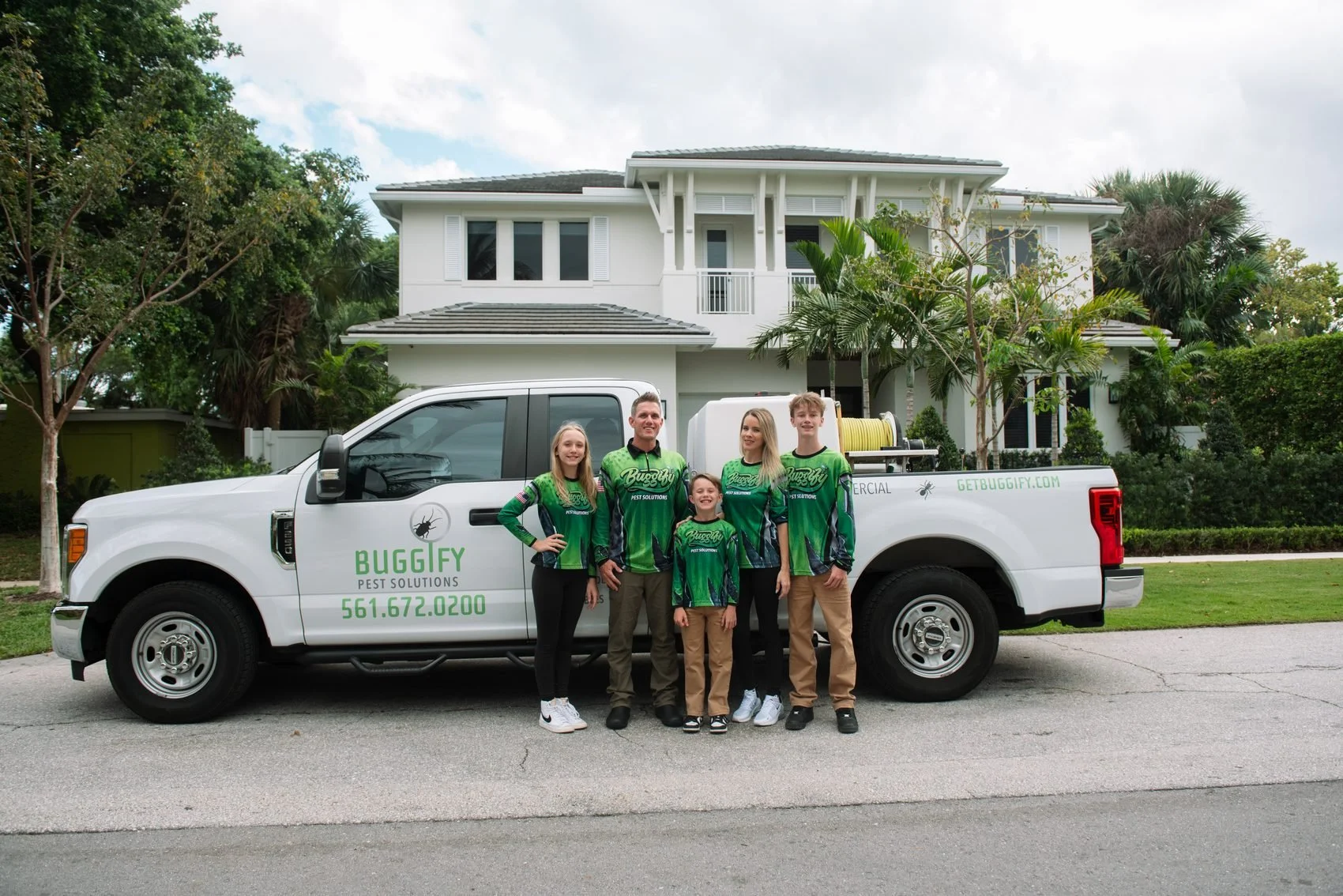
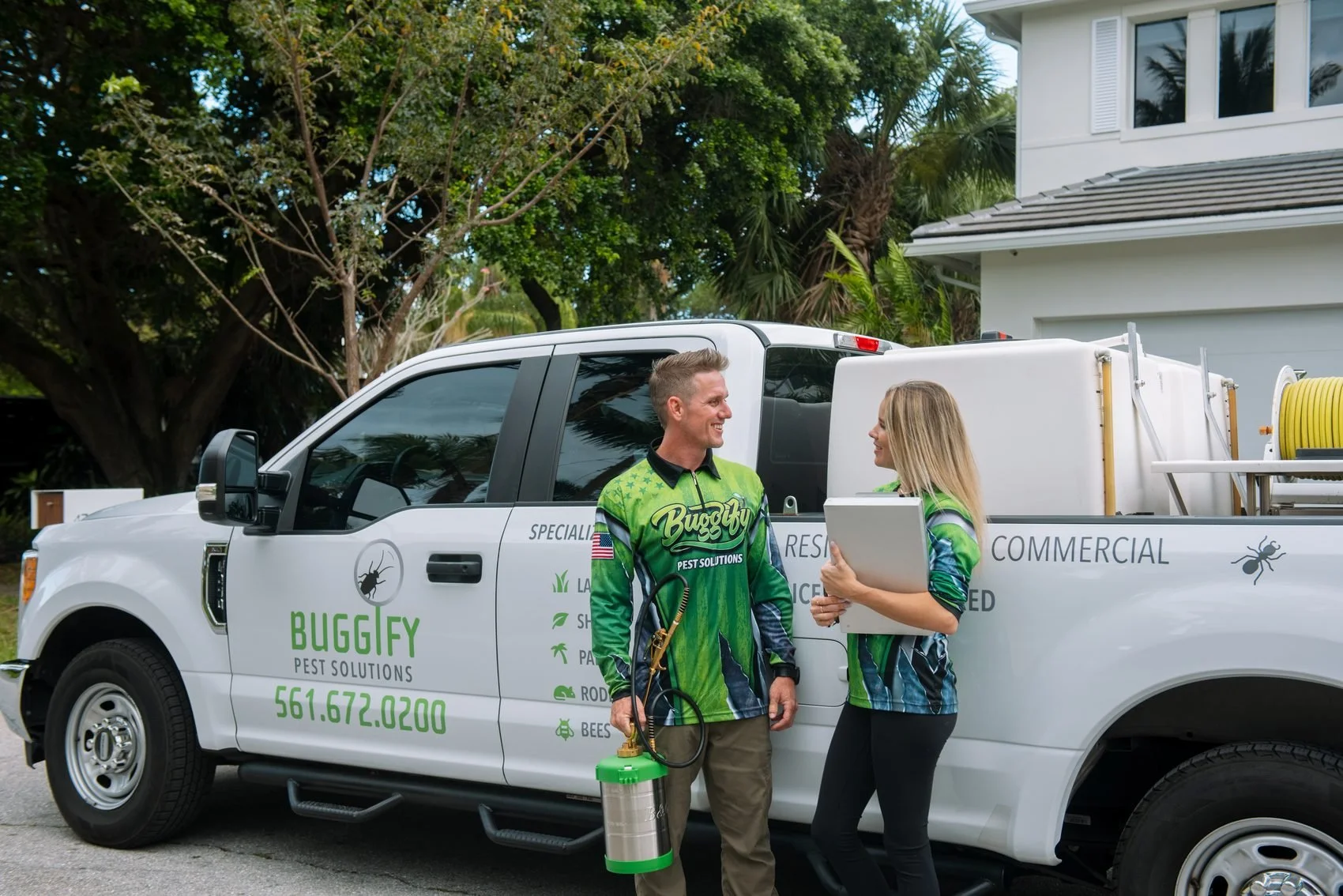
Same-day routine in the core area when you call before noon, prioritized over scheduled visits. Tyler arrives in the white Buggify truck and identifies the species, nest location, and access before anything else.
Species ID + risk assessment.
Paper wasp, mud dauber, yellow jacket, bald-faced hornet, or cicada killer? Each has a different protocol, aggression level, and PPE requirement. Yellow jackets and hornets are the dangerous ones and dictate timing (dusk) and gear (full sealed-seam suit).
Species-specific treatment with proper PPE.
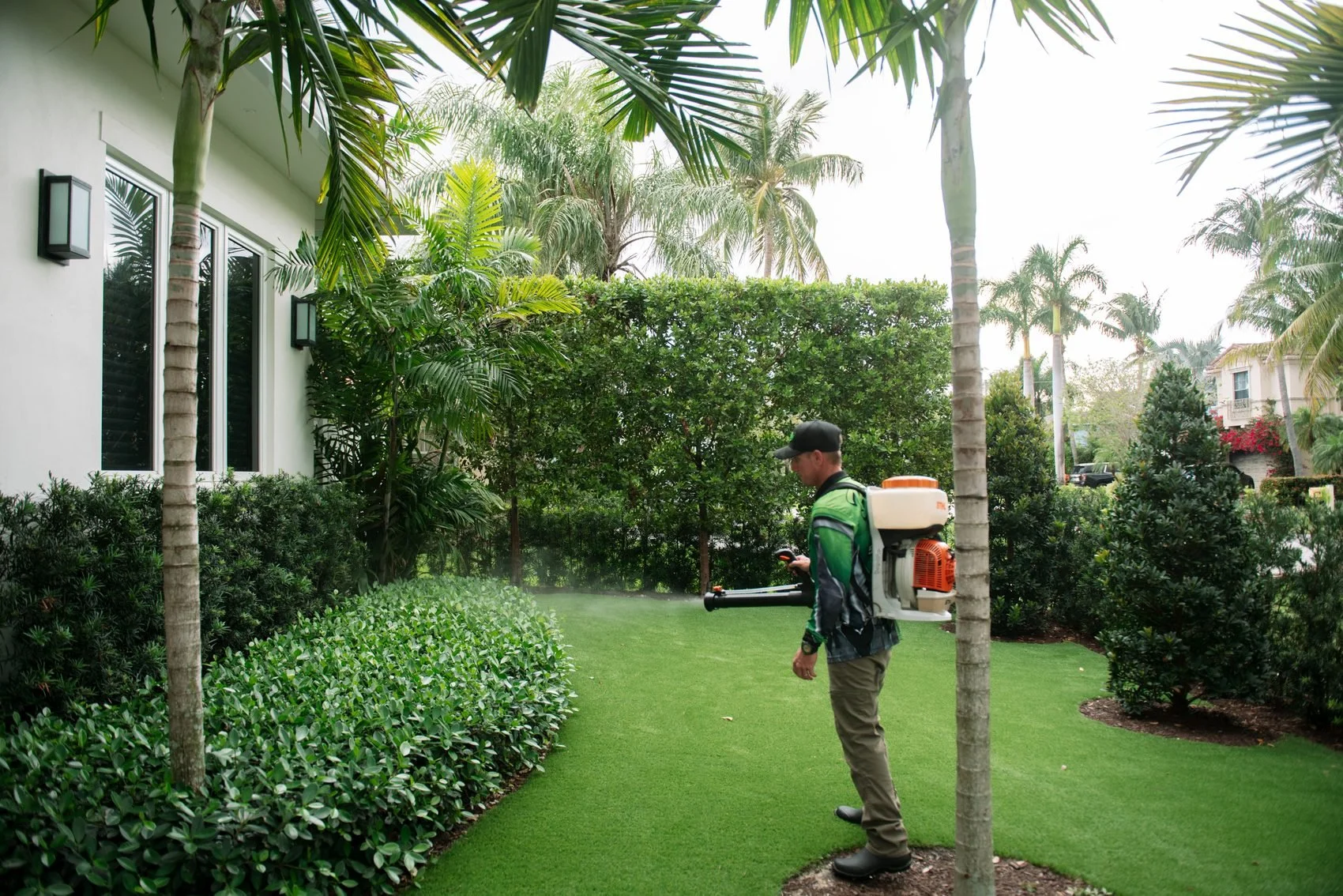
Direct injection + nest removal for paper wasps and mud daubers; dusk volume-injection + entry sealing for yellow jackets; longer-range residual from a 15–20 ft standoff for bald-faced hornets. Pet-safe residual; SDS on request.
Confirmation + 30-day callback.
Paper wasps: dead within 1–2 hours. Yellow jackets: 24–48 hours. Bald-faced hornets: nest removed at a 24-hour return. Written summary, plus a 30-day callback warranty if a new nest forms in the same zone.
A local owner beats a route tech
Bi-monthly plans, every 8 weeks
Three tiers, same cadence. They differ in scope, not frequency. Bills per visit — cancel anytime.
Basic
General pest — perimeter, entry-point, crack-and-crevice.
- ✓Every-8-week service
- ✓Perimeter + entry-point treatment
- ✓Crack-and-crevice work
- ✓Free re-service between visits
Full Home Protection
The standard for typical Boca / Parkland / West Boca homes.
- ✓Everything in Basic
- ✓Interior on request
- ✓Rodent + ant monitoring
- ✓Termite-sign check + licensed WDO referral
Complete
Built for luxury, gated, or high-pressure properties.
- ✓Everything in Full Home
- ✓Mosquito barrier
- ✓Attic + exclusion monitoring
- ✓Lanai treatment + termite-sign referral
Standard single-visit for nests under eaves, lanai overhangs, and mailboxes — direct treatment + physical nest removal. 30-day callback if a new nest forms in the same zone.
Dusk volume-injection + follow-up entry sealing. Higher than paper wasps for the PPE and dusk timing. Multi-colony properties priced higher.
Full PPE, longer-range equipment, and a multi-day window (treat + 24-hr return for removal). Nests above standard ladder height at the upper end. Multi-nest properties custom-quoted.
Recurring wasp/hornet prevention is bundled into Full Home Protection and Complete bi-monthly plans. See the plan tiers →
13 cities, two counties, one local guy
Buggify runs out of the West Boca shop at 22617 Middletown Dr. Same-day service is routine in the core area when you call before noon.
Outer zones by appointment — Highland Beach, Wellington, Lake Worth Beach & Tamarac case-by-case. Travel surcharge may apply beyond a 15-mile radius.
Why Boca pest pressure isn't like anywhere else
National playbooks are built for four-season climates with a real off-season. South Florida has none — seven local factors that change the whole approach.
Year-round pressure — no real off-season
Reproductive cycles compress in the heat. Bi-monthly cadence is built for continuous pressure; stinging-insect season runs 8+ months here, not the 4–5 of cooler climates.
Extended stinging-insect season
Paper wasps and yellow jackets are active March–November in South Florida; bald-faced hornets peak July–October; cicada killers June–August. The effective season is 8+ months.
Outdoor harborage outsizes indoor
The climate keeps colonies viable outdoors year-round, so eaves, lanai rafters, and ground burrows are the primary nest zones. Every inspection starts on the exterior.
Lush landscaping = nest habitat
Heavy landscaping, palm-frond accumulation, and mulch beds create sheltered nesting habitat. Yard-level habitat reduction is part of every inspection.
Hurricane-season displacement (May–Oct)
Storms displace stinging-insect colonies and open new nest sites in damaged soffits and lifted tiles. Active plan customers get a post-named-storm inspection offer.
Lanai & pool-cage architecture creates nest sites
Heavy lanai overhangs, pool-cage rafters, gazebos, and BBQ stations — common across Boca, Parkland, and Coral Springs — are ideal sheltered paper-wasp habitat. Recurring pressure is normal on lanai-heavy homes.
Ground-burrow yellow jackets in disturbed soil
New construction, renovation, irrigation work, and pool installs create disturbed-soil zones that yellow jackets colonize within 6–12 months. Newer subdivisions (Boca Bridges, western Delray, Coconut Creek) see elevated first-year activity.
Not sure what's driving it on your street?
Tyler knows the pressure block by block. Get a free read on the phone.
(561) 672-0200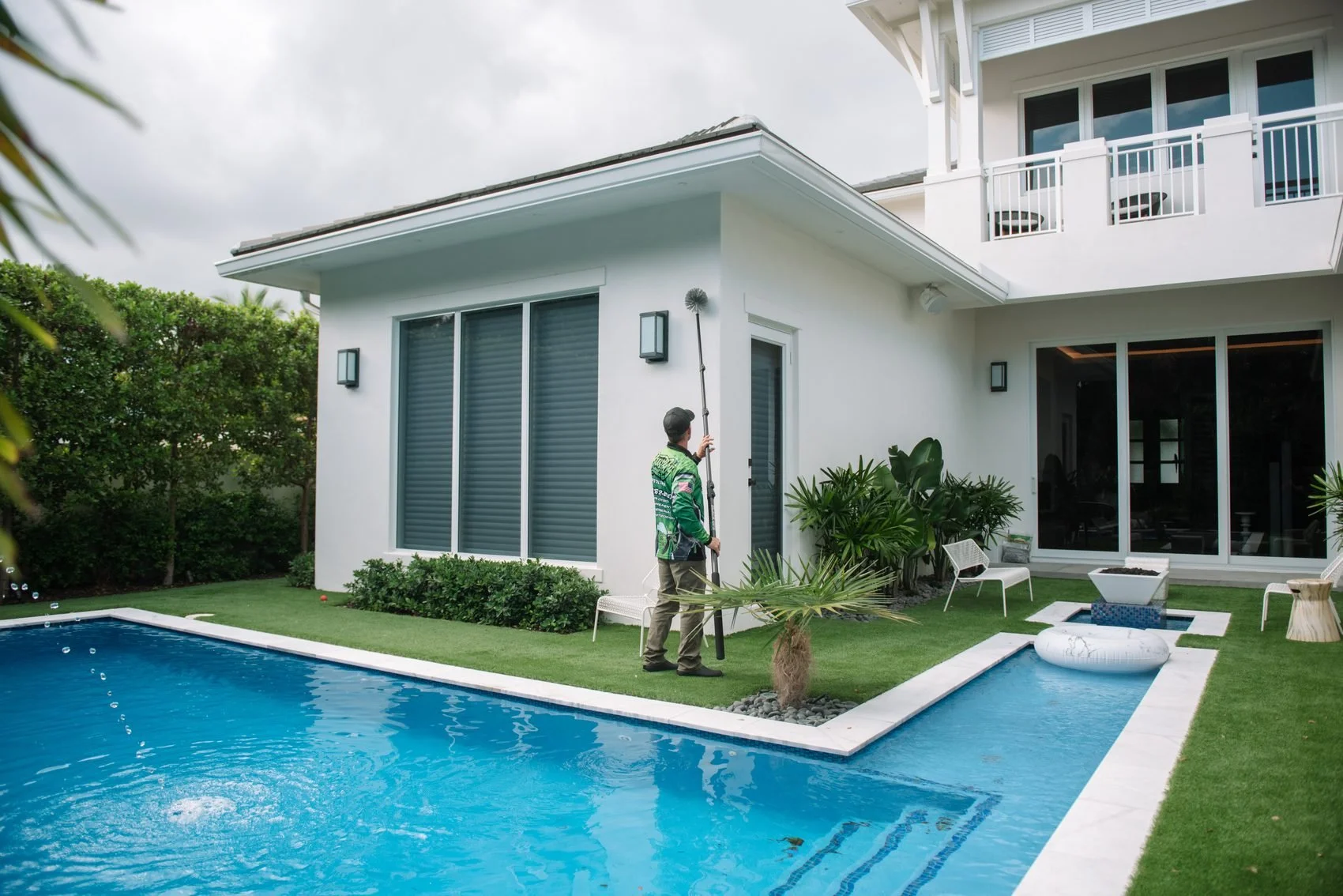
The technical depth behind every visit
Seven things most route techs are never trained on — each tied to a real outcome for your home.
Yellow jacket dusk application — why timing matters
Foragers return to the colony at dusk. Treat during the day and the foragers survive outside — the colony reforms or relocates. Dusk volume-injection of non-foaming residual into the entry hole reaches the deep chambers where the queen and brood are, then the entry is sealed. Daytime spray is incomplete and dangerous.
Bald-faced hornet 15-foot standoff equipment
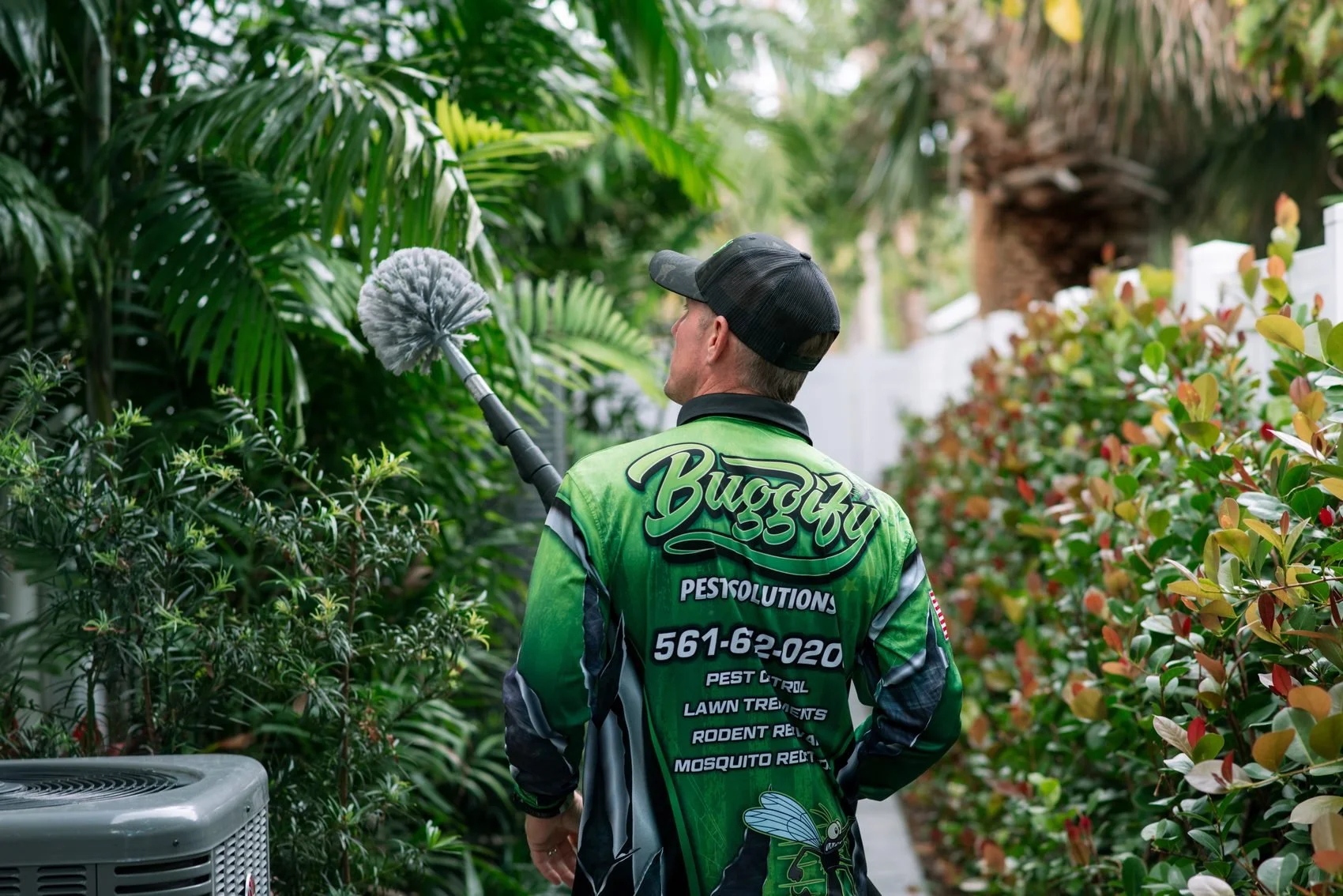
These hornets defend at 30–40 ft. Tyler uses longer-range residual delivered from a 15–20 ft safe standoff, full bee suit with sealed seams (gloves taped to suit, suit to boots, no exposed skin), approaching at a non-vertical angle to reduce defender response.
Paper wasp direct injection vs. aerosol
Direct residual injection into open nest cells kills adults, reaches brood, and leaves residual at the wood-grain attachment point to prevent re-nesting. Aerosol knock-down kills visible adults but misses brood — re-nesting at the same spot in 2–3 weeks is common.
Mud dauber vs. other wasp ID
Mud daubers are solitary, low-aggression, and mostly cosmetic (mud tubes on walls and ceilings). Tyler often recommends physical removal without chemical treatment — the species doesn't justify the residual. Chains routinely overtreat them as paper wasps.
Cicada killer monitoring vs. treatment
Large and intimidating but very low-risk — males don't sting, females rarely do. Single-season colonies die naturally in fall. Default is monitoring only; treatment only at high burrow density in kid/pet zones. Mowing and watering adjustments discourage colonies the next year.
Carpenter bee disambiguation
Carpenter bees (large, black, bumblebee-like) get called in as 'wasps.' They're wood-boring bees that drill perfect 1/2-inch holes in soft wood. Tyler IDs on-site and cross-references to bee removal — different protocol (wood-grain bait + plug, not nest removal).
Multi-sting incident protocol
On multi-sting reports (usually yellow jackets): immediate no-charge inspection, evening dusk treatment, a 48-hour follow-up to confirm elimination, and a written colony-location record for medical or insurance follow-up. Allergic patients should consult their allergist before re-entering the zone.
SDS available on request
Every product, every time — full transparency, no "proprietary blends."
homes served
What our customers say about Buggify
Verified 5-star reviews from Boca Raton, Parkland & Coral Springs families — straight from Google.
Twelve questions Tyler gets about wasp & hornet work
If yours isn't here, call (561) 672-0200 — Tyler answers directly.
How do I tell yellow jackets from paper wasps?
–Yellow jackets are black-and-yellow with a smooth body, nest in the ground or wall voids, and are very aggressive. Paper wasps are slimmer, brown-and-yellow, build open umbrella-shaped paper nests under eaves, and are moderately aggressive. Yellow jacket calls are higher-priority emergencies.
Will killing the wasps near my house attract more?
+No — wasp colonies aren't replaced from outside. Once the colony is dead the spot becomes available for new nesting next season but doesn't actively attract wasps. Tyler leaves residual on the attachment point to deter re-nesting at the same exact spot.
I'm allergic — can I be on-site during treatment?
+No — allergic homeowners should stay inside with windows closed during treatment, especially for yellow jackets and bald-faced hornets where airborne dispersal is highest. Tyler discusses timing and re-entry on the phone for allergic cases.
Will the chemicals hurt my pets or kids?
+Products are label-compliant and pet-safe per label. Paper-wasp and mud dauber zones are safe for re-entry within 30–60 minutes once residual dries. Yellow jacket and bald-faced hornet zones should be avoided for 24 hours — keep pets and kids inside during that window.
How long until the nest is dead?
+Paper wasps and mud daubers: same-day, dead within 1–2 hours. Yellow jackets: 24–48 hours after dusk application. Bald-faced hornets: 24 hours after treatment before nest removal.
What's the warranty if a new nest shows up?
+30-day callback warranty — a new nest in the same zone is retreated at no additional cost. Beyond 30 days, new nests are treated at the standard one-time rate.
Can you remove a bald-faced hornet nest 20 feet up?
+Yes — equipment reaches up to 40 feet for ladder access and 15–20 feet for residual standoff. Higher than 40 feet (very tall pines, multi-story eaves) needs specialty bucket-lift equipment Tyler refers out; he can recommend a contact.
My carpenter bees keep drilling holes in my deck — same as wasps?
+No — different species, different protocol. Carpenter bees are wood-boring (not stinging in the traditional sense); the treatment is a wood-grain bait + plug rather than nest removal. See the bee removal page.
Cicada killers in my yard — are those dangerous?
+Very low risk despite the size. Males don't sting; females rarely do. Tyler's default is monitoring only — single-season colonies die naturally in the fall. Treatment only when burrow density is high in pet- or kid-traffic zones.
Same-day for nests above the ground floor?
+Yes — Tyler carries ladders up to 32 feet. Above that (high multi-story or very tall pines) needs a bucket-lift referral, but he does the inspection and ID same-day, then schedules the lift for follow-up.
Do you treat wasps and hornets at restaurants or commercial properties?
+Yes — outdoor dining areas, pool decks, and dumpster zones are common stinging-insect emergency calls. Custom-quoted; same-day response when scheduling allows.
Three things Buggify will never do to you
Quote a real price without inspecting first
The phone gives a range; firm pricing comes after an on-site walkthrough, so the scope matches what's actually driving the activity.
Indoor spraying when the source is outside
Most South Florida pest pressure is driven by outdoor harborage. Indoor-only work is a short-term cover-up, not a fix.
Lock you into a long-term contract
Bi-monthly plans bill per visit and cancel anytime, no fees. Service should be based on need, not contractual obligation.
Call Tyler. Get a price range on the first call.
No contract, no sales pitch, no callback queue — in most cases, on the schedule the same day or next morning.