
Boca Raton Spider Control — Lanai-Edge Clearing, Brown Widow Exclusion, Prey Reduction
Spider removal plus prey-insect reduction. The durable fix, not more spray.
Most South Florida spider activity is outdoor, concentrated around lanai screens, pool cages, exterior light-fixture zones, and palm-crown webs where the orb weavers, brown widows, and house spiders find their prey. Spiders follow the food, so adding more spider spray to a property without addressing the prey insects means the population rebuilds within weeks. Buggify's protocol treats both halves of the problem: spider removal at the active zones plus prey-insect reduction through an outdoor lighting audit (yellow-amber LEDs in place of white CFL or UV bulbs cut prey-insect attraction by 60 to 80 percent) and a foliage barrier residual on adjacent shrubs.
every call himself
Spider + prey-insect control, one local technician
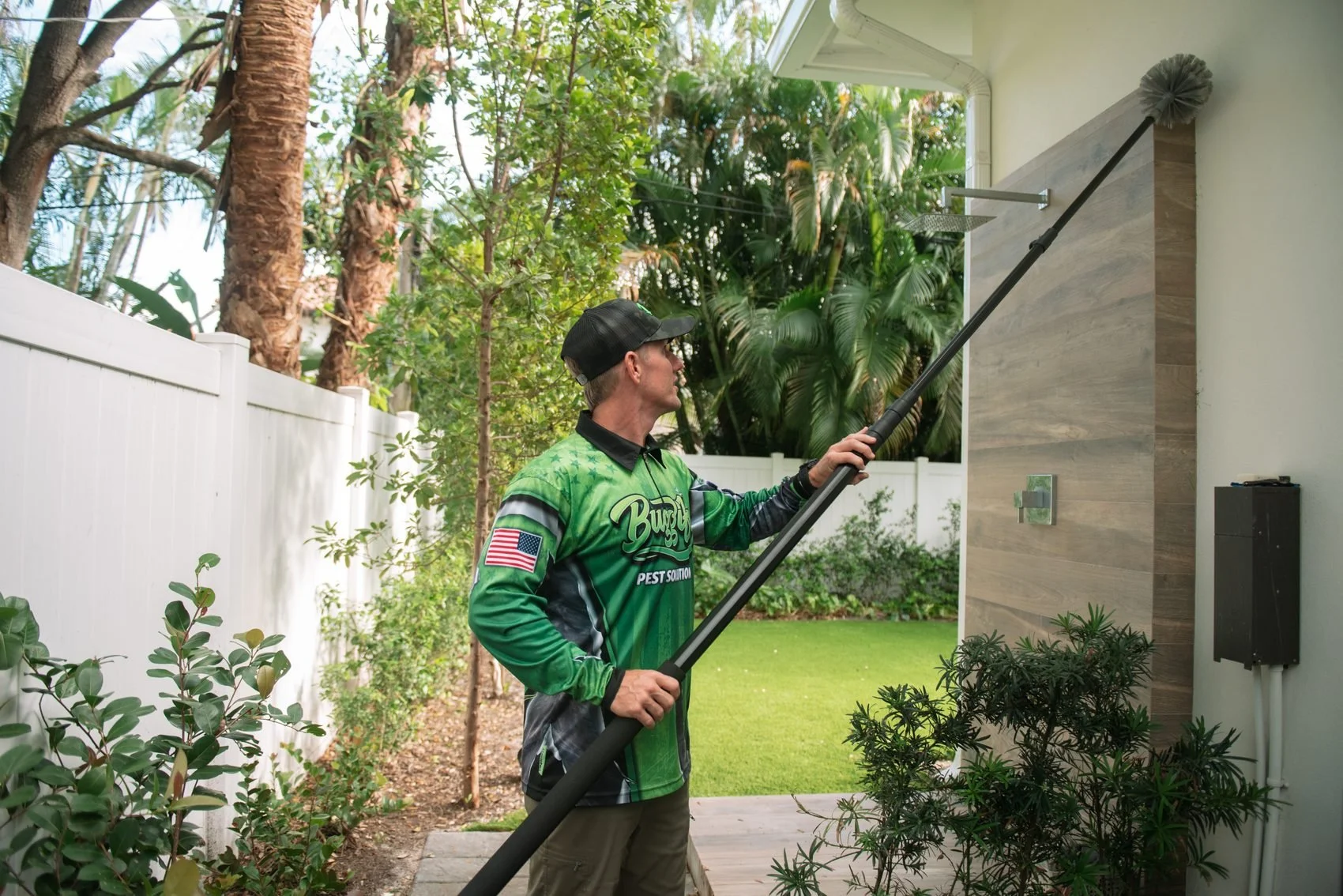
Lanai-Edge Orb Weaver Clearing
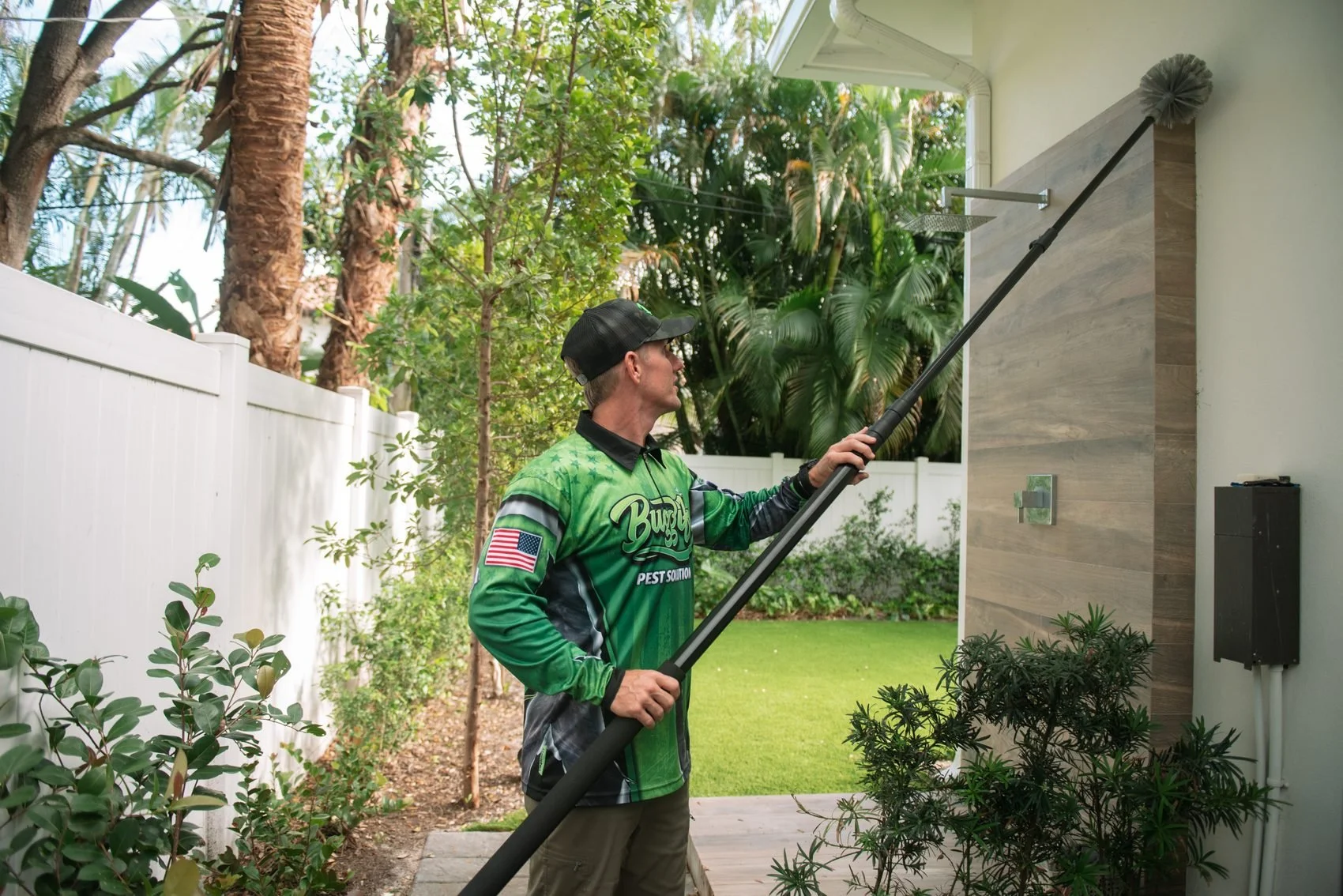
Most spider complaints are orb weavers building webs across lanai openings and pool cages overnight. Tyler clears them and treats the prey insects feeding them.
Brown Widow Exclusion
South Florida's invasive widow — less aggressive than a black widow but still venomous. Lanai-zone exclusion plus outdoor light-fixture treatment and egg-sac removal.
Prey-Insect Reduction = the fix
Spiders go where the bugs are. Cutting the prey insects (moths, flies at outdoor lights) reduces spider activity far more than spider-direct spray.
Outdoor Lighting Audit
Yellow/amber bulbs attract 60–80% fewer prey insects than white or UV bulbs. A simple $5–15 bulb swap drops spider activity dramatically.
Palm-Crown Web Reduction
Heavy palm crowns accumulate webs and prey insects — crown trimming and treatment are part of the protocol on heavily landscaped properties.
Same Technician Every Visit
Tyler runs the inspection, IDs the species, and treats. No rotating route techs handing off the file.
“Spiders go where prey insects are. Treating the spider population without addressing the prey insects is treating the symptom, not the cause.”
South Florida lanai screens, pool cages, and outdoor light-fixture zones attract moths, gnats, flies, and other small flying insects. Orb weavers (the most common Boca-area complaint) build webs overnight across openings to catch these prey insects. Brown widows nest in the shielded corners of lanai posts, outdoor light fixtures, and pool-cage corners — feeding on the smaller prey insects that come to the light.
Tyler's protocol treats both phases. Spider removal first (direct treatment of webs and active nests). Prey-insect reduction second (perimeter residual at outdoor lighting zones, outdoor lighting bulb-swap recommendation to yellow/amber bulbs, foliage barrier residual). The combination eliminates the spider population because it also addresses the food source. Spray-only protocols leave the food source intact — the population rebuilds within weeks.
Spiders are one piece — we cover them all
Tyler IDs the species on-site — brown widow handling is different from harmless orb weavers.
Indoor pests — roaches, ants, spiders, silverfish
German and American cockroach harborages. Carpenter, fire, sugar/ghost, pharaoh, and big-headed ants (each needs a different bait + barrier strategy). House spiders, lanai-edge orb weavers, and brown widow exclusion. Silverfish in older humid homes. Earwigs and millipedes during the rainy season.
Outdoor pests — mosquitoes, wasps, hornets, yellow jackets
Mosquito yard barrier on a monthly cadence, May–October. Paper wasp, mud dauber, yellow jacket, and bald-faced hornet nest removal — same-day response when scheduling allows. Carpenter bee identification and removal (often confused with honey bees — they need a different treatment). Stinging-insect emergencies prioritized over scheduled visits.
Rodent control — roof rats, Norway rats, mice
Roof rats dominate South Florida (tile-roof entry geometry); Norway rats are secondary, canal-adjacent only. Trapping for active populations, baiting for ongoing pressure, copper mesh + polyurethane exclusion for the long-term fix. Attic and wall-cavity work both in scope.
Whole-home pest exclusion + specialty work
Entry-point sealing (copper mesh + Tremco/GE polyurethane). Soffit-fascia gap repair, plumbing-vent screening, slab-crack treatment, pest-grade vent screening. Bee removal ($250–1,200+ by hive size and access). Commercial / HOA / property management (50–200 home communities preferred). Luxury home pest management (gated communities). Lawn care (HOA + luxury-estate add-on only).
Exactly what happens, start to finish
Most pest companies won't tell you the plan. Here's ours — proven, source-first, and transparent — so you can spot anyone cutting corners.
You call Tyler. He picks up.
Direct line, Mon–Fri 8 am – 5 pm. He asks what you're seeing, where, and how long. Free phone estimate range, then a $175 on-site inspection if needed (credited toward your first treatment when you book ongoing service).
Same-day or next-day on-site inspection.
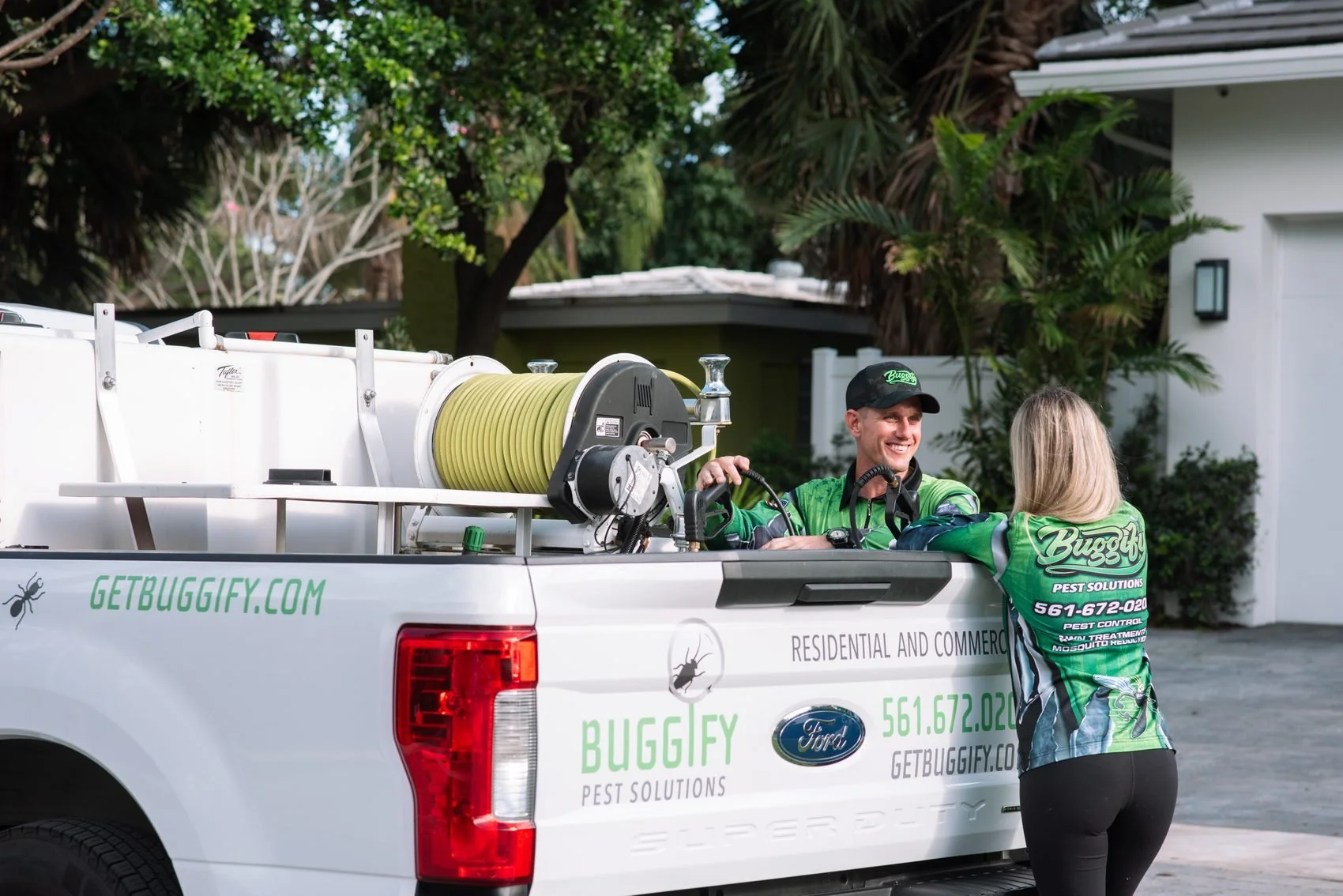
Same-day routine in the core service area when you call before noon. Tyler arrives in the white Buggify truck. The visit runs 30–60 minutes: lanai and pool-cage check, light-fixture zones, and a species ID.
Species ID + prey-source diagnosis.
Orb weaver, brown widow, house spider, or wolf spider? Brown widow handling differs from harmless orb weavers. Tyler also identifies which outdoor lights and foliage are producing the prey insects driving the activity.
Removal + prey-reduction treatment.
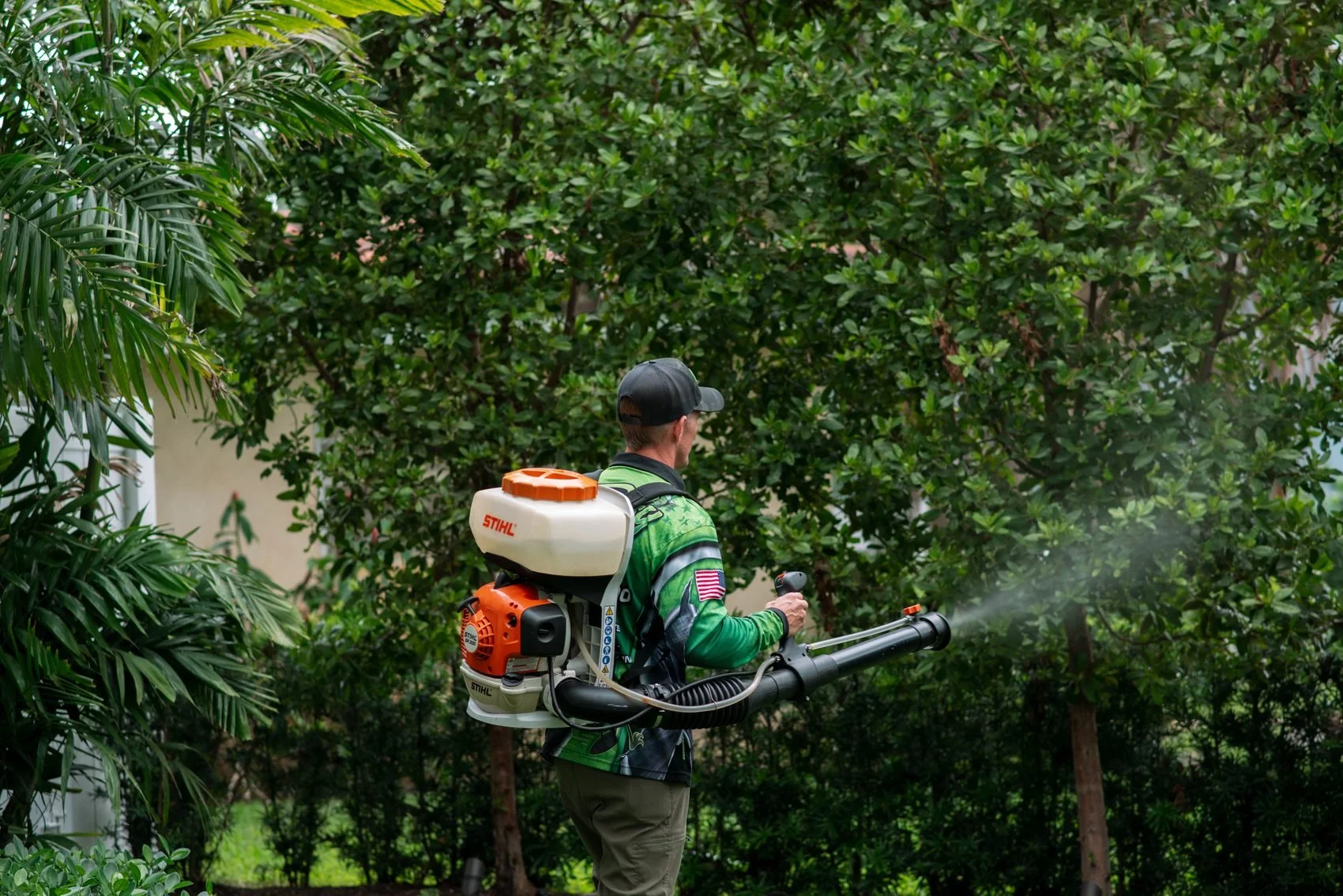
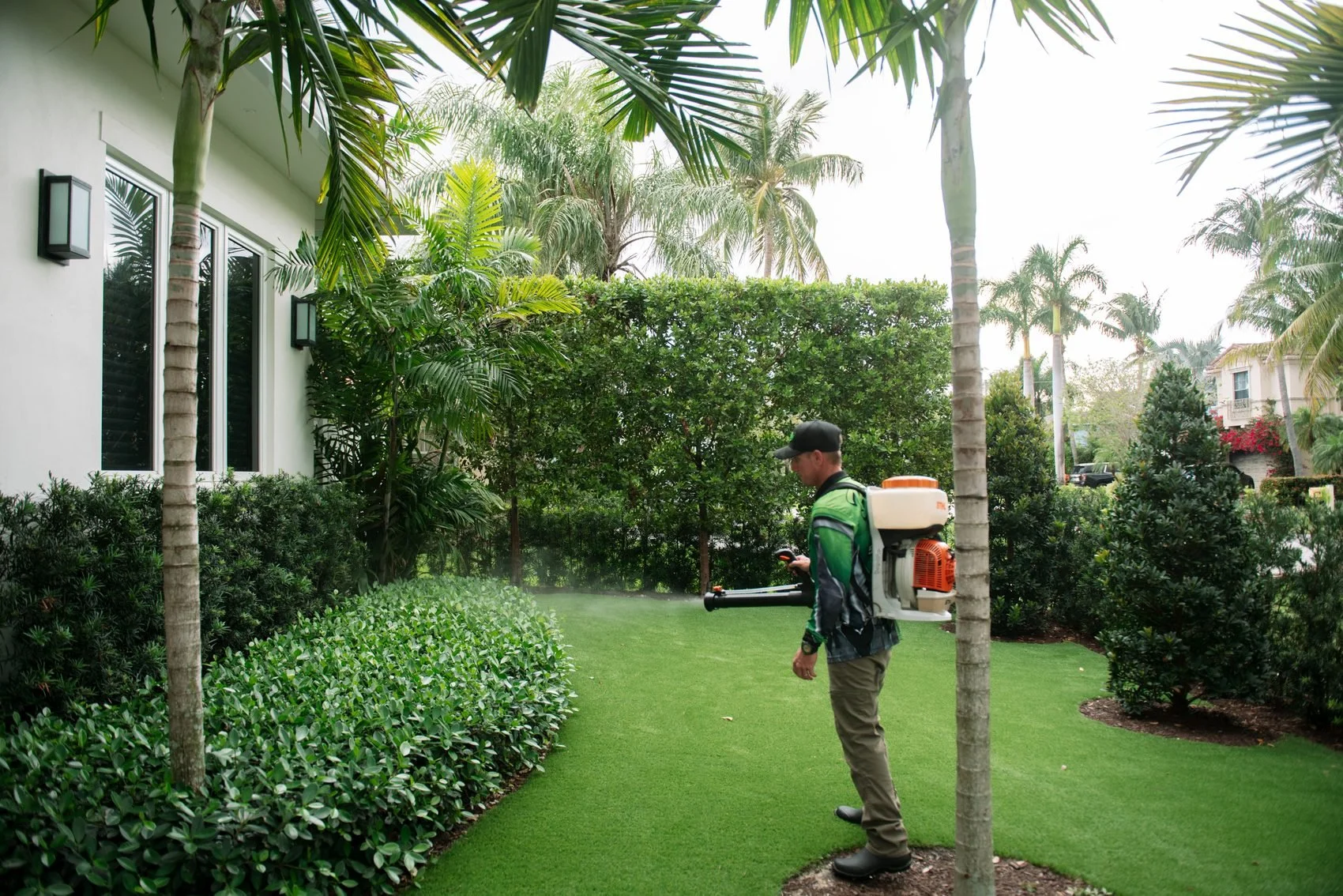
Web and nest clearing, brown widow exclusion with polyurethane at frame corners and egg-sac removal, perimeter residual at light-fixture zones, and a foliage barrier on adjacent shrubs (VectorFog C100 ULV). Pet-safe; SDS on request.
Lighting audit + walkthrough.
Tyler flags the high-attraction fixtures for a yellow/amber LED swap, gives a written summary, and — for plan customers — schedules the next visit with re-service included if activity persists.
A local owner beats a route tech
Bi-monthly plans, every 8 weeks
Three tiers, same cadence. They differ in scope, not frequency. Bills per visit — cancel anytime.
Basic
General pest — perimeter, entry-point, crack-and-crevice.
- ✓Every-8-week service
- ✓Perimeter + entry-point treatment
- ✓Crack-and-crevice work
- ✓Free re-service between visits
Full Home Protection
The standard for typical Boca / Parkland / West Boca homes.
- ✓Everything in Basic
- ✓Interior on request
- ✓Rodent + ant monitoring
- ✓Termite-sign check + licensed WDO referral
Complete
Built for luxury, gated, or high-pressure properties.
- ✓Everything in Full Home
- ✓Mosquito barrier
- ✓Attic + exclusion monitoring
- ✓Lanai treatment + termite-sign referral
Single visit — web clearing, species ID, perimeter residual at outdoor light-fixture zones, lanai-edge treatment, and prey-reduction recommendations. 30-day callback warranty.
For extensive screened patios, pool cages, or lanai/pool-cage combos — screen-edge treatment, pool-cage frame inspection, brown widow exclusion, and an outdoor lighting audit.
Recurring pressure homes — pool cages, lanai-heavy, canal-adjacent foliage — get spider scope bundled into Full Home Protection and Complete plans.
Recurring spider pressure is best handled on a bi-monthly plan, with prey-insect prevention built in. See the plan tiers →
13 cities, two counties, one local guy
Buggify runs out of the West Boca shop at 22617 Middletown Dr. Same-day service is routine in the core area when you call before noon.
Outer zones by appointment — Highland Beach, Wellington, Lake Worth Beach & Tamarac case-by-case. Travel surcharge may apply beyond a 15-mile radius.
Why Boca pest pressure isn't like anywhere else
National playbooks are built for four-season climates with a real off-season. South Florida has none — seven local factors that change the whole approach.
Year-round pressure — no real off-season
Reproductive cycles compress in the heat, so spider and prey-insect activity never fully stops. Bi-monthly cadence is built for continuous pressure; orb weavers peak April–October.
Humidity drives moisture harborage
70–85% humidity keeps moisture-driven pest harborage active year-round — which sustains the prey-insect population that spiders feed on.
Outdoor harborage outsizes indoor
The climate keeps pests viable outdoors year-round, so lanai screens, pool cages, and foliage are the primary spider zones. Indoor-only treatment misses ~70% of the driver.
Lush tropical landscaping = harborage
Heavy landscaping, palm-frond accumulation, and mulch beds create daytime spider hideouts and prey habitat. Yard-level habitat reduction is part of every inspection.
Outdoor lighting concentrates prey insects
South Florida homes run heavy outdoor lighting — lanai, pool, landscape uplights, garage floods. Each fixture pulls moths, gnats, and flies. Spiders follow. The white→yellow/amber bulb swap cuts that 60–80%.
Brown widow established-range hotspot
Brown widows (Latrodectus geometricus) are invasive but well-established across South Florida — lanai posts, light fixtures, pool-cage corners, mailboxes, grill covers. Different handling than black widows; Tyler IDs on-site.
Hurricane-season web reset
Major storms strip webs and displace spiders; post-storm rebuilds are heavy around outdoor lighting and prey zones. Tyler's post-storm inspection includes a lanai, pool-cage, and light-fixture spider check.
Not sure what's driving it on your street?
Tyler knows the pressure block by block. Get a free read on the phone.
(561) 672-0200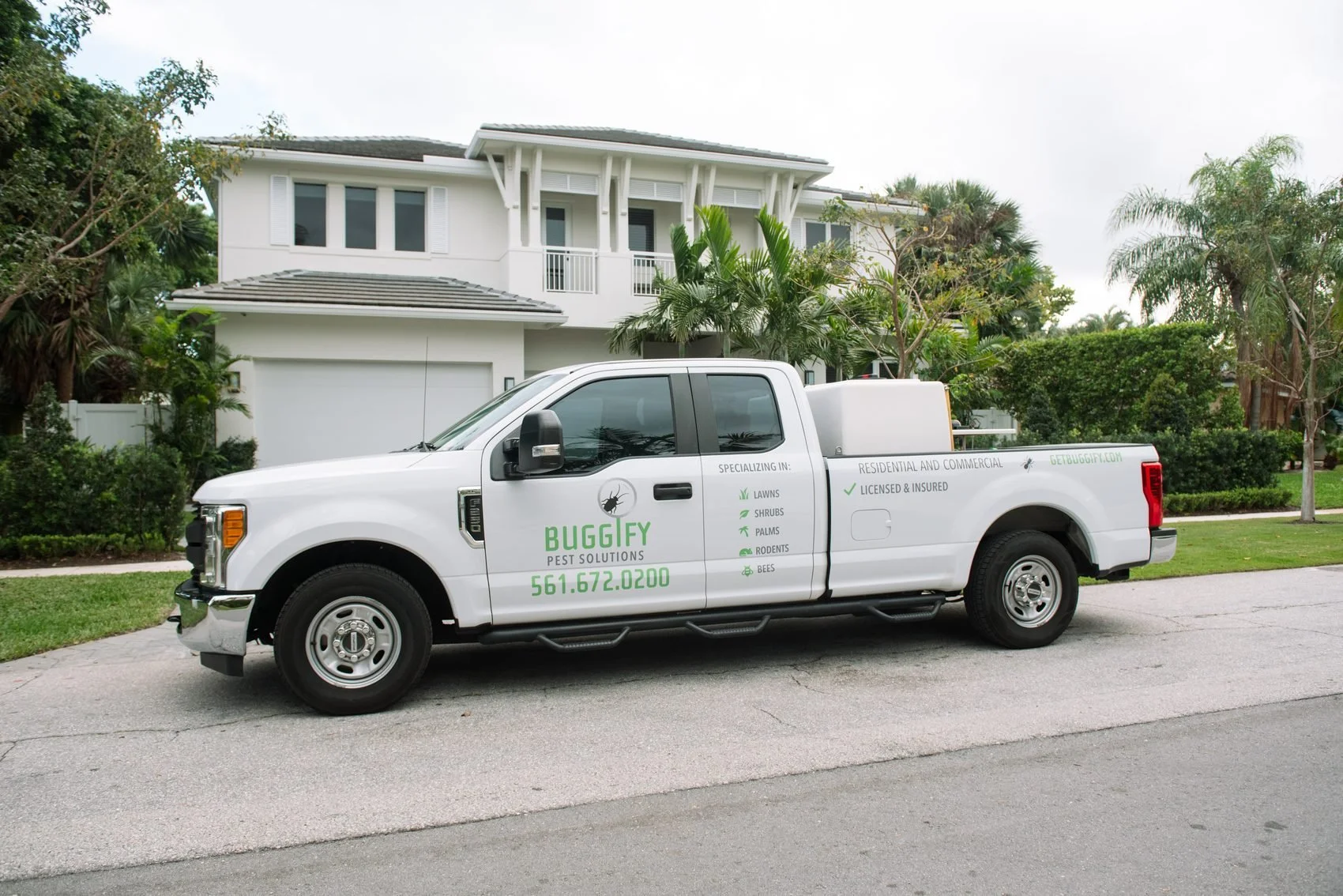
The technical depth behind every visit
Seven things most route techs are never trained on — each tied to a real outcome for your home.
Prey-insect reduction — the long-term fix
Spiders eat insects; reduce the prey and the spider population drops durably. The white CFL/UV → yellow/amber LED bulb swap is the single highest-leverage change (60–80% prey reduction). Combined with fixture-zone residual and a foliage barrier, it ends recurring complaints.
Brown widow egg-sac handling
Females produce 5–8 egg sacs, each with 100–200 eggs. The sac shell resists most residuals, so physical removal during exclusion is the standard — Tyler bags the female and sacs for off-site disposal, with standard residual for surviving juveniles.
Orb weaver timing — treat in the morning
Orb weavers build at dusk and dawn and abandon the web by mid-morning, retreating to nearby foliage or a lanai-post corner. Morning visits clear overnight webs and treat the hideout zones; late-morning visits miss the spider.
Pool-cage frame-corner exclusion
Cage corners are prime brown widow habitat — shielded, dry, near prey-drawing lights. Exclusion uses polyurethane at frame-to-screen transitions and post-base gaps plus debris removal. Standard residual protocols don't reach these zones.
Outdoor light-fixture perimeter treatment
Each fixture concentrates prey insects within a 10-foot radius. Residual at the fixture, sconce body, wall surface, and 10-foot ground perimeter treats prey and the spiders feeding on them — the highest-leverage zone on most properties.
Foliage barrier on adjacent shrubs
Heavy foliage near lights, lanais, and pool cages gives daytime hideouts and prey habitat. A foliage barrier reduces both — applied with the VectorFog C100 ULV for leaf-underside penetration (same tool as mosquito work, different target).
Brown widow vs. black widow ID
Both have an underside hourglass. Black widow: red hourglass, glossy black, 1/2-inch body. Brown widow: orange/yellow hourglass, brown/mottled, 3/8-inch body, small white silk tufts in the web. Bite-incident protocol differs — Tyler advises on-site.
SDS available on request
Every product, every time — full transparency, no "proprietary blends."
homes served
What our customers say about Buggify
Verified 5-star reviews from Boca Raton, Parkland & Coral Springs families — straight from Google.
Eleven questions Tyler gets about spider control
If yours isn't here, call (561) 672-0200 — Tyler answers directly.
Are brown widows actually dangerous?
–Less aggressive than black widows and the venom is generally milder, but still medically significant — a bite can cause local pain, swelling, and sometimes systemic symptoms. Bites are rare, but exclusion and nest removal are recommended when nests are near human-activity zones (mailboxes, lanai posts, grill covers, pool-cage corners).
How do I tell a brown widow from a regular brown spider?
+The underside hourglass is the giveaway — brown widows have an orange or yellow hourglass on the abdomen underside, plus white silk tufts in the web and spiky beige egg sacs. Most other brown spiders in Boca are house spiders or wolf spiders, and neither has the underside hourglass.
Are the products safe for pets and kids?
+Yes — label-compliant pet-safe products applied at outdoor zones (light fixtures, foliage, lanai edge) away from pet traffic. Indoor treatment, when needed, is targeted to corners and storage areas that aren't pet- or kid-accessible. SDS available on request.
Will changing my outdoor bulbs really make a difference?
+Yes — it's the biggest single-change reduction Tyler recommends. White CFL and UV bulbs attract maximum prey insects; yellow/amber LEDs are 60–80% less attractive. Fewer prey means fewer spiders. Bulbs are $5–15 each and the payback is immediate.
How fast will the spider activity drop?
+Visible webs and spiders are cleared at treatment. The outdoor population drops within 7–14 days as prey insects decline and residual reduces the foliage population. The 4–8 week outcome depends on prey-insect reduction (bulb swap + foliage management).
Do I need a recurring plan, or is one-time enough?
+One-time treatment handles a localized issue. Recurring-pressure homes (pool cages, lanai-heavy properties, canal-adjacent with heavy foliage) benefit from a bi-monthly plan — spider scope is bundled into Full Home Protection and Complete.
Do you treat wolf spiders and jumping spiders?
+Only when they're entering the home or causing distress. Both are largely outdoor, ground-level, and beneficial (they eat other pests). Wolf spiders don't build webs; jumping spiders are day-active and harmless. Tyler treats when an active population is a real problem, not by default.
There are spiders all over my pool cage — what can you do?
+The screened-patio program covers this: screen-edge treatment, pool-cage frame inspection, brown widow exclusion at frame corners, and an outdoor lighting audit. Cage corners are prime brown widow habitat, so exclusion is the durable fix, not repeat spray.
Do spiders come back after treatment?
+If the prey source is untouched, yes — within weeks. That's why the protocol cuts the prey (lighting audit + foliage barrier) rather than only killing spiders. Homes that make the bulb swap and keep foliage trimmed see the longest-lasting results.
Same-day service available?
+Same-day inspection is routine in the core service area (Boca, West Boca, Parkland, Coral Springs, Deerfield Beach) when you call before noon. Outside the core, the next day is typical.
Do you handle spiders for HOAs and property management?
+Yes — custom-quoted by location and scope. Pool decks, clubhouses, and shared lanai/breezeway lighting are the most common HOA-driven spider zones.
Three things Buggify will never do to you
Quote a real price without inspecting first
The phone gives a range; firm pricing comes after an on-site walkthrough, so the scope matches what's actually driving the activity.
Indoor spraying when the source is outside
Most South Florida pest pressure is driven by outdoor harborage. Indoor-only work is a short-term cover-up, not a fix.
Lock you into a long-term contract
Bi-monthly plans bill per visit and cancel anytime, no fees. Service should be based on need, not contractual obligation.
Call Tyler. Get a price range on the first call.
No contract, no sales pitch, no callback queue — in most cases, on the schedule the same day or next morning.