

One-Time Spider Treatment or the 8-Week Plan? How to Tell
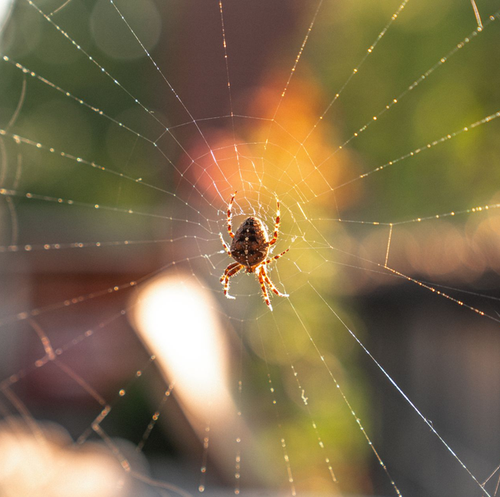
Quick Answer: An isolated trigger, cleared storm debris, a single web colony, or a dry, low-harborage yard usually fits a one-time visit. A pool cage, canal-adjacent lot, or heavily landscaped property usually needs the every-eight-week plan instead.
You call to book a spider treatment, and partway through, you are asked whether you want a single visit or ongoing service every eight weeks. If the answer is not obvious, you are not alone. For spiders more than almost any other pest, the right format depends less on how bad the problem looks today and more on what is actually generating it.
That distinction matters because spiders do not behave like ants or roaches. There is no colony to eliminate and no nest to seal shut for good. A spider shows up because two things line up in one spot: a structural feature suited to web-building and a nearby supply of the flying and crawling insects it eats. Whether that combination is a one-off or a standing condition on your property is what actually decides which service fits, not how many webs you counted this week.
Why Spiders Do Not Follow the Same Rule as Ants or Roaches
Ant colonies and roach populations regenerate from within: a queen keeps laying, an egg case keeps hatching, and a single visit that misses the source gets outrun by the next generation. Spiders do not work that way. Most species common to South Florida homes- house spiders, orb weavers along a lanai edge, wolf spiders in a garage- are not colonizing insects. Each one is an individual who claimed a spot because it offered shelter and food, and removing that individual does not leave behind a breeding population waiting to replace it.
What determines whether a new spider shows up in the same corner is whether the conditions that attracted the first one remain. A structural feature that only existed for a season, storm debris against a wall, an unused corner stacked with boxes, does not regenerate spider activity once it is cleared. A structural feature that is a permanent part of the property, a screened enclosure, a canal-front seawall, a dense shrub line against the siding, keeps drawing new insects and new spiders indefinitely, regardless of how thoroughly any single visit was done.
Signals That Point to a One-Time Visit
A single visit is the right call when the trigger is identifiable and does not repeat on its own. Look for these signals together, not just one:
A specific, one-off event: Storm debris piled against an exterior wall, furniture pulled out of long-term storage, or a shed or attic opened for the first time in a year creates a temporary spike in web-building spots that disappears once the debris is gone or the space is back in regular use.
Minimal standing harborage: A dry, well-kept perimeter with no screened structures, limited exterior lighting near entry points, and shrubs kept clear of the siding gives spiders little reason to return once the current population is cleared.
No repeat activity across more than one season: If this is the first time you have dealt with it, and nothing about the yard or structure changed, a single visit is treating a genuine, contained event rather than one instance of a recurring pattern.
Signals That Point to the Every-Eight-Week Plan
The opposite set of conditions calls for scheduled service instead of a single stop:
A screened pool cage or lanai: The structure combines the two things spiders need in one place, frame corners and screen seams for shelter, plus overhead lighting near the pool or spa that concentrates flying insects after dark. Clearing the webs changes nothing about either condition, so new webs typically reappear in the same corners within days to a couple of weeks.
A canal-adjacent lot or freshwater edge: canal corridors and lake or canal frontage support a steady population of midges, mosquitoes, and other small flying insects that does not meaningfully let up across the year here. Spiders are not drawn to the water itself; they are drawn to what the water keeps producing nearby.
Landscaping touching the structure: shrub lines, hedges, and mulch beds that run right up against siding, soffits, or a lanai screen give ground and web-building spiders continuous cover and a short commute to indoor entry points.
Repeat rebuilding across more than one season: a property with the same porch post or pool-cage corner rebuilding, spring after spring, is telling you the source was never a single event to begin with.
Check whether exterior fixtures near the pool cage or entry doors use standard white bulbs. Warmer, lower-draw bulbs pull noticeably fewer nighttime insects, and that alone can thin out what a recurring visit has to manage each round.
Why the Same Feature Can Fall on Either Side
None of the signals above works as a single yes/no switch because the same feature can point in different directions depending on its surroundings. A pool cage with no exterior lighting, set back from any canal or dense planting, and screened tight enough that little gets through is a much weaker case for ongoing service than a cage that sits fifty feet from a canal seawall with a spa light running most nights. The structure alone does not determine it; the combination of structure, lighting, proximity to water, and plant cover does.
The reverse also holds. A property with heavy landscaping but no pool cage, no nearby canal, and shrubs that get trimmed back from the siding every few months may generate less standing pressure than the landscaping alone would suggest. Reading your property means weighing how many of these conditions are actually present together, not treating any one of them as the whole answer.
Reading Your Own Property Before You Book
Three questions do most of the work. First, can you point to one specific thing that caused the activity, and is that thing now gone, cleaned up, or no longer present? Second, does the property have a pool cage, canal or lake frontage, or landscaping that runs against the structure, features that keep generating insect activity regardless of any single visit? Third, has this happened in the same spot before, in a prior season, or is this the first time it has happened?
One clear yes to the first question and no to the other two points toward a single visit. Any combination of the second and third points points toward the eight-week plan, since South Florida's climate does not give outdoor insect activity a real off-season, as a treatment schedule built around cold winters would assume. That is also why the plan runs every eight weeks here rather than the quarterly interval used in cooler climates: humidity breaks down a professional exterior residual in roughly three to four weeks, so a longer gap leaves the property unprotected for a stretch that local pressure does not allow.
Matching the Visit to What Is Actually Feeding the Activity
Neither format is the safer default. A single visit against a truly isolated event is the right call and does not need to be upgraded into something ongoing out of caution. A recurring plan against a pool cage, canal-adjacent lot, or shrub line touching the structure is the right call because those features do not stop producing insect activity between visits, no matter how thorough any one appointment is. The mistake worth avoiding is picking a format based on how the current infestation looks rather than on what is generating it, since a property with standing conditions will produce the same result again regardless of how well a single visit went.
Frequently Asked Questions
A properly done one-time visit should include checking for and removing egg sacs, not just clearing visible webs. A single brown widow egg sac can hold well over 100 spiderlings, and one female can produce up to roughly twenty sacs across her lifetime. A visit that clears the visible web but misses a sac tucked into a corner or under a ledge can look like a rebound within weeks, even though the treatment format was the right call; the miss was in execution, not in choosing one-time over recurring.
Not structurally. Moving from a single treatment into scheduled service later is just a matter of booking the next visit on a repeating interval instead of leaving it at one, and it typically starts with a fresh walk of the same harborage checklist, pool cage, canal edge, landscaping against the structure, rather than picking up where the first visit left off, since conditions on the property can shift in the weeks between. The more useful signal for making that call is whether activity returns to the same spot within a few weeks, even after the trigger is addressed, which points to an ongoing source rather than a one-off event.
Scheduled spider service is built around prey-insect reduction as much as direct web and spider removal, meaning technicians also target the outdoor lighting zones, perimeter plantings, and screened-structure edges that concentrate the insects spiders are feeding on, not only the exact corners where a web was last seen. Each round also includes a quick check of soffit-fascia gaps and screen-door thresholds, since those same gaps let spiders move from an outdoor harborage spot into the structure itself, and a property that keeps generating webs outside will eventually push some of that activity indoors if the gaps go unchecked. That is part of why a recurring interval outperforms repeat one-time visits on a high-pressure property: each round addresses the food source, the entry points, and the visible activity.
Not automatically. A single, enclosed, low-traffic area with no pool cage, canal frontage, or dense landscaping nearby can often be handled with a focused one-time visit plus a follow-up look, since an isolated void like a shed corner or one lanai panel has a short, specific list of spots to recheck rather than an entire perimeter. If the follow-up shows the same corner rebuilding despite the original trigger being cleared, that is the point to reconsider a recurring interval, not because the area is inherently high-pressure, but because something is still feeding it despite the visible cause being addressed.
Usually not to the same degree. The pull described above is tied to how close a structure sits to the actual waterline, not to being generally in a canal neighborhood. Once a house, fence line, or hedge row sits between your yard and the seawall, most of that direct insect traffic never reaches your property, since flying insects concentrate at the nearest rigid surface to where they hatch rather than traveling several lots inland. If your yard doesn't have direct water frontage, weigh it against the other every-eight-week signals instead: a pool cage, or landscaping that runs against the structure, rather than assuming canal-adjacent status applies just because the neighborhood backs up to water.
Often, yes, at least at first. A home with young, sparse plantings and little established shrub cover against the structure typically has less standing harborage than mature, established plantings do, which can make a single visit sufficient early on. That picture changes as landscaping fills in over a year or two; a property that needed only one visit when it was newly planted can shift into recurring-plan territory once hedges and mulch beds mature enough to sit against the siding.
Get your property matched to the right approach — a quick inspection tells you whether a one-time visit or the 8-week plan fits. Buggify Pest Solutions serves Boca Raton, West Boca, and communities across Palm Beach and northern Broward. Call Tyler: (561) 672-0200.
