

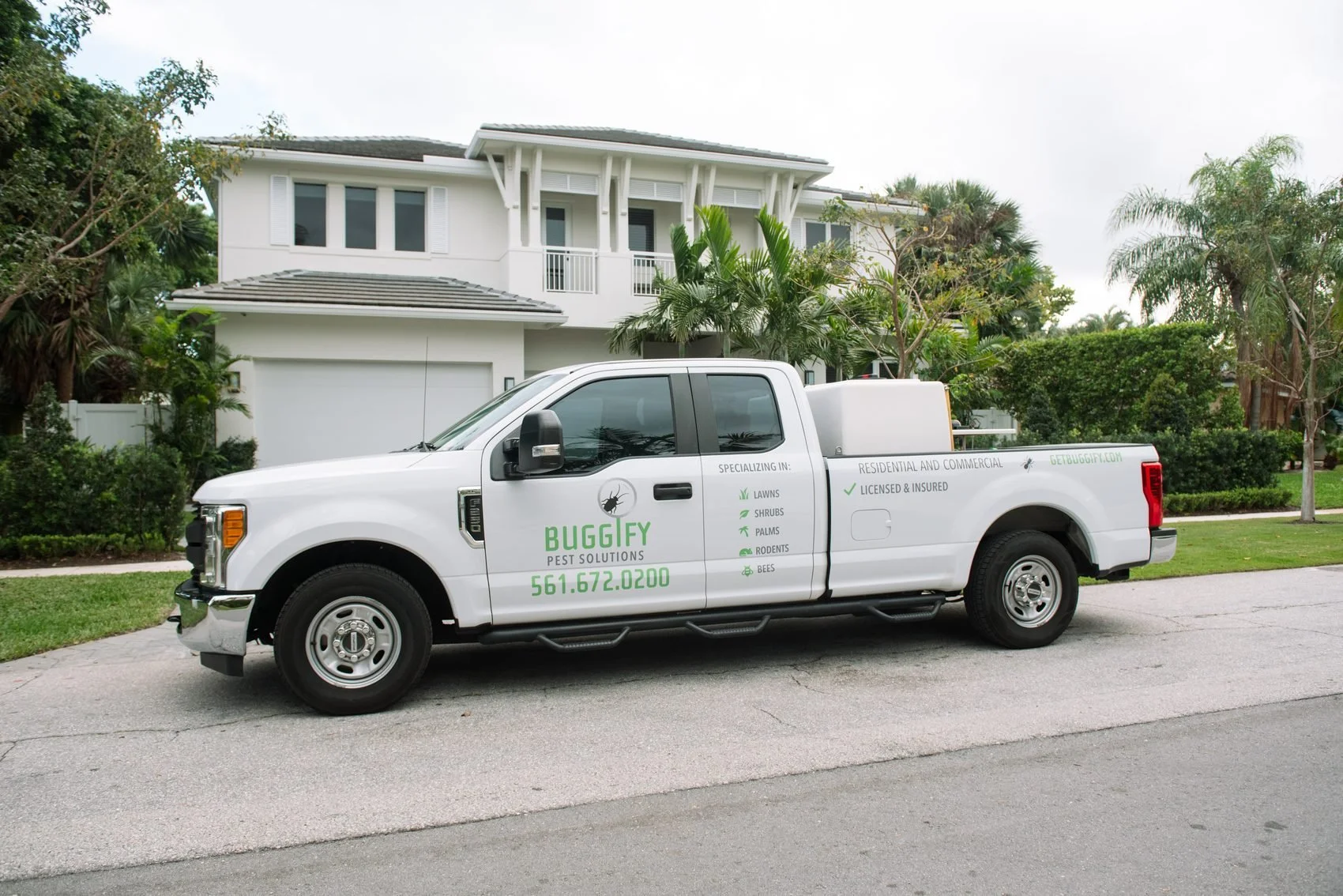
Boca Raton Rodent Control — Trap-Out Fast, Seal the Source, No Multi-Year Contract
Borescope inspection, 4–6 week trap-out, copper-mesh exclusion. No multi-year bait subscription.
Roof rats are the dominant rodent species across Boca, Parkland, West Boca, and most of the tile-roof inventory in southern Palm Beach County. The entry points are almost always at the roofline — separated soffit-fascia joints, plumbing-vent penetrations, and tile-edge gaps create the geometry roof rats need to access attics and wall cavities. Buggify clears the active population in a 4-to-6 week trap-out and then closes the entry points with copper mesh and polyurethane sealant, so the next generation doesn't have the same door to walk through.
every call himself
The trap-out-and-seal protocol, run by one local technician
Roof Rats Dominate Boca
Tile-roof homes have natural entry geometry — soffit-fascia gaps, plumbing-vent penetrations, roof returns. Norway rats are secondary (canal-adjacent only).
Borescope Attic Inspection
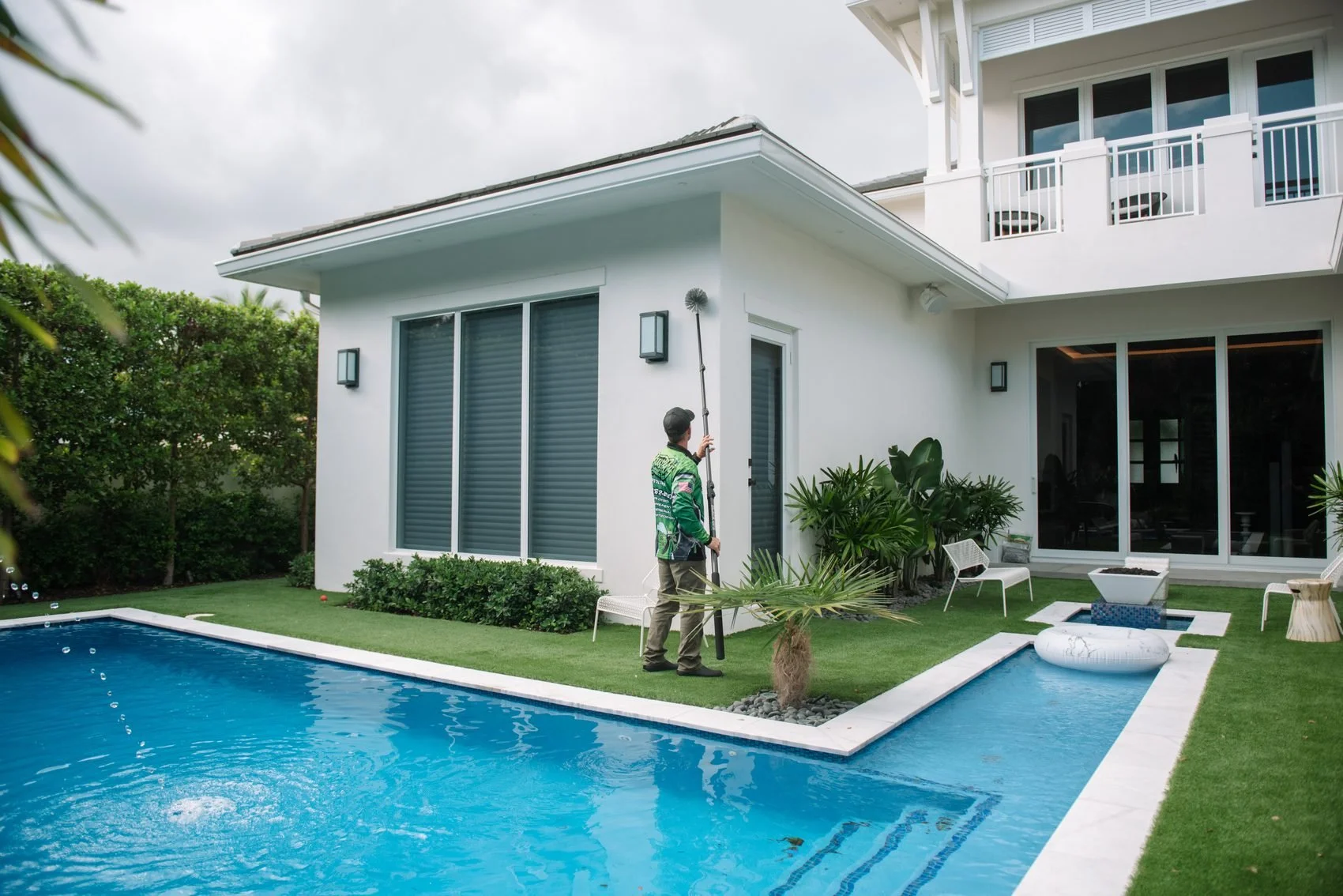
Tyler runs a borescope on the soffit-fascia line to find the actual entry point — not just the activity. Most companies skip this.
Trap-Out in 4–6 Weeks
Active populations cleared in a typical 4–6 week trap-out. National chains often quote a year of bait-only visits instead.
Copper Mesh + Polyurethane
Steel wool corrodes, foam gets chewed, caulk fails in the humidity. Copper mesh + polyurethane is the only exclusion that holds for years.
Same Technician Every Visit
Tyler runs the whole job — trap-out, monitoring, exclusion. No rotating route techs handing off the file mid-job.
No Multi-Year Bait Contract
Bills per visit. No auto-renewal — Tyler quotes the actual job, not a bait-refill subscription.
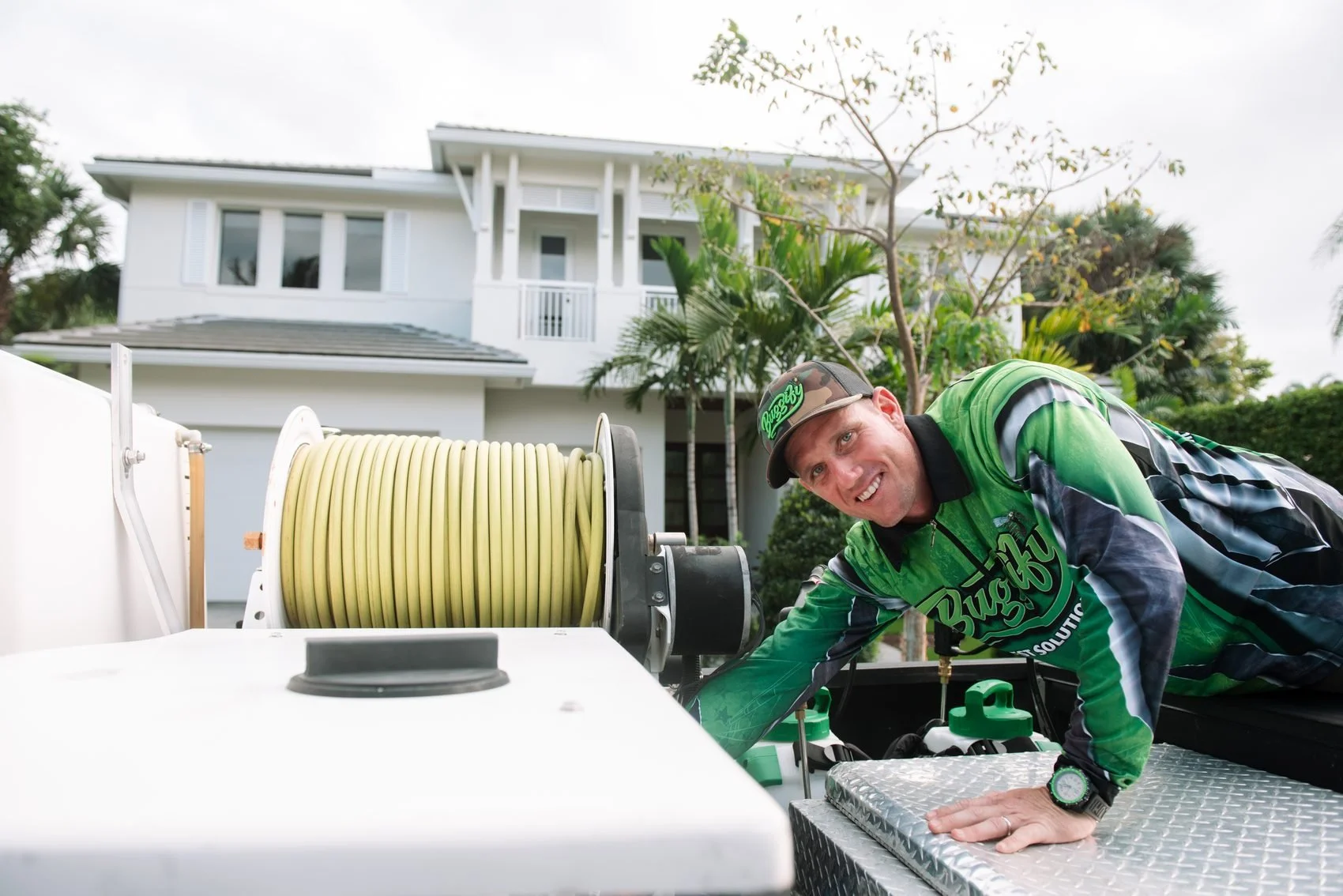
“Bait kills the rat you catch, but it doesn't close the door the next one walks through. Trap out the population, seal the entry with copper mesh, and the cycle ends — that's a one-time fix, not a subscription.”
National pest chains often quote rodent jobs as a year of quarterly bait-station refills — $80–120 per visit, four visits a year, indefinite renewal. The economics work for the company (recurring revenue, low labor), but the rodents never actually leave because the bait doesn't close entry points.
Roof rats keep coming back because the home keeps offering them an open door. Until the soffit-fascia gap, the plumbing-vent screen, or the roof-return penetration is sealed, the population resets every 21–25 days. Buggify's protocol: borescope the soffit line, find the active entry, trap out the existing population in 4–6 weeks, then close the entry with copper mesh + polyurethane. Trap-out + exclusion = one-time fix for most homes.
Every rodent issue Buggify handles
Roof rats, Norway rats, and house mice — each nests, travels, and enters differently.
Roof rats — the South Florida dominant species
Climb in via tile-edge gaps, soffit-fascia separations, plumbing vents, roof returns, and outdoor light-fixture penetrations. Nest in attics, soffits, and wall cavities above the ceiling. Active at night, mostly silent in walls. Treatment: borescope inspection → snap-trap in attic → exclusion at entry points. Bait-only protocols fail because the entry isn't closed.
Norway rats — canal-adjacent and ground-level
Larger and heavier than roof rats. Nest in ground burrows along canal banks, sea walls, and outdoor utility trenches. Enter at ground level — door sweeps, garage thresholds, slab cracks, exterior plumbing penetrations. Less common in Boca proper, more common in Lighthouse Point, Pompano canal-adjacent zones, and Boynton's Loxahatchee edge. Treatment: ground-level trap deployment + slab + exterior penetration sealing.
House mice — opportunistic indoor nesters
Smaller, faster reproductive cycle (litters every 19–21 days), and more difficult to exclude because they fit through gaps smaller than 1/4 inch. Common in older homes (pre-1980 single-family), garages, and storage rooms. Treatment: snap-trap deployment at activity zones + sealing at common penetration points (dryer vents, water-heater closet, pipe chases, electrical conduit).
Attic and wall-cavity exclusion (the long-term fix)
Post-trapping exclusion is the work that ends the cycle. Tyler uses copper-mesh insertion at soffit-fascia gaps, hardware-cloth screening at plumbing vents and gable vents, Tremco/GE polyurethane sealants at slab cracks > a credit card, and weather-stripping repair at garage threshold gaps. Exclusion is sometimes a separate job from the trap-out (depending on access and scope) and is custom-quoted by home size.
Exactly what happens, start to finish
Most pest companies won't tell you the plan. Here's ours — proven, source-first, and transparent — so you can spot anyone cutting corners.
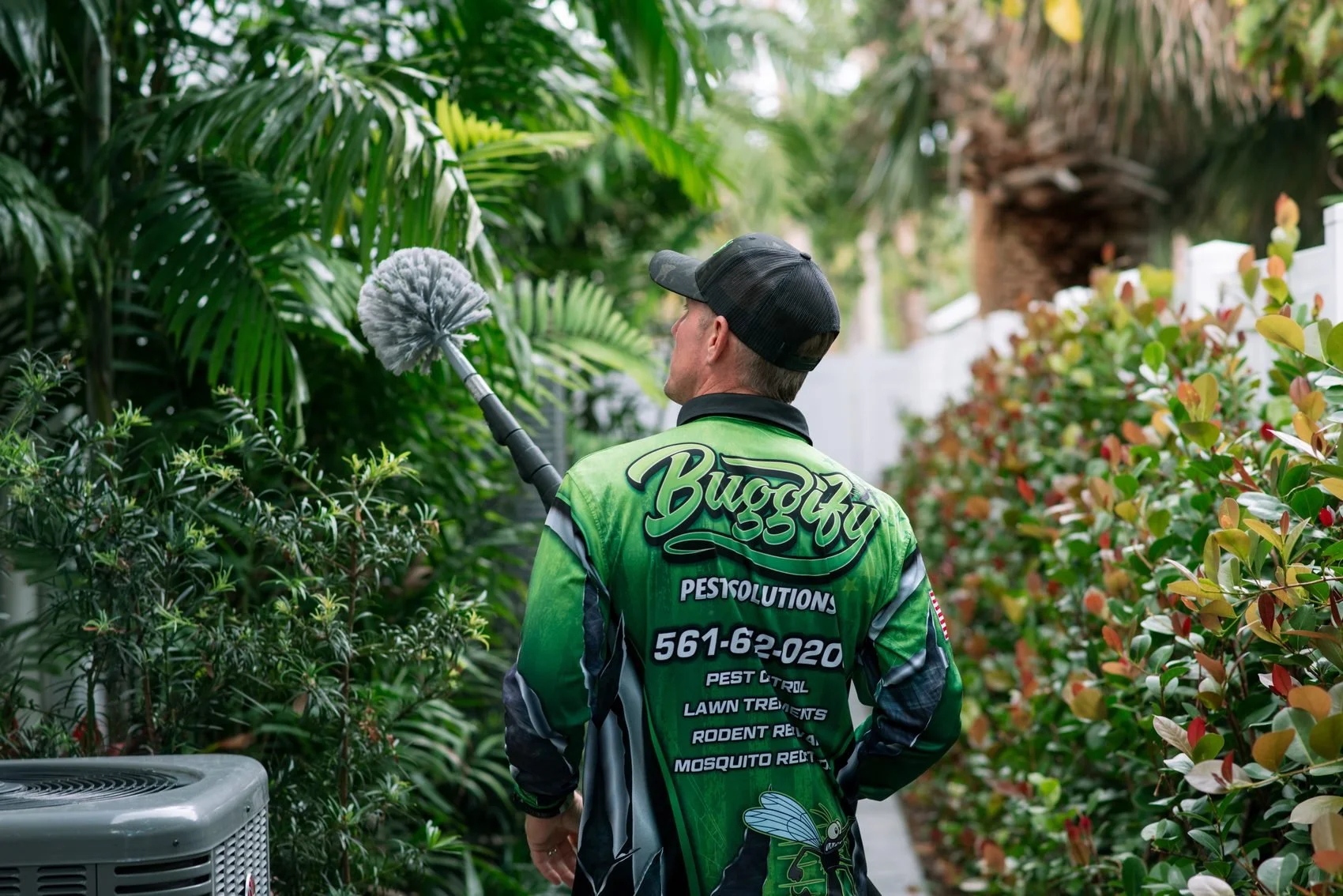
You call Tyler. He picks up.
Direct line, Mon–Fri 8 am – 5 pm. He asks what you're hearing (scratching, droppings, gnawing), where, and how long. Free phone estimate range, then a $175 on-site inspection if a borescope-level diagnosis is needed (credited when you book).
Borescope inspection — soffit-fascia line + attic.
Same-day or next-day, 45–90 minutes: borescope on the soffit line, an exterior walk to identify entry points, and an attic check for active nests and droppings. Findings reported on-site with photos.
Trap-out plan + same-visit exclusion estimate.
Tyler quotes the trap-out (4–6 wks roof rats, 3–4 Norway, 2–3 mice) plus a separate estimate for entry-point exclusion. Book either or both — most book both because that's what ends the cycle.
Snap-trap deployment + monitoring.
Snap traps at active nest zones; Tyler returns every 7–10 days to check, remove kills, and reset. Activity drops sharply by week two; most jobs are quiet by week four. Bait is a secondary tool, not the primary.
Exclusion sealing + post-job walkthrough.
Once activity ends, entry points are closed with copper mesh, hardware cloth, and Tremco/GE polyurethane. Final walkthrough shows exactly what was sealed. Limited-term warranty (30–90 days typical) on the exclusion work.
A local owner beats a route tech
Bi-monthly plans, every 8 weeks
Three tiers, same cadence. They differ in scope, not frequency. Bills per visit — cancel anytime.
Basic
General pest — perimeter, entry-point, crack-and-crevice.
- ✓Every-8-week service
- ✓Perimeter + entry-point treatment
- ✓Crack-and-crevice work
- ✓Free re-service between visits
Full Home Protection
The standard for typical Boca / Parkland / West Boca homes.
- ✓Everything in Basic
- ✓Interior on request
- ✓Rodent + ant monitoring
- ✓Termite-sign check + licensed WDO referral
Complete
Built for luxury, gated, or high-pressure properties.
- ✓Everything in Full Home
- ✓Mosquito barrier
- ✓Attic + exclusion monitoring
- ✓Lanai treatment + termite-sign referral
Borescope inspection, snap-trap deployment, and the first monitoring visit. $200–400 for typical mice / smaller roof-rat jobs; $400–600 for larger or multi-zone attic work.
Typical roof-rat exclusion (4–6 soffit-line entry points, copper mesh + polyurethane) $300–600. Whole-home exclusion across multiple penetration types $800–1,500.
Attic-level trap-out plus wall-cavity access (the harder rodent work), quoted on-site. Ongoing monitoring is bundled free into the Complete bi-monthly plan.
Ongoing rodent monitoring is bundled into the Complete and Full Home Protection bi-monthly plans. See the plan tiers →
13 cities, two counties, one local guy
Buggify runs out of the West Boca shop at 22617 Middletown Dr. Same-day service is routine in the core area when you call before noon.
Outer zones by appointment — Highland Beach, Wellington, Lake Worth Beach & Tamarac case-by-case. Travel surcharge may apply beyond a 15-mile radius.
Why Boca pest pressure isn't like anywhere else
National playbooks are built for four-season climates with a real off-season. South Florida has none — seven local factors that change the whole approach.
Tile-roof architecture = roof-rat capital
Boca, Parkland, West Boca, and Coral Springs are heavy tile-roof markets. Tile-edge gaps, soffit-fascia separations, plumbing-vent penetrations, and roof returns create natural roof-rat entry geometry. The roofline is the primary vector.
Canal-corridor Norway rat pressure
Lighthouse Point is canal-built; Coral Springs has 165 miles of canals. Pompano seawall properties and Boynton's Loxahatchee edge support Norway rats that nest in ground burrows and enter at slab level.
Year-round activity — no winter pause
National calendars assume winter indoor migration. South Florida has no real off-season — roof rats are active year-round, with a modest indoor uptick Nov–Feb when nights drop below 60°F.
Hurricane-season displacement (May–Oct)
Storms displace ground-nesting Norway rats into homes; lifted tiles and damaged soffits create fresh roof-rat entry overnight. Tyler's post-storm protocol includes an exterior walk after every named storm.
Pre-1978 home lead-paint constraints
Old Floresta, the Boca Highlands historic core, and Delray's pre-WWII bungalows contain pre-1978 structures where exclusion uses non-disturbing methods (copper-mesh insertion without drilling, EPA RRP-aware scope) with lead-paint disclosure.
Slab-on-grade construction
Most Boca-area construction is slab-on-grade with no basement or crawl space — so rodent entry is primarily through the roof, soffit, or slab perimeter. The protocol is calibrated to slab construction.
Lush landscaping = outdoor harborage
Heavy tropical landscaping, mulch beds, and palm-frond accumulation support rodents between indoor incursions. Yard-level habitat reduction is part of every rodent inspection, not just structural work.
Not sure what's driving it on your street?
Tyler knows the pressure block by block. Get a free read on the phone.
(561) 672-0200
The technical depth behind every visit
Seven things most route techs are never trained on — each tied to a real outcome for your home.
Borescope entry-point diagnosis
A borescope camera on the soffit-fascia line finds the active entry, not just the activity. This is the step most companies skip — and it's why bait-only protocols never end the cycle. Findings are photographed and shown on-site.
Why bait-only fails on roof rats
Roof rats reproduce every 21–25 days. Bait kills individual rats but doesn't close the entry, so the population resets faster than bait keeps up. Bait without exclusion is why the cycle repeats indefinitely — Tyler uses bait only as a secondary tool where access blocks trapping.
Trap-out timeline by species
Roof rats 4–6 weeks, Norway rats 3–4, house mice 2–3. Activity drops sharply by week two; most jobs are quiet by week four. Snap traps trap-and-hold so kills are removed at monitoring visits — no rodents left decomposing in walls.
Copper mesh + polyurethane exclusion
Copper-mesh insertion at soffit-fascia gaps, hardware-cloth screening at vents, and Tremco/GE polyurethane at slab cracks. Steel wool corrodes, foam gets chewed through, and caulk fails in the humidity — the copper-mesh combination is the only exclusion that holds for years.
Norway vs. roof rat protocol
Roof rats are climbers entering at the roofline; Norway rats are ground-nesters entering at slab level. Different trap placement, different entry-sealing focus. Getting the species right (and the entry geometry) is what makes the trap-out efficient.
House mouse exclusion — the 1/4-inch problem
Mice fit through gaps under 1/4 inch and breed fast (litters every 19–21 days). Exclusion targets dryer vents, water-heater closet penetrations, pipe chases, and electrical conduit — the small gaps rats can't use but mice exploit.
Attic sanitation & damage documentation
When rodent damage triggers an insurance claim (attic insulation, chewed ductwork), Tyler provides written inspection findings, entry-point photos, the trap-out timeline, and exclusion detail — the documentation adjusters need.
SDS available on request
Every product, every time — full transparency, no "proprietary blends."

homes served
What our customers say about Buggify
Verified 5-star reviews from Boca Raton, Parkland & Coral Springs families — straight from Google.
Rodent questions Tyler gets most
If yours isn't here, call (561) 672-0200 — Tyler answers directly.
Why can't I just use bait?
–Bait kills individual rats but doesn't close entry points. Roof rats reproduce every 21–25 days — the population resets faster than bait keeps up. Bait without exclusion is why the cycle doesn't end. Tyler uses bait only as a secondary tool where access prevents trapping.
Do you take care of the dead rats in my attic?
+Yes — snap traps trap-and-hold, so kills are removed at scheduled monitoring visits and disposed of off-site. Bait-only protocols leave rodents decomposing in walls and attics; the trap-primary approach avoids that.
How are the rats getting in?
+Roof rats: tile-edge gaps, soffit-fascia separations, plumbing-vent penetrations, roof returns, and light-fixture wall penetrations. Norway rats: door sweeps, garage thresholds, slab cracks, exterior plumbing penetrations. Mice: dryer vents, water-heater closets, and gaps under 1/4 inch around pipe chases.
What's the warranty on the exclusion work?
+A limited-term 30–90 day warranty on the sealing — if a new entry develops in that window, Tyler returns at no additional cost. Beyond it, copper mesh + polyurethane sealing typically holds 10+ years.
Are the bait stations safe for my pets and kids?
+Yes — Bell Labs tamper-resistant stations, child- and pet-safe, EPA-registered and locked, placed exterior-only at perimeter activity zones, not in pet-accessible interior areas.
Roof rats or Norway rats — how do you tell?
+Roof rats are agile climbers entering at the roofline (the dominant Boca species); Norway rats are larger ground-nesters entering at slab level, mostly canal-adjacent. Tyler IDs the species and the entry geometry, which determines trap placement and sealing focus.
Do I need the exclusion, or is trapping enough?
+Trapping alone clears the current population, but without sealing the entry the next generation walks in through the same gap. Trap-out + exclusion is the one-time fix for most homes — that's why most customers book both.
How much does rodent work cost?
+Initial visit $200–600 (borescope + traps + first monitoring). Exclusion sealing $300–1,500+ depending on the number of entry points. Attic/wall-cavity work $750–1,500. The free phone estimate gives a range; firm pricing follows the inspection.
Will they come back after the job?
+Not through the sealed entries — copper mesh + polyurethane holds for years. New entry points can develop over time, which is why ongoing monitoring is bundled into the Complete and Full Home Protection plans.
Same-day service available?
+Same-day inspection is routine in the core service area (Boca, West Boca, Parkland, Coral Springs, Deerfield Beach) when you call before noon. Outside the core, next day is typical.
Do you handle rodents for HOAs and commercial properties?
+Yes — commercial tile-roof buildings get the same borescope + copper-mesh + polyurethane protocol. See the commercial page; custom-quoted.
Three things Buggify will never do to you
Quote a real price without inspecting first
The phone gives a range; firm pricing comes after an on-site walkthrough, so the scope matches what's actually driving the activity.
Indoor spraying when the source is outside
Most South Florida pest pressure is driven by outdoor harborage. Indoor-only work is a short-term cover-up, not a fix.
Lock you into a long-term contract
Bi-monthly plans bill per visit and cancel anytime, no fees. Service should be based on need, not contractual obligation.
Call Tyler. Get a price range on the first call.
No contract, no sales pitch, no callback queue — in most cases, on the schedule the same day or next morning.