

What Professional Rodent Exclusion Actually Involves
You hear it first, usually after the house goes quiet. A scratch, then a pause, then a faster scramble along the joist above the guest room ceiling. In the morning you find the confirmation you didn't want: a scatter of dark, rice-grain droppings along the back of the pantry shelf, behind the cereal boxes where nobody looks twice. Maybe there's a greasy smudge low on the wall by the laundry room, right where a pipe passes through. That smudge is a rub mark, oil and dirt from a rat's fur, left in the same spot night after night because rodents run the same routes on repeat. None of this is random. It's a routine, and it means something in your house has become a reliable entry point.
Roof rats are the ones doing most of this. They're agile climbers, comfortable on power lines, tree limbs, and rooflines, and they're built to squeeze through openings that look far too small to matter. A gap the width of your thumb is enough. That's the part homeowners underestimate: an animal can compress its skull and rib cage to pass through any hole its skull will fit through, and a roof rat's skull isn't much bigger than a quarter. So the fix isn't really about traps or poison. It's about finding every gap that size or larger and closing it in a way that stays closed.
Why Steel Wool, Spray Foam, And Caulk Don't Hold
Steel wool gets recommended constantly as a rodent block, and it does work, briefly. Then humidity gets into the strands, rust sets in, and the wool loses its rigidity. A rat that's already invested energy chewing at a gap once will keep testing it, and softened, corroded wool eventually gives.
Spray foam fails for a different reason. It cures light and porous, and a rodent's front incisors never stop growing, so gnawing isn't optional behavior for them; it's maintenance. Foam offers almost no resistance, closer to chewing through packed cardboard than anything close to a barrier. Caulk has its own weak point: in a warm, humid climate, the substrate around a gap expands and contracts with heat and moisture more than caulk can flex to match, so it cracks and pulls away from the edges within a season or two, right where roofline and fascia board meet.
None of these are bad-faith fixes. They just aren't matched to the material problem: an animal with continuously growing teeth, working in a climate that never really gives it a slow season.
Where The Openings Actually Are
Before anything gets sealed, the gaps have to be found, and most of them aren't at eye level. Tile roofs create a particular geometry at the soffit and fascia line where the roof edge meets the wall, and gaps open up there as the roofing settles, the fascia boards warp, and the roof penetrations for vents and plumbing stacks age. Rodents follow that seam because it's covered, close to attic insulation, and rarely inspected by anyone standing on the ground.
A visual walk of the exterior catches the obvious stuff. The rest gets found with a borescope, a small camera on a flexible cable that can be threaded into a suspected gap or run along a soffit channel without tearing anything open first. That matters because plenty of entry points are hidden behind fascia trim or above a covered patio where a ladder and a flashlight won't tell you much. The borescope lets an inspection confirm what's an active route versus what's just a cosmetic gap that nothing is using.
Clearing The Rats Out Before Sealing Anything
Sealing every entry point on a house that already has rodents inside doesn't solve anything; it just locks the problem in with you. So the sequence matters. Interior activity gets addressed first, generally with a trap-out: placing traps at known runways and confirmed access points and monitoring them until activity stops. Only once that's done does exclusion work move to full sealing, because closing gaps while rats are still active indoors just traps them in your walls and attic, which creates an odor problem far worse than the noise ever was.
This is also where die-off risk gets managed. Sealing prematurely is one of the more common mistakes in amateur attempts at this: someone closes the visible holes, hears quiet for a week, and assumes it's solved, only to find out an animal was sealed inside a wall cavity.
What Copper Mesh And Polyurethane Sealant Actually Do
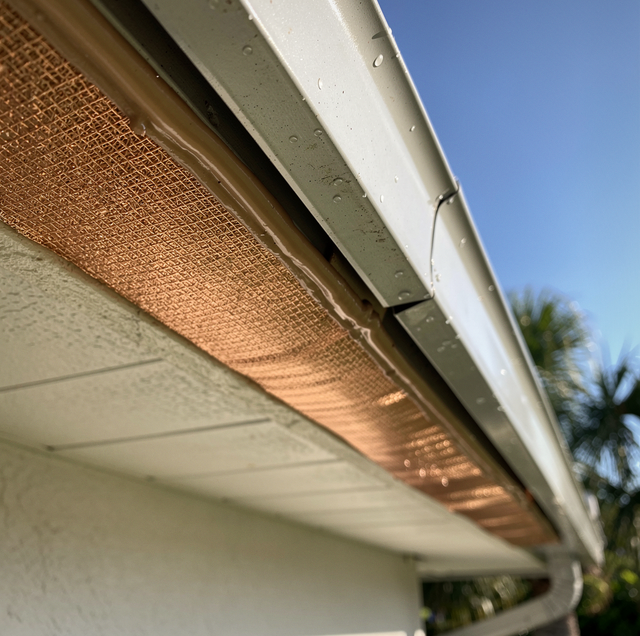
Once a space is confirmed clear, the sealing itself uses copper mesh packed into the gap first, then a polyurethane sealant applied over it. The mesh does the mechanical work. Copper fibers are dense enough that they resist chewing the way steel wool briefly does, but unlike steel wool, copper doesn't corrode in coastal humidity, so it keeps its shape and rigidity instead of turning soft over a rainy season. Think of it less like packing insulation and more like packing a wound: the fill has to hold its structure under repeated pressure, not just plug the opening once.
The polyurethane layer over the mesh does something caulk can't. It stays flexible through temperature swings and moisture cycles instead of hardening and cracking, so it moves with the fascia board rather than fighting it. Together, the two materials solve both failure modes at once: a physical barrier a rodent can't chew through, wrapped in a seal that doesn't degrade in the exact conditions that break down caulk and foam.
Why One Visit Rarely Finishes The Job
A four-season climate gives homeowners a break most of the year, because cold winters knock rodent activity down for months at a time and entry attempts slow to almost nothing. That reset doesn't happen here. Warm, humid conditions keep pest activity going close to year-round, so a house that got sealed in one season can still see new pressure at the same gaps, or new gaps opening elsewhere, in the next.
Outdoor harborage plays into this too. Mulch beds, screened patios, and the damp ground kept wet by irrigation lines tend to hold more rodent activity than anything happening inside a house, which means the population pushing against your exclusion work never really thins out on its own. That's the argument for monitoring after sealing rather than treating exclusion as a single event: stations placed at the perimeter, Bell Labs rodent stations among them, get checked on a schedule so any renewed pressure against the seal gets caught before it becomes a new gap.
What To Expect When It's Done
A finished exclusion job should leave you with documentation of exactly where every gap was found and how it was closed, not just a verbal assurance that it's handled. You should be able to walk the roofline and fascia with whoever did the work and see the copper mesh and sealant at each point, rather than taking it on faith. And you should expect a follow-up visit, since the honest answer to "is it done" for rodent exclusion is that it's done until the next weather cycle or the next roof repair opens something new, which is exactly why the monitoring stations stay in place after the sealing crew leaves.
Frequently Asked Questions
Most single-family homes require a single focused visit for inspection and sealing, though the total time depends heavily on roofline complexity. Homes with multiple roof penetrations, additions with mismatched rooflines, or older fascia boards with several soft spots take longer because each gap requires its own mesh-and-seal application rather than a single blanket treatment.
In many cases, yes. Because the borescope threads through soffit gaps and along fascia channels from outside, a large share of the inspection and confirmation work happens without walking the attic floor, which limits disturbance to insulation and stored items and reduces the mess involved.
Proper exclusion targets the specific gap an animal is using, not the entire soffit vent system, so airflow through the vents themselves stays intact. The goal is to close an unintended opening next to the venting, not to block the ventilation a roof needs to manage heat and moisture.
Fresh droppings appearing again after a sealing visit, new grease marks along a wall or beam, or scratching returning weeks later usually point to a gap that opened somewhere new rather than the original seal failing outright. Roof repairs, storm damage, and normal fascia settling are common causes of a fresh opening months after the first job.
Exclusion by itself only closes future entry; it doesn't remove animals already inside, which is why clearing activity through trapping always happens before the final seal goes on. Insulation that's been used as a nesting area for a while may also need attention afterward, since matted or soiled sections lose their effectiveness even after the rodents are gone.
Roof rats favor raised, off-the-ground routes, rooflines, trees, and utility lines, and they tend to nest above ground level rather than in basements or crawlspaces, as some rodents do. That changes where the evidence shows up first, usually the attic and upper walls, and it's part of why soffit and fascia gaps matter far more for this pest than ground-level foundation gaps do.
Schedule a rodent exclusion inspection — get a borescope check of your soffit, fascia, and roofline before the next gap turns into an active entry point. Buggify Pest Solutions serves Boca Raton, West Boca, and communities across Palm Beach and northern Broward. Call Tyler: ( 561)672-0200.
