

Rat Poison In The Attic: Why It Often Makes Things Worse
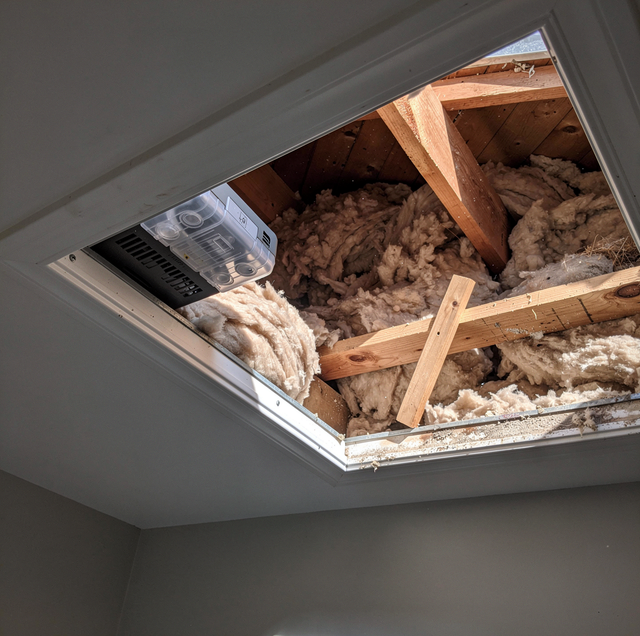
Rat poison in the attic looks like the fastest fix available: no traps to check, no crawling through insulation, just a set of bait stations and a wait. For a lot of homeowners, it also looks like the end of the story: the scratching stops, the droppings stop appearing, and the assumption is that the problem is resolved. What actually happens next depends entirely on where that rodent goes to die, and that part is rarely as simple as the bait packaging implies.
Where A Poisoned Rodent Actually Goes To Die
Anticoagulant baits do not work instantly. A rodent that takes a lethal dose keeps moving normally for several days before it weakens, and in that window it does not head for open ground or a spot that is easy to check. It retreats toward whatever felt safest before it got sick: deep insulation, a wall void behind a bathroom vanity, the narrow gap between a soffit return and a roof truss, spaces built for hiding, not for retrieval. A homeowner who sets bait on a Friday has no way of knowing where that animal will be by the following Wednesday, and once it is gone, there is rarely a clean way to check, short of cutting into a ceiling or wall.
The Smell That Shows Up Days Later
Decomposition in an enclosed cavity does not remain contained as it would outdoors. Within a few days, the odor works its way through drywall seams, recessed lighting fixtures, and return-air vents, and by the time it is noticeable at floor level, the source can be anywhere along several feet of joist bay. Locating it usually means cutting drywall in more than one spot, since the smell travels along air paths rather than straight down from wherever the carcass actually sits. What started as a scratching noise that would have taken one focused evening to trace to an attic gap can turn into a multi-day search through finished ceiling, guided mostly by which room smells worst that morning. Flies and carpet beetles typically show up on their own schedule once the carcass reaches a certain stage, adding a second problem to the odor.
Secondary Poisoning: The Risk Bait Creates For Pets And Wildlife
A poisoned rodent that reaches open ground before it dies does not cease to be a hazard once it stops moving. Owls, hawks, snakes, and neighborhood cats and dogs all treat a slow, disoriented rat as easy prey, and anticoagulant residue passes from the rodent's tissue into whatever eats it next. This pattern is known as secondary poisoning: predatory birds and mammals that regularly feed on rodents can accumulate the same compound a homeowner intended only for the rat living in the attic. A dog or cat that finds a dying or dead rodent in the yard faces the same exposure route on a smaller scale. None of this requires the pet or wild animal to get anywhere near the bait station itself; the risk travels forward through whatever eats the poisoned rodent next.
What To Do If Bait Is Already Down
For a homeowner who already set bait before weighing any of this, the priority shifts from prevention to damage control. Keep pets and kids away from the attic access point and any spot where a dying rodent might surface outdoors, since a slow-moving animal is easier for a curious dog to catch than a healthy one. Avoid handling any bait, bait station, or rodent carcass with bare hands, and bag anything found for disposal rather than leaving it where another animal could scavenge it. Running the attic fan or opening a roof vent for a few extra hours a day can help move odor out faster once decomposition starts, though it will not stop the smell from building if the carcass sits in an enclosed void. If an odor develops and does not fade within a week or so, that is usually the point to bring in someone who can trace it to the source rather than waiting it out.
Why Poison Never Touches The Entry Point
Even a bait program that works exactly as intended- no odor problem, no secondary exposure- only removes the rodents that are already inside. It does nothing about the gap in the soffit, the gnawed vent boot, or the fascia joint that let the first one in, and that opening does not close on its own once the current population happens to die off. A new rodent following the same scent trail and the same physical route can move in within days of the old one clearing out, especially where breeding does not slow down for a real cold season. Poison treats the symptom in a loop: remove what is inside, wait for the next one to arrive, repeat, without ever addressing why the attic kept being found in the first place.
What Actually Stops New Rodents From Moving In
Ending that loop means dealing with the opening itself, not just whatever is using it this month. That starts with a full inspection of the roofline, attic vents, and foundation to identify every point where an animal can get from outside to inside, since a single visible gap is rarely the only one on a given roofline. Openings with no current activity get closed with materials that resist gnawing, since caulk and foam alone give a rodent something to chew through in one sitting rather than any real resistance. Any opening still showing fresh activity gets handled with trapping first, so nothing ends up sealed inside a wall void by accident, and monitoring continues until that activity has fully stopped before the last gap gets closed for good.
Sealing, Trapping, And Monitoring: How The Three Fit Together
None of the three steps- sealing, trapping, and monitoring- accomplishes much on its own. Sealing without confirming the interior is clear risks locking an animal inside, the same odor outcome poison can create, just by a different route. Trapping without sealing removes what is currently there and leaves the door open for a replacement. Monitoring after the fact, usually with tamper-resistant exterior stations checked on a set schedule, is what confirms whether the seal is holding or whether a new gap has opened somewhere else on the property, since roof settling, storm damage, and routine repairs can all create a fresh opening months after the first job wrapped up. Together the three steps address the population currently inside, the route it used to get there, and whatever pressure keeps building against the structure afterward.
When Poison Still Has A Place
None of this means rodenticide has no legitimate use. Tamper-resistant exterior bait stations, placed and checked on a schedule by a licensed operator away from the house itself, can help manage pressure at the perimeter without putting bait anywhere near an attic void or a spot where a pet could encounter a dying rodent. The distinction is placement and monitoring, not the product itself: bait set outdoors in a locked station and checked on a routine behaves very differently than bait set loose in an attic with no way to track where the animal goes afterward.
A quiet attic is not the same thing as a solved problem. The gap that let the first rodent in stays open until something closes it, and until that happens, poison, traps, or nothing at all will not change the outcome.
Frequently Asked Questions
Most modern anticoagulant baits take anywhere from three to seven days to work, by design. A slower kill reduces the chance that surviving rodents associate the bait with sudden danger and avoid it, but that same delay is exactly what gives a poisoned animal time to retreat into a hard-to-reach void before it dies.
The odor itself is unpleasant rather than a health hazard for most people, though it often signals a secondary issue: the site draws flies and carpet beetles, and anyone with respiratory sensitivity may find the smell aggravating in a closed room. The bigger practical concern is usually the drywall or insulation damage involved in locating and removing the carcass.
The risk is lower, not zero. A tamper-resistant station keeps bait away from pets and non-target animals, but a rodent that feeds there can still travel some distance before dying, and any predator or scavenger that finds it afterward faces the same secondary exposure. Placement and monitoring schedule matter more than whether the station itself is secure.
Sometimes, if the odor is caught early and the general location can be narrowed down, insulation and drywall usually have to come out to reach it, and there is no guarantee the first attempt finds the right spot. A few feet of missed insulation or an adjacent joist bay is enough to keep the search going for days.
Because the entry point that let the first rodent in is still open. Bait removes the current population but does nothing to the physical gap, and a scent trail left behind at a soffit joint or vent boot is often enough to draw the next rodent to the same route within days or weeks.
Mechanical traps eliminate the exposure risk associated with a poisoned carcass, since there is no residue to pass along if a pet or wild animal finds it, and the outcome is immediate rather than delayed by several days. Paired with sealing the entry point afterward, trapping addresses both the current population and the reason it got in without the die-off uncertainty that comes with bait.
Schedule a rodent inspection — get every entry point mapped and sealed so that poison is never the only line of defense in your attic. Buggify Pest Solutions serves Boca Raton, West Boca, and communities across Palm Beach and northern Broward. Call Tyler:( 561)672-0200.
