

Why Rodent Season in South Florida Isn't Seasonal
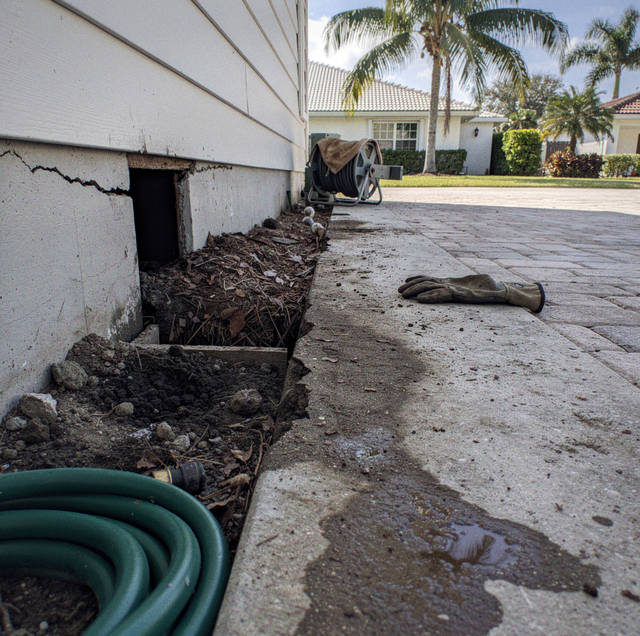
Quick Answer: Rodent activity in South Florida tracks local conditions rather than a time of year: changes in nearby food, ground disturbance, a new gap in the building envelope, a quieter interior, and reproduction within an already-present population.
Ask most homeowners when to expect a rodent problem and the guess usually follows the rest of pest control: pressure builds when conditions outdoors are favorable, and it eases once they turn. Apply that logic to rats and mice and the pattern falls apart almost immediately. Rodent calls in South Florida don't cluster the way ant or mosquito activity does, and the reason has nothing to do with what the weather outside is doing on a given week. A rat or mouse already living near a structure responds to what changes at that structure, not to a shift most people indoors never even register. Understanding rodent season in South Florida starts with setting the calendar aside and looking at what actually moves the needle: a food source, a disturbance nearby, an opening in the building itself, how much is happening inside, and how fast the population already present is growing.
Why Pest Pressure and Rodent Pressure Don't Move Together
Most common pest activity tracks the outdoors directly. Ants forage more when conditions favor foraging, and mosquitoes breed where standing water sits. Those populations respond to broad environmental conditions that move across an entire area at roughly the same pace, so pest pressure tends to rise and fall together across a neighborhood.
A rat or mouse living near a house does not answer to the same signal. It responds to conditions at a specific property: what food is available there, whether the structure has an opening, and how much activity occurs inside it. Two houses built and planted the same way can run on completely different timelines, because the actual triggers are local to each building rather than shared across a block. Without an outdoor stretch that pushes rodents toward buildings on a predictable schedule the way some regions get, there isn't a single rodent season in South Florida the way there's a recognizable mosquito season. What replaces it is a set of independent triggers, each capable of starting or stopping activity on its own.
A Food Source That Changes
A structure's rodent pressure is only ever as stable as the food sitting near it, and what's near it rarely stays fixed. A reliable source can disappear: cleared brush, a removed compost pile, a construction dumpster that gets hauled away, a neighboring property changing hands and changing habits. When that happens, animals feeding elsewhere redirect toward the nearest remaining option, which can be a house that has never received a single complaint before.
The reverse happens just as often. A new source can appear where nothing drew activity previously: a stack of discarded materials, an unattended pile of yard waste, a change in how trash gets staged before pickup. Either direction moves independently of the outdoors, because what changes is what a person or a property is doing, not what the air is doing.
If a food source is being cleared out and anything on it shows gnaw marks, treat the removal as a gloves-and-bag job rather than a bare-hand one. Gnaw damage means something has already been feeding there.
Construction or Grounds Work Nearby
Ground-level shelter is constantly destroyed, and every time it is, whatever was living in it needs somewhere else to go immediately. Land clearing, a fence replacement, an irrigation trench, a dumpster dropped on a neighboring lot, or dense plantings pulled out and replaced all remove harborage a rodent population had been using without anyone noticing it was there.
The animals displaced by that kind of disturbance don't wait for anything. They move toward the nearest cover and food the same day, and the nearest structure is frequently a house that was never part of the original problem. It's one of the few triggers actually tied to activity nearby rather than to anything happening at the house itself, which is why a property with a spotless yard and a sealed foundation can still see a sudden increase driven entirely by what started next door.
If land clearing, fencing, or heavy yard work starts on a neighboring property, take a minute to look along your foundation line and at what is visible from the ground; it can catch a new entry attempt early.
A Building Envelope That Develops a New Gap
Exterior materials move, weather, and age on their own schedule, independent of anything happening around them. A seam that has held for a long stretch without incident can open through ordinary wear alone: a fastener working loose, a panel shifting slightly with repeated expansion and contraction, a joint that was never quite tight to begin with finally giving a little more. None of that requires a storm to set it off.
That matters because a rodent population working the perimeter of a house doesn't need a large opening, and it doesn't need to find one on any particular date. It needs an opening to exist at the moment it is tested, and a building is tested constantly by animals already moving along its edges. A gap present but unused for a long stretch can start carrying traffic the moment something on the other side of it changes, with the opening itself contributing nothing new.
An Interior That Turns Quieter or Emptier
How much is happening inside a structure changes how that structure behaves as a target, independent of its food or its openings. A household traveling for an extended stretch, a room that stops getting used, a property sitting between owners or tenants, an adult child moving out and a bedroom going unused: each reduces the routine disturbance that would otherwise interrupt movement near a wall void, an attic access point, or a garage corner.
A rodent exploring toward a structure is weighing exposure the whole time it's moving. Regular foot traffic, doors opening and closing, and ordinary household noise all function as friction against that exploration, whether or not anyone living there thinks of it that way. Reduce that friction over a given stretch of days, and an approach that would have been interrupted before has a better chance of finishing.
Population Turnover Inside an Existing Colony
A structure doesn't need new arrivals to see activity jump. Roof rats reproduce roughly every 21 to 25 days, which means a population that started with one or two cautious animals moving carefully through a space can become a larger, considerably less careful group within a span of weeks. That escalation runs on the colony's own reproductive clock, not on anything happening outside the building.
A young litter old enough to move independently behaves nothing like the animals that established the original route. It hasn't learned where the disturbance is or how to route around a section of the attic that gets checked regularly, and it moves with more noise and less caution than the adults who have been there longer. What reads to a homeowner as a sudden worsening is often simply the same population getting larger and more active, with no new openings and no new food.
What This Means for When to Act
None of the triggers above is tied to a date, which means the useful signal was never a time of year to begin with. It's the event itself: a dumpster showing up next door, a food source disappearing or appearing where nothing drew activity before, a section of the house sitting quieter than usual, a sound that wasn't there last week. Each is a reason to look, independent of any other one and independent of when it happens to occur.
Treating any one of those events as the trigger, rather than waiting for a particular stretch of the year to think about it, is what keeps a small issue from becoming a larger one. A structure checked when something changes nearby catches a population early, while one checked only on an assumed schedule can go a long stretch with activity building unnoticed in between.
Frequently Asked Questions
Not on its own. Snap traps trap-and-hold, so a catch stays on the device until it is removed at a monitoring visit, and those visits fall every seven to ten days rather than daily. Quiet between two of them is a gap in observation, not a reading on whether the route is still carrying traffic.
Because the trigger itself was shared, not because the weather was. A drainage or paving project, a community-wide planting replacement, or a holiday stretch with several houses standing empty all fire the same local condition at several addresses at once. The clustering is a human schedule showing through, and it disappears the following year if that schedule does not repeat.
A nearby disturbance, such as a repair, a trap being set, or an unfamiliar noise on one side of a structure, can push an existing population toward a different section of the same building, a soffit void, or a garage corner instead of the original attic space. The original complaint goes quiet without the animals having gone anywhere.
Because what varies is not only the structure; it is who is around to notice. A household that is home often, uses the room under an attic access point daily, or walks the yard regularly catches early signs that a neighbor with a quieter routine simply has not crossed paths with yet. The same pressure surfaces as two calls with a long gap between them.
Activity on a job already underway normally drops sharply by week two, with most homes quiet by week four. Fresh displacement from a neighboring lot partway through shows up as that curve flattening or ticking back up instead, which reads as new animals arriving on an established route rather than as the closures already completed coming undone.
Because of where that location sat in the sealing order. Everywhere inactive gets closed first, and the route in habitual adult use is held open on purpose and taken last, so a spot that surfaces after the first closure is usually a route that was already in occasional use and was never the one being held. It is a sequencing question about which opening went last, not evidence of a second population arriving.
Notice one of these triggers at your property — schedule an inspection before a small population becomes a large one. Buggify Pest Solutions serves Boca Raton, West Boca, and communities across Palm Beach and northern Broward. Call Tyler: (561) 672-0200.
