

Seal Rodent Entry Points First? Why Order Matters
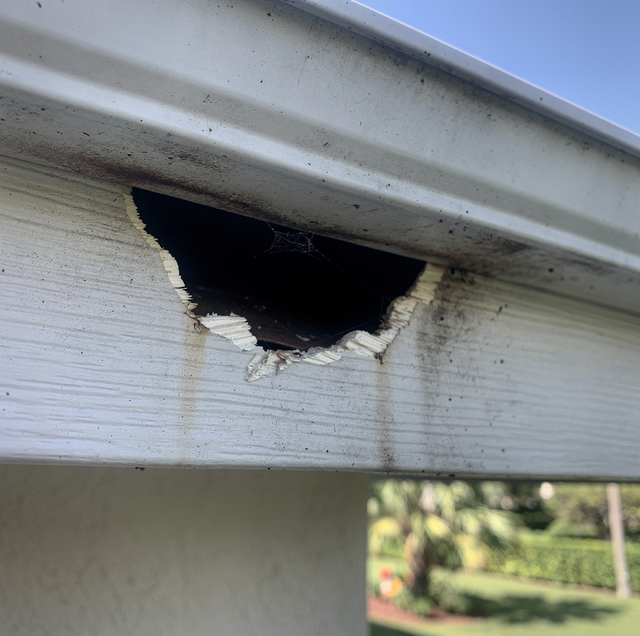
You finally found it: a gap where the soffit meets the fascia, chewed wider at the edges, with a dark smear of grease along the wood where something has been squeezing through for weeks. Every instinct says to grab a tube of sealant and close it before another rat gets the same idea. That instinct is not wrong, but acting on it immediately, before you know what is already inside, is one of the more common mistakes in do-it-yourself rodent control.
Two Instincts, Two Opposite Risks
There are two competing ways to approach a known entry point, and each solves a different half of the problem while introducing a new risk if pursued alone. Sealing first stops the next rodent from getting in, but it does nothing about the ones already living in the attic or wall void. Trapping first removes the animals that are already inside, but leaves the door open for a replacement to move in the same week, sometimes the same night. Neither approach, on its own, actually ends the problem; they only look complete because each addresses the half you can see.
The Case For Sealing Every Gap Immediately
Closing an opening the moment you find it has real logic behind it. Roof rats and mice are persistent, and a proven route back into a warm, dry attic gets used again and again once an animal has learned it. Every day a known gap stays open is another chance for the current population to bring in more rodents through the same route, or for a female that has already nested nearby to expand the colony. From a pure prevention standpoint, closing the gap the day you find it is the safest move you can make against new activity.
What Happens When You Seal Too Soon
The problem is that sealing does not distinguish between a gap nothing is currently using and a gap that is a live thoroughfare for animals already inside your attic or wall cavity. Rodents are territorial and tend to keep working a network of two or three routes rather than one; sealing the entry they are using traps whatever is on the interior side at that moment. A cornered rat or mouse does not sit quietly. It chews through insulation, through drywall, occasionally through low-voltage wiring, looking for a way back out. If it cannot find one, it dies in the wall void, and what follows is worse than the original noise: a smell that builds over several days as decomposition sets in, plus the secondary pests, flies and carpet beetles among them, that arrive to feed on the remains. A seal-first mistake frequently turns a manageable scratching problem into a much harder one to locate and fix.
How Professionals Sequence Exclusion And Trapping Together
The reason a professional approach avoids this trap is sequencing, not a different set of tools. The process starts with a full inspection of the roofline, soffit, fascia, vents, and foundation to map every opening, not just the one gap a homeowner happened to notice. From there, most openings that show no current activity get sealed right away, since closing a route nothing is using carries no risk of trapping anything. The one or two openings that show fresh droppings, grease marks, or gnaw damage, meaning something is actively using them, get handled differently: traps go in first, placed along the confirmed travel path, and monitoring continues until activity stops for a full cycle with no new droppings and no fresh gnawing. Only then does that last opening get permanently closed. The order is not sealed-then-trap or trapped-then-sealed; it is sealed everywhere inactive, then trap the active route, then seal that one last.
Finding Every Entry Point Before You Decide Anything
Deciding which gaps are safe to close now and which need trapping first depends entirely on reading the signs correctly, and this is where most DIY efforts fall short simply from missing openings rather than misjudging the ones they find. Grease and rub marks along a beam or gap edge result from body oil transferring onto the surface each time an animal squeezes through the same spot, and a dark, consistent mark indicates regular, current traffic. Gnaw marks with rough, splintered edges on wood, or a chewed corner on vinyl siding, usually mean the gap started small and was worked open over time. Fresh droppings clustered directly beneath an opening, rather than scattered old ones with no new additions, are among the clearest signals of whether a route is still active. A technician doing this properly will also run a borescope, a small camera on a flexible cable, into soffit returns and wall voids that cannot be checked by eye, because a home can easily carry several separate entry points on one roofline and a homeowner who patches the single gap they found often leaves two or three others untouched.
The One-Way Door Method: Sealing Without Trapping Anything Inside
There is a middle path that resolves part of the conflict between the two instincts: a one-way exclusion device, sometimes called a check valve or excluder, installed directly over an active opening rather than a solid seal. The device is built with a hinged flap or spring-tensioned door that swings out when an animal pushes to exit but resets to a closed position before it can be pushed back in from outside. Fitted correctly over the one gap still showing activity, it lets whatever is currently inside leave on its own schedule without letting anything new take the same route back in. It is not a substitute for finding every opening, and it is not foolproof: a gap that is too irregular in shape, or debris that props the flap open, will defeat it. But used on the confirmed active route while every other opening gets a permanent seal, it removes most of the timing risk without requiring a trap to catch every last animal first.
Materials That Actually Hold Up To Gnawing
Once an opening is confirmed clear, either because it never showed activity or because trapping and monitoring closed it out, what you pack it with matters almost as much as the timing. Caulk and expanding spray foam alone look like a finished repair, but a determined rodent can chew through both in a single sitting; neither has any built-in resistance. Steel wool stuffed into a gap works for a few weeks, but in a humid climate it rusts and breaks down within a season, leaving a soft, crumbling plug that no longer blocks anything. The combination that actually holds is a stainless or copper mesh packed tightly into the gap first, since rodents cannot get a grip to chew through the woven metal, followed by a polyurethane sealant over the top that expands to fill irregular edges and stays flexible rather than cracking the way rigid caulk does over a season of expansion and contraction. That two-part approach is what turns a sealed gap into one that stays sealed.
Weighing Convenience Against The Risk
If you are working alone on a weekend and only have a few hours, the temptation is to seal everything you can reach and call it finished, and for openings with no current sign of use, that is a reasonable call. The risk calculation changes the moment you find grease marks, fresh droppings, or gnawing at the edge of a gap, because that is the one spot where speed works against you instead of for you. Slowing down on just that single opening, confirming activity has stopped before you close it, costs a little patience against the alternative of chasing a smell through drywall two weeks later.
Frequently Asked Questions
Most professional trap-outs run for one to two weeks of continuous monitoring with no new droppings, no fresh gnawing, and no bait or trap activity before the final gap gets closed. A single quiet night is not enough, since rodents can go a few days between visible activity even while still present in a void.
Yes, and the difference comes down to skull width rather than overall body size. A mouse can flatten its skull to fit through an opening about the width of a dime, close to a quarter inch, while a rat needs a gap closer to a half inch, about the size of a quarter, because its skull does not compress nearly as much.
Reopen that section as soon as you can reach it. A rodent trapped behind a fresh seal will chew through drywall, insulation, and occasionally low-voltage wiring within 24 to 48 hours trying to find its way out, and the damage from that escape attempt is often worse than the original opening ever was.
They can, usually for one of two reasons: the opening is too irregular in shape for the flap to seat flush, leaving a gap around the edge, or debris such as leaves or nesting material props the door open, preventing it from swinging shut. A properly fitted device on a clean, regular opening rarely fails to reset.
Only short-term. It resists gnawing better than foam alone for the first few weeks, but in a humid climate the fibers rust and compress within a season, leaving a plug soft enough for a rodent to work through again. It functions better as a temporary measure than a finished repair.
More than most homeowners expect. It is common for a single roofline, once soffit returns, fascia joints, vent screens, and plumbing chases are all checked with a borescope, to show three to eight separate points with some sign of prior or current rodent access, even when only one was visible from the ground.
Sealing and trapping are not competing strategies; they are two steps that only work in the right order. Close what is already quiet, trap what is still moving, confirm the activity has stopped, then finish the last opening. Do it out of order, and you either invite the next rodent in or shut the current one inside a wall you cannot reach.
Schedule a rodent exclusion inspection — get every entry point mapped with a borescope check before anything gets sealed or trapped, so activity is confirmed clear before the last gap is closed. Buggify Pest Solutions serves Boca Raton, West Boca, and communities across Palm Beach and northern Broward. Call Tyler:( 561)672-0200.
