

The Soffit-Fascia Gap Where Roof Rats Actually Get In
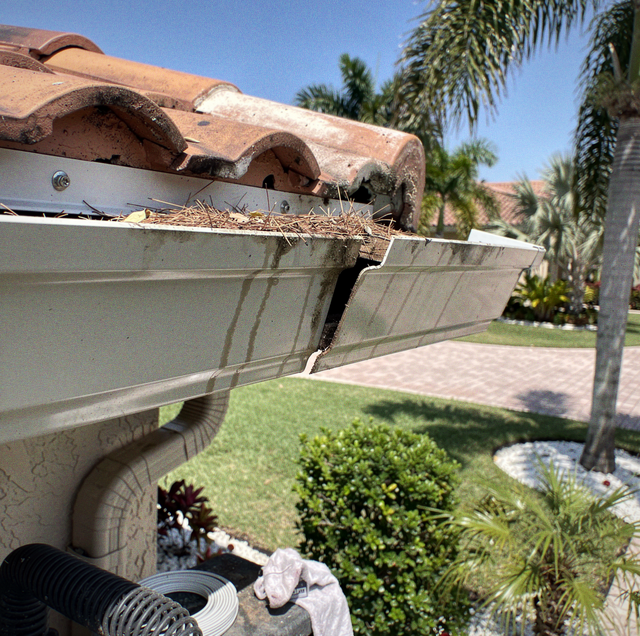
Quick Answer: The soffit-fascia seam widens through several mechanisms: the assembly tolerance it starts with, fascia movement and fastener backout, soffit panel deflection at the J-channel, water softening the fascia from behind, and prior repairs that closed the wrong surfaces.
A gap at the soffit-fascia line looks about the same from the driveway, whichever way it opened, and the way it opened determines which closing it takes. Small openings repeating at regular intervals along a run call for a different repair than one dropped panel corner, and both differ again from a seam a previous repair covered rather than closed. Sorting those apart is the actual work. The seam runs the full perimeter of the house, and only a short section of it has to open wide enough to matter.
How the Eave Assembly Leaves This Seam Open
A soffit panel is cut to a run length and slid into a J-channel fastened along the wall, and a matching channel is let into the back of the fascia. That channel receives the panel edge; the fascia itself is not what the panel locks against. A tight fit depends on the panel matching that exact run length and the two channels sitting parallel, and framing dimensions vary enough from one section of eave to another that an exact match is the exception. That is the starting condition on most panel-soffit eaves, before a single storm, re-roof, or wet season touches the house.
Fascia boards also butt together wherever one run ends and the next begins, a second built-in seam layered onto the soffit-panel tolerance. A final walkthrough checks for visible daylight and square trim, not whether a channel could pass a rodent, so a joint that looks finished from the ground can still carry a working gap behind the paint line. That is not sloppy work. The standard the joint was built to, and the standard a rat needs it to fail below, are simply different standards.
Fascia Board Movement and Fastener Backout
A fascia board is fastened into the end grain of the rafter tails, which holds a fastener less securely than face grain, part of why this joint loosens faster than flatter trim elsewhere. Wood fascia swells with moisture in wet seasons and shrinks as it dries, and each cycle makes the fastener shank slightly looser. A nail that started flush backs out a little further with each swelling and drying cycle, giving the board room to flex outward under wind load at that point, while the rest of the run still looks straight from the driveway.
PVC and composite fascia resist rot but not this. Both still move with heat more than the fastener holding them does, so it backs out on the same schedule, minus the moisture part of the cycle. Either material ends up with a gap that opens at the fastener line first, widest right where the board is pinned.
Soffit Panel Deflection at the J-Channel
Aluminum and vinyl soffit panels are thin-gauge by design, chosen for light weight and for movement with heat rather than for rigidity. A panel is not fully fastened at both channels for that reason; one pinned solid would buckle in an eave space that swings from a cool morning to full sun in a single day. It is meant to shift slightly within the channel as it moves, not to lock down tight.
Shifting slightly is not the same as staying inside the channel indefinitely. Enough heat cycles and a panel edge can work to the shallow end of the channel's grip and slip free at one corner, especially where the original cut left less than a full seat. A panel loose at one end does not always look obvious from the ground; it can simply bow outward far enough to open a slot where two edges used to overlap, while the run on either side of it still reads flat.
Water Damage That Widens the Gap
Water reaches this junction two ways, and both make an existing gap worse rather than causing a new one. Wind-driven rain works behind a gutter apron or up under the fascia's top edge during a storm, and once that path exists, it repeats with every hard rain from the same direction. A slower path comes from a roof leak or failed flashing elsewhere, draining inside the soffit cavity before it reaches the fascia from outside.
From the ground after a hard rain, look along the eave for a dark stripe that starts at the fascia's top edge and runs down the face. Water tracking behind the board stains differently than runoff leaving the true roof edge.
Either path soaks the fascia from the back, the side nobody paints or inspects, and damp wood softens and rots before any discoloration shows outside. Softened wood holds a fastener less securely than sound end grain, so backout accelerates, and the soffit panel loses its anchor along with it, since the channel it sits in depends on that same wood staying square behind it. A gap that was a hairline before a leak can be considerably wider afterward, and most of that widening occurs behind the board before anything shows on the painted face.
Prior Repairs That Bridged the Wrong Two Surfaces
Not every repair at this junction closes the junction. The seam needing sealed is the one between the fascia board and the soffit panel, at the channel where they meet, and any repair aimed elsewhere can look finished without touching that seam.
The pattern shows up two ways most often: a soffit panel caulked or screwed directly to the exterior wall finish, which stops the rattling but does nothing about the open channel behind the fascia edge, or a fascia board wrapped in aluminum coil stock over the old wood underneath, a cosmetic fix that leaves whatever gap already existed sealed inside the wrap rather than closed. Both join surfaces that were never the problem, and leave the junction just as open, only harder to spot behind a tidy new surface.
Worth saying plainly, since so much of this turns on board condition: carpentry and roof repair are separate trade work and are not part of a pest control scope. Replacing a rotted fascia board, re-wrapping one, or correcting the leak that soaked it are jobs for the trades that do that work. The pest control piece is the exclusion seal at the opening itself.
Confirming Which Failure Path Is Actually Open
The failure paths above do not all look the same from the ground. A gap at regular intervals along a run tracks with fastener backout at each nailing point. A single bowed or dropped panel section points to J-channel deflection. Staining running down from the top of the fascia, rather than spreading from a fixed point, suggests water intrusion rather than a mechanical gap alone. A section that looks freshly finished but sits over an older, weathered run elsewhere on the house is worth a second look for a repair that covered rather than closed.
Do not pull on a bowed soffit panel or push against a loose fascia board to test how far it moves. A section that flexes by hand can hide an already-brittle board or an active wasp nest behind it.
Once the active gap is narrowed down, closing it uses the same copper mesh packed into the opening and sealed over with a flexible polyurethane sealant used at any other gnaw-prone gap on the roofline, fitted to whichever path actually produced the opening, though a vented gable end is a different assembly with weak points of its own.
Frequently Asked Questions
The usable test on a vented run is comparative rather than absolute. An opening is measured against the vent-slot width elsewhere along the same run, and it is flagged as a problem once it no longer matches its neighbors, since a judgment like "that looks open" carries no information on a surface designed to be open. A solid panel gives no reference dimension to compare against, so any gap on it is abnormal on sight.
The J-channel receiving a soffit panel edge is one continuous aluminum track along a wall or fascia line, not a series of separate brackets. Once a panel edge works loose at one point, the same channel holding every other inch of that panel is already compromised, so the loss of grip spreads along the run rather than stays confined, especially once wind gets behind the panel and works the rest of the seam from inside.
A gutter hung from the fascia is fastened with hanger straps or spikes driven through the fascia board and into the rafter tails behind it, adding fastener penetrations at the same board already carrying the seam. The trough also sits directly in front of the joint, blocking a clear sightline from the ground and hiding a bowed panel far more effectively than an eave with no gutter.
A stucco soffit is not a panel seated in a channel; it is lath and plaster troweled over blocking and fastened solid to the framing, so it does not deflect the way a thin panel does. Instead of popping loose at a corner, it fails at the trim reveal where the plaster meets the fascia, opening as a hairline stress crack rather than a visible slot.
A paint film has enough surface tension to bridge a hairline crack and make the fascia or soffit look solid from the ground, but paint provides no mechanical resistance to gnawing and no structural role at the joint beneath it. The same movement that opened the gap continues after the paint goes on, and the film cracks again along that exact line, which is why a fresh paint crack that repeats at the same seam year after year signals an unclosed gap.
A soffit panel corner, where two runs meet at an outside corner of the house, is field-cut and mitered on-site to match that angle, rather than arriving as a factory-formed piece, as a straight run does. The two edges rely on overlap and sealant rather than a full seat inside a J-channel on both sides, so a field-cut corner starts with less material engagement than a straight run, which is already the weaker joint before any movement or fastener backout acts on it.
Get the soffit-fascia seam on your eave checked — before another season of movement turns a built-in tolerance gap into an active route. Buggify Pest Solutions serves Boca Raton, West Boca, and communities across Palm Beach and northern Broward. Call Tyler: (561) 672-0200.
