

Palmetto Bug: Why One Name Covers Three Different Roaches
"Palmetto bug" sounds like it should mean one thing: a specific bug, with a specific look and a specific reason it's in your garage. It doesn't. Ask five different South Florida homeowners what a palmetto bug is, and you'll get five different mental pictures, because the name isn't a species. It's a catch-all label neighbors here have used for generations to mean, roughly, "large roach I'd rather not deal with," and it gets slapped onto at least three unrelated cockroaches that don't look alike, don't behave alike, and don't call for the same response.
That mismatch matters more than it sounds like it should. If you assume every "palmetto bug" sighting means the same thing, you'll either overreact to a bug that was never coming inside in the first place, or underreact to one that's actively working its way toward your soffit. Sorting out which bug you actually have is the first real step, not an afterthought.
It's a Nickname, Not a Species
Entomologists don't recognize "palmetto bug" as a taxonomic category, the way they do "German cockroach" or "American cockroach." It's regional folk vocabulary, common across the Gulf South and Florida, that grew out of a simple sizing habit: big, reddish-brown roaches that turn up outdoors, especially anywhere palmetto scrub or ornamental palms grow, got lumped under one nickname rather than sorted by species. The name describes a general impression, not an identifying trait.
That's the root of the confusion. In South Florida, at least three different cockroach species are called "palmetto bugs" depending on who's talking, and none of them are the small tan roach most people picture when they hear the word "infestation." That one, the German cockroach, is a different animal entirely: light brown, under an inch, with two dark stripes behind the head, and it almost never earns the palmetto bug label because it doesn't live outdoors the way the others do. If a house has a genuine indoor cockroach problem, it's usually this species, and it's addressed differently than anything discussed below.
The Three Bugs Hiding Behind One Name
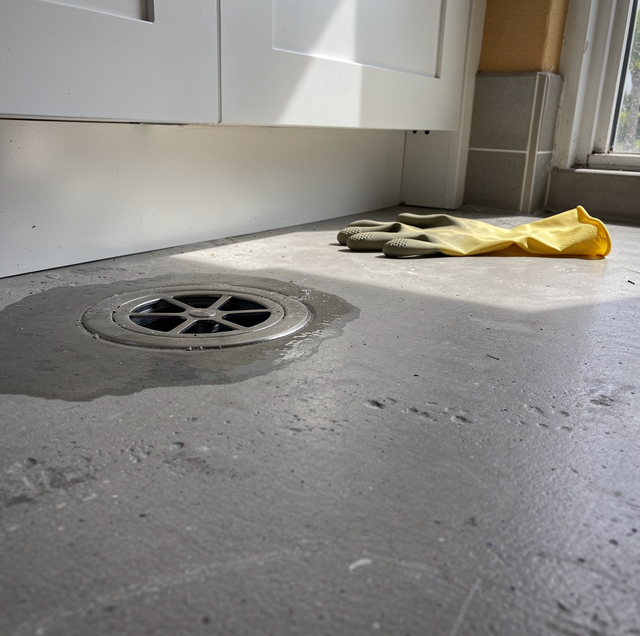
American cockroach: Reddish-brown, roughly an inch and a half long, with a pale yellow band shaped roughly like a figure eight just behind the head. It's a strong, confident flier, especially at dusk, and it favors damp, low-lying harborage: storm drains, sewer cleanouts, wet mulch, and palm boots (the fibrous collar where old fronds meet the trunk). It's also the one most likely to actually get inside, often coming up through a floor drain, a laundry standpipe, or the slab expansion joint where a garage meets the house rather than climbing in through a door.
Smokybrown cockroach: Solid, glossy, mahogany-to-almost-black, with no head markings to speak of. Also a capable flier and strongly drawn to porch lights and bright windows after dark. Unlike the American roach's ground-level, drain-adjacent habits, the smokybrown prefers raised, moist harborage: tree canopies, leaf-clogged gutters, attic overhangs, and stacked woodpiles. It's the one that tends to drop out of a palm canopy onto a patio table or find its way into a soffit gap rather than a floor drain.
Florida woods cockroach: Dark reddish-black, with short, non-functional wing pads in place of usable wings, so it cannot fly at all. It's a slow, ground-bound species that lives in leaf litter, mulch beds, palm thatch, and under garden timbers, and it rarely has any reason to cross a threshold.
If you disturb a Florida woods cockroach, don't crush it. It defends itself with a foul-smelling chemical spray from abdominal glands, which is where its old nickname, "skunk roach," comes from.
Of the three, the woods roach is the one people are most likely to see and least likely to actually have a problem with indoors, since it isn't built to get past a door sill the way its two flying cousins are.
Why the Species Actually Changes What You Should Do
This is where the naming confusion stops being trivia and starts being useful. Seeing a Florida woods cockroach in a mulch bed under the hedge is not the same event as seeing an American cockroach near a bathroom floor drain, even though both would get called a palmetto bug by the same homeowner. The wingless woods roach staying in the mulch is doing exactly what it does; it isn't evidence of anything creeping toward the house. An American cockroach turning up indoors, on the other hand, points toward a specific entry route worth checking: a floor drain without a trap seal, a sewer cleanout cap that's loose or missing, or an unsealed slab penetration where a plumbing stub-out or an AC condensate line passes through the wall.
Smokybrown activity tells a third story. Because this species stages out of raised, moist harborage rather than ground-level drains, repeated sightings near the roofline usually track back to gutters that hold standing leaf litter or a soffit-fascia gap the roach is using as a doorway, not to anything happening at ground level. Treating the wrong harborage, spraying the mulch bed for a smoky-brown problem that's actually staged out of the gutters, wastes effort on the part of the yard that was never the source.
None of this changes what's happening indoors if a true German cockroach problem also exists; that's a separate species with its own sanitation- and harborage-driven pattern, addressed with crack-and-crevice treatment and bait placement rather than outdoor source reduction. The point of sorting out the nickname isn't to rule that out. It's to keep an outdoor, low-risk sighting from being treated like an indoor infestation, or an indoor entry point from being dismissed as "just a palmetto bug" and left unaddressed.
What the Name Doesn't Tell You
The nickname also flattens a real difference in seasonal behavior that's easy to miss if you only think in terms of "palmetto bug season." American and smokybrown cockroaches fly most and show up around lights most during the warmer, wetter stretch of the year, but South Florida's climate doesn't hand either species a true off-season the way a four-season state does; outdoor harborage in mulch, palm boots, and leaf litter stays viable year-round, so a quiet winter month isn't evidence the harborage is gone, only that activity has slowed. The Florida woods cockroach, by contrast, has no light-driven flight season at all, since it can't fly, and its sightings track more with ground moisture and disturbed mulch than with any particular month.
Knowing which of the three you're looking at also changes what's worth doing yourself versus what's worth having someone look at. Pulling wet leaf debris out of gutters and keeping palm fronds off the roofline takes away smoky brown harborage, though anything that puts you on a ladder against a tile roof is worth weighing honestly. Checking a sewer cleanout cap for a tight, undamaged seal is a quick job that heads off the American cockroach's most common indoor route. A Florida woods cockroach in the mulch, on its own, usually isn't worth doing anything about at all.
Frequently Asked Questions
No. None of the three species have mouthparts built for biting; they're scavengers equipped to chew soft, decaying organic material, not to bite skin, and there's no recorded case of any of these roaches biting a person. The startle reaction people describe (a bug landing on an arm or brushing a leg) is contact, not a bite.
Heavy rain floods the ground-level spaces these roaches live in, including storm drains, irrigation valve boxes, water meter boxes, and saturated mulch, pushing them up and out in search of drier ground. It's a displacement response tied to water rising in their harborage, not an attraction to rain itself, and it can bring out all three species within a few hours of a hard downpour even in months with no particular "roach season" reputation.
No, and this is one of the biggest differences from a German cockroach problem. German cockroaches are drawn indoors by food residue and clutter that gives them harborage near a kitchen or bathroom. American, smoky brown, and Florida woods cockroaches are drawn to outdoor moisture and organic matter (wet mulch, leaf litter, standing water) regardless of how clean the house is, so an immaculate house in a shaded, damp yard can still see plenty of activity.
Not at you, no. What both flying species do is a short, clumsy glide rather than controlled powered flight, and it is almost always launched downward from a perch above you: a porch beam, a palm frond, a gutter edge. They steer poorly once airborne and cannot correct mid-glide, so a roach that drops toward a lit doorway you happen to be standing in reads as an attack and is not one. Flight also declines sharply on cooler nights, which is why the stories cluster in warm, humid weather rather than being evenly distributed throughout the year. The Florida woods cockroach has only non-functional wing pads and cannot get airborne at all.
They overlap but aren't identical. "Waterbug" is another regional nickname, more common in the Northeast, that in some areas refers specifically to the Oriental cockroach, a species that isn't established as a significant presence in South Florida. Locally, "waterbug" and "palmetto bug" are usually used interchangeably for the same American and smoky brown cockroaches, adding another layer of naming confusion rather than resolving it.
Not automatically, and when one does turn up indoors, the condition it is in tells you more than the sighting itself. A roach found dead, or flipped on its back and moving slowly out in the open, has usually crossed a treated perimeter or run out of the humidity it needs, which is the signature of an outdoor animal that got in and could not stay. A fast, healthy one that runs straight for a crack the moment the light comes on is finding what it needs inside, and that is the sighting worth acting on. Neither one says anything about whether German cockroaches are established indoors; that species arrives by a different route entirely.
Sorting the nickname out doesn't require memorizing entomology. It mostly comes down to noticing three things: whether the bug flies, where you keep seeing it, and whether it's actually crossing the threshold or staying out in the mulch where it started. Those three observations tell you more about what's actually going on than the word "palmetto bug" ever will.
Get a cockroach inspection — find out which species is actually on your property and what it takes to keep it from becoming an indoor problem. Buggify Pest Solutions serves Boca Raton, West Boca, and communities across Palm Beach and northern Broward. Call Tyler: (561) 672-0200.
