

Why You Have Roaches in a Clean House — and How They Got In
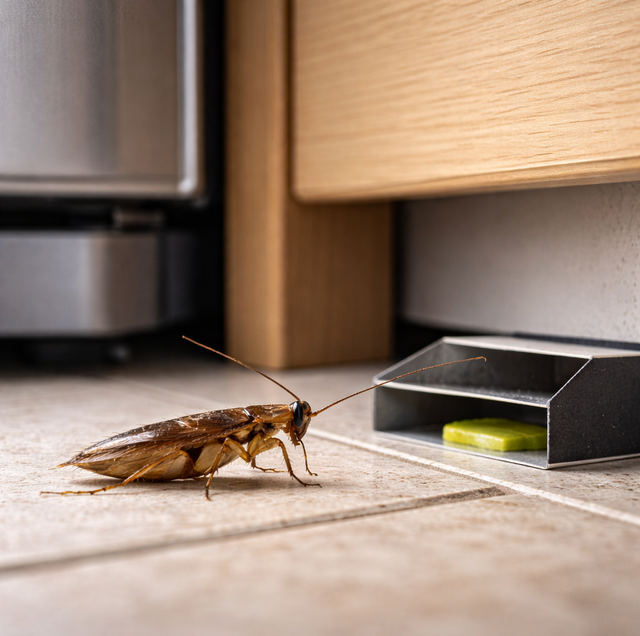
There is a stubborn belief that roaches are a verdict on your housekeeping, that a clean home is a roach-proof one. It is one of the most reassuring ideas in pest control, and one of the least accurate. Plenty of spotless kitchens run roach traps that fill up week after week, and plenty of cluttered ones never see a single insect. A roach on your counter is not a report card. It is a clue about how the insect got in and where it is hiding, and those two things have very little to do with how often you mop.
Cleanliness matters, but not in the way most people assume. It shrinks the buffet a roach has to work with. It does nothing to stop one from arriving in the first place, and it does not reach the tight, hidden pockets where a colony actually lives. Once you understand how roaches enter a warm, humid home and where they set up, the clean-house paradox stops being a mystery.
What Cleaning Actually Does, and What It Cannot Do
A clean kitchen removes easy calories: the crumbs, the grease film, the open food, the sticky spill under the toaster. That really does make a home less rewarding for a roach, and over time it helps any treatment work faster because the bait faces less competition.
But a roach needs almost nothing to get by. It will feed on a smear of grease behind the range, the starch in cardboard, the glue on a stamp or a box flap, spilled pet food, hair in a drain, even a bar of soap. Wiping the counters does not erase those. And cleaning solves for food only. It does not close the gap under the front door, seal the plumbing penetration behind the dishwasher, or empty the warm void inside a used microwave. Those are the things that decide whether a roach shows up, and a mop never touches them.
There is a reason some people notice more roaches right after a deep clean, not fewer. Pulling out the fridge, emptying a cabinet, or breaking down a stack of boxes disturbs the exact cracks a colony was hiding in, and the insects scatter into the open. It can feel like cleaning summoned them. What it actually did was flush harborage you did not know was there.
German Roaches Hitchhike In
The most common indoor roach, the German cockroach, rarely walks in from the yard. It is a warmth-loving indoor insect that lives its whole life indoors, and it spreads by being carried. It rides in on the things you bring home.
Grocery bags are a classic route, especially reusable totes and the cardboard trays and banana boxes used to pack goods at warehouse stores. A single female tucked into a box seam is all it takes. That female may already be carrying an egg case, called an ootheca, and one German roach ootheca holds roughly 30 to 40 eggs. You did not bring home a roach. You brought home a hatchery.
Secondhand appliances and electronics are the other big one. A used refrigerator, a thrift-store microwave, a hand-me-down toaster oven, a returned coffee maker, a bargain gaming console: each has a warm, dark motor housing that a roach treats as ideal shelter, and each can arrive already occupied. Cardboard moving boxes, grocery deliveries left in a garage, and packages that sat in a warehouse all carry the same risk. In an apartment, townhome, condo, or any home that shares a wall, roaches also travel between units through plumbing chases and shared cabinet voids, so a neighbor's untreated kitchen can seed yours no matter how clean you keep it.
None of these routes care about your standards. A pristine home is exactly as easy to hitchhike into as a messy one.
They Live in Cracks, Not on Your Counters
Here is the part that makes the clean-house paradox click. The roach you see on the counter is a tiny fraction of the population, and it is only visible because it made a mistake. The colony spends its life pressed into harborage: a tight, warm, humid crack within a few feet of food and water.
Picture the hinge pocket of a cabinet door, the seam behind the dishwasher, the gap where the drain line passes through the cabinet floor, the motor compartment under the fridge, the void behind the stove, the underside of a drawer slide. That is where German roaches cluster, packed in tight because they prefer surfaces touching them on several sides. They come out briefly in the dark to feed, then duck back before the light finds them.
A cleaning routine works entirely on the visible surfaces the roach avoids. You are scrubbing the stage while the colony sits in the wings. This is also why a can of surface spray disappoints: it coats the open floor and baseboard the roaches rarely cross and never reaches the harborage where they actually live. The problem was never that your counters were dirty. It is that the counters are not where the roaches are.
The Big Ones Outside Are a Different Story
If the roach you are seeing is large, reddish-brown, and turned up in the garage, a bathroom, or scuttling across the patio at night, it is probably not a German roach at all. That is usually an American cockroach, the one most people call a palmetto bug, or a close cousin like the Australian or smokybrown roach. These are outdoor insects, and their presence says even less about cleanliness than a German roach does.
Palmetto roaches live in mulch beds, leaf litter, tree holes, sewers, and storm drains, and they wander indoors looking for moisture or riding out heavy rain. They come up through floor drains and dry plumbing traps, slip under garage and exterior doors, and drop in through soffit and attic gaps. A guest bathroom that goes unused for weeks is a common entry point, because the water in the drain trap evaporates and leaves an open pipe straight to the sewer line. Year-round warmth and moisture in a mild climate keep these outdoor populations active in every month, so this is not a summer-only visitor. Unlike German roaches, palmetto bugs rarely breed in large numbers inside a home. They are invaders, not residents, which is why the fix for them leans on sealing entries and cutting outdoor harborage rather than indoor baiting.
Why the Fix Is Never Just a Cleaner Kitchen
If cleaning cannot stop roaches from arriving and cannot reach where they hide, then scrubbing harder is not the answer, and neither is a perimeter spray. What actually runs a roach population down works on the two things cleaning misses: the harborage and the way in.
For German roaches, the core of it is targeted gel bait worked into the cracks and crevices where the colony lives, placed within a few feet of the food and water it depends on, and paired with an insect growth regulator (IGR). The bait works with roach behavior instead of against it: an insect feeds at the placement in its own crack, carries the dose back to harborage, and others feed on its droppings and body, so the active ingredient spreads to roaches that never came into the open. The IGR does something a spray cannot. It interferes with the molt that turns a nymph into a breeding adult, so the next generation cannot mature and replace the colony. Gel and IGR reach the hidden population. A surface spray and a good scrub do not.
For palmetto roaches, the work moves outside and to the shell of the house: sealing the gaps under exterior doors, screening soffit and vent openings, running water into seldom-used drains so the trap stays full, and clearing the mulch, leaf litter, and moisture against the foundation that feeds outdoor harborage. Exclusion and moisture control do far more than anything you spray on an indoor surface.
Cleaning still earns its place as support. A dry cabinet under the sink, a fixed drip, food in sealed containers, and pet bowls picked up at night all shrink a roach's options and make bait the most reliable meal in the room. It is a helper, not the whole plan.
The Real Read on a Roach Sighting
Seeing roaches in a spotless home is not a sign you missed a spot. It is a sign an insect either hitched a ride in on something you brought home or wandered in from outside, then found a crack to live in that no cleaning routine reaches. The honest read on a roach sighting is not "clean harder." It is "find how it got in and where it is hiding." Close the entries, treat the harborage, manage the moisture, and the population falls, whether your counters were spotless the whole time or not.
Frequently Asked Questions
Yes, and it is one of the most common ways German roaches enter a tidy home. They hide in the corrugated flutes of cardboard, which double as shelter and a starch food source, and in the seams of boxes and reusable bags. Warehouse-store banana boxes and bulk cardboard trays are frequent culprits because they cycle through warm storerooms where roaches breed. Break down and recycle cardboard right away instead of stacking it in the pantry or garage, and check box flaps and seams for the small dark specks that signal roach droppings or a shed egg case.
Size and location are the quick tells. German roaches are small, about half an inch, light brown, with two dark parallel stripes running down the shield behind the head, and they cluster in kitchens and bathrooms near food and water. Palmetto bugs, or American roaches, are large, an inch and a half or more, reddish-brown, and turn up in garages, bathrooms, and outdoors. The behavior matters more than the label: German roaches breed indoors and multiply fast, so a couple of sightings can mean a hidden colony, while a lone palmetto is more often a single outdoor wanderer that came in for moisture.
It can, and this is an underrated route. The warm motor housing of a refrigerator, the interior of a microwave, the base of a toaster oven, and the vents of electronics all hold gentle heat and tight space, which is prime harborage. A single female carrying an ootheca of 30 to 40 eggs is enough to start a colony. Before bringing a secondhand appliance inside, inspect the compressor area, the back panel, and any warm cavity for live insects, droppings, or the small brown egg capsules, and consider having it checked or treated rather than plugging it straight in next to your food.
It helps, but it rarely finishes the job on its own. German roaches survive on things you cannot seal away: grease film behind the range, soap, toothpaste residue, the glue on packaging, hair and organic matter in drains, and crumbs in appliance seams. Sealing food in hard containers and picking up pet bowls at night reduces their easy options and makes bait more attractive, which does help. But because they can subsist on trace residue and non-food materials, starvation alone will not clear a colony living in harborage. A German roach can survive weeks without food but only days without water, so the real lever is moisture control, fixing drips, wiping condensation, and picking up pet water bowls at night, rather than food-sealing. It has to be paired with treatment at the source.
A few reasons. With German roaches, seeing even one or two in daylight often means the hidden population is large enough that some are being pushed out to forage in the open, so scattered sightings can understate the problem. With palmetto bugs, a lone insect every so often is usually a single outdoor invader rather than an indoor colony. Sticky monitor traps placed in cabinet corners, under the sink, and behind the fridge tell the difference: steady catches point to breeding harborage inside, while an occasional single catch points to something wandering in from outside.
Often weeks, which is why the source is easy to miss. One hitchhiking female can drop an egg case of 30 to 40 eggs, and German roaches complete a generation in roughly two to three months under warm indoor conditions, faster in a humid kitchen. The first arrivals stay hidden in harborage and feed at night, so the population builds quietly before anyone spots an insect on the counter. By the time roaches are visible in daylight, the colony has usually been established for a while, which is why acting on the first confirmed sighting matters more than waiting to see how bad it gets.
See roaches even though your home is spotless? Get the entry points and hidden harborage found and treated at the source. Buggify Pest Solutions serves Boca Raton, West Boca, and communities across Palm Beach and northern Broward. Call Tyler: (561) 672-0200.
