
Boca Raton Mosquito Control — Monthly During May–October Peak, Not Quarterly
Monthly cadence May–October. The only thing that holds in this climate.
Mosquito service is the one Buggify offering that runs on a monthly cadence rather than bi-monthly, and the reason is chemistry rather than marketing. Professional residual barriers hold their effective adulticide for 21 to 30 days under South Florida humidity and rainfall, while mosquito breeding cycles compress to 7 to 10 days in the summer heat. Quarterly visits leave 60-plus days of zero coverage between treatments, during which four to six full breeding cycles are completed uninterrupted. Monthly residual at the foliage and landscape edges, combined with a breeding-source audit at every visit, is what actually holds during the May to October peak.
every call himself
Monthly cadence, one local technician
Monthly During Peak Season
May–October monthly cadence matches the 7–10 day breeding cycle. Quarterly is too long for South Florida pressure.
Breeding-Source Audit
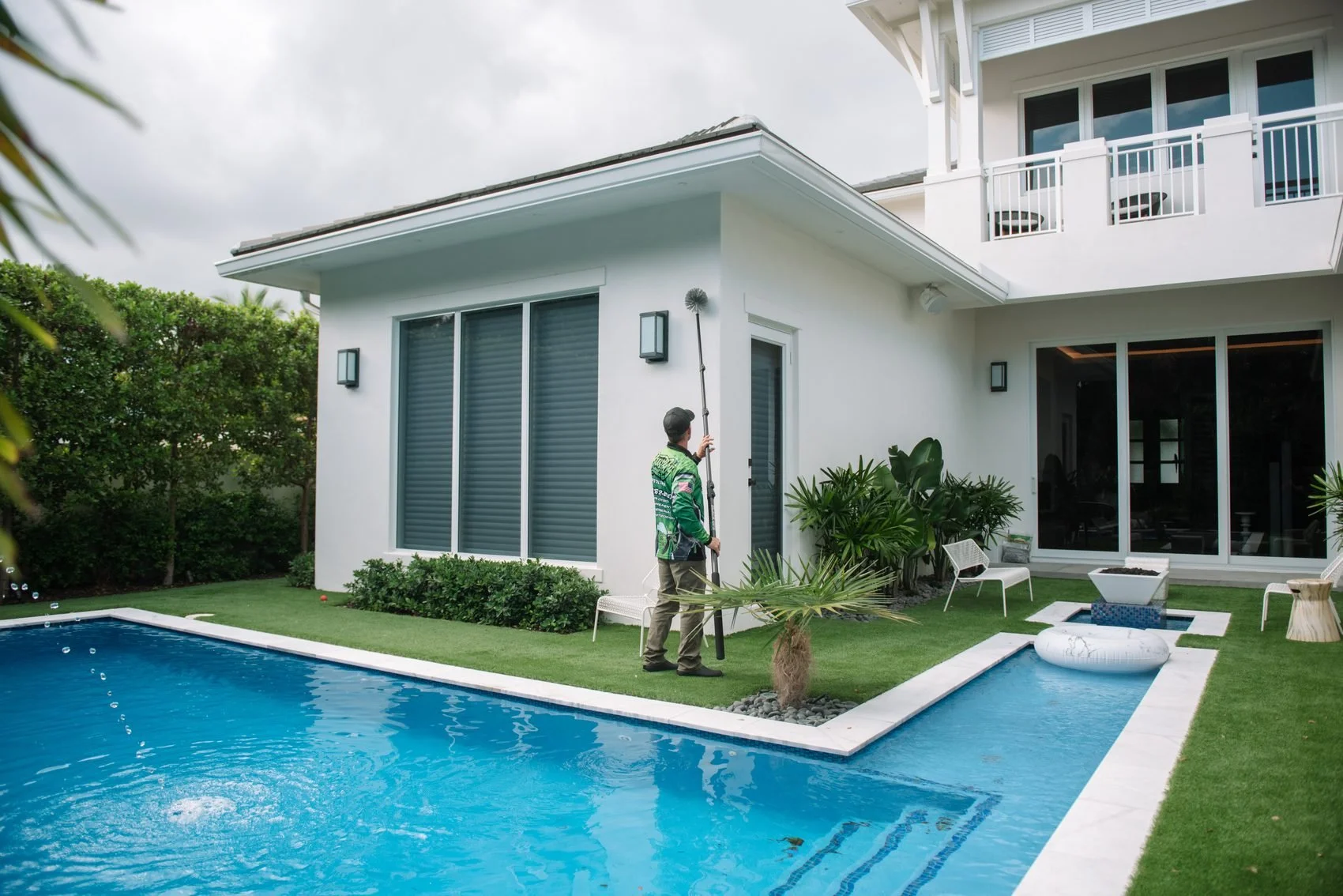
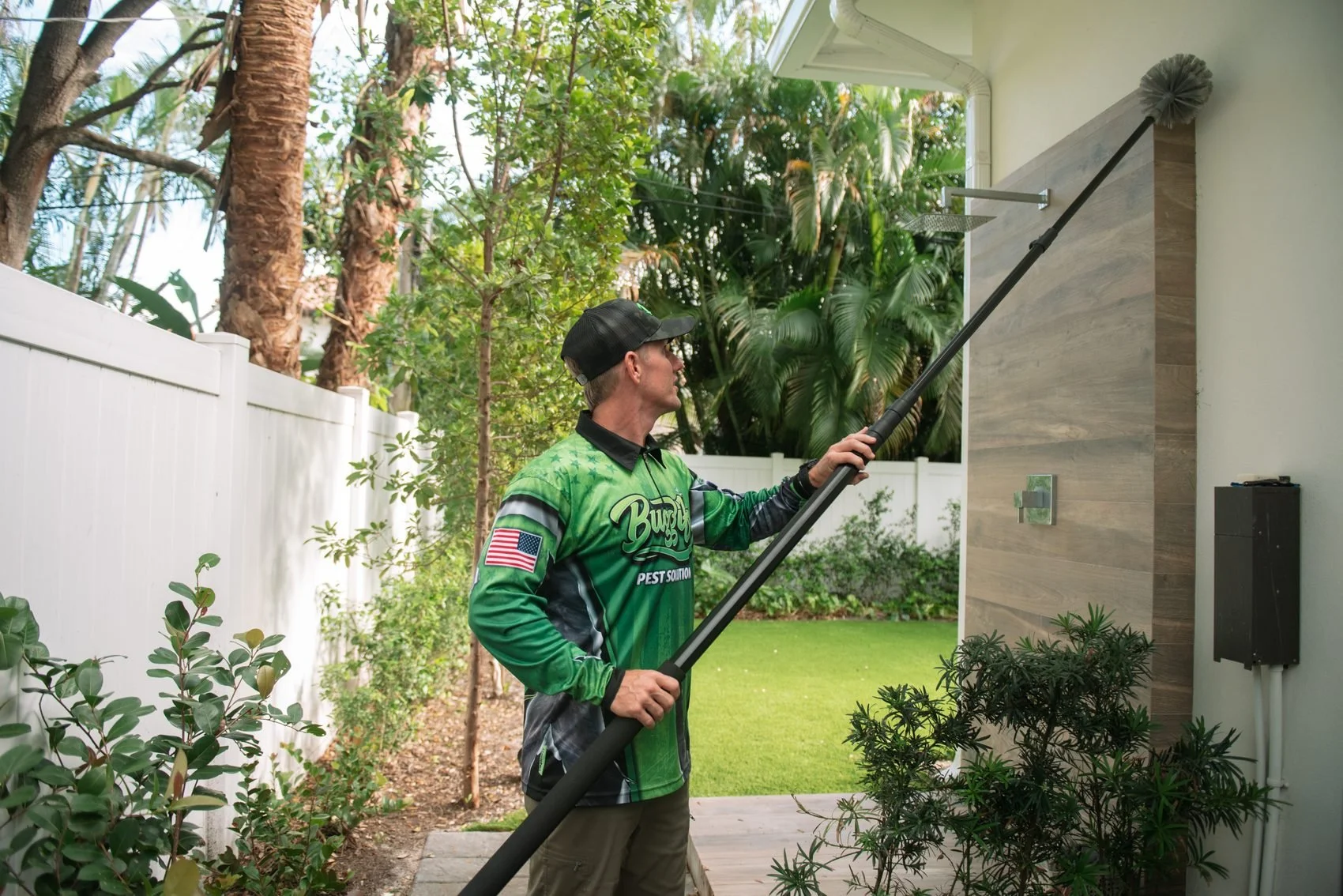
Tyler inspects standing water, dock lines, canal edges, bromeliads, and gutters before treating. Source elimination beats spray-only.
VectorFog C100 ULV
Professional ultra-low-volume fogger for foliage barrier and lanai zones — different equipment from backpack work, reaching where mosquitoes rest.
Post-Storm Inspection
Hurricane-season protocol includes a post-storm breeding-zone check after every named storm — water-pooling and damaged screens become breeding sites overnight.
Yard Barrier Residual
Foliage and landscape barrier residual lasts 21–30 days, re-treated monthly to maintain continuous coverage.
Tropical-Landscape Aware
Bromeliads, dense palms, ponds, and water features all factor into the breeding-source audit — the micro-habitats other companies miss.
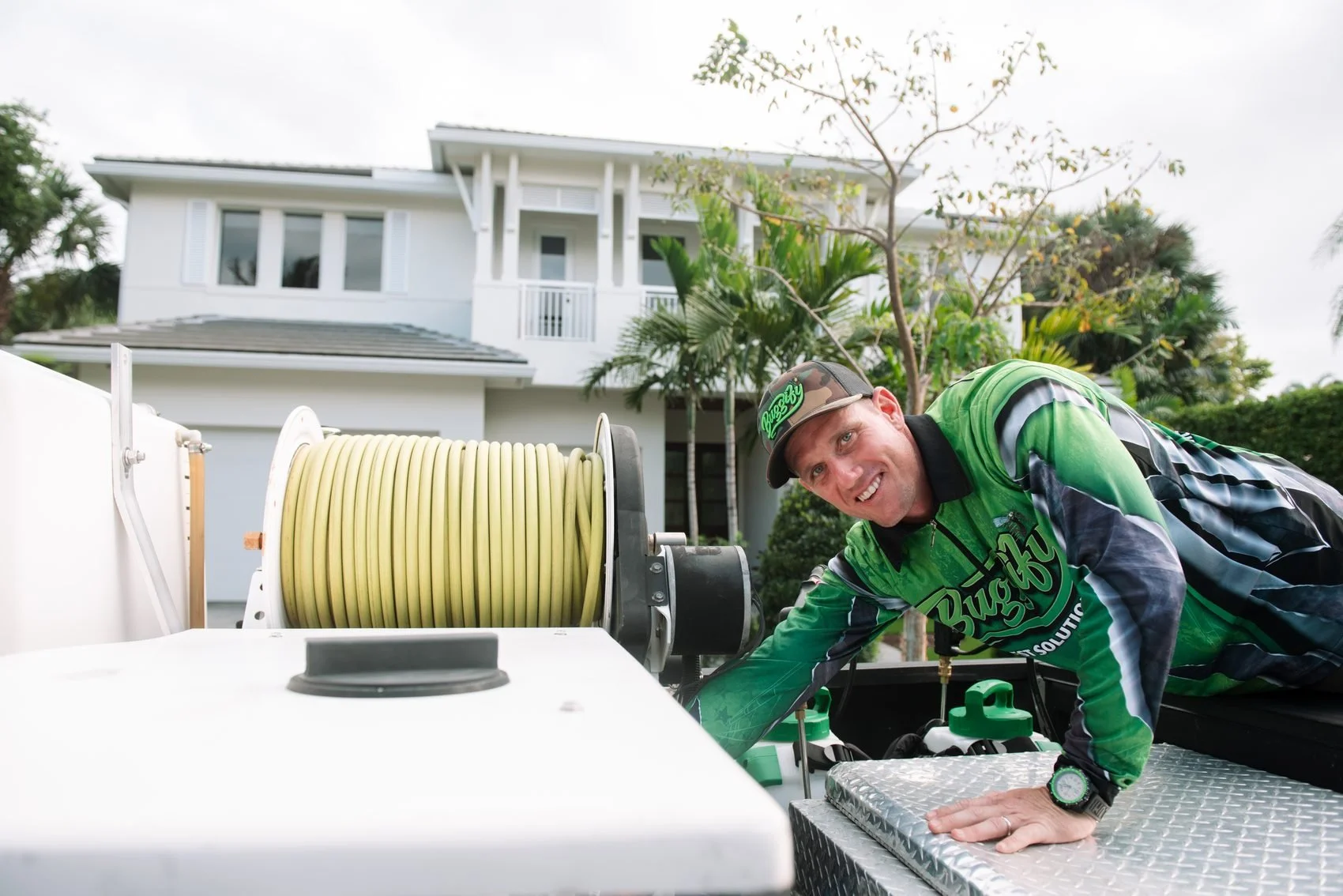
“Mosquito work is the one pest service where Buggify's bi-monthly cadence isn't the right answer. Monthly is. The chemistry forces the decision.”
Professional mosquito residuals (bifenthrin, lambda-cyhalothrin) hold their effective adulticide barrier for 21–30 days in South Florida humidity and rainfall. After 30 days, the residual is exhausted. Mosquito breeding cycles compress in the summer heat — egg to adult in 7–10 days for Aedes (the day-biting yellow fever / Zika vector) and 10–14 days for Culex (the nighttime nuisance species). At a 12-week (quarterly) visit interval, you have 60+ days of zero coverage, during which 4–6 full breeding cycles complete uninterrupted. Quarterly mosquito spraying is decorative.
Tyler's mosquito protocol: monthly residual barrier May through October (yard foliage + lanai zones + landscape edges), plus a breeding-source audit on every visit (standing water, dock lines, canal edges, bromeliad cups, clogged gutters, neglected pool features, abandoned bird-bath water). Source elimination prevents next-generation breeding; barrier residual handles the adult population. Both together is what holds.
Mosquito work — what's covered, what's not
Yard barrier residual, breeding-source audit, and canal-edge protocol across all 13 cities.
Indoor pests — roaches, ants, spiders, silverfish
German and American cockroach harborages. Carpenter, fire, sugar/ghost, pharaoh, and big-headed ants (each needs a different bait + barrier strategy). House spiders, lanai-edge orb weavers, and brown widow exclusion. Silverfish in older humid homes. Earwigs and millipedes during the rainy season.
Outdoor pests — mosquitoes, wasps, hornets, yellow jackets
Mosquito yard barrier on a monthly cadence, May–October. Paper wasp, mud dauber, yellow jacket, and bald-faced hornet nest removal — same-day response when scheduling allows. Carpenter bee identification and removal (often confused with honey bees — they need a different treatment). Stinging-insect emergencies prioritized over scheduled visits.
Rodent control — roof rats, Norway rats, mice
Roof rats dominate South Florida (tile-roof entry geometry); Norway rats are secondary, canal-adjacent only. Trapping for active populations, baiting for ongoing pressure, copper mesh + polyurethane exclusion for the long-term fix. Attic and wall-cavity work both in scope.
Whole-home pest exclusion + specialty work
Entry-point sealing (copper mesh + Tremco/GE polyurethane). Soffit-fascia gap repair, plumbing-vent screening, slab-crack treatment, pest-grade vent screening. Bee removal ($250–1,200+ by hive size and access). Commercial / HOA / property management (50–200 home communities preferred). Luxury home pest management (gated communities). Lawn care (HOA + luxury-estate add-on only).
Exactly what happens, start to finish
Most pest companies won't tell you the plan. Here's ours — proven, source-first, and transparent — so you can spot anyone cutting corners.
You call Tyler. He picks up.
Direct line, Mon–Fri 8 am – 5 pm. He asks what you're seeing, where, and how long. Free phone estimate range, then a $175 on-site inspection if needed (credited toward your first treatment when you book ongoing service).
Same-day or next-day on-site inspection.
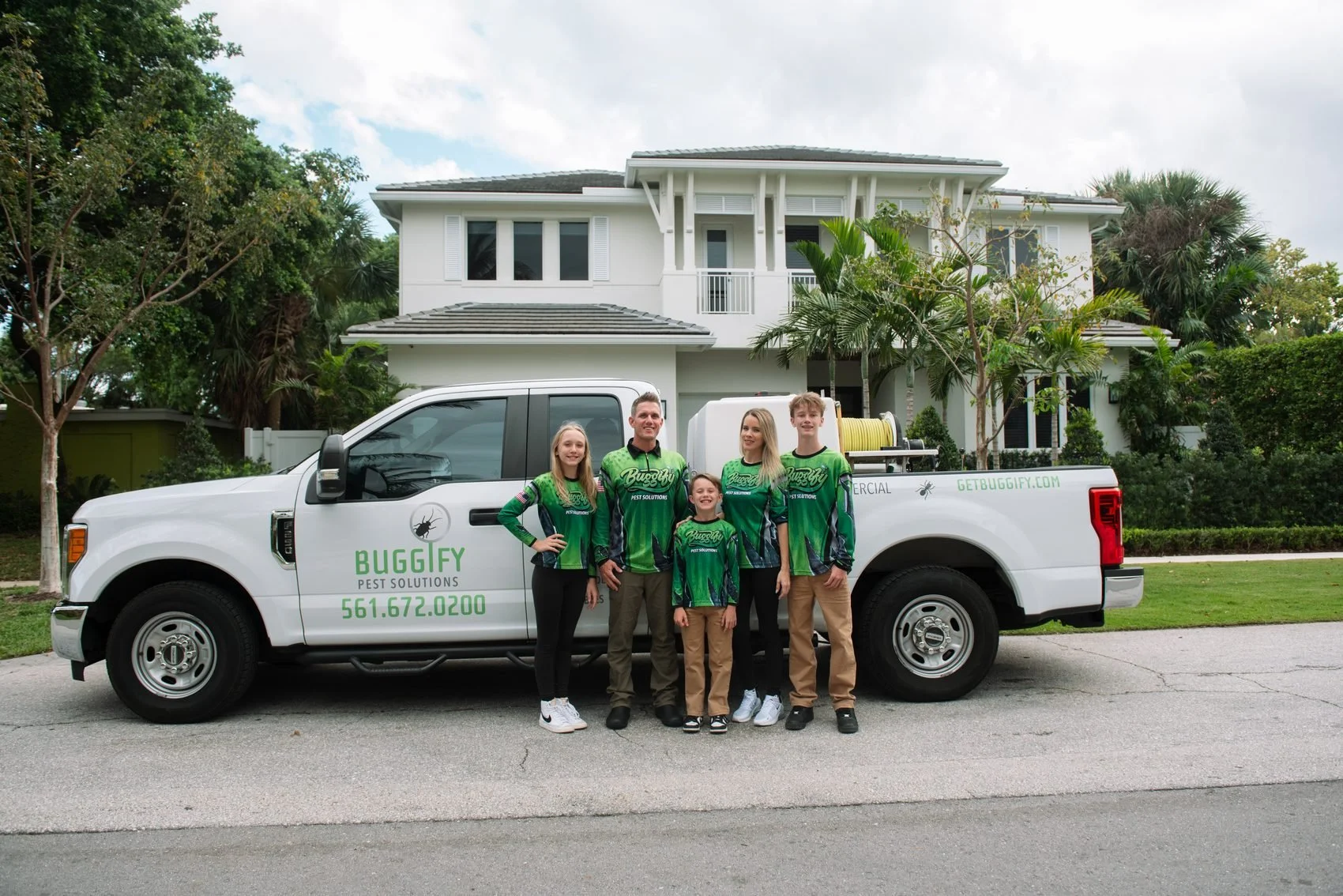
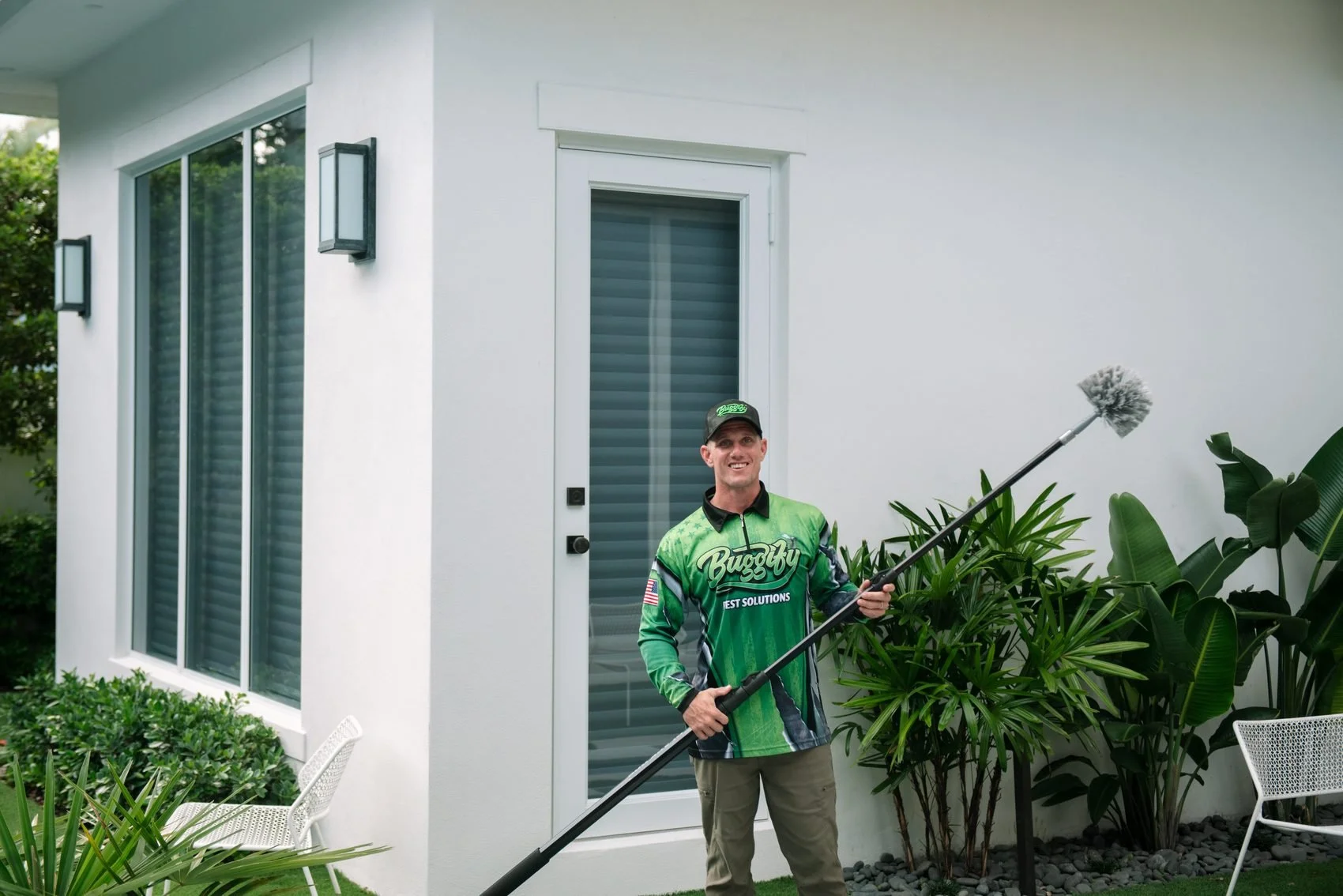
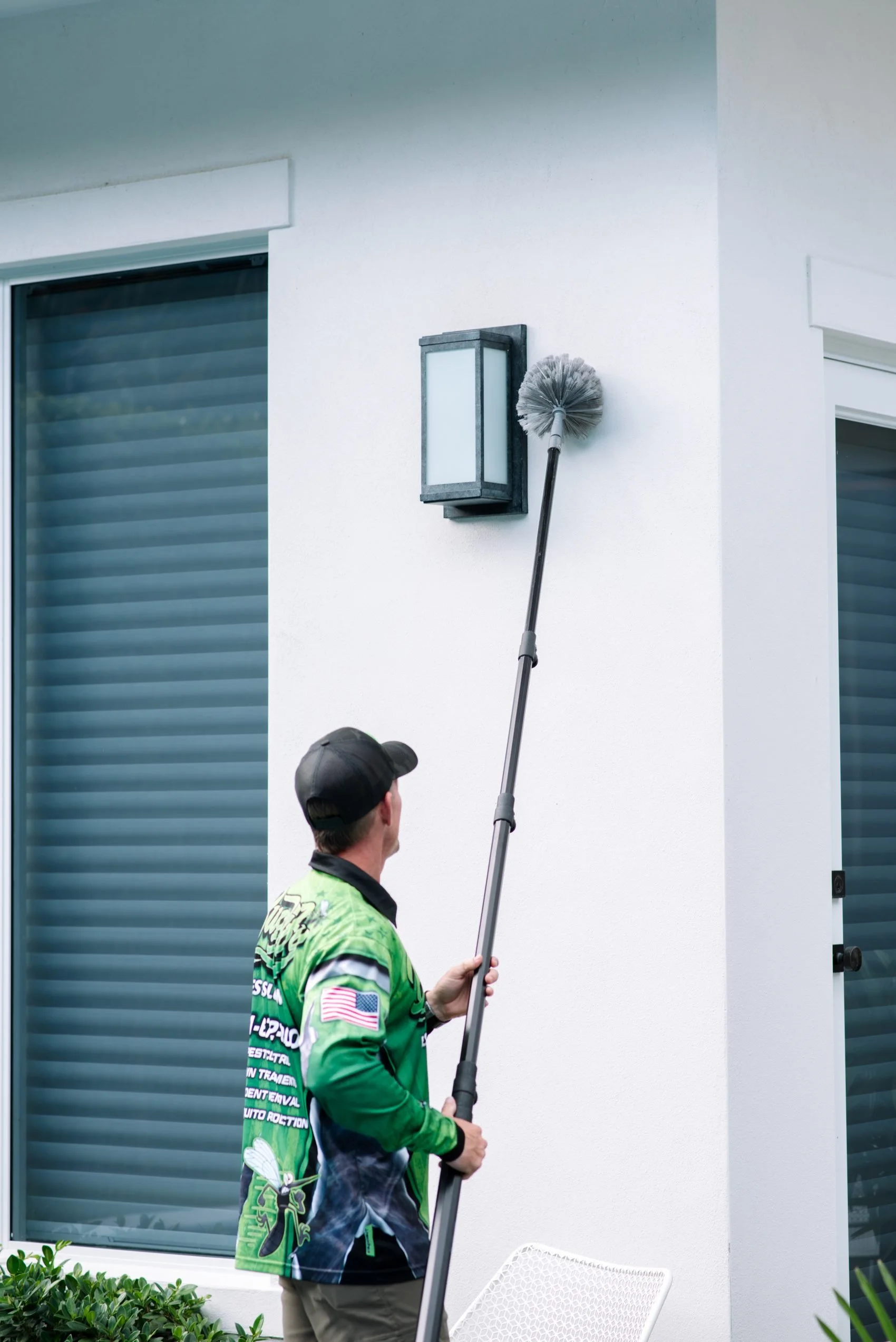
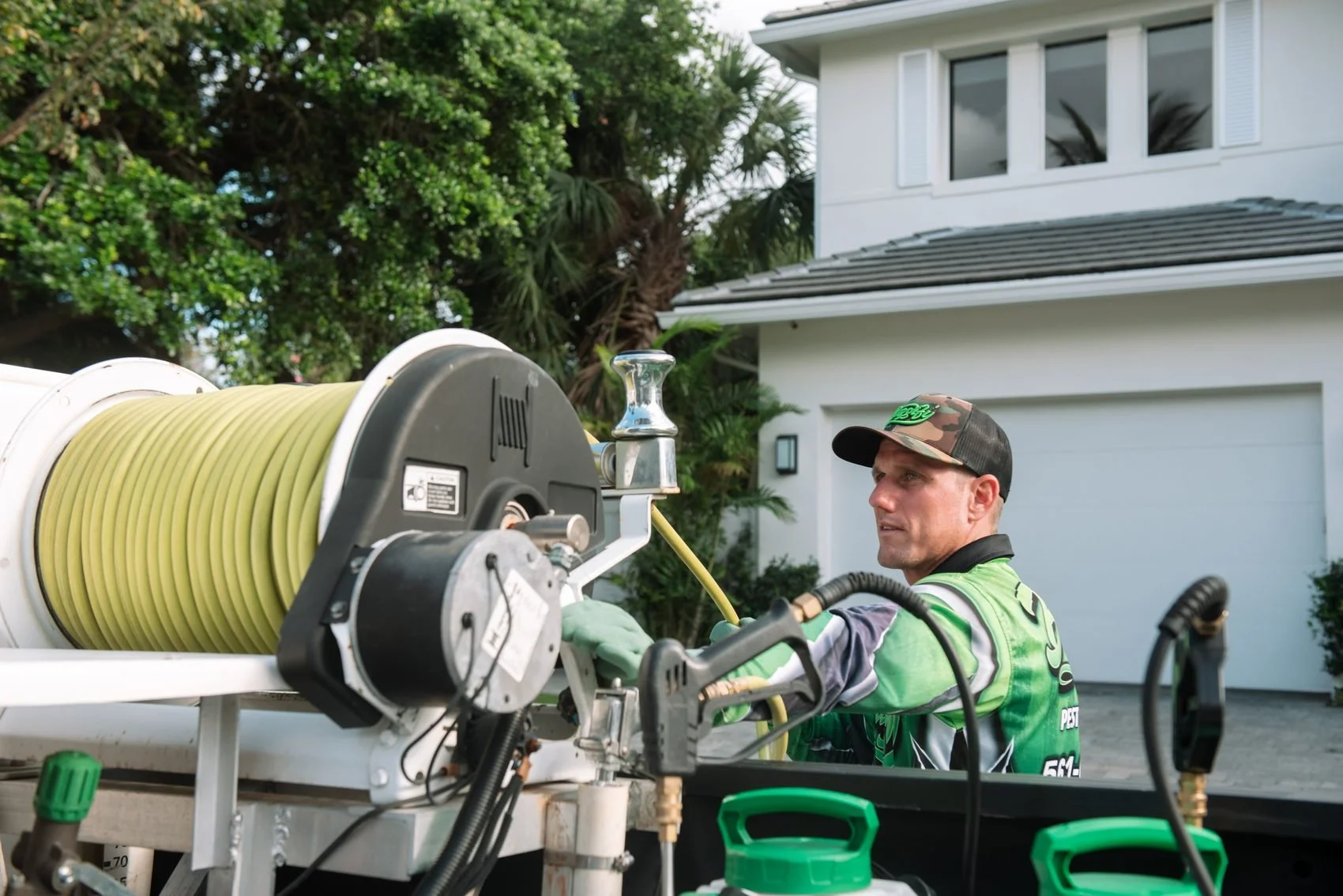
Same-day routine in the core service area when you call before noon. Tyler arrives in the white Buggify truck — green uniform, cowboy hat. The visit runs 30–60 minutes: perimeter walk, foliage-rest zones, and a breeding-source sweep.
Breeding-source audit — the step that holds.
Standing water in plant saucers, clogged gutters, bromeliad cups, pool features, dock-line pockets, irrigation pooling. Source elimination is more durable than spray-only — most yards have 5–10 active micro-breeding sites.
Barrier residual + larvicide treatment.
VectorFog C100 ULV for foliage penetration (the underside of leaves where mosquitoes rest), Cardinal CPS435 for landscape edge, Bti tablets in standing water you can't eliminate. Pet-safe, label-compliant; SDS on request.
Monthly cadence + post-storm monitoring.
Monthly residual May–October (bi-monthly in cooler months). Adult population drops 60–80% within 48–72 hours; source elimination drives the longer-term reduction. Post-named-storm breeding checks included for active customers.
A local owner beats a route tech
Bi-monthly plans, every 8 weeks
Three tiers, same cadence. They differ in scope, not frequency. Bills per visit — cancel anytime.
Basic
General pest — perimeter, entry-point, crack-and-crevice.
- ✓Every-8-week service
- ✓Perimeter + entry-point treatment
- ✓Crack-and-crevice work
- ✓Free re-service between visits
Full Home Protection
The standard for typical Boca / Parkland / West Boca homes.
- ✓Everything in Basic
- ✓Interior on request
- ✓Rodent + ant monitoring
- ✓Termite-sign check + licensed WDO referral
Complete
Built for luxury, gated, or high-pressure properties.
- ✓Everything in Full Home
- ✓Mosquito barrier
- ✓Attic + exclusion monitoring
- ✓Lanai treatment + termite-sign referral
Single visit — full-property foliage + landscape-edge + lanai barrier residual plus a breeding-source audit. Holds 21–30 days. Ideal before an outdoor event.
Recurring monthly residual + breeding-source audit through peak season. Varies by property size and canal-adjacency; larger lots at the upper end.
Lighthouse Point, Coral Springs canal zones, Boynton Loxahatchee-edge, Delray Lake Ida — monthly May–Oct, bi-monthly Nov–Apr, plus post-storm monitoring.
Complete (Premium) plan customers get the monthly mosquito add-on bundled into the May–Oct peak. See how it bundles with the Complete plan →
13 cities, two counties, one local guy
Buggify runs out of the West Boca shop at 22617 Middletown Dr. Same-day service is routine in the core area when you call before noon.
Outer zones by appointment — Highland Beach, Wellington, Lake Worth Beach & Tamarac case-by-case. Travel surcharge may apply beyond a 15-mile radius.
Why Boca pest pressure isn't like anywhere else
National playbooks are built for four-season climates with a real off-season. South Florida has none — seven local factors that change the whole approach.
Year-round pressure — no real off-season
Reproductive cycles compress in the heat, so pressure never fully stops. Bi-monthly is built for the actual cycle; mosquito peak forces monthly May–October.
Humidity drives moisture harborage
70–85% humidity keeps moisture-driven harborage active continuously — AC condensate, irrigation overspray, lanai-edge transitions, and standing water in the landscape.
Breeding cycle compresses to 7–10 days
Aedes (day-biting Zika/dengue vector) complete egg-to-adult in 7–10 days in summer heat; Culex in 10–14. Quarterly allows 4–6 full cycles between visits. Monthly matches the cycle.
Canal-corridor & freshwater-edge pressure
Coral Springs has 165 miles of canals; Lighthouse Point is canal-built. Lake Ida and the Loxahatchee edge support year-round breeding that doesn't seasonally ease.
Hurricane-season displacement (May–Oct)
Major storms create 50–100 new micro-breeding sites overnight. Tyler's post-named-storm sweep checks gutters, pool covers, tarps, play equipment, and AC condensate for active water.
Bromeliad & tropical-landscape micro-breeding
Bromeliads, banana trees, dense palm crowns, and water features hold the 1/2 inch of standing water Aedes needs. A 10+ bromeliad yard can produce 1,000+ adults a month from cup water alone.
Heavy-rainfall container breeding
Thunderstorms and hurricane bands leave standing water in pool covers, play equipment, pots, gutters, and tarps — active Aedes sites within 7–10 days. Post-rain container sweeps are part of the protocol.
Not sure what's driving it on your street?
Tyler knows the pressure block by block. Get a free read on the phone.
(561) 672-0200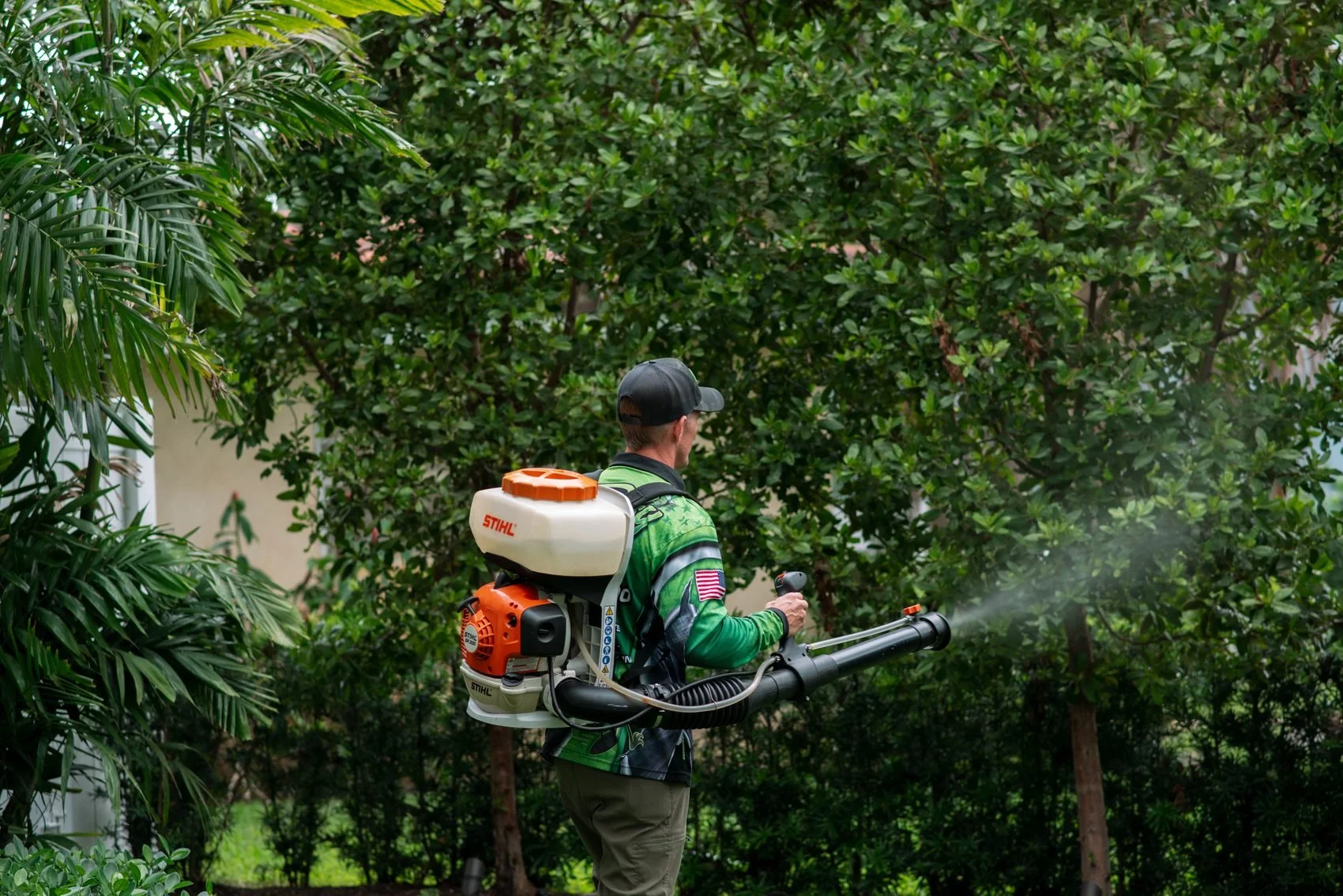
The technical depth behind every visit
Seven things most route techs are never trained on — each tied to a real outcome for your home.
Why 30-day residual holds and 90-day doesn't
Professional residuals (bifenthrin, lambda-cyhalothrin) hold their adulticide barrier for 21–30 days under South Florida humidity, rain, and UV. After that it's exhausted. "Long-lasting" quarterly marketing uses the same chemistry — the real window is 21–30 days regardless of brand.
Aedes vs. Culex — different targets
Aedes (day-biting, container-breeding — bromeliads, saucers, gutters, pool covers) vector Zika/dengue/chikungunya. Culex (night-biting, larger-water breeders — ponds, canal edge) vector West Nile. The protocol addresses both: bromeliad audit for Aedes, foliage/landscape residual for Culex.
Bti — biological larvicide for water you can't drain
Bacillus thuringiensis israelensis targets mosquito larvae specifically — safe for fish, birds, pets, and beneficial insects. Deployed in bromeliads, ponds, and standing-water features. Tablets last 30 days, re-deployed monthly.
Foliage barrier — where mosquitoes actually rest
Adults spend 23 of every 24 hours resting on foliage, not biting. Foliage barrier targets the resting population (10–100x the biting population). VectorFog C100 ULV droplets reach the underside of leaves; hose-end sprays don't.
Canal-edge & dock-line protocol
Canal-adjacent properties have continuous pressure that doesn't seasonally ease: dock-line foliage residual, seawall-edge perimeter (with water-quality care), bank foliage, and Bti in visible standing water. Hand-pump precision at smaller volumes.
Post-storm inspection — the hurricane multiplier
Major rainfall creates 50–100 new micro-breeding sites overnight. The post-named-storm sweep checks gutters, pool covers, tarps, play equipment, abandoned pots, dripping AC condensate, and irrigation pooling. Included for active monthly customers.
Pet-safe application timing
Residuals are pet-safe per label, but Tyler applies around pet outdoor hours — morning before pets go out, evening after they come in. Residual dries in 30–60 minutes; pets resume normal schedule. Communicated on every visit.
SDS available on request
Every product, every time — full transparency, no "proprietary blends."
homes served
What our customers say about Buggify
Verified 5-star reviews from Boca Raton, Parkland & Coral Springs families — straight from Google.
Eleven questions Tyler gets about mosquito service
If yours isn't here, call (561) 672-0200 — Tyler answers directly.
When does mosquito service stop being needed?
–November–April is the cooler season — pressure drops, but doesn't disappear. Canal-adjacent properties stay on monthly year-round; inland properties can drop to bi-monthly during cooler months. Pressure spikes back up in May.
Is the mosquito spray safe for my dog?
+Yes — Buggify uses label-compliant pet-safe products. Residual dries within 30–60 minutes; pets can resume their normal outdoor schedule. Tyler times applications around your pet's outdoor schedule (morning before they go out, or evening after they come in).
Will the spray kill butterflies and bees?
+Pyrethroid-based barriers can affect any flying insect that contacts the residual. Tyler's protocol minimizes broadcast on flowering plants during pollinator-active hours; bee-aware customers can ask for early-morning or post-dusk application timing.
What's a bromeliad and why does it matter?
+Bromeliads are tropical plants with a central cup that holds water. Aedes mosquitoes need only 1/2 inch of standing water to breed — bromeliads are ideal habitat. A yard with 10+ bromeliads can produce 1,000+ adult mosquitoes per month from cup water alone. Flush every 7–10 days or use Bti tablets.
I have a pond or decorative water feature. Will mosquitoes breed there?
+Yes — any stagnant water can produce mosquitoes. Solutions: keep water moving with a pump, add mosquito fish (eat larvae), or deploy Bti tablets (safe for fish, kills mosquito larvae). Tyler audits during inspection.
Do I need to mow before treatment?
+Lower is better — taller grass shields mosquitoes from the residual. Mow within 2 days of treatment for best penetration, and clear palm-frond accumulation.
How soon will I notice less mosquito activity?
+Adult population drops 60–80% within 48–72 hours of the initial barrier treatment. Source elimination (bromeliad audit, gutter cleanup, water-feature treatment) drives the longer-term reduction over 2–4 weeks.
Is one-time treatment enough for a backyard party?
+One-time treatment 3–5 days before the event is the standard pre-event approach — the effect holds for the event and 2–3 weeks beyond. For regular outdoor entertaining, monthly service is more cost-effective.
Does mosquito service reduce Zika/dengue risk?
+Yes — Aedes mosquitoes are the primary vector, and Buggify's Aedes-focused protocol (bromeliad audit, container source elimination, foliage barrier) directly reduces vector population. Risk in Palm Beach County is generally low, but every reduction matters.
Same-day before an event?
+Best to schedule 3–5 days ahead — residual needs time to take full effect on foliage and resting populations. Same-day is possible, but coverage isn't fully established.
Do HOAs and community pools need separate mosquito service?
+Often yes — common areas, pool decks, dog parks, clubhouses. Tyler does HOA mosquito work on custom quotes.
Three things Buggify will never do to you
Quote a real price without inspecting first
The phone gives a range; firm pricing comes after an on-site walkthrough, so the scope matches what's actually driving the activity.
Spray indoors when the source is outside
Most South Florida pest pressure is driven by outdoor harborage. Indoor-only work is a short-term cover-up, not a fix.
Lock you into a long-term contract
Bi-monthly plans bill per visit and cancel anytime, no fees. Service should be based on need, not contractual obligation.
Call Tyler. Get a price range on the first call.
No contract, no sales pitch, no callback queue — in most cases, on the schedule the same day or next morning.