
Mosquito Control in Coconut Creek
Butterfly-garden coexistence protocol for properties maintaining active gardens. Preserves garden ecology while addressing mosquito pressure.
- FL DACS License #JB268060 · Certified Operator Tyler Craig
- Bayer Authorized Applicator (Termidor)
- $1M general liability insurance
- Google 5.0 Rated · live review feed
- Family-owned · 1,000+ South Florida homes served since 2018
- Pet-safe and family-safe treatments by default
- Free phone estimates · no long-term contracts
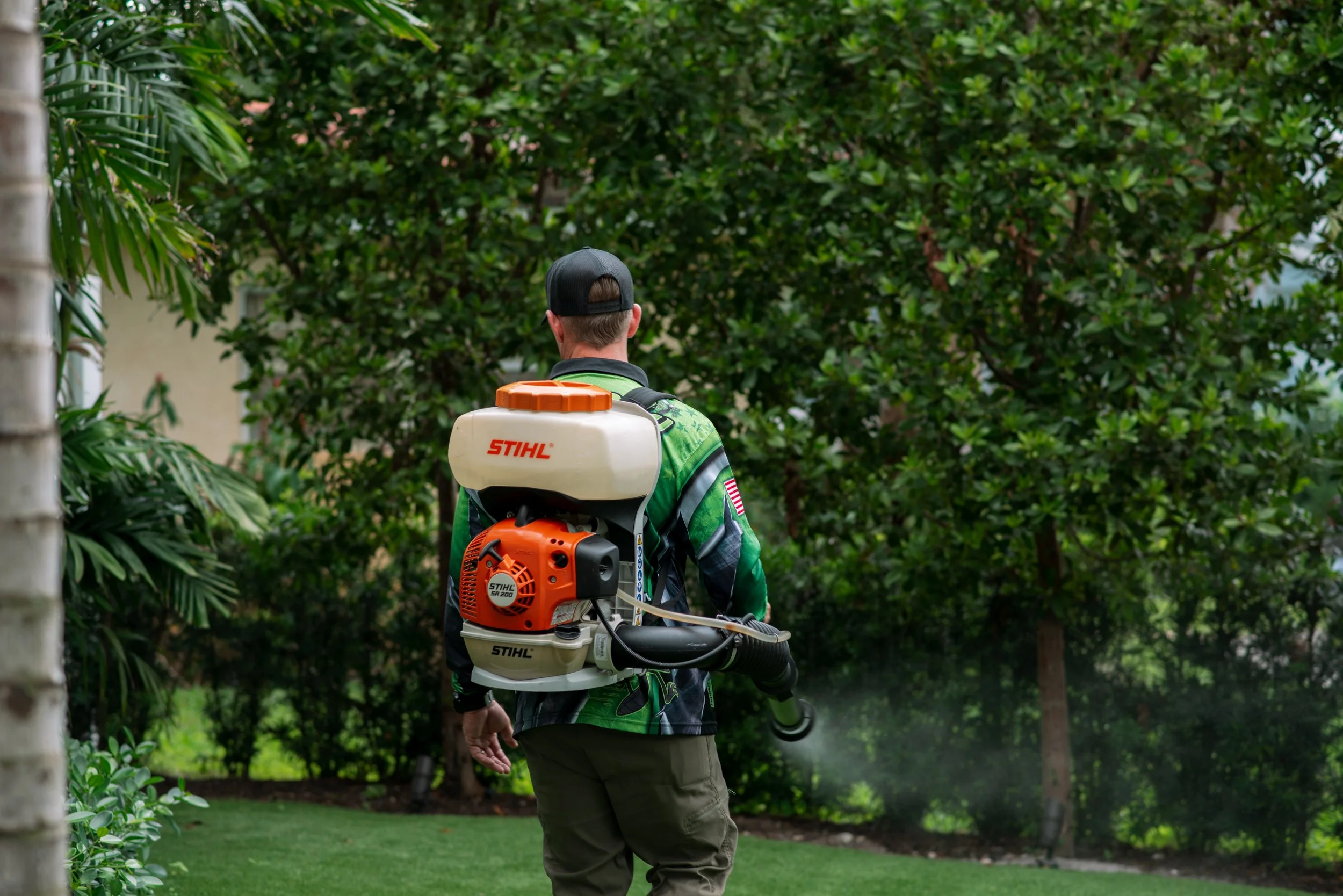
Coconut Creek's Butterfly Capital designation reflects a substantial concentration of properties actively maintaining butterfly gardens as landscape features. These are not just gardens with occasional butterflies; they are landscape zones designed to attract, feed, and sustain butterfly populations throughout their life cycle, from egg to caterpillar to chrysalis to adult. Standard mosquito control protocols treat the entire yard uniformly, which for butterfly-garden owners can disrupt the very ecology they are cultivating. Even pollinator-aware timing (early-morning or post-dusk application) still delivers residual chemistry that persists into pollinator-active hours. Tyler's butterfly-garden coexistence protocol pushes further: treatment focus stays on non-garden yard zones; garden zones get Bti larvicide in standing water plus source-elimination coordination, but no residual spray; and homeowner conversation covers the specific host and nectar plants that need particular protection. The parent Coconut Creek city hub covers pollinator-aware application timing and bromeliad micro-breeding audit in depth; this Tier 3 page focuses on the deeper butterfly-garden coexistence dimension.
Butterfly-Garden Coexistence Specialty
Properties actively maintaining butterfly gardens as landscape features need a mosquito protocol that preserves the garden ecology, not just pollinator-safe timing.
Garden-Zone Boundary Treatment
Treatment focus stays on non-garden yard zones. Garden zones get Bti larvicide in standing water plus source elimination coordination, no residual spray.
Nectar-Plant + Host-Plant Awareness
Distinction between adult butterfly nectar plants and caterpillar host plants (milkweed, etc.) matters; host plants sustain the lifecycle.
Same Technician Every Visit
Tyler tracks butterfly-garden owner preferences and lifecycle awareness across visits.
Pet-Safe + Family-Safe by Default
Barrier dries in 30-60 minutes. SDS available on request.
No Long-Term Contract
Bi-monthly plans bill per visit and cancel anytime.
Established Coconut Creek butterfly-garden owner: three-year coexistence protocol
The context
A Coconut Creek homeowner has been maintaining an established butterfly garden for over 8 years, including significant milkweed plantings for monarch butterflies, passionflower for gulf fritillary caterpillars, and nectar plants across the season. She had been on a Buggify bi-monthly plan for two years and asked whether the standard pollinator-aware timing was actually preserving the garden ecology or just reducing the visible impact.
The extended-coexistence conversation
Tyler walked the garden with the homeowner, mapping the specific plant zones by butterfly lifecycle function. Confirmed the standard pollinator-aware timing was reducing adult exposure but was still delivering residual chemistry across the garden landscape that could affect caterpillars, chrysalises, and beneficial insects across their lifecycles. Proposed a coexistence protocol variant that separated garden zones from non-garden yard zones for treatment purposes.
The three-year evolved protocol
Garden zones get Bti larvicide in identified standing-water sources only, and source-elimination coordination for any bromeliads or plant saucers holding water. No residual spray in the garden zones. Non-garden yard zones (front yard, side yard, non-garden perimeter) get standard bi-monthly residual with pollinator-aware timing. Fence-line vegetation on the non-garden side treated as standard. Owner reports the garden has held better ecology over the coexistence-protocol years than under the standard pollinator-aware-timing approach previously.
The learning
Butterfly-garden coexistence is a more granular protocol than pollinator-aware timing alone. For properties actively cultivating garden ecology as a landscape feature, protecting the caterpillar and chrysalis lifecycle stages matters as much as protecting adult butterflies. Tyler now runs this protocol for a handful of Coconut Creek butterfly garden owners and coordinates the specific plant zones for each property.
Four technical details specific to Coconut Creek butterfly-garden mosquito work
Garden-zone vs non-garden zone treatment mapping, Bti larvicide as garden-zone-appropriate chemistry, host-plant vs nectar-plant awareness, and integration with parent hub scope.
Garden-Zone vs Non-Garden-Zone Treatment Mapping
Butterfly-garden coexistence protocol treats the property as two functionally distinct zones. Non-garden zones (front yard, side yard, non-garden perimeter) get standard bi-monthly residual with pollinator-aware timing. Garden zones get Bti larvicide in standing water only, plus source-elimination coordination. Fence-line vegetation on the non-garden side of the garden zone is treated as a buffer. Zone mapping is walked with the homeowner on inspection and updated as the garden evolves.
Bti Larvicide as Garden-Zone-Appropriate Chemistry
Bti (Bacillus thuringiensis israelensis) is a bacterial larvicide targeting mosquito larvae in standing water. It does not affect adult mosquitoes, caterpillars, adult butterflies, bees, or other beneficial insects. Deployed in bromeliad cups, plant saucers, or any garden standing water. Reduces mosquito breeding in the garden zone without residual spray impact on the garden lifecycle.
Host-Plant vs Nectar-Plant Awareness
Butterfly gardens include distinct functional plant types: nectar plants feed adult butterflies, and host plants sustain caterpillars through the larval stage. Host plants (milkweed for monarchs, passionflower for gulf fritillaries, parsley for black swallowtails, others) support the caterpillar stage where residual chemistry would be particularly disruptive. Tyler tracks the specific host plants in each garden and coordinates treatment to avoid host-plant zones.
Coordination with Parent Hub Pollinator-Timing + Bromeliad Scope
Standard pollinator-aware application timing and bromeliad micro-breeding audit + Bti tablet deployment are covered on the parent Coconut Creek city hub. Butterfly-garden coexistence protocol on this page extends the hub's approach to properties with active butterfly-garden ecology. Non-butterfly-garden Coconut Creek residential fits the parent hub's standard protocol.
Four Coconut Creek conditions that shape butterfly-garden mosquito work
Butterfly Capital designation, active garden ecology at scale, host-plant distinction, and coordination with parent hub each shape the coexistence protocol.
Butterfly Capital of Florida Designation + Active Garden Concentration
Coconut Creek's Butterfly Capital designation reflects a substantial concentration of active butterfly gardens across residential properties. Higher garden density here than in most Buggify cities.
Host-Plant + Nectar-Plant Landscape Feature Distinction
Active butterfly gardens include distinct plant types by lifecycle function. Host plants (milkweed, passionflower, parsley) sustain the caterpillar stage. Nectar plants feed adult butterflies. Treatment protocol distinguishes them.
Standard Coconut Creek Mosquito Sources (Parent Hub Reference)
Bromeliad micro-breeding audit + Bti tablet deployment + pollinator-aware timing on standard residential covered on parent Coconut Creek city hub.
Non-Butterfly-Garden Standard Coconut Creek Residential
Properties without active butterfly gardens fit the parent hub's standard pollinator-aware protocol. Butterfly-garden coexistence applies specifically to properties cultivating butterfly ecology as a landscape feature.
Why butterfly-garden coexistence extends the pollinator-aware protocol
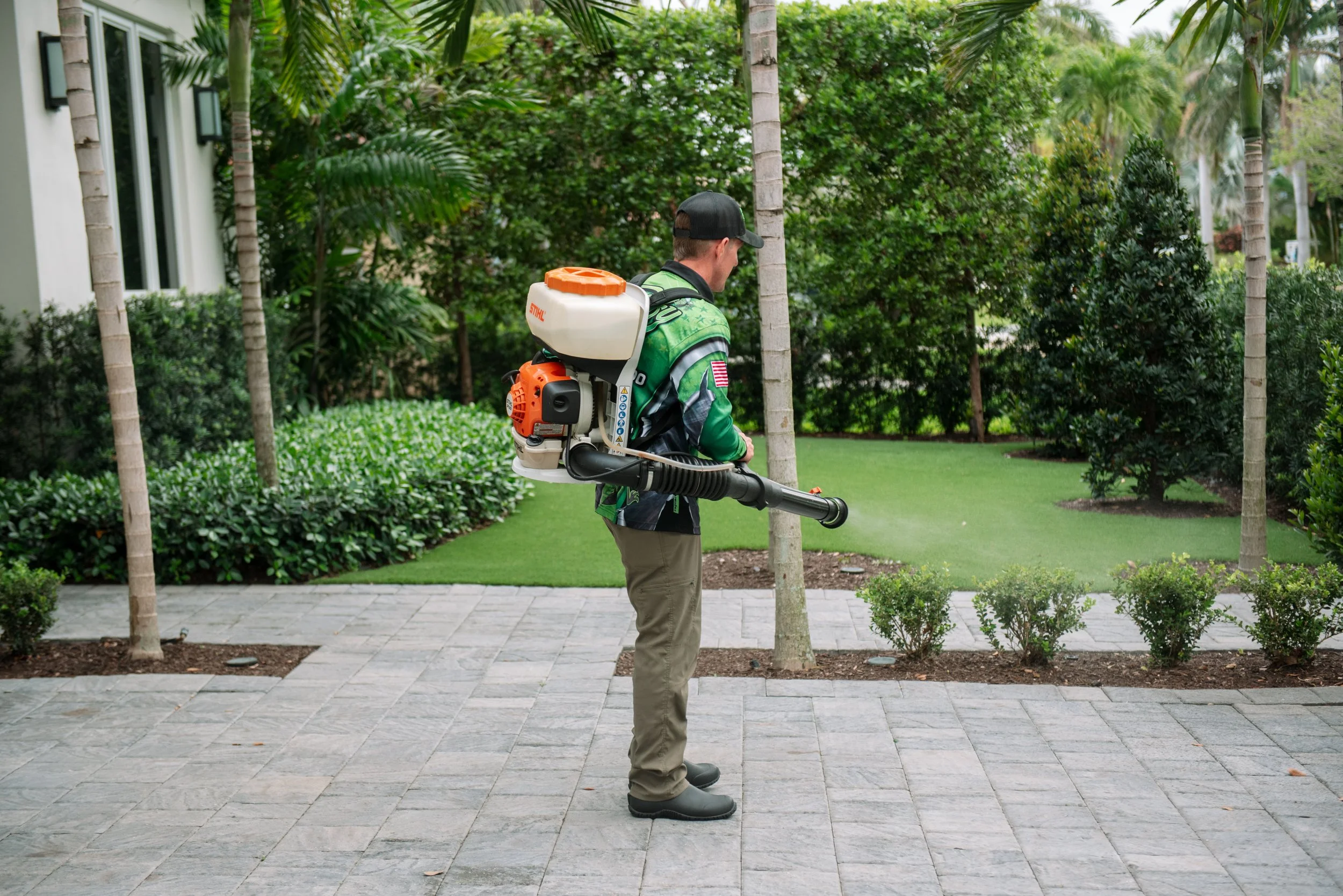
The parent Coconut Creek city hub covers pollinator-aware application timing (early morning or post-dusk near butterfly gardens) as standard protocol. That approach substantially reduces adult butterfly exposure to residual chemistry. For properties with active butterfly gardens as cultivated landscape features, pollinator-aware timing alone still delivers residual across the garden landscape that persists into hours when pollinators are active, and it does not specifically address the caterpillar and chrysalis lifecycle stages that spend days or weeks on host-plant leaves.
The butterfly-garden coexistence protocol extends the pollinator-aware approach by mapping garden-zone vs non-garden-zone treatments. Non-garden zones get standard bi-monthly residual with pollinator-aware timing. Garden zones get Bti larvicide in standing-water sources only, plus source-elimination coordination for bromeliads and plant saucers, with no residual spray in the garden zones themselves. The distinction between host plants (sustaining the caterpillar stage) and nectar plants (feeding adults) further refines which garden zones need particular attention.
This protocol applies specifically to Coconut Creek properties actively cultivating butterfly-garden ecology as a landscape feature. Properties without active butterfly gardens fit the parent hub's standard pollinator-aware application-timing protocol without the further coexistence-mapping extension. Tyler runs this protocol for a subset of Coconut Creek customers on the standing plan roster; property qualification is by butterfly-garden landscape assessment on inspection.
Every Coconut Creek mosquito issue Buggify handles
Three Coconut Creek mosquito-work profiles distinguished by butterfly-garden landscape context.
Butterfly-garden coexistence protocol (active-garden properties)
Distinctive Coconut Creek work. Garden-zone vs non-garden-zone treatment mapping, Bti larvicide in garden-zone standing water only, source-elimination coordination, host-plant awareness.
Standard pollinator-aware protocol (non-active-garden Coconut Creek residential)
Parent hub scope. Standard bi-monthly residual with early-morning or post-dusk pollinator-aware application timing near any butterfly-attracting vegetation. Bromeliad micro-breeding audit and Bti tablet deployment per hub protocol.
Standard South Florida mosquito residential (non-Coconut-Creek-specific)
Interior residential without butterfly-garden or bromeliad exposure fits standard bi-monthly plan coverage.
Coconut Creek mosquito pricing
Standard Buggify mosquito pricing with butterfly-garden coexistence protocol as an extended scope on qualifying properties.
One-Time Treatment,$125-225
Single visit. Butterfly-garden coexistence properties at the upper end because of the additional garden-zone mapping work.
Butterfly-Garden Coexistence Program,Custom
Extended-scope protocol for active butterfly-garden properties. Garden-zone mapping + Bti larvicide + source-elimination coordination + host-plant awareness. Custom-quoted.
Bi-Monthly Plan Coverage
Complete (Premium) bi-monthly plan bundles: mosquito barrier + coexistence scope for butterfly-garden properties + bromeliad audit.
Backyard Event Fogging,$150-250
One-time ULV cold fogger sweep 2-6 hours before an event.
Buggify vs. National Pest Chains
5-point comparison. Every row verifiable from how Buggify operates.
| Feature | Buggify in Coconut Creek | National Pest Chains |
|---|---|---|
| Butterfly-garden coexistence protocol | Standard on active-garden properties | Standard residential protocol regardless of garden ecology |
| Garden-zone vs non-garden-zone treatment mapping | Standard on butterfly-garden properties | Uniform yard treatment regardless of landscape function |
| Bti larvicide in garden-zone standing water only | Standard, no residual spray in garden zones | Broad residual spray across yard |
| Host-plant vs nectar-plant awareness | Standard on butterfly-garden inspections | No lifecycle-stage awareness |
| Same technician tracking garden ecology across visits | Tyler runs every Coconut Creek mosquito job | Rotating techs, no cross-visit ecology awareness |
Read what Coconut Creek customers say on Google directly
Coconut Creek mosquito reviews from butterfly-garden owners often reference the coexistence-protocol conversation. Owners who had experienced the tradeoff between mosquito control and garden ecology under standard protocols describe the garden-zone vs non-garden-zone mapping as the change that let both coexist. Google 5.0 Rated · live review feed.
Three things Buggify will never do to you
Three things Buggify will never do to you (full list of seven on Why Choose Buggify):
Quote a real treatment price without inspecting the property first. Phone gives a range; firm pricing comes after an on-site walkthrough.
Indoor spraying when the source is outside. Most of the pest pressure in Coconut Creek is driven by outdoor harborage; indoor-only work is a short-term cover-up.
Long-term contracts that lock you in. Bi-monthly plans bill per visit and cancel anytime, no fees.

Call (561) 672-0200. Tyler answers, gives you a price range on the first call, and books your Coconut Creek appointment into the next dispatch window (standard scheduling runs same-week; stinging-insect emergencies get prioritized).
Seven Coconut Creek mosquito questions Tyler hears most often
I have an active butterfly garden. Standard pollinator-aware timing seems to still affect the garden ecology. What can be done?
Butterfly-garden coexistence protocol maps garden zones separately from non-garden yard zones. Garden zones get Bti larvicide in standing water only and source-elimination coordination, with no residual spray in the garden. Non-garden zones get standard bi-monthly residual with pollinator-aware timing.
What is Bti and why is it garden-appropriate?
Bti (Bacillus thuringiensis israelensis) is a bacterial larvicide targeting mosquito larvae in standing water. It does not affect adult mosquitoes, caterpillars, adult butterflies, bees, or other beneficial insects. Deployed in garden standing-water sources without disrupting the garden ecology.
What is the difference between host plants and nectar plants in a butterfly garden?
Nectar plants feed adult butterflies. Host plants (milkweed for monarchs, passionflower for gulf fritillaries, parsley for black swallowtails) sustain caterpillars through the larval stage. Host plants are particularly important to protect from residual chemistry because caterpillars spend days or weeks on the leaves.
My property is not an active butterfly garden. Do I still need this protocol?
Probably not. Standard pollinator-aware application timing per the parent Coconut Creek city hub applies to properties near butterfly gardens or Butterfly World. The coexistence protocol applies specifically to properties actively cultivating butterfly-garden ecology as a landscape feature.
How does Buggify identify garden zones on inspection?
Tyler walks the garden with the homeowner and maps the specific plant zones by lifecycle function. Host-plant zones, nectar-plant zones, standing-water sources within the garden, transitional zones between garden and non-garden yard. Zone mapping is updated as the garden evolves seasonally or with new plantings.
Does the coexistence protocol cost more than standard treatment?
Custom-quoted based on garden complexity and mapping work. Typically at the upper end of standard mosquito pricing because of the additional garden-zone walk-on inspection and Bti larvicide deployment vs residual spray.
How fast can Tyler dispatch to Coconut Creek?
Coconut Creek is 15-20 miles north of the shop; standard scheduling books same week.
Direct line to the technician serving Coconut Creek
Phone: (561) 672-0200 (Tyler answers) · Mon–Fri 8 am – 5 pm
Email: Getbuggify@gmail.com
Address: 22617 Middletown Dr., Boca Raton, FL 33428 (West Boca shop, primary dispatch)
License: FL DACS #JB268060 · Certified Operator: Tyler Craig
Call (561) 672-0200 or submit the form below for a free phone estimate. Tyler answers directly. Coconut Creek dispatch is owner-operator across a 20-25-mile route, so appointments are pre-scheduled rather than drop-in; most standard jobs book the same week.