
Wasp, Bee & Hornet Removal in Coconut Creek
Butterfly-World-adjacent pollinator-corridor policy: live-relocation-first on honey bee finds, pollinator-safe timing on any adjacent-yard treatment.
- FL DACS License #JB268060 · Certified Operator Tyler Craig
- Bayer Authorized Applicator (Termidor)
- $1M general liability insurance
- Google 5.0 Rated · live review feed
- Family-owned · 1,000+ South Florida homes served since 2018
- Pet-safe and family-safe treatments by default
- Free phone estimates · no long-term contracts
Coconut Creek's designation as the 'Butterfly Capital of the World', home to Butterfly World, one of the largest butterfly conservatories in the Americas, sets a pollinator-first stinging-insect standard the surrounding residential communities generally support. The city's tropical canopy inventory, Sabal Pines Park and Tradewinds Park preserves, and dense landscape hedge lines make the entire community a functional pollinator corridor. That changes the stinging-insect work profile in a specific direction: honey bee finds on Coconut Creek residential get live-relocation coordination with a partner beekeeper by default, with treatment reserved for cases where colony behavior, cavity access, or safety considerations rule out cut-out and transfer. Any adjacent-yard paper-wasp or hornet treatment on a pollinator-active landscape gets pollinator-safe application timing (early morning or dusk, outside butterfly and bee foraging windows) on request, and direct nest application avoids broadcast exposure of the surrounding landscape. Parent Coconut Creek city hub covers the tropical-canopy tree-pathway rodent scope, butterfly-garden coexistence mosquito work, and Township cross-subdivision cockroach coordination in depth; this Tier 3 page focuses on the pollinator-corridor stinging-insect dimension.
Pollinator-Corridor Live-Relocation Policy
Honey bee finds get cut-out coordination with a coordinating beekeeper. Treatment reserved for Africanized or inaccessible-cavity situations.
Pollinator-Safe Application Windows
Adjacent-yard treatments timed outside butterfly and bee foraging windows on request. Direct nest application avoids broadcast.
Same Technician Every Visit
Tyler runs every Coconut Creek stinging-insect job.
Direct Line to Tyler
Mon–Fri 8 am – 5 pm.
No Broadcast Landscape Spraying
Direct nest-site application only. Written condition-of-treatment note documents the specific method.
No Contract Lock-In
Bills per visit.
Five Coconut Creek conditions that shape stinging-insect work
Butterfly World proximity, pollinator corridor, Sabal Pines and Tradewinds preserves, Township HOA density, and tropical canopy each shape the wasp and bee protocol.
Butterfly World and Pollinator-Corridor Proximity
Adjacent to Butterfly World, one of the largest butterfly conservatories in the Americas. A pollinator-first treatment approach is the community norm.
Sabal Pines Park and Tradewinds Park Preserve Adjacency
Preserve-adjacent lots follow chemical-restriction guidance: targeted formulations, no broadcast at the preserve edge.
Township HOA and Master-Planned Community Density
Township area and adjacent master-planned communities coordinate landscape work at the HOA level; preemptive nest-inspection scheduling matches HOA landscape cycles.
Dense Tropical Canopy Inventory
Oak, mahogany, gumbo-limbo, and Sabal palm canopies support paper-wasp and bald-faced hornet aerial nesting throughout the residential density.
Adjacent Butterfly-Garden Landscape Prevalence
Many Coconut Creek residential properties maintain butterfly gardens. Pollinator-safe timing on adjacent-yard treatment is a standard request, not an exception.

Five technical details specific to Coconut Creek wasp, bee, and hornet work
Cut-out-first workflow, partner beekeeper coordination, cavity-access assessment, pollinator-safe timing, and preserve-adjacency chemistry each drive the Coconut Creek standard.
Cut-Out-First Workflow on Honey Bee Finds
Species identification is the first step in inspection. European colony behavior confirmation triggers immediate beekeeper coordination. Cavity access assessment determines cut-out feasibility. Treatment is reserved for Africanized-behavior colonies or cavity-access-blocked situations.
Partner Beekeeper Coordination Protocol
Coordinated relationship with local beekeepers for cut-out access when a live-relocation candidate is confirmed. Timing coordination between Buggify (cavity access, sealing) and beekeeper (bee handling, transfer, relocation). Post-transfer cavity sealing with copper mesh and polyurethane.
Cavity Access Assessment Technique
Soffit vent access, attic void access, wall cavity access, tree hollow access; each has different cut-out feasibility. Assessment reads the specific access geometry before committing to a cut-out vs treatment path.
Pollinator-Safe Application Timing
Adjacent-yard paper-wasp and hornet treatments timed outside butterfly and honey bee foraging windows on request, early morning before foraging starts or dusk after foraging ends. Direct nest application confines residual to the nest site.
Preserve-Adjacency Chemistry Selection
Sabal Pines and Tradewinds preserve-adjacent lots use rapid-degradation targeted formulations. Contained application at the preserve edge. The written condition-of-treatment note documents the chemistry selection and application method.
Every Coconut Creek wasp, bee and hornet issue Buggify handles
Six work profiles across pollinator-corridor and standard Coconut Creek residential stinging-insect load.
Honey bee cavity finds (live-relocation-first)
European honey bee cavity colonies get beekeeper cut-out coordination by default. Cavity cut-out through accessible access, transfer to nucleus hive, relocation to permitted apiary. Post-transfer cavity sealing.
Paper-wasp on lanai and pool-cage frames
Direct nest application (never broadcast landscape spraying); pollinator-safe timing available on request for adjacent butterfly garden zones.
Bald-faced hornet aerial nests in tree canopies
Grey pulp aerial nest shells in oak, mahogany, and gumbo-limbo canopies. Extended-reach applicator with direct-nest application; adjacent hedge lines are not treated.
Yellow-jacket ground nests near landscape edges
Aggressive underground colonies; direct nest treatment at the burrow entrance. Not broadcast across surrounding landscape.
Africanized-suspected colony controlled treatment
When honey bee species identification reads Africanized, or when cavity access rules out a live cut-out, use controlled treatment with occupant notification and pollinator-safe timing on adjacent forage zones.
Cicada killer and mud dauber solitary wasp work
Non-defensive solitary wasps that leave burrow deposits on turf or mud tubes on stucco. Removal + surface cleaning; not colony-level chemical treatment.
Butterfly-World-adjacent case: honey bee soffit colony relocated live to apiary
The find and setting
A Coconut Creek homeowner in the Township area, roughly a mile from Butterfly World, noticed heavy honey bee activity at a garage-eave soffit vent. The homeowner explicitly requested live-relocation given the neighborhood's proximity to the butterfly conservatory. Preliminary phone assessment flagged the location and behavior as consistent with a cavity-established swarm.
The species and relocation
On-site inspection at a 30-foot approach distance showed a steady worker cycling, with no defensive recruitment on approach. Tyler collected 12 workers for morphometric confirmation; behavior and morphometrics both read European. Partner beekeeper coordinated a cut-out visit the following morning: the soffit access panel was removed, the colony was transferred to a nucleus hive box, and the relocation to a permitted apiary was completed. Soffit void sealed with copper mesh + polyurethane after transfer.
Why Coconut Creek treats honey bee finds as live-relocation-first
Coconut Creek's 'Butterfly Capital' designation reflects a broader civic identity around pollinator protection, and the residential landscape supports it: dense hedge lines, tropical canopy, butterfly gardens, and preserve-adjacent lots throughout the community. The Butterfly World conservatory at Tradewinds Park is one of the largest butterfly conservatories in the Americas, and the surrounding landscape functions as a de facto pollinator corridor. Standard treatment approaches that would broadcast-spray a landscape or default-kill a honey bee colony do not fit the community's stated preference on pollinator work.
The Coconut Creek protocol on any honey bee find defaults to live-relocation coordination with a partner beekeeper. Cavity access is the first inspection point: if the colony is behind a soffit vent or in an accessible cavity where a cut-out is technically feasible, the standard path is beekeeper coordination and transfer to a permitted apiary. Controlled chemical treatment is reserved for cases where colony behavior reads Africanized, cavity access rules out cut-out, or safety considerations (concurrent allergic occupants, immediate defense zone) require rapid neutralization. On paper-wasp and hornet work, direct nest application avoids broadcast landscape exposure.
Parent Coconut Creek hub covers tropical-canopy tree-pathway rodent work, butterfly-garden coexistence mosquito work, and Township cross-subdivision cockroach coordination. This Tier 3 page focuses on the pollinator-corridor stinging-insect dimension.
What Coconut Creek wasp, bee, and hornet removal costs
Firm stinging-insect pricing follows an on-site inspection because access, nest location, hive size, and species drive the work required. A phone conversation gives a range and confirms whether emergency dispatch is appropriate.
Phone estimate
Free, Tyler gives a treatment range on the first call after confirming access, nest location, and species suspected. On-site inspection sets firm pricing.
Emergency dispatch note
Stinging-insect calls involving allergic occupants, children, pets, or aggressive swarm behavior get priority scheduling. Standard scheduling runs same-week.
Included in every job
Species identification (paper wasp, mud dauber, yellow jacket, hornet, honey bee, carpenter bee), nest removal, treatment residual, and a written condition-of-treatment note.
21-day return
If the nest re-establishes at the treated location within 21 days, Tyler returns at no additional charge.
Buggify vs. National Pest Chains
Seven-point comparison. Every row verifiable from how Buggify operates.
| Feature | Buggify in Coconut Creek | National Pest Chains |
|---|---|---|
| Who answers when you call? | Tyler Craig, the licensed operator | Call center or booking bot |
| Same technician every visit | Yes, Tyler runs every job | Different rotating techs |
| Live-bee relocation policy | Coordinated with a beekeeper before removal for honey bee finds | Kill-and-remove default |
| Africanized-bee protocol | Bee identification before treatment; DNA-testing referral available | Standard chemical treatment regardless |
| Allergy notification | Written allergy-aware protocol for occupants before treatment | Not standard |
| Return-visit policy on stinging insects | Included when a nest re-establishes within 21 days at no charge | Extra visit fee typical |
| Contract lock-in | None. Bills per visit; cancel anytime. | Annual contracts common |
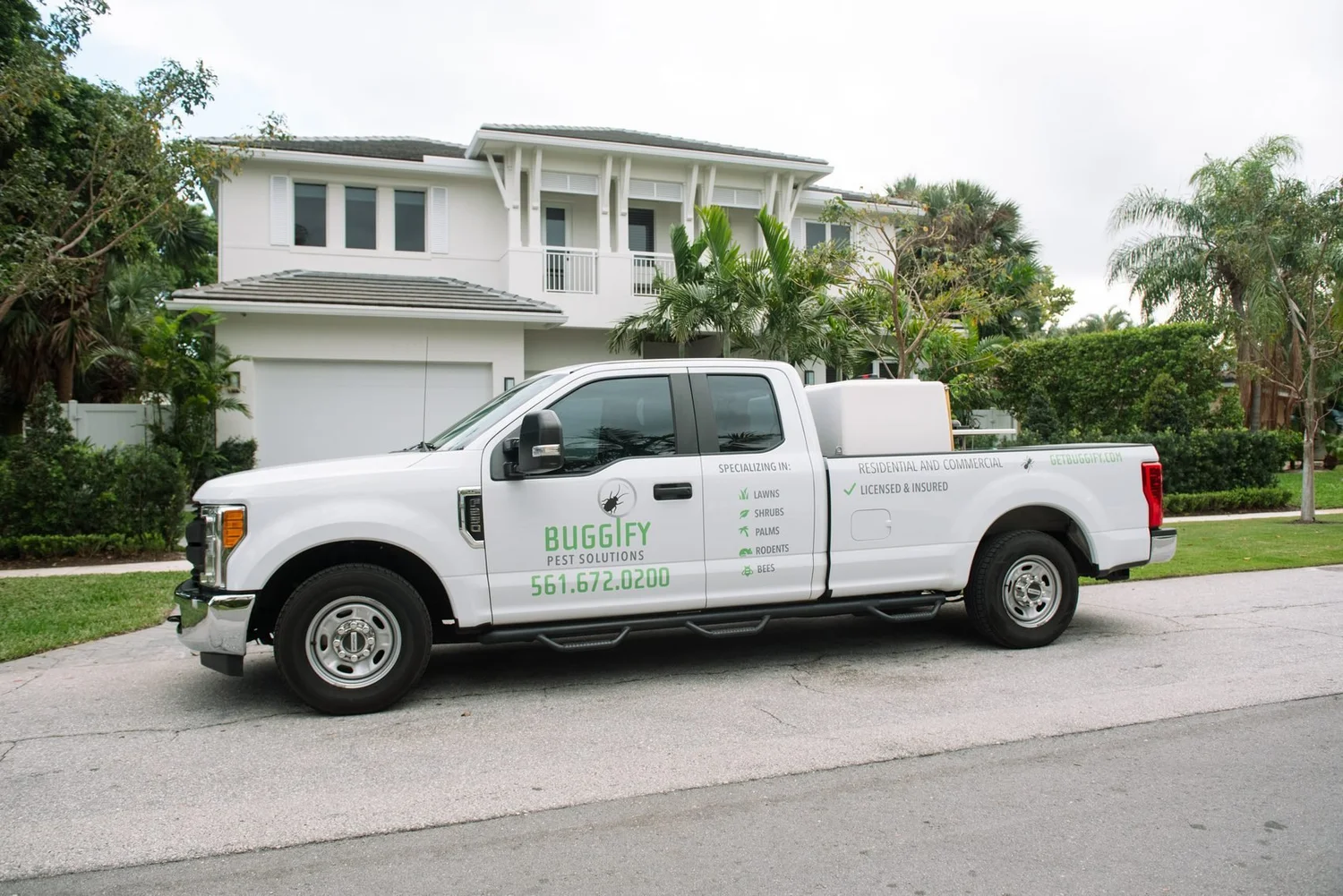
Read what Coconut Creek customers say on Google directly
Real Google reviews from Coconut Creek residents drive most of Buggify's new stinging-insect calls. Tyler answers, talks through the situation, and quotes a range on the first phone call. The live widget below pulls current reviews directly from Google, with a five-star average across all pest categories, with wasp and bee removal jobs mentioned frequently by name.
Three things Buggify will never do to you
Three things Buggify will never do to you (full list of seven on Why Choose Buggify):
Quote a real treatment price without inspecting the property first. Phone gives a range; firm pricing comes after an on-site walkthrough.
Indoor spraying when the source is outside. Most Coconut Creek pest pressure is driven by outdoor harborage; indoor-only work is a short-term cover-up.
Long-term contracts that lock you in. Bi-monthly plans bill per visit and can be canceled anytime, no fees.
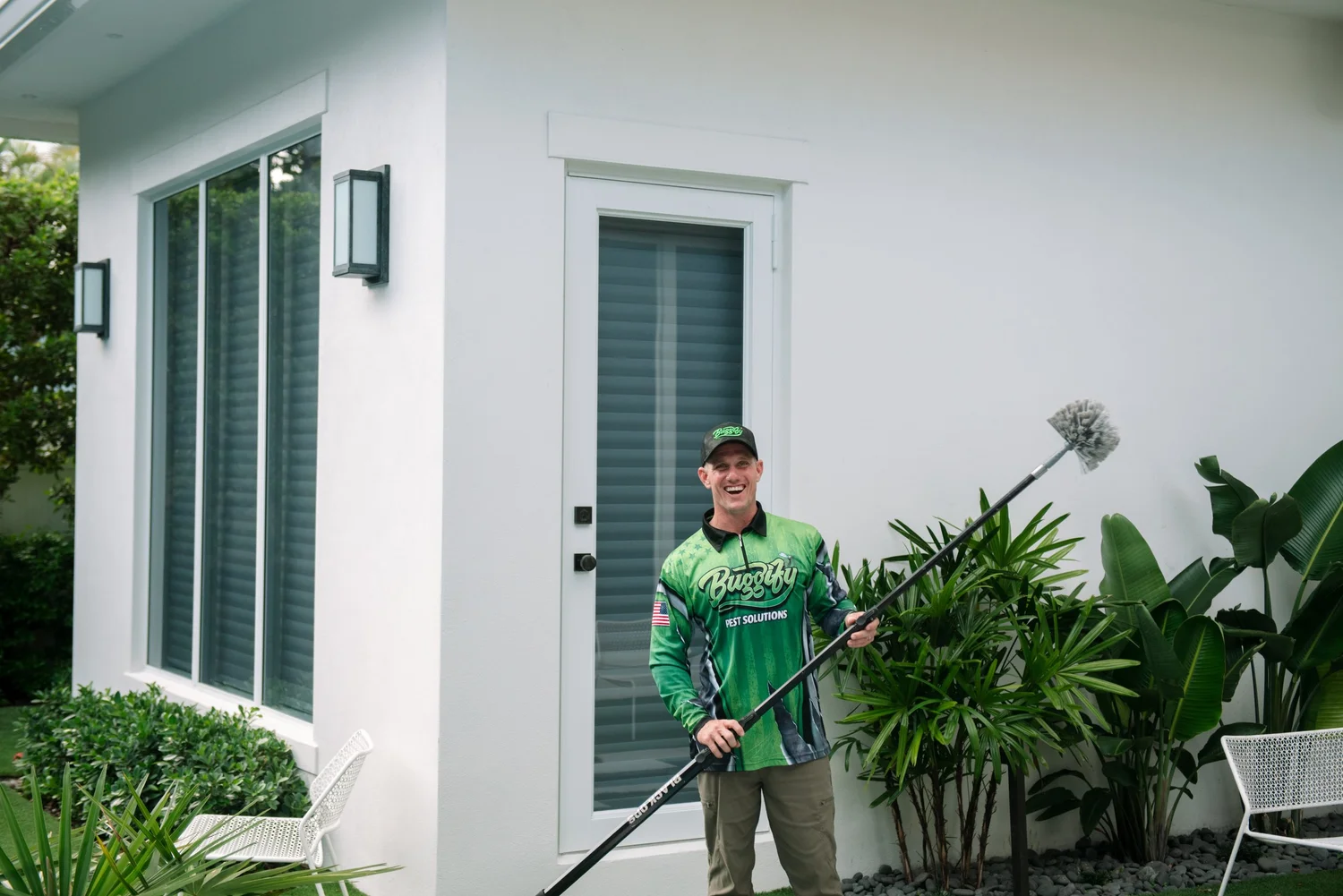
Call (561) 672-0200. Tyler answers, gives you a price range on the first call, and books your Coconut Creek appointment into the next dispatch window (standard scheduling runs same-week; stinging-insect emergencies get prioritized).
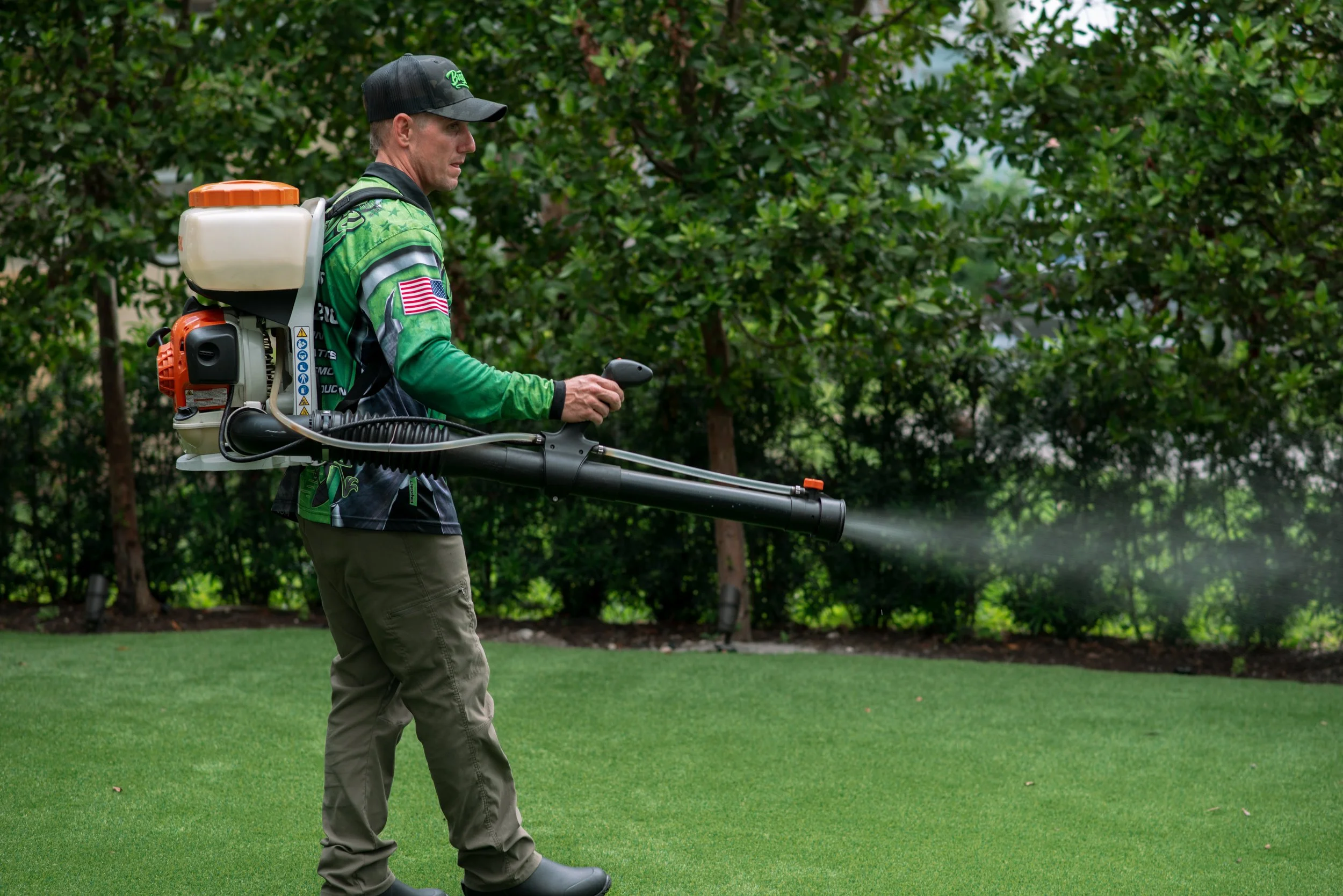
Coconut Creek wasp, bee and hornet FAQ
Do you always relocate honey bees rather than killing them in Coconut Creek?
Beekeeper cut-out is the default first path on any Coconut Creek honey bee cavity find. Cut-out and transfer to a permitted apiary through a partner beekeeper is the working standard. Controlled chemical treatment is reserved for colonies where species identification reads Africanized, where cavity access rules out live cut-out, or where safety considerations require rapid neutralization.
What if the bees are in a wall cavity that I can't easily access?
Cavity access assessment is part of the initial inspection. Wall cavity colonies sometimes require partial drywall removal for cut-out access. When cut-out is not feasible without significant structural intervention, the decision path shifts to controlled treatment with occupant notification and post-treatment cavity sealing to prevent successor-colony establishment.
Will your wasp treatment affect the butterflies visiting our garden?
Direct nest application confines treatment residual to the specific nest site, not broadcast across the surrounding landscape. Pollinator-safe timing (early morning or dusk, outside foraging windows) available on request for treatments on adjacent butterfly garden zones. Written condition-of-treatment note documents the specific method and location.
How does living near Sabal Pines or Tradewinds Park change your treatment approach?
Preserve-adjacent lots use rapid-degradation targeted formulations rather than persistent broadcast sprays. A written condition-of-treatment note documents chemistry selection and application method for HOA or county records.
Can we use pollinator-safe timing on paper-wasp work in our lanai?
Yes, pollinator-safe timing (early morning before foraging or dusk after foraging ends) is available on request. Direct nest application avoids broadcast landscape exposure regardless of timing.
Do you coordinate with Township HOA property management on scheduled landscape cycles?
Yes. HOA property manager coordination is standard on Township and adjacent master-planned community work. Preemptive nest-inspection scheduling times to HOA landscape cycles; two-week-ahead walkthroughs cut emergency-call volume during trim windows.
What if we find a honey bee swarm cluster hanging in a tree branch (not established)?
Swarm clusters that have not yet established a cavity are the easiest cut-out candidates. A coordinating beekeeper handles same-day pickup of qualifying candidates of the cluster; the cluster is transferred to a nucleus hive box without any cut-out or structural work required. This is the least-intervention path and is the standard on visible swarm clusters.
Does Buggify have any conflict-of-interest with Butterfly World or the city's pollinator program?
No formal relationship or conflict. The cut-out-first policy reflects the standard community preference for stinging-insect work in a pollinator-corridor community and aligns with Tyler's broader treatment philosophy.
Direct line to the technician serving Coconut Creek
Phone: (561) 672-0200 (Tyler answers) · Mon–Fri 8 am – 5 pm
Email: Getbuggify@gmail.com
Address: 22617 Middletown Dr., Boca Raton, FL 33428 (West Boca shop, primary dispatch)
License: FL DACS #JB268060 · Certified Operator: Tyler Craig
Call (561) 672-0200 or submit the form below for a free phone estimate. Tyler answers directly. Coconut Creek dispatch is owner-operator across a route from the West Boca shop, so appointments are pre-scheduled rather than drop-in; most standard jobs book for the same week.