
Rodent Control in Coconut Creek
Tropical-canopy tree-pathway roof-rat geometry + Sabal Pines + Sabal Palm Wildlife Sanctuary buffer work.
- FL DACS License #JB268060 · Certified Operator Tyler Craig
- Bayer Authorized Applicator (Termidor)
- $1M general liability insurance
- Google 5.0 Rated · live review feed
- Family-owned · 1,000+ South Florida homes served since 2018
- Pet-safe and family-safe treatments by default
- Free phone estimates · no long-term contracts
Coconut Creek's designation as the Butterfly Capital of Florida reflects a broader landscape reality: the city maintains one of the densest mature tropical canopies in Broward County. Sabal Pines Park, Sabal Palm Wildlife Sanctuary, and the tree-canopy corridors along the community waterways together create a continuous overhead canopy that connects most residential properties through tree crowns. That canopy continuity changes rodent-entry geometry substantially. Roof rats climb along connected canopy from property to property, and a tile-roof inspection that reads only the individual property's roofline misses the canopy-continuity vector connecting your property to adjacent properties, or to public-space canopy corridors. Tyler's Coconut Creek rodent protocol treats tree-canopy continuity as part of the inspection and treats canopy-connected properties as functionally related rather than fully independent. The parent Coconut Creek city hub covers the western new-construction first-year exclusion protocol in depth; this Tier 3 page focuses on the tropical-canopy tree-pathway dimension the hub does not cover at length.
Tropical-Canopy Tree-Pathway Specialty
Coconut Creek's mature oak and palm canopy provides continuous overhead pathways connecting properties. Roof-rat inspection has to read the tree geometry, not just the roofline.
Sabal Pines + Sabal Palm Wildlife Sanctuary Buffer
The Sabal Pines Park and Sabal Palm Wildlife Sanctuary areas create wildlife-corridor buffer zones with distinct rodent dynamics on adjacent residential.
Canopy-Continuity Diagnostic
Adjacent-property tree canopy that touches your roofline extends the rodent-entry vector beyond your own property boundary. Tyler reads the canopy continuity as part of inspection.
Same Technician Every Visit
Tyler runs every Coconut Creek rodent job. Tree-canopy pattern awareness stays consistent.
Direct Line to Tyler
Mon–Fri 8 am – 5 pm.
No Multi-Year Bait Subscription
Bills per visit. Cancel anytime, no fees.
Four Coconut Creek conditions that shape rodent work
Coconut Creek's tropical canopy density, wildlife-sanctuary buffer zones, canopy-continuity across property lines, and coordination with parent hub each shape the rodent protocol.
Sabal Pines Park + Sabal Palm Wildlife Sanctuary Buffer Zones
Sabal Pines Park (city park) and Sabal Palm Wildlife Sanctuary (Broward County natural area) each create wildlife-corridor buffer zones. Adjacent residential areas see wildlife-corridor rodent dynamics similar to but distinct from Deerfield's Deerfield Island Park work covered in the DF Tier 3 pages.
Continuous Mature Tropical Canopy Across Neighborhoods
Coconut Creek's mature oak and palm canopy connects most residential properties through overhead tree crowns. Roof rats travel along connected canopy from property to property, extending the rodent-entry vector beyond individual property boundaries.
Canopy-Continuity Across Public and Private Property Lines
City-planted street trees, public-space canopy corridors, and adjacent-property canopy each contribute to the canopy-continuity vector. Rodent-entry inspection that reads only the individual property misses meaningful vectors.
Western New-Construction + Multi-Family Townhome (Parent Hub Reference)
Western-corridor new construction first-year exclusion and multi-family townhome German cockroach inter-unit work covered on the parent Coconut Creek city hub.
Every Coconut Creek rodent issue Buggify handles
Three Coconut Creek rodent-work profiles matched to canopy-continuity and property context.
Tropical-canopy tree-pathway roof-rat work (mature-canopy residential)
Mature-canopy Coconut Creek residential where continuous overhead tree crowns connect properties. Tree-canopy continuity diagnostic on inspection + standard tile-roof borescope + copper-mesh exclusion. Where the public-space canopy is a source, homeowner coordination with city arboriculture for canopy management adjacent to residential areas.
Sabal Pines + Sabal Palm Wildlife Sanctuary buffer-zone work
Wildlife-corridor buffer-zone residential adjacent to Sabal Pines Park or Sabal Palm Wildlife Sanctuary. Standard preserve-corridor pattern tracking similar to DF Deerfield Island approach, adapted to Coconut Creek's park geography.
Western new-construction + townhome German scope (parent hub reference)
Western-corridor new-construction first-year exclusion and multi-family townhome scope covered on the parent Coconut Creek city hub.
Why Coconut Creek rodent work needs canopy-continuity diagnostic
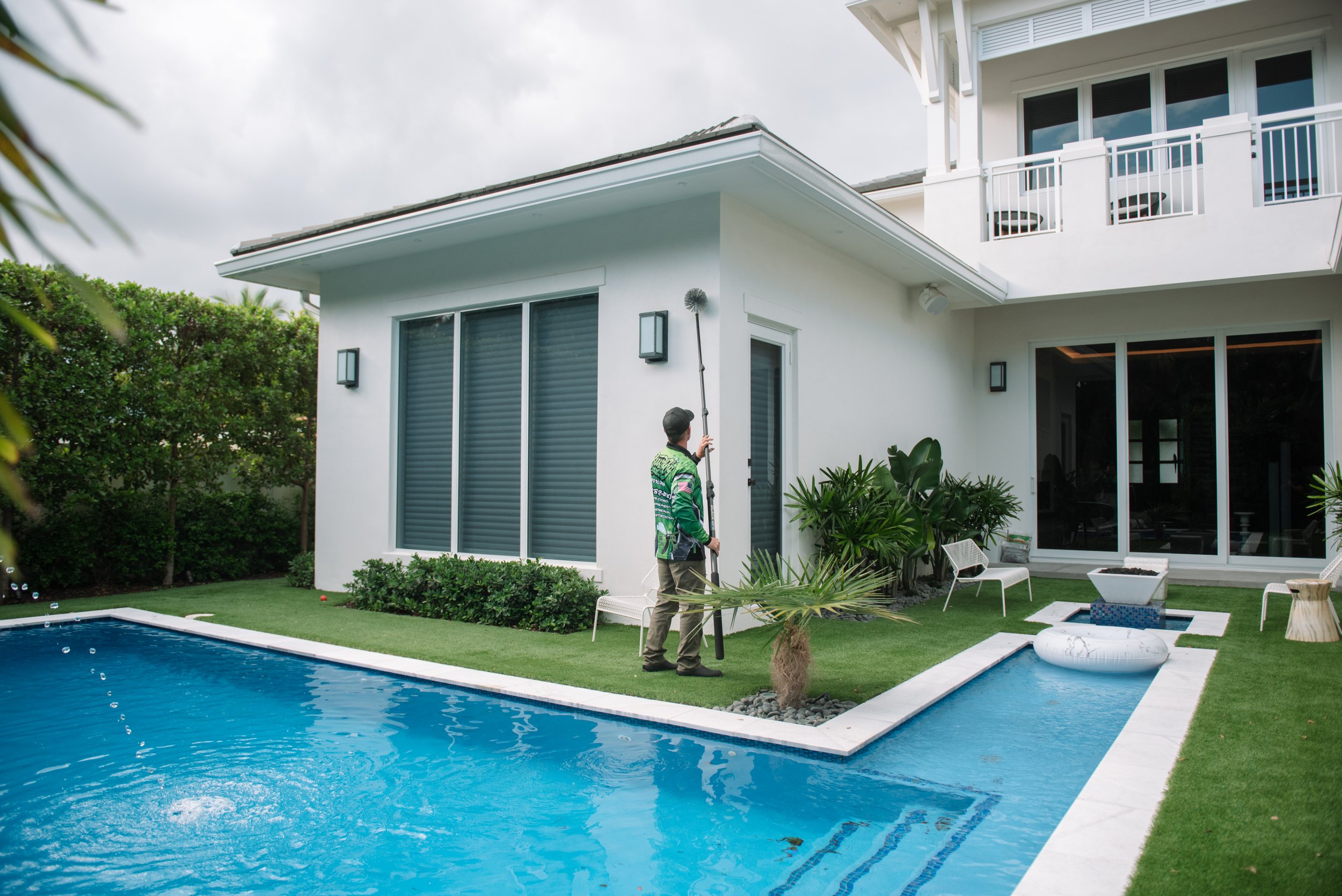
Standard South Florida rodent protocols assume individual-property rodent-entry geometry; roof rats enter at that property's specific soffit-fascia and tile-roof gaps. Coconut Creek's tropical canopy density breaks that assumption. Mature oak and palm canopy connects most residential properties through overhead tree crowns, and roof rats travel along the connected canopy from property to property. A property with a clean roofline inspection can still host active roof-rat activity if the neighboring property's canopy provides continuous overhead access.
Tyler's Coconut Creek canopy-continuity diagnostic reads the tree geometry adjacent to and connecting to the property under inspection. Which trees on the property boundary or on adjacent property extend overhead pathways to the roofline. Which city-planted street trees create public-space canopy corridors that reach the property? Where canopy-continuity vectors extend the rodent-entry pattern beyond the individual property boundary. This reading changes what the standard tile-roof borescope inspection means; exclusion at soffit-line gaps still applies, and canopy-source awareness informs homeowner conversation about tree trimming that might reduce the canopy-continuity vector.
Adjacent to canopy work, the Sabal Pines Park and Sabal Palm Wildlife Sanctuary areas create wildlife-corridor buffer zones with dynamics similar to but distinct from Deerfield's Deerfield Island Park work. The parent Coconut Creek city hub covers western new-construction and multi-family townhome scope; this Tier 3 page focuses on the canopy-continuity and wildlife-sanctuary-buffer dimensions.
Five technical details specific to Coconut Creek rodent work
Canopy-continuity diagnostic, wildlife-sanctuary buffer-zone protocol, tree-trim coordination with homeowners, public-space canopy source awareness, and integration with parent hub scope.
Canopy-Continuity Diagnostic on Inspection
Tyler's Coconut Creek rodent inspection includes a tree-canopy continuity walk in addition to the standard property-perimeter inspection. Identifies specific trees on the property, on adjacent property, or in the public right-of-way that provide continuous overhead pathways to the roofline. Documents which canopy segments extend rodent-entry vectors beyond the individual property. Diagnostic determines whether the property's rodent pressure is individual-property driven or canopy-continuity driven, changing the treatment conversation.
Sabal Pines Park + Sabal Palm Wildlife Sanctuary Buffer-Zone Protocol
Wildlife-corridor buffer-zone residential adjacent to these Coconut Creek parks and preserves gets pattern-tracking protocol similar to DF Deerfield Island Park approach. Cross-visit activity signal tracking, post-preserve-event re-inspection offered within 72 hours of storm or maintenance events, wildlife-vs-rodent differentiation at the fence line.
Tree-Trim Coordination Conversation with Homeowners
Where canopy continuity extends beyond the property under inspection, Tyler's protocol includes a conversation with the homeowner about tree trimming to reduce the canopy vector. Specific branches or canopy segments are identified for trim recommendation. Homeowner decides whether to schedule tree work with an arborist; Buggify does not perform tree trimming. Reducing canopy continuity is an environmental change that reduces rodent-entry vectors alongside the chemistry.
Public-Space Canopy Source Awareness + City Arboriculture Coordination
City-planted street trees and public-space canopy corridors can be sources of canopy that the individual property owner cannot address directly. Tyler's protocol identifies these sources and, where warranted, provides written documentation the homeowner can use in a conversation with Coconut Creek city arboriculture about canopy management adjacent to residential areas.
Coordination with Parent Hub Western + Townhome Scope
Western-corridor new-construction first-year exclusion protocol and multi-family townhome German cockroach inter-unit work covered on the parent Coconut Creek city hub. Canopy-continuity properties with western-corridor exposure or townhome scope reference both this page and the parent hub.
Sabal Pines Park boundary event: post-storm displacement across three adjacent properties
The trigger event
In fall 2023, a strong non-named tropical system passed through Broward with heavy wind and rain. Sabal Pines Park experienced significant canopy displacement from downed limbs and shifted tree crowns. Within two weeks, three adjacent residential properties on the park-facing street each reported new roof rat scratching in attics that had been clean during prior bi-monthly visits.
The three-property inspection
Tyler ran coordinated inspections across all three properties over a single week. Confirmed active roof-rat presence in all three attics. Canopy-continuity walk identified that the storm-shifted park canopy had brought previously separated tree crowns into contact with the three properties' rooflines, extending the canopy-continuity vector. Standard tile-roof soffit inspection found the entry points where the newly-continuous canopy met the rooflines.
The coordinated response
Trap-out deployment across all three properties simultaneously. Copper-mesh + polyurethane exclusion at the newly-identified entry points. Homeowner conversations about scheduling tree trimming with a shared arborist to break the canopy-continuity vectors across the three properties. Coordination with city arboriculture about the park-side canopy management post-storm.
The outcome
All three properties clear of activity within 5-6 weeks. Two of three homeowners scheduled tree trimming; the third opted to keep the canopy for shade and instead moved to a Complete-tier plan for ongoing canopy-continuity monitoring. Park-side canopy management by city arboriculture completed within 3 months of the event as part of routine post-storm park maintenance.
Coconut Creek rodent job pricing
Standard Buggify rodent pricing with canopy-continuity diagnostic + wildlife-sanctuary buffer-zone monitoring as specialty scope.
Initial Visit,$200-600
Standard rodent inspection + canopy-continuity walk + snap-trap deployment + first monitoring visit.
Wildlife-Sanctuary Buffer-Zone Monitoring,Custom
Preserve-adjacent property monitoring bundled into Complete-tier plans. Pattern tracking + post-storm re-inspection offered within 72 hours.
Attic / Wall-Cavity Work,$750-1,500
Standard trap-out and attic access.
Exclusion Sealing,$400-1,500+
Standard tile-roof soffit + gable vent: $400- $ 800. Multi-entry-point canopy-continuity properties at upper end.
Buggify vs. National Pest Chains
5-point comparison. Every row verifiable from how Buggify operates.
| Feature | Buggify in Coconut Creek | National Pest Chains |
|---|---|---|
| Canopy-continuity diagnostic | Standard on every Coconut Creek inspection | Individual-property protocol misses canopy vector |
| Sabal Pines + Sabal Palm buffer-zone tracking | Standard on buffer-adjacent Complete-tier | No wildlife-sanctuary protocol |
| Tree-trim coordination conversation | Standard when canopy vectors are identified | Chemistry-only approach |
| City arboriculture coordination | Available on public-space canopy source cases | No public-space coordination |
| Same technician every visit | Tyler runs every Coconut Creek rodent job | Rotating route techs |
Read what Coconut Creek customers say on Google directly
Coconut Creek rodent reviews often reference the canopy-continuity conversation. Homeowners who had experienced recurring rodent activity that individual-property protocols could not resolve describe the tree-canopy vector explanation as the change that let them address the actual driver alongside the pest treatment. Google 5.0 Rated · live review feed.
Three things Buggify will never do to you
Three things Buggify will never do to you (full list of seven on Why Choose Buggify):
Quote a real treatment price without inspecting the property first. Phone gives a range; firm pricing comes after an on-site walkthrough.
Indoor spraying when the source is outside. Most Coconut Creek pest pressure is driven by outdoor harborage; indoor-only work is a short-term cover-up.
Long-term contracts that lock you in. Bi-monthly plans bill per visit and cancel anytime, no fees.
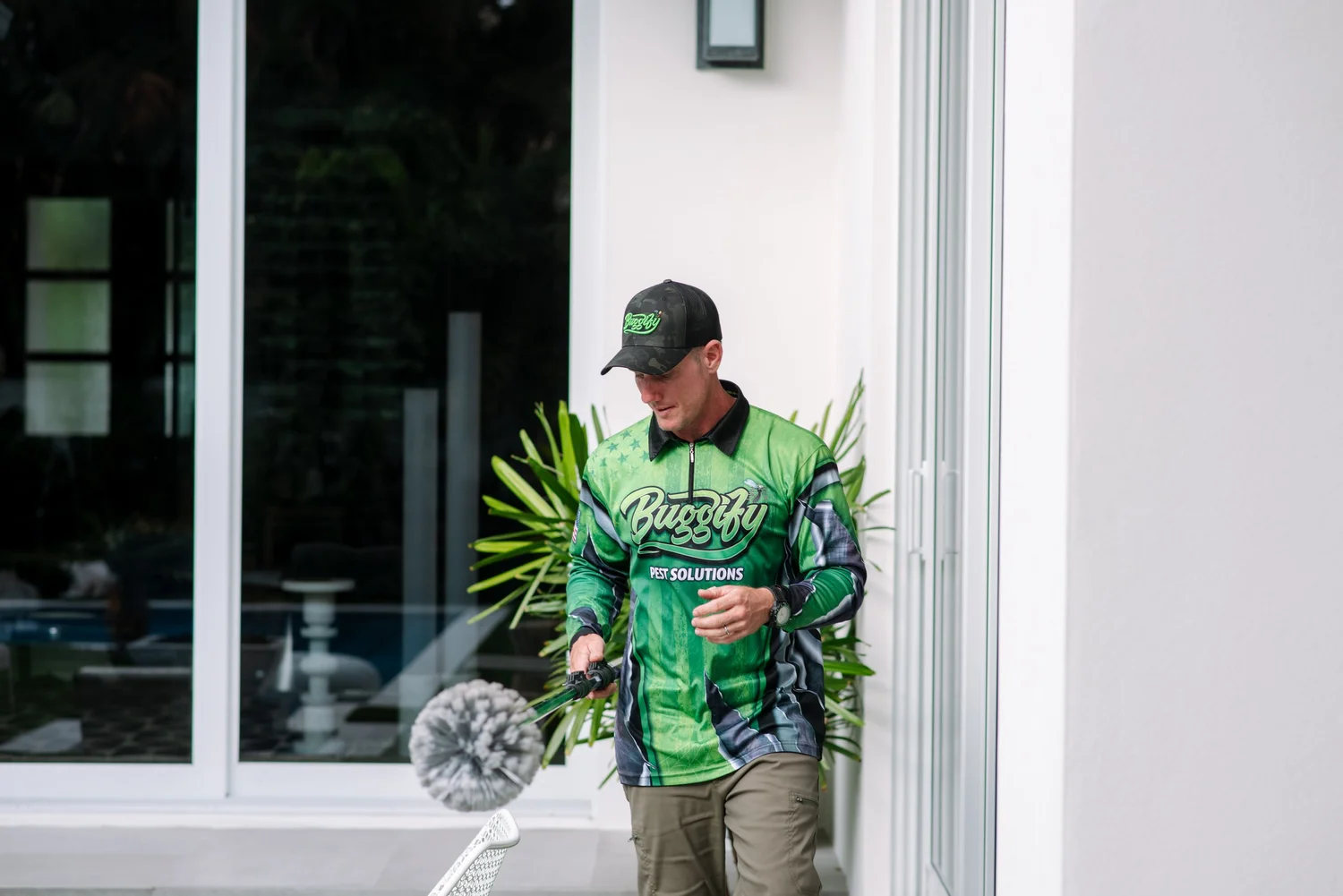
Call (561) 672-0200. Tyler answers, gives you a price range on the first call, and books your Coconut Creek appointment into the next dispatch window (standard scheduling runs same-week; stinging-insect emergencies get prioritized).
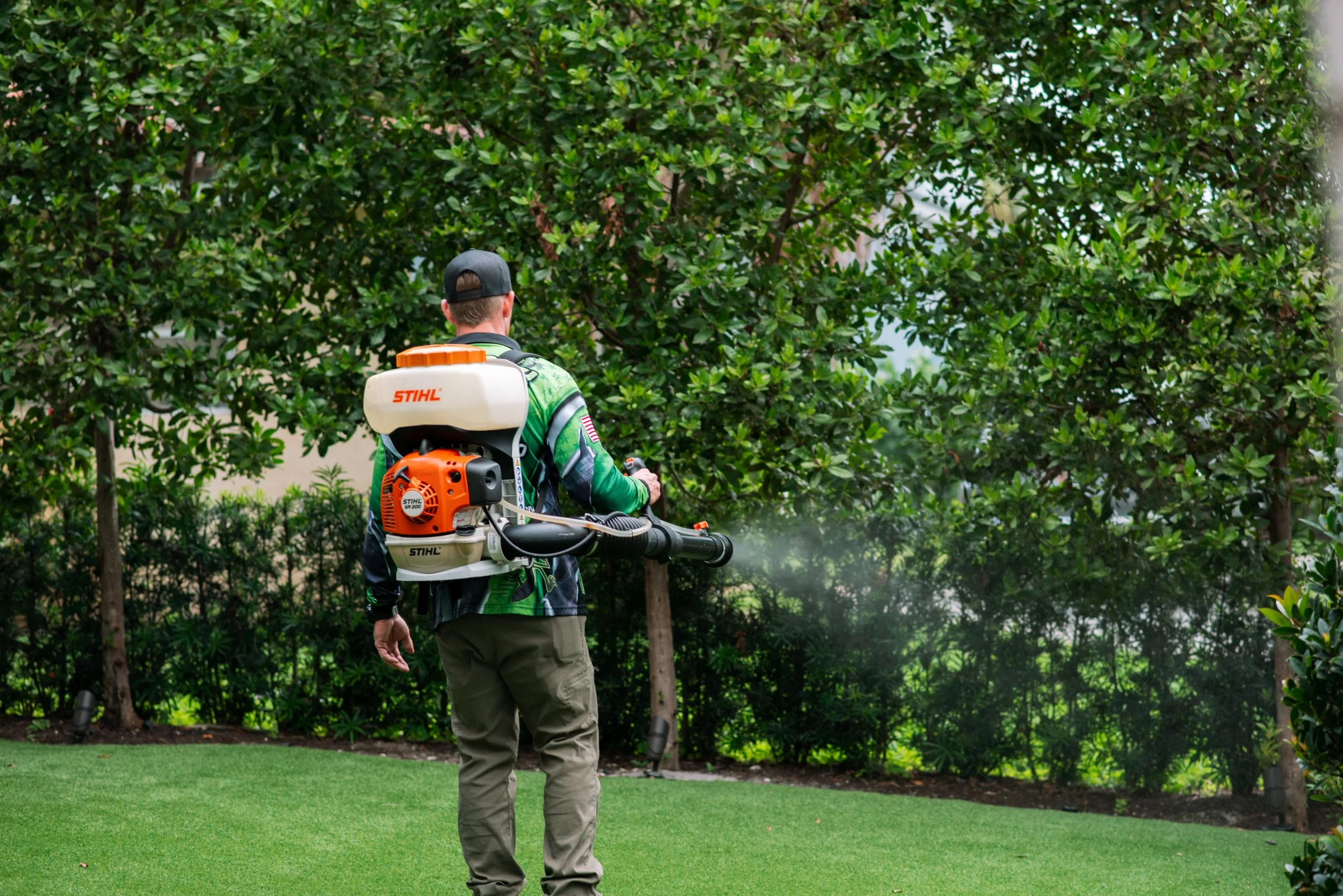
Seven Coconut Creek rodent questions Tyler hears most often
My roofline looked clean on inspection, but my attic still has roof rats. Why?
Likely canopy-continuity from adjacent property or public-space trees. Roof rats travel overhead through connected canopy from property to property. Tyler's canopy-continuity diagnostic walk identifies the specific trees creating the vector, and treatment addresses the entry points where the canopy meets your roofline.
My property backs onto Sabal Pines Park. Is my rodent work different?
Yes, wildlife-corridor buffer-zone protocol applies. Pattern tracking across visits catches displacement events, and post-preserve-event re-inspection offered within 72 hours of storm or maintenance events is standard on Complete-tier.
Can Buggify trim my trees?
No, tree work is an arborist scope. Tyler identifies specific canopy segments creating rodent-entry vectors and recommends a tree-trim conversation with an arborist. Reducing the canopy continuity is an environmental change that helps alongside the pest treatment.
My canopy-continuity source is a city-planted street tree. What can I do?
Tyler can provide written documentation the homeowner can use in conversation with Coconut Creek city arboriculture about canopy management adjacent to residential. Public-space canopy decisions ultimately rest with the city.
How does this differ from Deerfield Island Park work?
Similar principles, different ecology. DF Deerfield Island Park is a boat-access preserve with wildlife-predator competition dynamics. CC Sabal Pines Park + Sabal Palm Wildlife Sanctuary are more accessible and produce tropical-canopy-connected rodent patterns rather than strict wildlife-corridor competition.
I'm in a western Coconut Creek new-construction home. Do I use this page or the parent hub?
Both. Parent hub covers western new-construction first-year exclusion; this page covers canopy-continuity where applicable. New-construction western Coconut Creek may or may not have significant canopy yet; canopy-continuity awareness grows as the landscape matures.
How fast can Tyler dispatch to Coconut Creek?
Coconut Creek is 15- 20 miles north of the shop; standard scheduling books same week.
Direct line to the technician serving Coconut Creek
Phone: (561) 672-0200 (Tyler answers) · Mon–Fri 8 am – 5 pm
Email: Getbuggify@gmail.com
Address: 22617 Middletown Dr., Boca Raton, FL 33428 (West Boca shop, primary dispatch)
License: FL DACS #JB268060 · Certified Operator: Tyler Craig
Call (561) 672-0200 or submit the form below for a free phone estimate. Tyler answers directly. Coconut Creek dispatch is owner-operator across a 20-25-mile route, so appointments are pre-scheduled rather than drop-in; most standard jobs book the same week.