

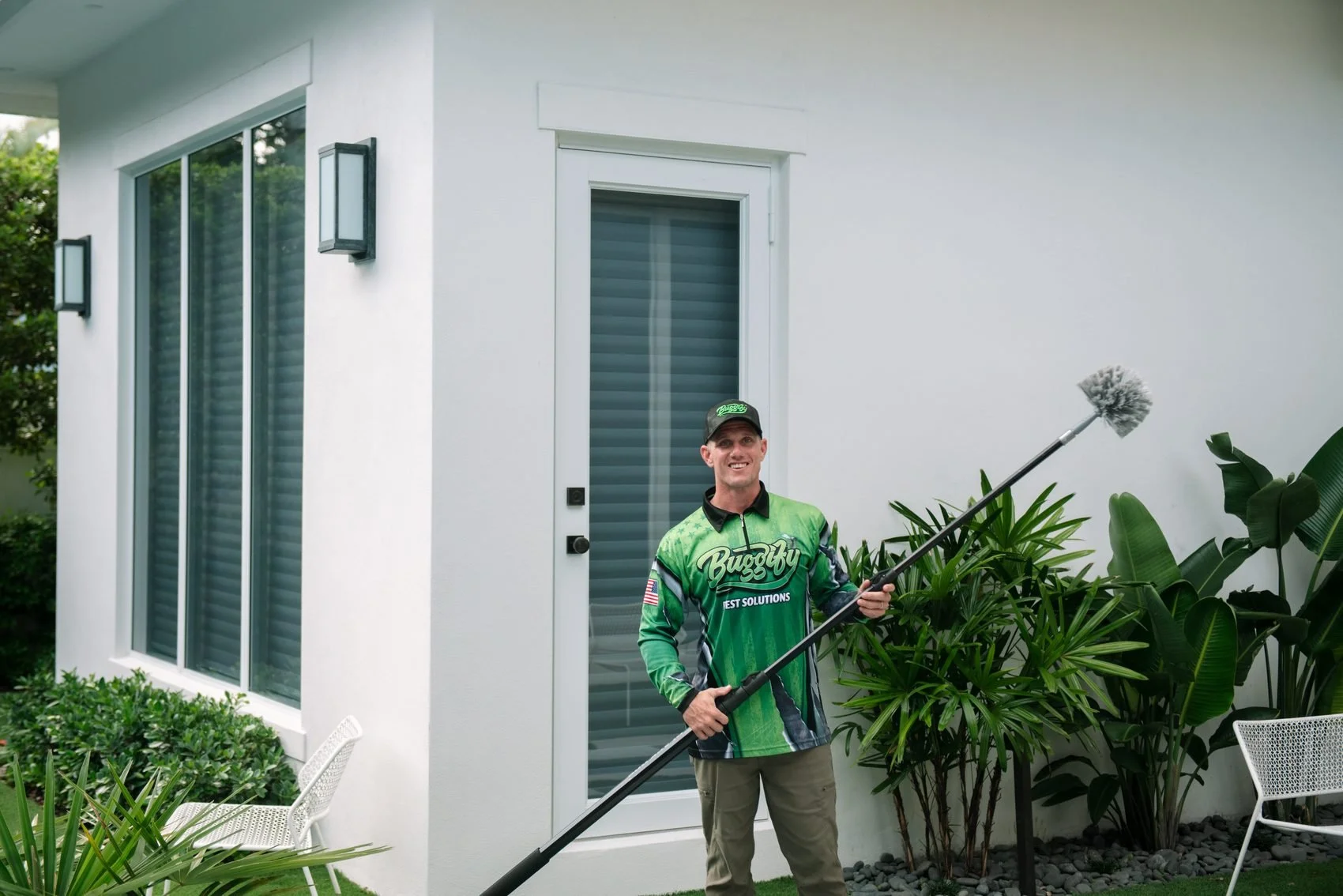
Boca Raton Control for Fleas, Ticks, Silverfish, Millipedes, Earwigs
Species-specific protocols for the less-common South Florida pests. Not generic spray.
Less common than roaches or ants, but still a real problem when they show up — fleas in a pet-heavy home, ticks in a heavily landscaped yard, silverfish in an older humid home, millipedes after a heavy rain, earwigs in lanai zones. Each one comes with its own driver and its own protocol, which is why generic perimeter spray fails on several of them. Flea jobs need a three-zone treatment across the pet, yard, and interior over four to six weeks. Silverfish need humidity reduction alongside residual. Millipedes need threshold sealing to prevent re-entry after the next storm. Tyler diagnoses the species during inspection and selects the protocol from there.
every call himself
Species-specific protocols, one local technician
Flea Treatment — Pet + Yard + Interior
Three-zone protocol: vet-coordinated pet treatment, yard residual, and indoor IGR. Single-zone treatment fails — Tyler does all three within a 4–6 week window.
Tick Yard Reduction
Heavy landscaping plus outdoor pet activity drives tick pressure. Yard residual + perimeter barrier + landscape management (mowing height, leaf-litter removal).
Silverfish — Humidity First
Older Boca homes with humidity issues and paper-based clutter breed silverfish. Humidity reduction is the primary fix, alongside targeted residual.
Millipede Post-Rain Treatment
Heavy rain drives millipedes indoors. Exterior perimeter + interior spot treatment + threshold sealing to keep the next wave out.
Earwig Lanai-Zone Treatment
Earwigs hide in damp lanai clutter during the rainy season. Lanai-edge residual plus a decluttering and mulch-line recommendation.
Same Technician Every Visit
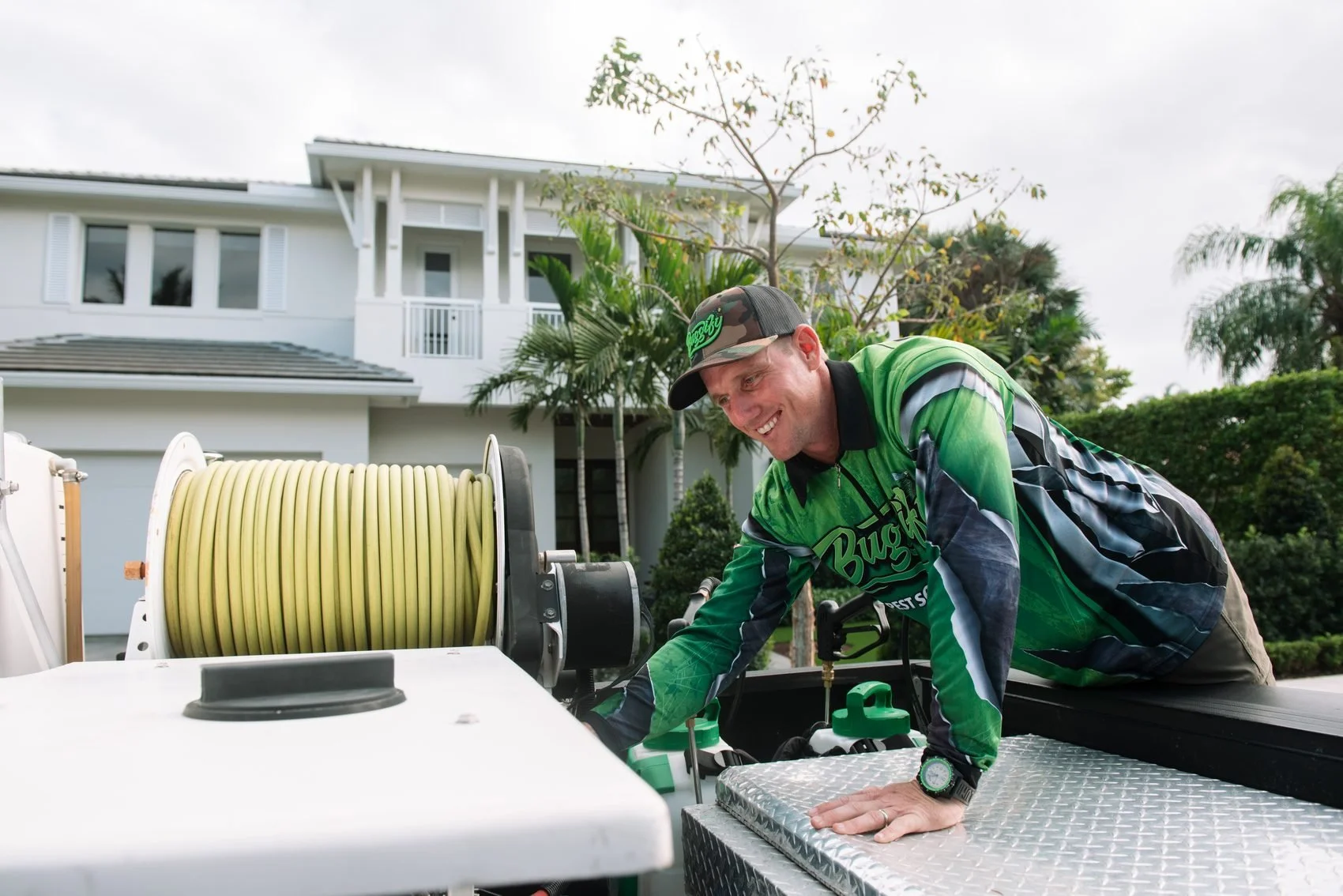
Tyler IDs the species and selects the protocol. No rotating route techs, no generic one-spray-fits-all.
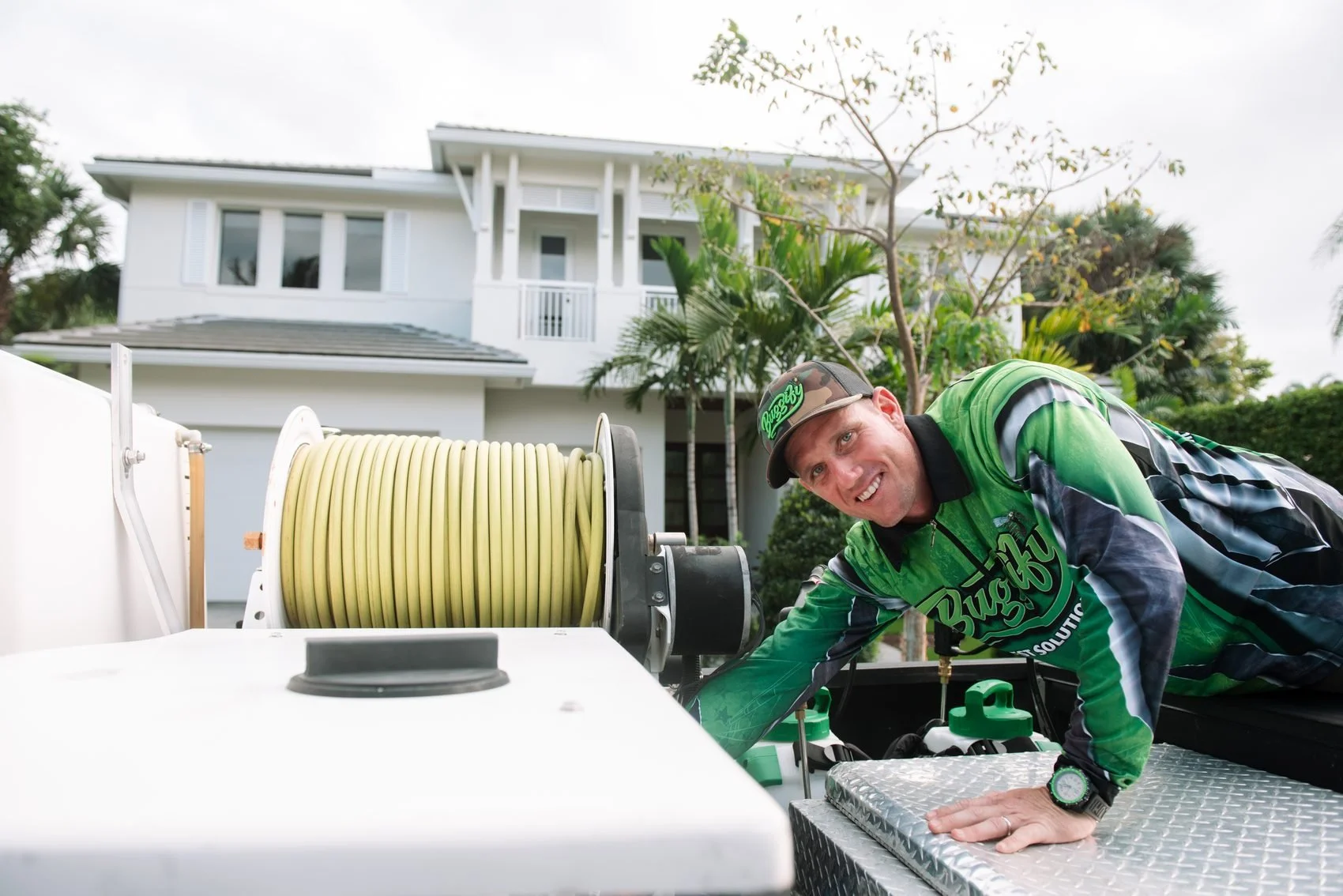
“Fleas, ticks, silverfish, millipedes, and earwigs share a common need: species identification before treatment. Each one requires a different protocol — a generic spray fails on most of them.”
Fleas need three-zone treatment (pet, yard, interior) — single-zone treatment fails because the life cycle continues elsewhere. Ticks need outdoor residual + yard perimeter reduction. Silverfish need humidity reduction (not just spray). Millipedes need exterior perimeter + threshold sealing to keep them out. Earwigs need lanai-zone work + decluttering.
National-chain protocols default to a generic perimeter spray for all of these — works moderately for ticks and earwigs, fails for fleas (life cycle continues), fails for silverfish (humidity untreated), fails for millipedes (entry points open). Tyler IDs the species and selects the protocol. The right work on each pest takes longer, but actually ends the activity.
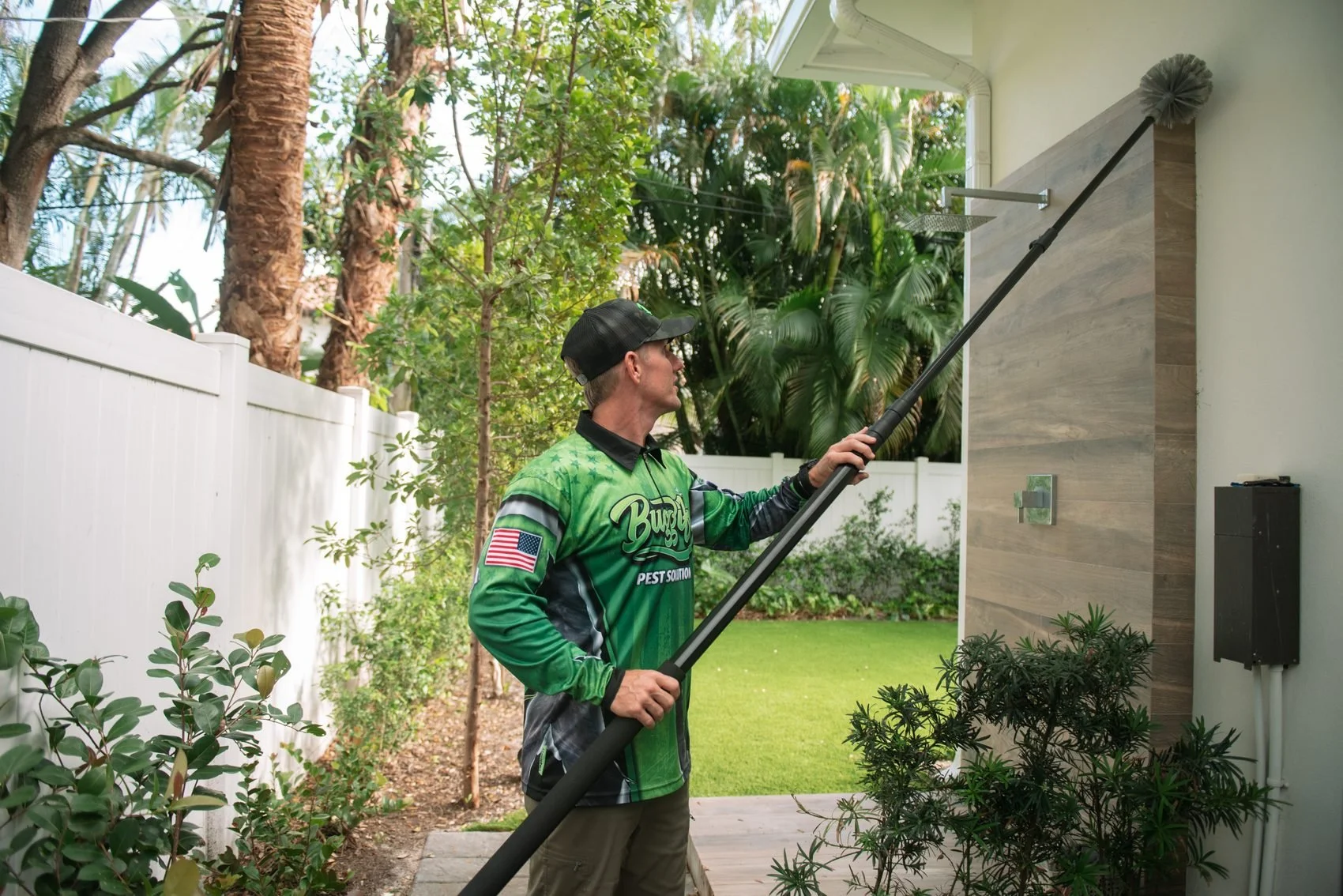
Every pest Buggify handles, one local technician
Each has a different driver, protocol, and prevention approach — Tyler IDs on-site.
Indoor pests — roaches, ants, spiders, silverfish
German and American cockroach harborages. Carpenter, fire, sugar/ghost, pharaoh, and big-headed ants (each needs a different bait + barrier strategy). House spiders, lanai-edge orb weavers, and brown widow exclusion. Silverfish in older humid homes. Earwigs and millipedes during the rainy season.
Outdoor pests — mosquitoes, wasps, hornets, yellow jackets
Mosquito yard barrier on a monthly cadence, May–October. Paper wasp, mud dauber, yellow jacket, and bald-faced hornet nest removal — same-day response when scheduling allows. Carpenter bee identification and removal (often confused with honey bees — they need a different treatment). Stinging-insect emergencies prioritized over scheduled visits.
Rodent control — roof rats, Norway rats, mice
Roof rats dominate South Florida (tile-roof entry geometry); Norway rats are secondary, canal-adjacent only. Trapping for active populations, baiting for ongoing pressure, copper mesh + polyurethane exclusion for the long-term fix. Attic and wall-cavity work both in scope.
Whole-home pest exclusion + specialty work
Entry-point sealing (copper mesh + Tremco/GE polyurethane). Soffit-fascia gap repair, plumbing-vent screening, slab-crack treatment, pest-grade vent screening. Bee removal ($250–1,200+ by hive size and access). Commercial / HOA / property management (50–200 home communities preferred). Luxury home pest management (gated communities). Lawn care (HOA + luxury-estate add-on only).
Exactly what happens, start to finish
Most pest companies won't tell you the plan. Here's ours — proven, source-first, and transparent — so you can spot anyone cutting corners.
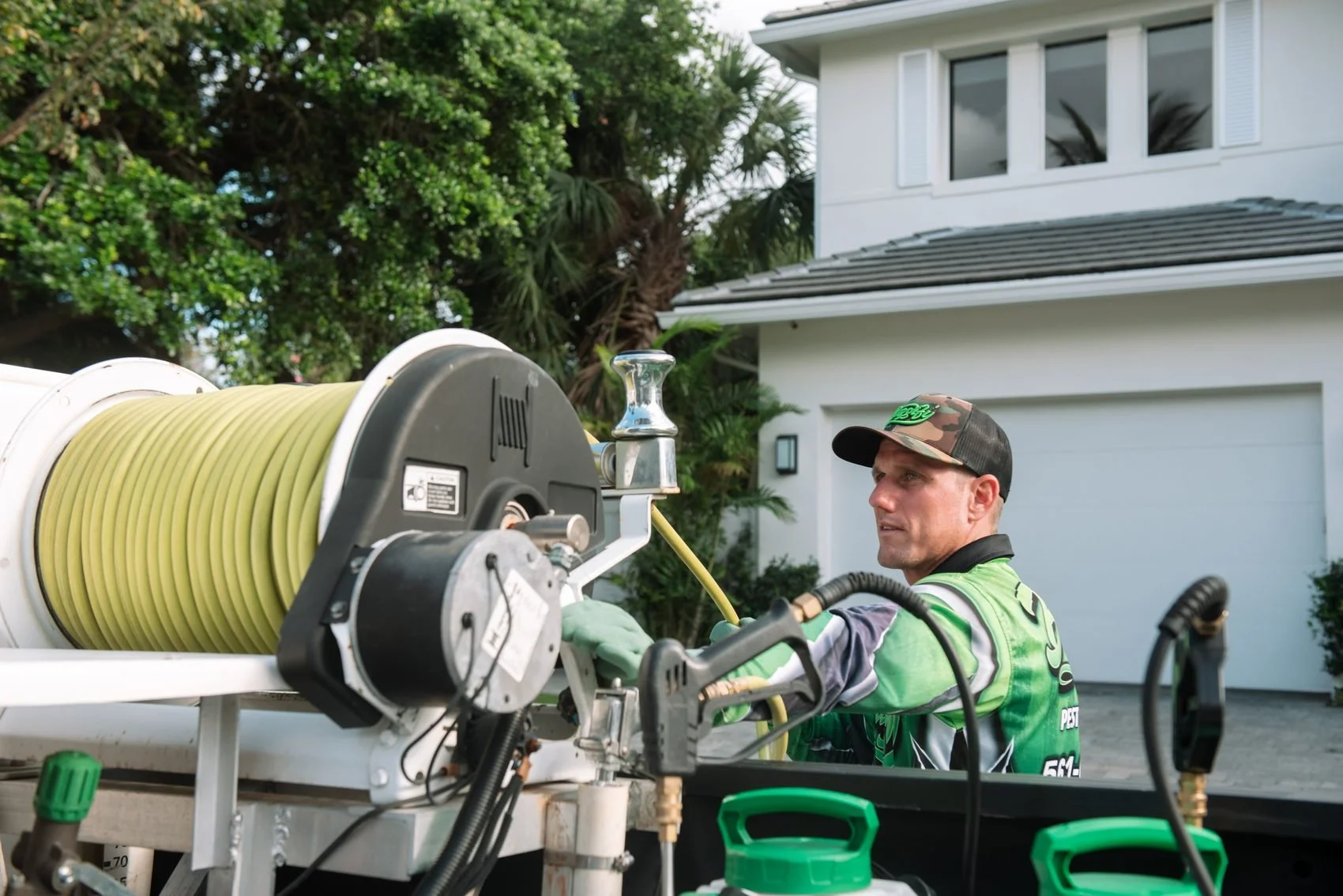
You call Tyler. He picks up.
Direct line, Mon–Fri 8 am – 5 pm. He asks what you're seeing, where, and how long. Free phone estimate range, then a $175 on-site inspection if needed (credited toward your first treatment when you book ongoing service).
Same-day or next-day on-site inspection.
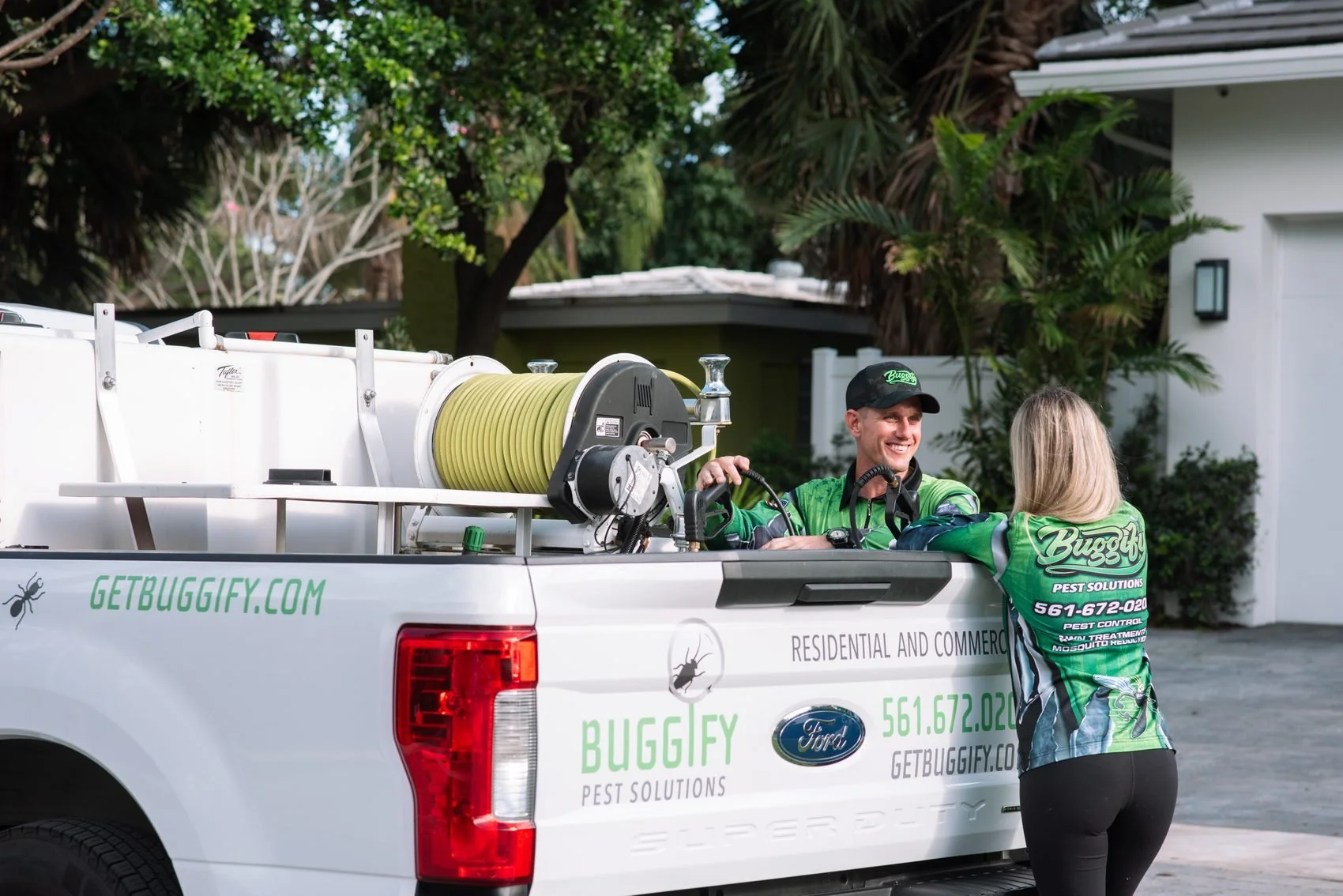
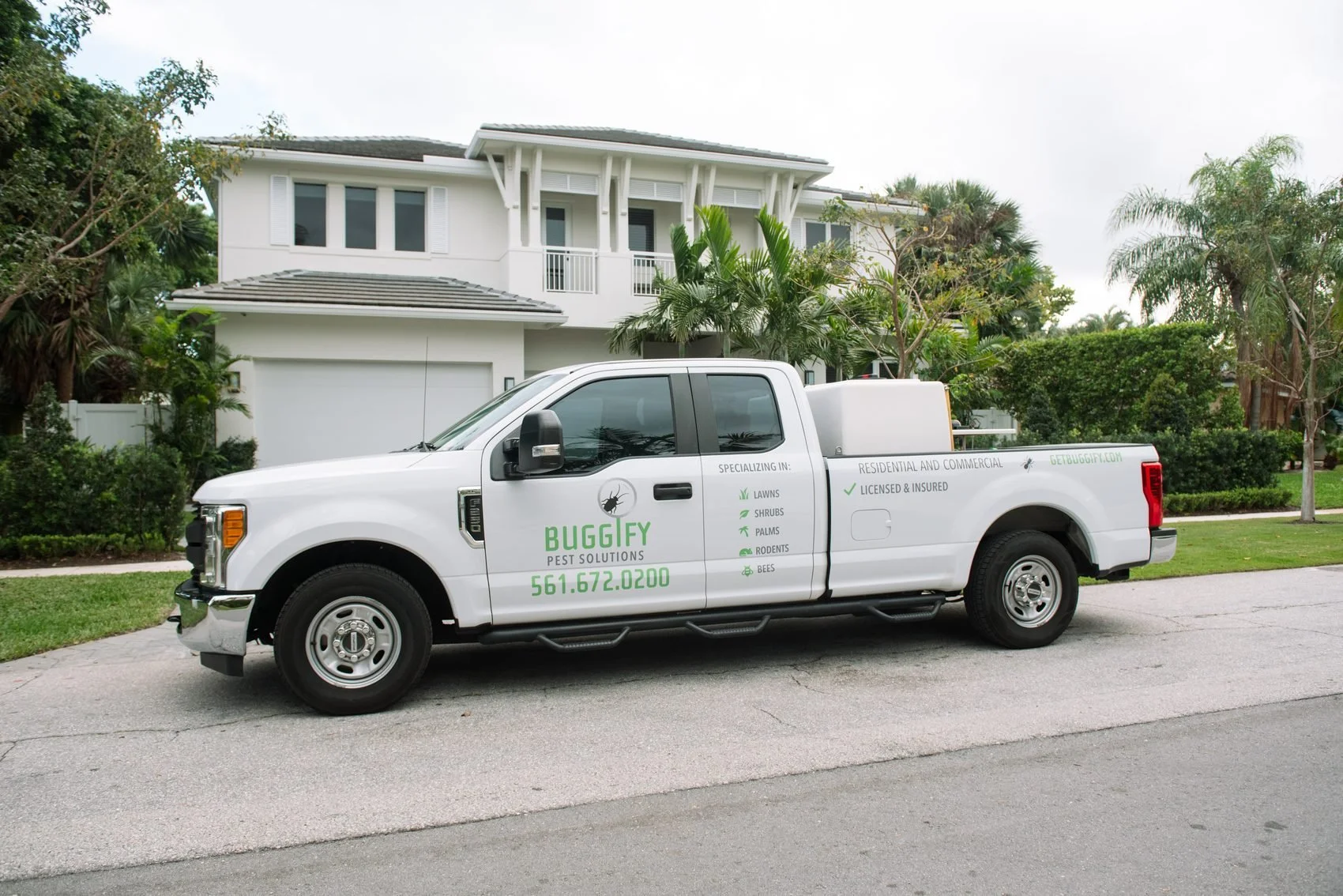
Same-day routine in the core area when you call before noon. Tyler arrives in the white Buggify truck and inspects the interior, exterior, and moisture/harborage zones relevant to the species.
Species ID + driver diagnosis.
Flea, tick, silverfish, millipede, or earwig? Each has a different driver — pet life cycle, landscape habitat, indoor humidity, post-rain migration, or damp clutter. Tyler identifies the species and the source producing it.
Species-specific treatment.
Three-zone flea protocol with IGR; yard residual + landscape plan for ticks; humidity fix + residual for silverfish; perimeter + threshold sealing for millipedes; lanai-edge + decluttering for earwigs. Pet-safe products; SDS on request.
Walkthrough, prevention plan, and follow-up.
Written summary of what was treated and the source to correct (humidity repair, threshold seal, landscape change). Flea jobs get a multi-visit schedule; a 30-day callback applies on one-time treatments.
A local owner beats a route tech
Bi-monthly plans, every 8 weeks
Three tiers, same cadence. They differ in scope, not frequency. Bills per visit — cancel anytime.
Basic
General pest — perimeter, entry-point, crack-and-crevice.
- ✓Every-8-week service
- ✓Perimeter + entry-point treatment
- ✓Crack-and-crevice work
- ✓Free re-service between visits
Full Home Protection
The standard for typical Boca / Parkland / West Boca homes.
- ✓Everything in Basic
- ✓Interior on request
- ✓Rodent + ant monitoring
- ✓Termite-sign check + licensed WDO referral
Complete
Built for luxury, gated, or high-pressure properties.
- ✓Everything in Full Home
- ✓Mosquito barrier
- ✓Attic + exclusion monitoring
- ✓Lanai treatment + termite-sign referral
Yard + interior treatment with IGR across a 4–6 week multi-visit window, coordinated with the vet's pet treatment. Priced by home and yard size.
Single-visit targeted treatment + source recommendation (humidity fix, threshold sealing, or decluttering). 30-day callback. One visit can cover multiple species.
Yard residual broadcast + perimeter barrier + landscape-management plan. Heavily wooded or large lots at the upper end.
Ongoing coverage for less-common pests is bundled into the bi-monthly plans. See the plan tiers →
13 cities, two counties, one local guy
Buggify runs out of the West Boca shop at 22617 Middletown Dr. Same-day service is routine in the core area when you call before noon.
Outer zones by appointment — Highland Beach, Wellington, Lake Worth Beach & Tamarac case-by-case. Travel surcharge may apply beyond a 15-mile radius.
Why Boca pest pressure isn't like anywhere else
National playbooks are built for four-season climates with a real off-season. South Florida has none — seven local factors that change the whole approach.
Humidity drives moisture harborage
70–85% year-round humidity keeps moisture-driven harborage active continuously — AC condensate drains, irrigation overspray, and under-sink leaks. It's the #1 driver behind silverfish and a contributor to most of these pests.
Hurricane-season displacement (May–Oct)
Heavy storms displace pests and saturate outdoor harborage. Active plan customers get a post-named-storm inspection offer — water-pooling zones and threshold gaps checked.
Heavy rain drives millipede migration
Rainy-season storms saturate mulch, leaf litter, and irrigation pooling; millipedes (and earwigs) displace into homes through thresholds and exterior doors. Post-rain work adds threshold sealing + perimeter residual.
Pre-1980 construction + humidity = silverfish
Older Boca and Delray homes with original HVAC and uncorrected humidity support silverfish. Modern construction almost never does. Silverfish activity signals a humidity problem to fix alongside treatment.
Heavy outdoor pet activity = flea + tick pressure
Boca, Parkland, and West Boca have high dog ownership and heavy outdoor pet activity. Yard residual on pet-heavy properties plus vet coordination is the standard protocol.
Tropical landscape = tick habitat
Oak canopies, palm clusters, and dense shrubs create shaded, humid, leaf-littered tick habitat. Landscape management (mow height, tall-grass setback, leaf-litter removal) is part of every tick job.
Outdoor harborage outsizes indoor
The climate keeps pests viable outdoors year-round, so mulch lines, lanai screens, and landscape moisture are the primary harborages. Indoor-only treatment misses ~70% of the driver.
Not sure what's driving it on your street?
Tyler knows the pressure block by block. Get a free read on the phone.
(561) 672-0200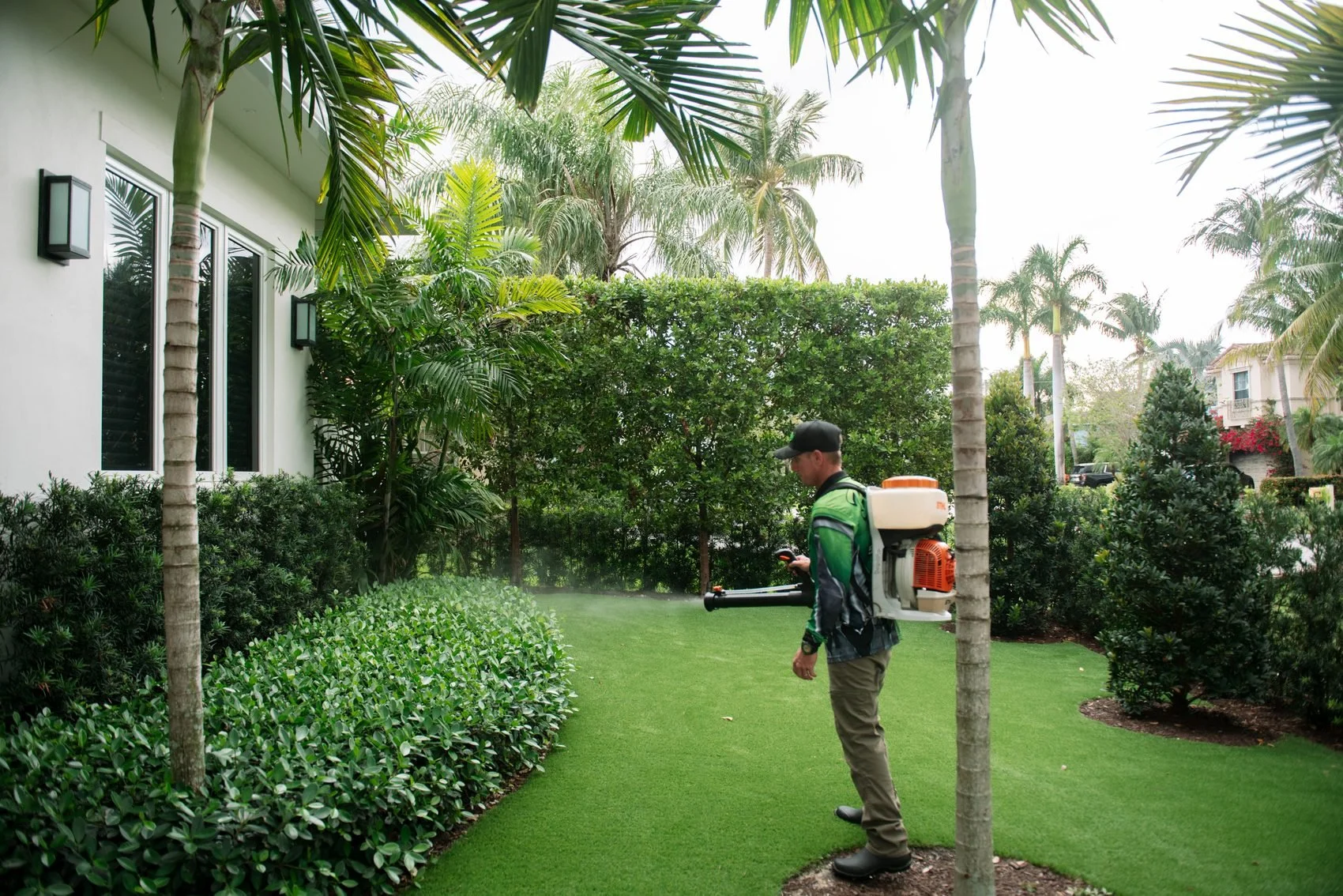
The technical depth behind every visit
Seven things most route techs are never trained on — each tied to a real outcome for your home.
Flea three-zone protocol — why single-zone fails
Egg → larva → pupa (treatment-resistant 7–14 days) → adult. Indoor-only leaves the yard active; yard-only leaves indoor eggs; pet-only leaves the carpet population. All three zones must be treated within a 4–6 week window with an IGR at each indoor application to interrupt the pupa stage.
Tick landscape management beats spray alone
Ticks live in shaded, humid, leaf-littered zones. Residual reduces population but not habitat. Mow to 2.5–3 in, remove leaf litter in pet zones, create a 3-ft tall-grass setback, manage woodpiles. Residual + habitat management is durable; residual alone isn't.
Silverfish humidity reduction — the primary protocol
Silverfish need >70% humidity. Homes with failing AC condensate, plumbing leaks, or dryer-vent moisture become habitat. Treatment without humidity correction recurs in 2–3 months. Tyler identifies the source, recommends correction, and applies residual + IGR at active zones.
Millipede threshold sealing — preventing re-entry
Millipedes enter at door thresholds, garage-door bottom seals, and slab-to-frame transitions. Residual kills the ones that enter, but the next rain brings a new wave. Weatherstripping, garage-seal repair, and polyurethane at slab gaps prevent re-entry (carpentry referred out; Tyler IDs the gaps).
Earwig lanai-zone treatment + decluttering
Earwigs hide in dark, damp clutter — under furniture, in mulch, behind pool equipment, in palm-frond accumulation. Lanai-edge residual + a decluttering and mulch-setback recommendation. Cosmetic and harmless despite the rear pincers.
Vet coordination on flea work
Buggify treats yard and interior; the pet treatment is vet-prescribed. Tyler times the yard/interior work around when the pet treatment takes effect so the whole life cycle is hit at once. Vet referral provided if needed — either half alone means re-infestation.
IGRs across species — methoprene + pyriproxyfen
IGRs (methoprene for fleas; pyriproxyfen for fleas and roaches) interrupt the reproductive cycle so the next generation never develops. Chains often skip the IGR step; Buggify includes it on every flea job and multi-visit roach work — the line between reduction and elimination.
SDS available on request
Every product, every time — full transparency, no "proprietary blends."
homes served
What our customers say about Buggify
Verified 5-star reviews from Boca Raton, Parkland & Coral Springs families — straight from Google.
Twelve questions Tyler gets about less-common pests
If yours isn't here, call (561) 672-0200 — Tyler answers directly.
Will my outdoor dog get ticks if I treat the yard?
–Yard residual reduces population but doesn't eliminate ticks completely. Combined with vet-prescribed tick prevention on the dog and landscape management (mow height, leaf-litter removal, tall-grass setback), exposure drops to near-zero. Yard treatment is one of three needed measures.
Why do I keep getting silverfish?
+Silverfish need humidity above 70%. If they keep coming back, there's an uncorrected humidity source — a failing AC condensate drain, a slow plumbing leak, or dryer-vent moisture. Treatment without fixing the humidity recurs in 2–3 months. Fix the moisture and they leave.
Millipedes came in by the dozen after a storm — normal?
+Yes — heavy rain saturates mulch and leaf litter and millipedes displace indoors through thresholds. Most die quickly in the dry indoor air. Exterior perimeter residual plus threshold sealing keeps the next wave out; interior cleanup handles the ones already in.
Are the treatments safe for pets and kids?
+Yes — label-compliant pet-safe products for every species treated. Flea IGRs and indoor residuals are applied to carpet edges and pet rest zones, dried before re-entry. SDS available on request.
Do you treat the pet for fleas too?
+No — the pet treatment is veterinarian-prescribed (oral, topical, or collar). Tyler coordinates the timing so the yard and interior work lands when the pet treatment is effective, hitting the whole life cycle at once. Vet referral provided if you don't have one.
What's the warranty on a one-time treatment?
+30-day callback warranty. If the same pest returns within 30 days, Tyler comes back at no additional cost. Flea jobs are structured as a multi-visit protocol rather than one-time.
Can one visit cover more than one pest?
+Often yes — silverfish and earwigs, for example, can be handled in the same visit. Tyler IDs everything active during inspection and bundles the treatment rather than billing per species.
Do earwig pincers hurt?
+Earwigs are essentially harmless — the rear pincers look intimidating but they rarely pinch and can't hurt a person. They're a cosmetic/nuisance pest; treatment is lanai-edge residual plus decluttering the damp zones they hide in.
How do I keep silverfish out of my books and papers?
+Reduce humidity (dehumidifier in the room, fix any leak), store paper in sealed bins rather than cardboard, and keep clutter off the floor. Tyler treats active zones with residual + IGR, but humidity control is what keeps them gone.
Same-day service available?
+Same-day inspection is routine in the core service area (Boca, West Boca, Parkland, Coral Springs, Deerfield Beach) when you call before noon. Outside the core, the next day is typical.
Do you handle these pests for HOAs and property management?
+Yes — custom-quoted by location and scope. Fleas in common-area landscaping and silverfish in older shared buildings are the most common multi-unit calls.
Three things Buggify will never do to you
Quote a real price without inspecting first
The phone gives a range; firm pricing comes after an on-site walkthrough, so the scope matches what's actually driving the activity.
Indoor spraying when the source is outside
Most South Florida pest pressure is driven by outdoor harborage. Indoor-only work is a short-term cover-up, not a fix.
Lock you into a long-term contract
Bi-monthly plans bill per visit and cancel anytime, no fees. Service should be based on need, not contractual obligation.
Call Tyler. Get a price range on the first call.
No contract, no sales pitch, no callback queue — in most cases, on the schedule the same day or next morning.