

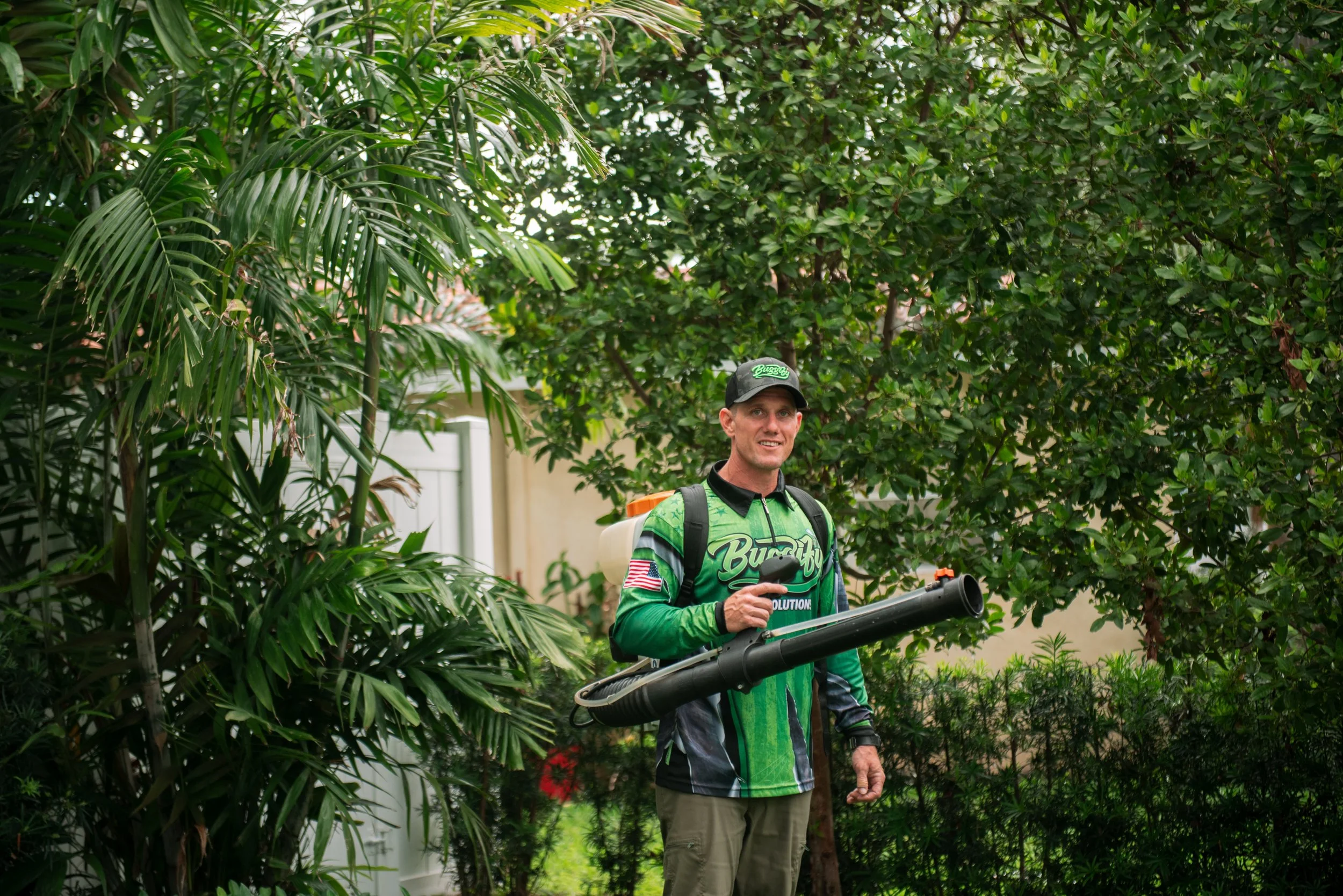
Mosquito Control in Pompano Beach
Tidal salt-marsh + Hillsboro Inlet mangrove-edge species need a different protocol from inland freshwater cadence. Species-appropriate treatment, not a one-cadence-fits-all plan.
- FL DACS License #JB268060 · Certified Operator Tyler Craig
- Bayer Authorized Applicator (Termidor)
- $1M general liability insurance
- Google 5.0 Rated · live review feed
- Family-owned · 1,000+ South Florida homes served since 2018
- Pet-safe and family-safe treatments by default
- Free phone estimates · no long-term contracts
Pompano Beach has a mosquito profile that inland freshwater protocols miss. The city fronts approximately 3 miles of Atlantic beachfront, includes the Hillsboro Inlet (where the Intracoastal Waterway meets the ocean), and threads a mangrove-fringe network along the Intracoastal Waterway from Hillsboro Shores down through Terra Mar and into the Harbor Village area. That coastal geometry produces a mosquito species mix dominated by Aedes taeniorhynchus (the black salt-marsh mosquito) alongside the standard Culex species that dominate inland freshwater breeding. Salt-marsh mosquitoes have a fundamentally different life cycle from freshwater ones; they breed on tidal cycles rather than rainfall, they fly farther inland than freshwater species (up to 10-20 miles), and they respond differently to residual chemistry. Tyler's Pompano mosquito protocol identifies the dominant species profile for each property, then matches cadence and chemistry to that profile rather than defaulting to a one-size-fits-all plan.
Intracoastal Tidal Salt-Marsh Specialty
Hillsboro Inlet + Intracoastal Waterway tidal edge drives a species mix that inland freshwater protocols miss. Aedes taeniorhynchus salt-marsh mosquitoes need a different treatment than Culex freshwater breeders.
Mangrove-Edge Fringe Work
Mangrove fringe zones along the Intracoastal are protected wildlife habitat; treatment must respect wildlife protection while addressing on-property spillover. Tyler operates within the rules.
Species-Appropriate Cadence
Salt-marsh species breed on tidal cycles (roughly 7-10 days after new/full moon high tides), freshwater species on rainfall cycles. Cadence should follow the species mix, not a generic monthly clock.
Owner-Operator, Not a Chain Route
Tyler Craig is the only technician. Same person every visit, learning your specific yard exposure and treatment response.
Pet-Safe + Family-Safe by Default
Bayer / FMC professional residuals applied at label rates. SDS available on request. Yard safe to re-enter once the barrier dries (30-60 minutes).
No Long-Term Contract
Bi-monthly plans bill per visit and can be canceled anytime. Monthly upgrade during peak by request.
Why Pompano mosquito pressure requires species-appropriate protocol, not just monthly cadence
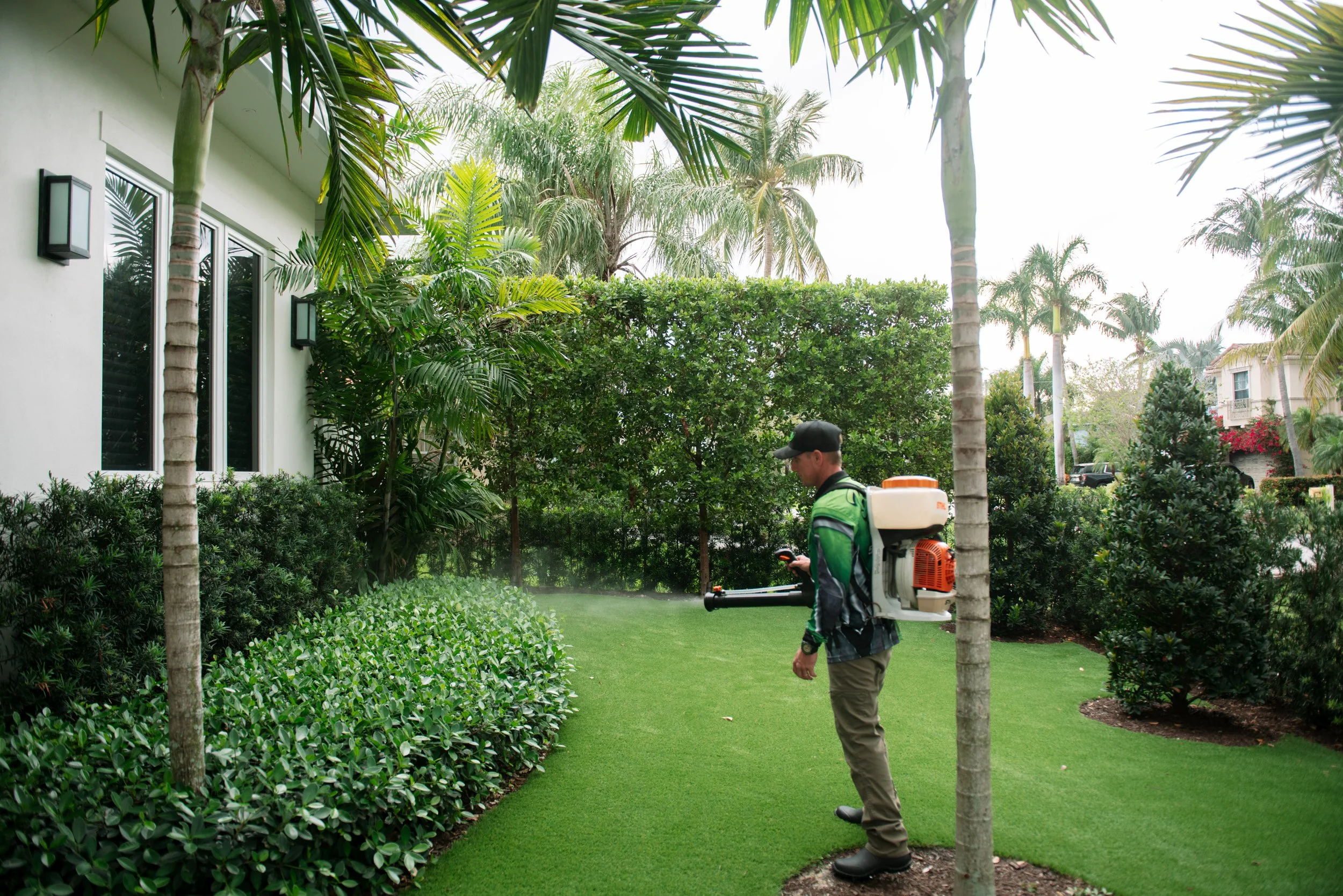
Standard South Florida mosquito playbooks assume freshwater Culex-dominant pressure driven by wet-season rainfall and canal breeding. Pompano Beach breaks that assumption. The city's coastal geometry (3 miles of Atlantic beachfront, the Hillsboro Inlet, and an extensive Intracoastal mangrove fringe) produces heavy pressure from Aedes taeniorhynchus (black salt-marsh mosquito) alongside the standard Culex freshwater breeding. Aedes taeniorhynchus has a fundamentally different life cycle. It breeds in the salt-marsh and brackish-water zones flooded by new-moon and full-moon high tides. Populations peak roughly 7-10 days after those flooding events. Adults fly inland much farther than freshwater species, sometimes 10-20 miles from the breeding site, so a Pompano property does not have to sit directly on the mangrove edge to see this species.
The distinction matters because salt-marsh mosquitoes respond differently to residual chemistry than freshwater species do, and because treatment timing matters. A monthly cadence calibrated to the freshwater breeding cycle can leave a 3-5-day window uncovered around each new or full moon salt-marsh emergence event. On Pompano properties with high salt-marsh exposure (beachfront + first inland row + Intracoastal-adjacent), Tyler's protocol adds a targeted treatment 3-4 days ahead of forecast high-tide flooding events to intercept the emerging adults before they disperse.
Culex freshwater species are still present in the city, especially in the interior canal corridor and in properties with poor drainage or standing container water. Tyler's inspection identifies which species is dominant on each property and matches the protocol. A beachfront condo on Terra Mar with dense mangrove exposure gets the tidal-cycle treatment schedule. A Cresthaven inland home with backyard container water gets the standard bi-monthly + on-site source elimination. A Palm Aire property near golf-course water features gets a hybrid protocol. Species-first, then cadence, then chemistry.
Every Pompano mosquito issue Buggify handles
Pompano's coastal geometry produces four distinct mosquito-work profiles across the city.
Aedes taeniorhynchus (black salt-marsh mosquito) on beachfront and Intracoastal properties
The dominant coastal species. Breeds in salt-marsh and brackish zones flooded by new-moon and full-moon high tides. Populations peak roughly 7-10 days after tidal flooding. Adults disperse 10-20 miles inland from breeding sites. Treatment: pre-emergence targeted spraying at forecast tidal-flood + 3-4 day window on high-exposure properties, plus standard bi-monthly barrier residual, plus outdoor lighting audit coordination with the parent hub's amber LED recommendation.
Culex nigripalpus + Culex quinquefasciatus (freshwater canal species)
The standard inland species. Breed in canals, retention ponds, poor-drainage low spots, container water. Populations respond to wet-season rainfall on standard 7-10 day breeding cycles. Treatment: standard bi-monthly perimeter barrier + on-site source elimination + Bti larvicide at identified standing-water breeding points. Cadence upgraded to monthly during May-October peak on canal-corridor properties.
Mangrove-fringe Aedes species on Intracoastal-adjacent
Mangrove-fringe zones along the Intracoastal (Hillsboro Shores, Terra Mar, Harbor Village) are protected wildlife habitat. Treatment respects the wildlife protection rules while addressing on-property spillover. Focus is on the yard side of the property line, with fence-line residuals and any yard-side low spots that hold floodwater; treatment does not enter the mangrove fringe itself.
Backyard container-breeding Aedes aegypti + Aedes albopictus
Dengue and Zika vectors breed in artificial container water (birdbaths, plant saucers, boat covers, clogged gutters). Tyler's inspection walks the property for container-water sources; treatment focuses on source elimination + adult knock-down + long-residual barrier at daytime resting zones (dense vegetation, shaded eaves, garage interiors). More important on Pompano than in inland cities because coastal storm cycles refill container water repeatedly.
Four technical details specific to Pompano mosquito work
Buggify's Pompano mosquito protocol depth in species identification, tidal-cycle timing, mangrove-fringe boundary work, and chemistry selection.
Aedes vs Culex Species Identification on Inspection
Adult mosquito species identification on the inspection walk uses a combination of resting posture (Aedes rest with body parallel to the surface, Culex rest with body angled), coloration (Aedes taeniorhynchus is jet-black with white leg banding, Culex is browner and more uniform), and habitat context (salt-marsh proximity, canal proximity, container-water proximity). This identification drives the selection of the property's cadence and chemistry.
Tidal-Cycle Pre-Emergence Timing
Salt-marsh mosquito populations follow a predictable astronomical cycle, peaking roughly 7-10 days after new-moon and full-moon high tides that flood the marsh. Tyler tracks the tidal forecast for Hillsboro Inlet and schedules pre-emergence targeted treatment 3-4 days ahead of the flood event. This intercepts the emerging adults before they disperse and reduces the interior-yard population before the standard bi-monthly or monthly visit.
Mangrove-Fringe Boundary Work + Wildlife Protection
The Intracoastal mangrove-fringe zone is protected wildlife habitat and cannot be treated directly with broadcast residuals. Tyler's boundary protocol treats the yard-side of the fence line with residual, targets yard-side low spots that collect flood water with Bti larvicide, and does not enter the fringe itself. Any drift-risk treatment on windy days is postponed until wind conditions are within EPA label limits.
Chemistry Selection by Species and Exposure Profile
Bti (Bacillus thuringiensis israelensis) is the standard larvicide for open standing water on inland freshwater sources. Methoprene IGR is used in contained standing water where Bti coverage is difficult. For adult knockdown on coastal properties, Tyler selects residuals with published salt-air performance data (Bayer / FMC lines) over generic pyrethroids that break down faster in coastal UV + salt exposure. SDS available on request for every product used.
Five Pompano conditions that shape mosquito work
Pompano's coastal geometry, mangrove-fringe habitat, tidal cycle, hurricane-season storm cycle, and 40-neighborhood construction-age spread each affect the mosquito protocol.
Three Miles of Atlantic Beachfront + Hillsboro Inlet
Pompano fronts approximately 3 miles of Atlantic beachfront from the Atlantic Blvd / Terra Mar Drive intersection north to Hillsboro Inlet. The inlet is where the Intracoastal Waterway meets the ocean, marked by the historic Hillsboro Lighthouse. Beachfront and inlet-adjacent properties see the heaviest salt-marsh mosquito pressure, and the tidal-cycle treatment schedule applies here first.
Intracoastal Waterway Mangrove-Fringe (Hillsboro Shores → Terra Mar → Harbor Village)
The Intracoastal Waterway from Hillsboro Shores south through Terra Mar and into Harbor Village threads a mangrove-fringe zone that is protected wildlife habitat. Mangrove fringe is a primary salt-marsh mosquito breeding zone but cannot be treated directly. Treatment focus is on the yard-side of the private property line, respecting the fringe boundary.
New-Moon and Full-Moon Tidal-Flood Cycle
Salt-marsh mosquito populations peak roughly 7-10 days after new-moon and full-moon high tides that flood the marsh and mangrove-fringe breeding zones. This is a predictable astronomical cycle. Tyler's protocol schedules pre-emergence targeted treatment 3-4 days before the forecast flood event to intercept emerging adults.
Hurricane Season Storm-Surge + Container Refill
Named-storm events and heavy rain refill backyard container water and can flood inland low spots that normally stay dry. Container-water source elimination is a moving target through May-October. Tyler's post-storm re-inspection offer for active plan customers includes a container-water source walk within a week of the all-clear.
Inland Freshwater Canal Corridor (Cypress Creek, Pompano Canal)
Interior canal-corridor properties see standard Culex freshwater mosquito pressure driven by canal breeding and wet-season rainfall. Parent Pompano city hub covers the canal-cadence Norway rat and mosquito overlap; this Tier 3 page focuses on the coastal salt-marsh side that the hub does not cover in depth.
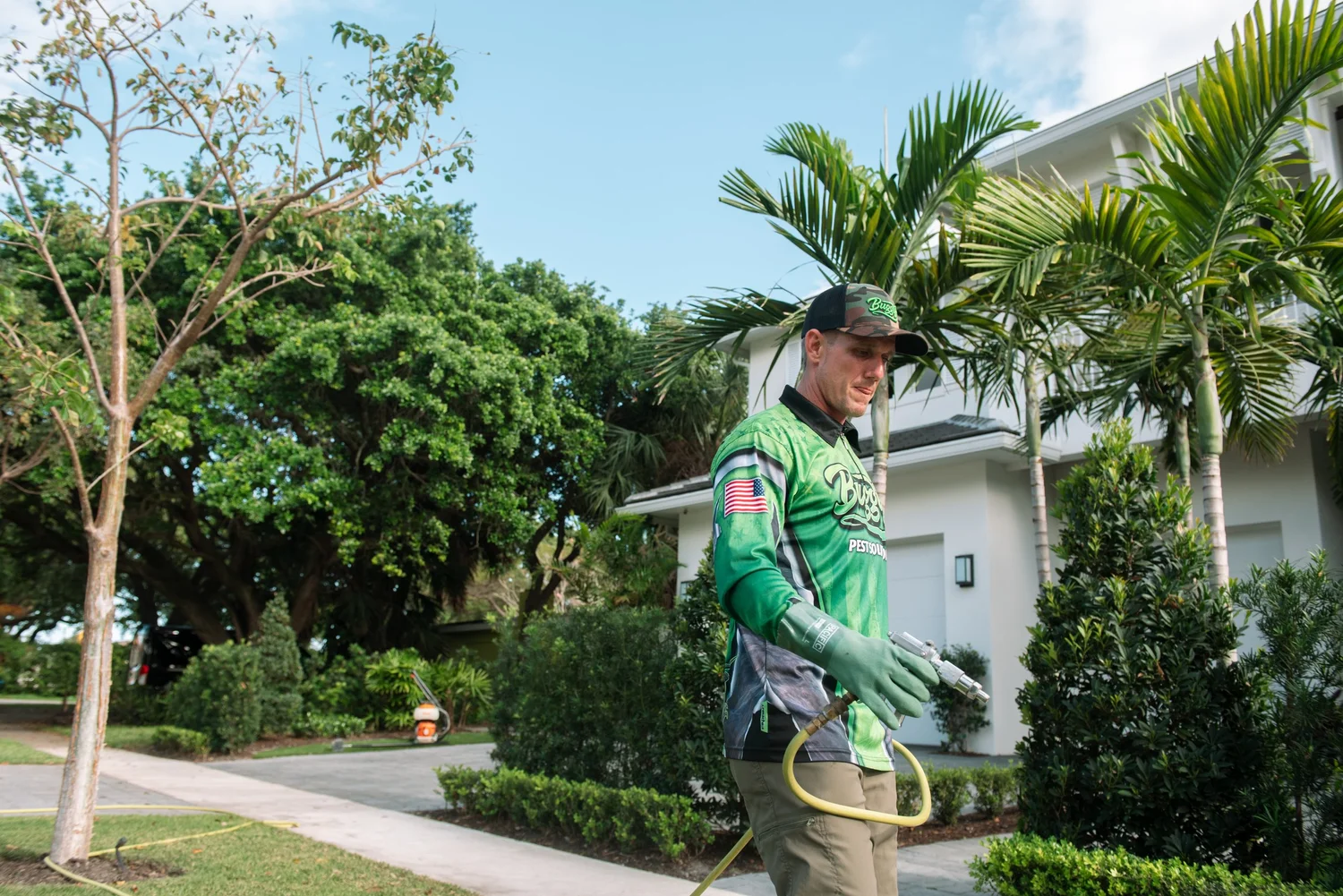
Terra Mar beachfront mosquito job: tidal-cycle targeting stopped the after-dinner exodus indoors
The problem
A Terra Mar oceanfront homeowner had a standing monthly mosquito plan through a national chain for two years. The yard was usable most weekdays but consistently unusable in the 3-5 day window after every full moon or new moon. Family had adjusted schedules around it. Homeowner called Buggify after the neighbor mentioned Tyler had identified this same pattern on their property.
The species check
Tyler ran a 40-minute inspection. Confirmed heavy Aedes taeniorhynchus (black salt-marsh mosquito) presence in the yard-side vegetation on the Intracoastal-facing side of the property, distinguishable from Culex by the jet-black coloration and white leg banding. Explained the tidal-cycle life cycle and the emergence timing pattern the family had been experiencing without knowing why.
The protocol adjustment
Kept the monthly cadence for baseline coverage. Added pre-emergence targeted treatment 3-4 days ahead of every forecast new-moon and full-moon high-tide event, per NOAA Hillsboro Inlet tidal forecast. Bti larvicide deployment in yard-side low spots that had been holding flood water after monthly rains. Mangrove-fringe boundary treatment on the property-line side only, respecting the protected habitat.
The result
Post-tidal exodus windows dropped from 3-5 days of unusable yard to 1-2 days of light activity. Homeowner switched from the chain monthly to Buggify monthly + tidal-window protocol. Family got their post-full-moon evenings back. Total May-October cost roughly equivalent to the previous chain plan; outcome was fundamentally different because the treatment finally matched the actual driving species.
Pompano mosquito pricing
Standard Buggify mosquito pricing with species- and exposure-adjusted cadence for salt-marsh and mangrove-fringe properties.
One-Time Treatment,$125-225
Single visit for isolated issues or event prep. Coastal and mangrove-fringe properties at the upper end because of the additional pre-emergence tidal-window targeting.
Monthly + Tidal-Window Program May-October,Custom
Recommended cadence for beachfront and Intracoastal properties with high salt-marsh exposure. Six-monthly visits plus 4-6 additional targeted pre-emergence treatments during forecast tidal-flood windows. Custom-quoted by yard size, exposure profile, and access.
Bi-Monthly Plan Coverage
Complete (Premium) bi-monthly plan includes a mosquito barrier at an 8-week cadence and works for lower-exposure Pompano properties (inland Cresthaven, Palm Aire single-family). Full Home Protection covers routine perimeter; monthly + tidal upgrade available.
Backyard Event Fogging,$175-275
One-time ULV cold fogger sweep 2-6 hours before an outdoor event. Coastal-property fogging at the upper end because of the wind-drift compensation and re-treatment likelihood if the event runs beyond the 4-6 hour residual window.
Buggify vs. National Pest Chains
Six-point comparison. Every row verifiable from how Buggify operates.
| Feature | Buggify in Pompano Beach | National Pest Chains |
|---|---|---|
| Salt-marsh species identification (Aedes taeniorhynchus) | Standard on beachfront and Intracoastal properties | Not identified; freshwater protocol applied regardless |
| Tidal-window pre-emergence targeting | 3-4 days ahead of forecast new/full moon high-tide flood | No tidal-cycle awareness; monthly-only cadence |
| Mangrove-fringe wildlife-protection compliance | Treatment stops at the property line; fringe not entered | Broad spray patterns risk protected-habitat overspray |
| Container-water source elimination | Standard on every inspection | Adult-spray only; source not addressed |
| Owner-operator continuity | Tyler runs every Pompano mosquito job | Rotating route techs |
| Contract structure | Bills per visit, cancel anytime | Multi-year quarterly contracts common |
Read what Pompano Beach customers say on Google directly
Pompano mosquito reviews tend to reference two Buggify strengths: species identification during the inspection walk and tidal-window pre-emergence targeting. Customers who previously had a monthly plan often note that this was the first time a technician explained why the yard was unusable during specific week-long windows each month, rather than dismissing it as generic mosquito activity. Google 5.0 Rated · live review feed.
Three things Buggify will never do to you
Three things Buggify will never do to you (full list of seven on Why Choose Buggify):
Quote a real treatment price without inspecting the property first. Phone gives a range; firm pricing comes after an on-site walkthrough.
Indoor spraying when the source is outside. Most Pompano Beach pest pressure is driven by outdoor harborage; indoor-only work is a short-term cover-up.
Long-term contracts that lock you in. Bi-monthly plans bill per visit and cancel anytime, no fees.
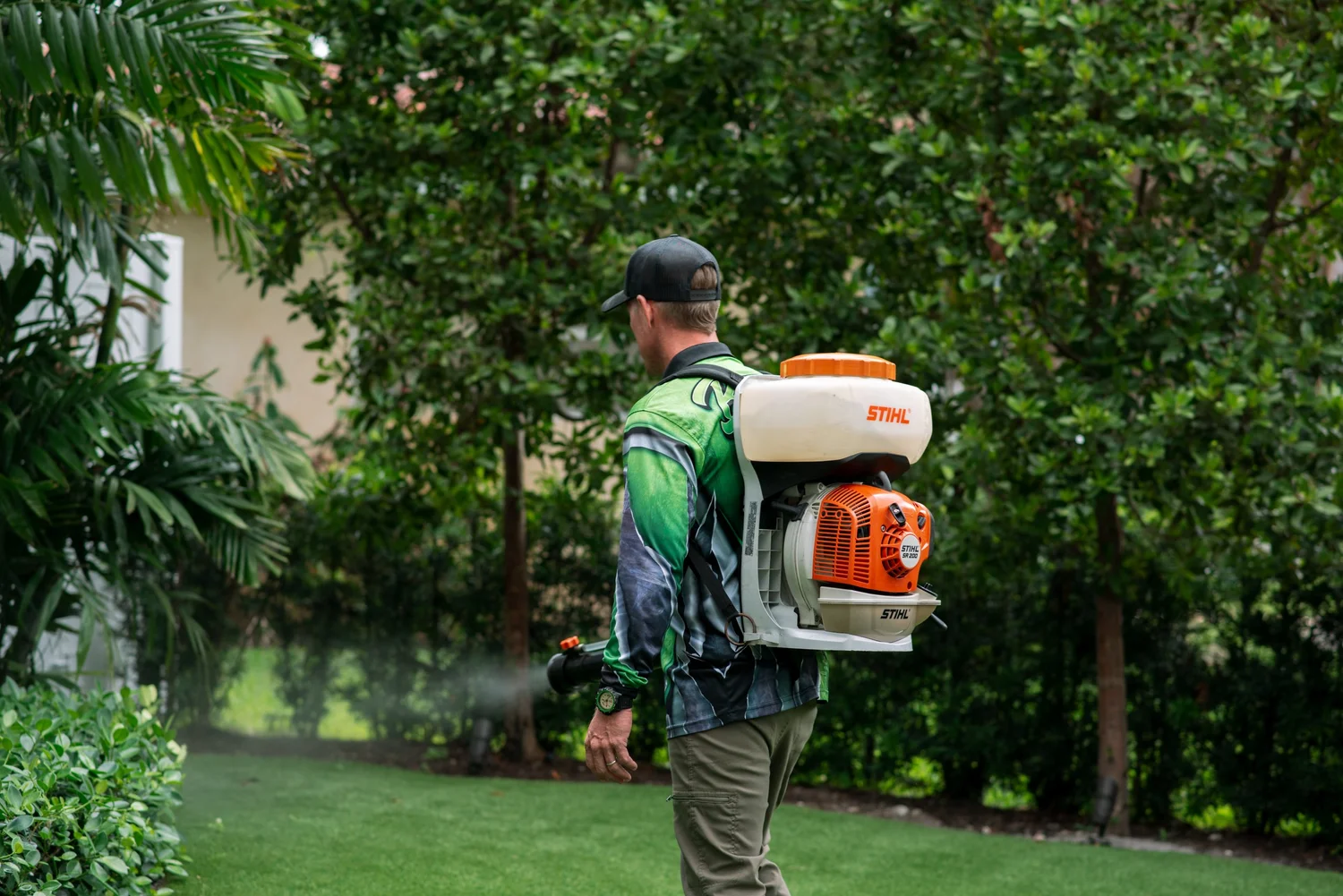
Call (561) 672-0200. Tyler answers, gives you a price range on the first call, and books your Pompano Beach appointment into the next dispatch window (standard scheduling runs same-week; stinging-insect emergencies get prioritized).
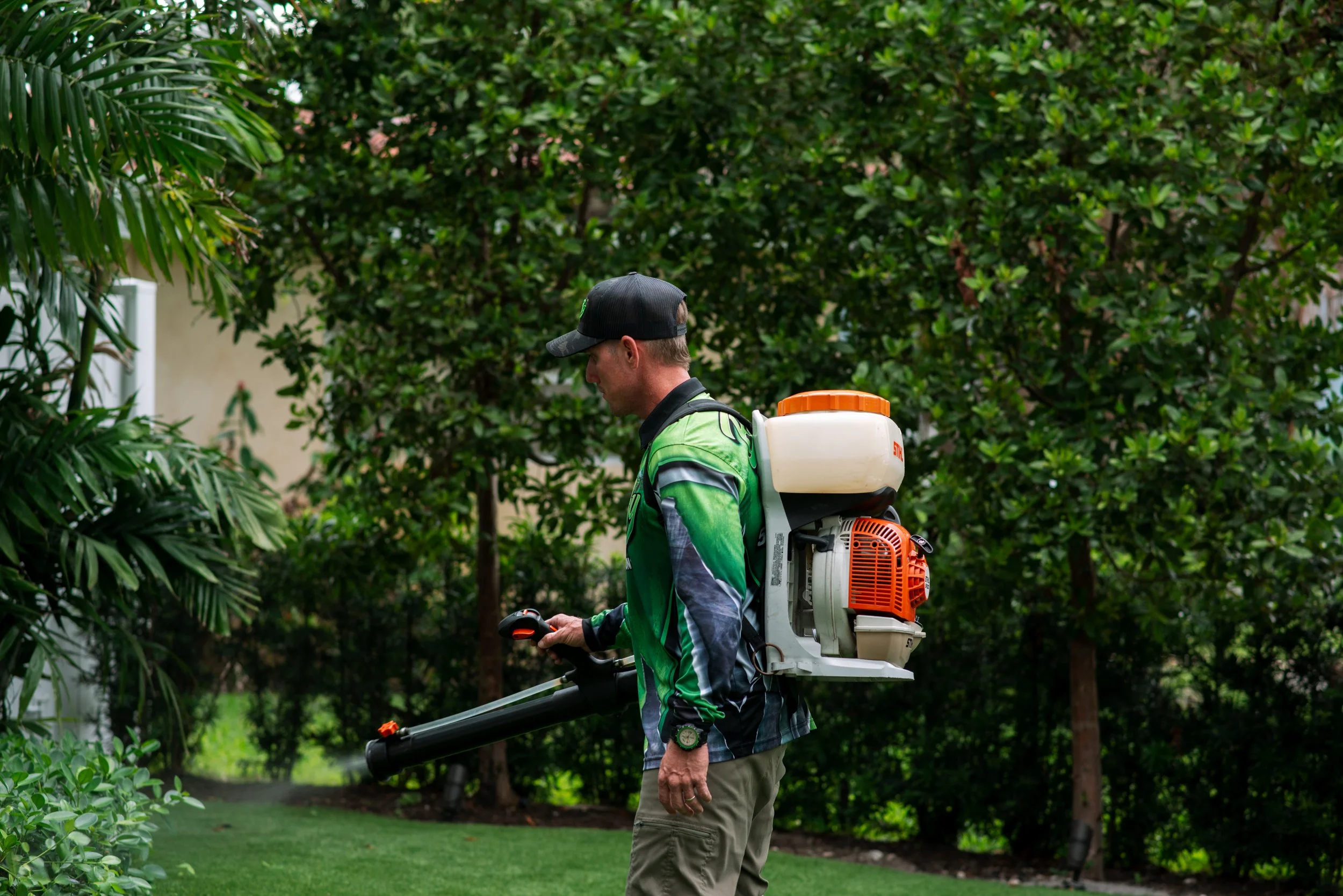
Seven Pompano mosquito questions Tyler hears most often
Why do I get eaten alive in my yard for a week after every full moon?
You are seeing Aedes taeniorhynchus, the black salt-marsh mosquito. It breeds in the salt-marsh and mangrove-fringe zones flooded by new-moon and full-moon high tides. Populations peak roughly 7-10 days after the tidal-flood event. Tidal-window pre-emergence treatment 3-4 days ahead of the flood intercepts the emerging adults.
My monthly mosquito plan does not seem to work in July and August. Is it broken?
The cadence is calibrated to a freshwater breeding cycle, not to the tidal cycle. On coastal and Intracoastal properties, salt-marsh species dominate and require treatment in response to the tidal cycle, which is not a monthly clock. Tidal-window pre-emergence treatments, when added to the monthly cadence, usually resolve it.
I live on the Intracoastal, but my yard does not sit on the mangrove fringe. Am I still affected?
Yes. Salt-marsh mosquito adults fly 10-20 miles inland from breeding sites. Even properties several blocks in from the mangrove fringe see the tidal-cycle pattern. Species-appropriate protocol is calibrated to your property exposure, not just direct adjacency.
Will you treat the mangrove fringe on my property line?
No, mangrove fringe is protected wildlife habitat and cannot be treated with broadcast residuals. Treatment stops at the yard-side of the property line. Bti larvicide can be deployed in yard-side low spots that collect flood water without crossing into the fringe.
What is the difference between Bti and methoprene larvicide?
Both target larvae. Bti (Bacillus thuringiensis israelensis) is a bacterial larvicide for open standing water, safe for beneficial insects. Methoprene is an insect growth regulator for contained standing water that fills and drains. Tyler selects by inspection findings.
Is monthly cadence overkill for my inland Cresthaven property?
Often yes. Inland freshwater-only exposure fits the standard bi-monthly plan, with a monthly upgrade during the May-October wet-season peak if activity warrants. Species-appropriate cadence is not one-size-fits-all in Pompano.
Are your mosquito treatments safe for my dog and my kids?
Yes. Professional residuals applied at label rates. The yard is safe to re-enter once the barrier dries, typically in 30-60 minutes. SDS available on request for every product Tyler uses.
Direct line to the technician serving Pompano Beach
Phone: (561) 672-0200 (Tyler answers) · Mon–Fri 8 am – 5 pm
Email: Getbuggify@gmail.com
Address: 22617 Middletown Dr., Boca Raton, FL 33428 (West Boca shop, primary dispatch)
License: FL DACS #JB268060 · Certified Operator: Tyler Craig
Call (561) 672-0200 or submit the form below for a free phone estimate. Tyler answers directly. Pompano Beach dispatch is owner-operator across a 20-25-mile route, so appointments are pre-scheduled rather than drop-in; most standard jobs book the same week.