

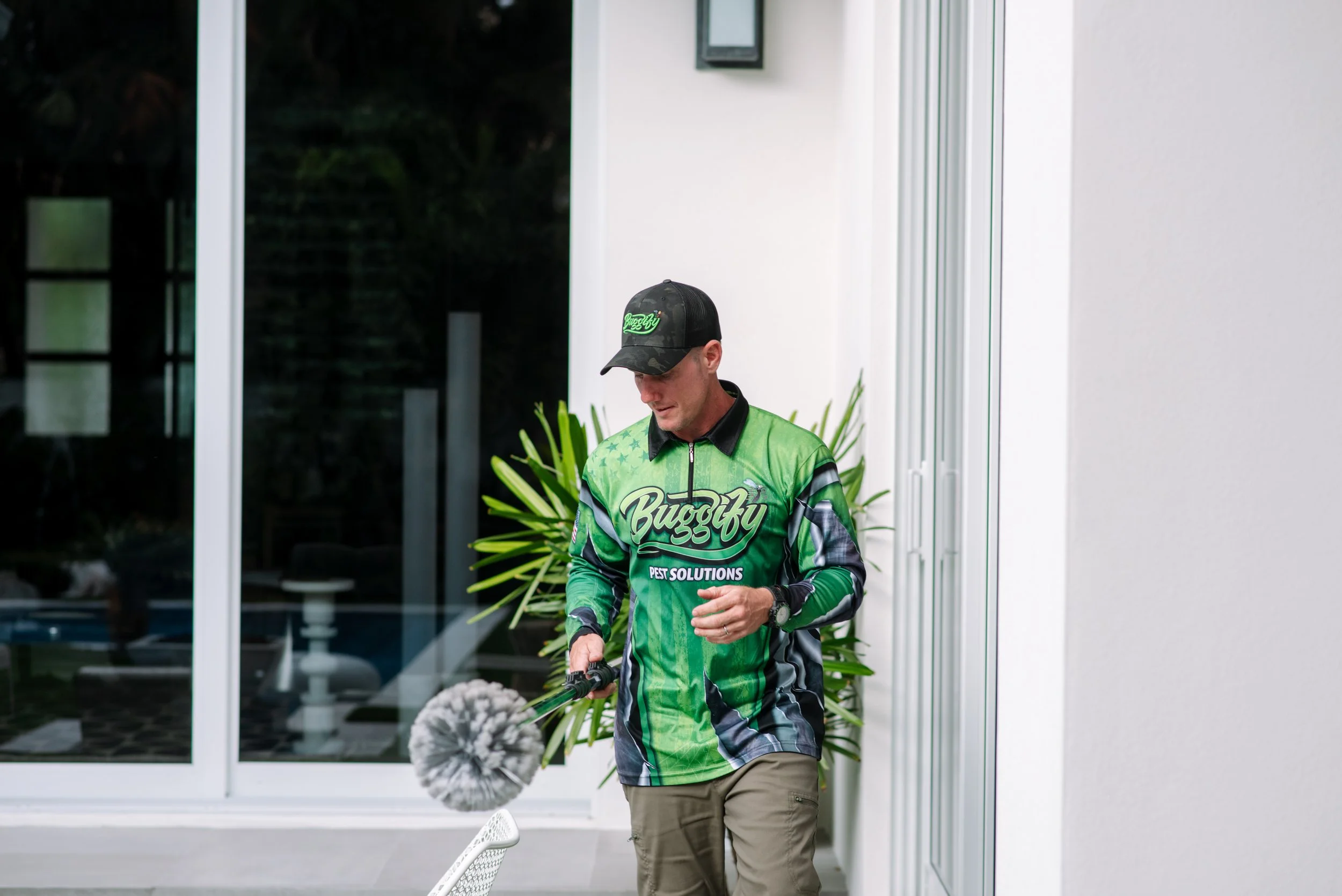
Cockroach Control in Pompano Beach
Marina and dockage transfer pressure + Atlantic Blvd hospitality corridor + residential adjacent-transfer work. Coastal Pompano has cockroach pressure inland cities do not.
- FL DACS License #JB268060 · Certified Operator Tyler Craig
- Bayer Authorized Applicator (Termidor)
- $1M general liability insurance
- Google 5.0 Rated · live review feed
- Family-owned · 1,000+ South Florida homes served since 2018
- Pet-safe and family-safe treatments by default
- Free phone estimates · no long-term contracts
Pompano Beach has cockroach pressure vectors most inland cities do not carry. Two marina complexes (Pompano Harbor Marina and Sands Harbor), plus the broader dockage infrastructure along the Intracoastal, generate documented commercial-grade cockroach transfer, boat provisioning, cargo, and boat storage that rotate cockroach populations between vessels and shore facilities in ways that ordinary commercial premises do not. Overlay that with the Atlantic Blvd hospitality corridor (restaurants and hotels from the beachfront inland), and Pompano's coastal residential zones face commercial-grade adjacent-transfer pressure that inland residential does not see. Tyler's Pompano cockroach protocol accounts for these vectors: marina-adjacent residential gets a specific transfer-source assessment, hospitality-adjacent residential gets wall-cavity commercial-transfer inspection, and standard inland residential gets the species-appropriate protocol. The parent Pompano hub covers the coastal palmetto bug outdoor source work; this Tier 3 page covers the German cockroach commercial-transfer side that the hub does not touch.
Marina + Dockage Transfer Specialty
Pompano Harbor Marina and Sands Harbor are documented commercial cockroach transfer vectors. Nearby residential and hospitality properties see the spillover.
Atlantic Blvd Hospitality Corridor
Restaurants and hotels along Atlantic Blvd generate high-volume commercial cockroach pressure. Adjacent residential gets the wall-cavity transfer through shared utilities.
Species and Source Diagnosis
German cockroach vs American palmetto bug vs smokybrown drive completely different treatments. Wrong species-and-treatment combination wastes weeks.
Gel Bait + IGR, Not Perimeter Spray
German cockroaches never leave the harborage; residual perimeter spray never touches them. Gel bait plus insect growth regulator is the treatment that actually works.
Same Technician Every Visit
Tyler runs every Pompano cockroach job. Sensitive work, customers value discretion and continuity.
No Multi-Year Contract
Bi-monthly plans bill per visit. Cancel anytime, no fees.
Why Pompano cockroach pressure includes vectors inland residential cities do not carry
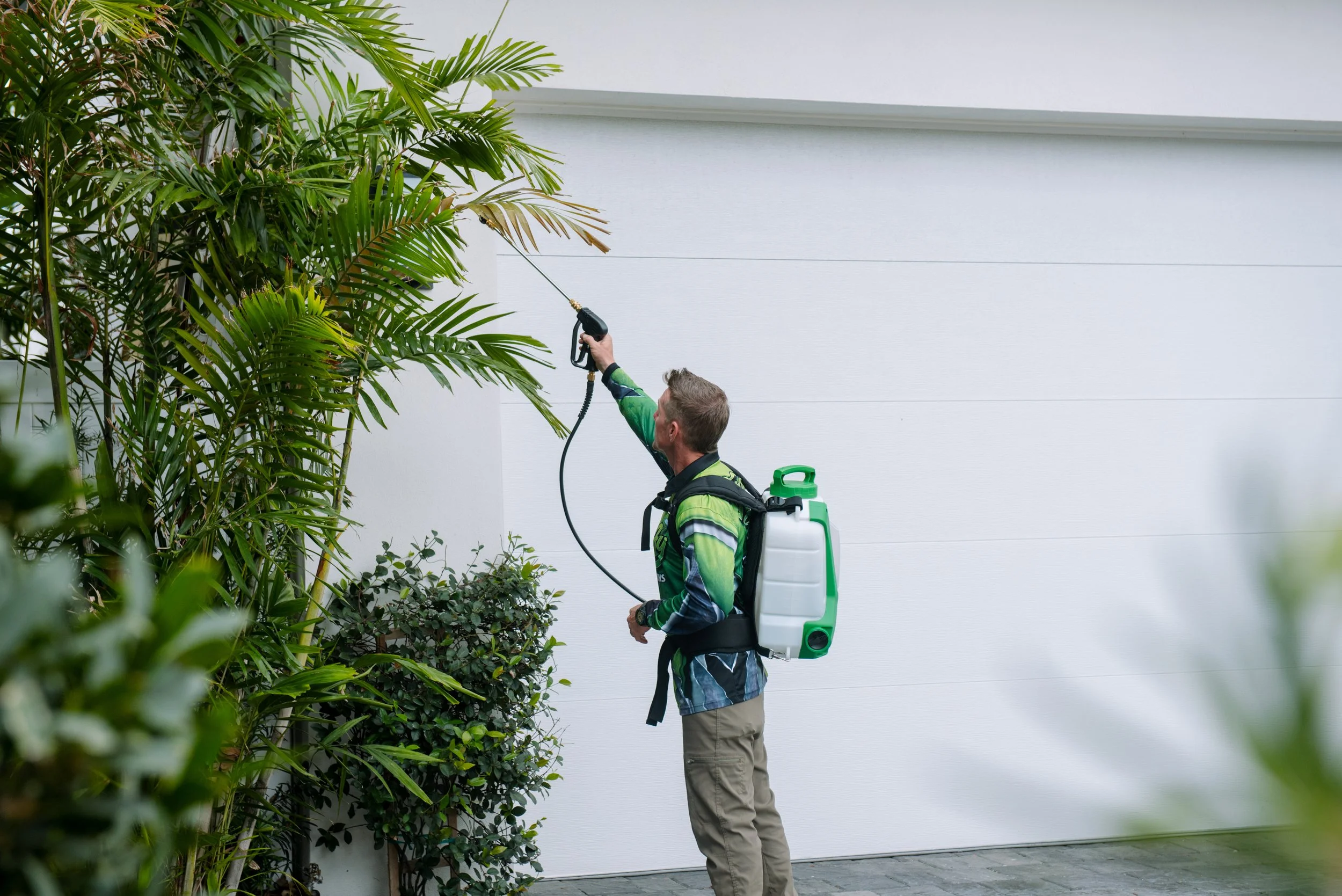
Standard South Florida cockroach protocols assume residential pressure comes from indoor harborage (German cockroach) or outdoor mulched landscape (American palmetto bug). Pompano Beach adds two vectors most inland cities do not have. First, the marina and dockage infrastructure along the Intracoastal, Pompano Harbor Marina in Downtown Pompano, Sands Harbor at the Hillsboro Blvd intersection, and the broader recreational and commercial dockage from Terra Mar down through Harbor Village. Boats and their provisioning rotate cockroach populations between vessels and shore facilities in ways ordinary businesses do not. Residential properties within a few blocks of these marina complexes see documented adjacent-transfer pressure.
Second, the Atlantic Blvd hospitality corridor. Restaurants, hotels, and mixed-use commercial from the beachfront pier inland through Downtown Pompano generate high-volume commercial-grade German cockroach pressure. That pressure migrates through shared utilities, electrical conduit, plumbing chases, and shared building envelopes into adjacent residential areas. A condo tower unit directly above a ground-floor restaurant is a completely different cockroach-work environment from that of an inland single-family home, and it requires a wall-cavity commercial-transfer inspection rather than a standard interior spray.
Standard inland Pompano residential (Cresthaven, Cypress Bend, Palm Aire, Kendall Green) still sees the standard South Florida cockroach picture: German harborage in kitchens and multi-family shared walls, American palmetto bug from exterior mulched landscape, occasional smoky brown from wooded property lines. Tyler's protocol species IDs first, then routes to the appropriate treatment path: marina transfer, hospitality corridor commercial transfer, or standard inland residential. Same city, three different work environments.
Sands Harbor-adjacent condo German cockroach: transfer traced to a marina-side dumpster zone
The unit
A condo owner in a Sands Harbor-adjacent building had recurring German cockroaches in her kitchen for four months. Two spray-based treatments had knocked activity down temporarily but it returned every 3-4 weeks. Owner called Buggify after her neighbor in the unit reported the same recurring pattern.
The transfer diagnosis
Tyler inspected the unit, then coordinated with HOA property management to walk the building perimeter and the shared utility rooms. Traced the cockroach activity source to a shared dumpster-and-utility zone on the marina side of the building where recycling bins for boat provisioning were being staged temporarily each week between boat resupply days. Cockroach populations from the marina-side staging were migrating into the building through the shared electrical-conduit penetration in the ground-floor utility room.
The multi-front protocol
Sealed the ground-floor conduit penetration with copper mesh plus marine-formulation polyurethane. Deployed gel bait plus IGR at the utility room harborage and in all six affected units on the marina-facing side of the building. Coordinated with HOA property management for the boat-provisioning staging schedule so recycling bins are now moved to a shore-side collection point same-day rather than staged overnight.
The result
Interior activity dropped to zero in all six units within 12 days and stayed there. HOA moved the building to a Buggify Full Home Protection plan at the building-envelope level covering the affected units. A six-property-manager conversation about the marina provisioning schedule change resolved the underlying transfer vector.
The learning
Marina-adjacent buildings need transfer-vector inspection, not just unit-level treatment. Boat provisioning, recycling staging, and shore-facility utility rooms are all part of the cockroach-work environment. Ordinary residential protocol reaches none of it.
Every Pompano cockroach issue Buggify handles
Pompano's marina, hospitality, and inland residential zones each need distinct cockroach-work approaches.
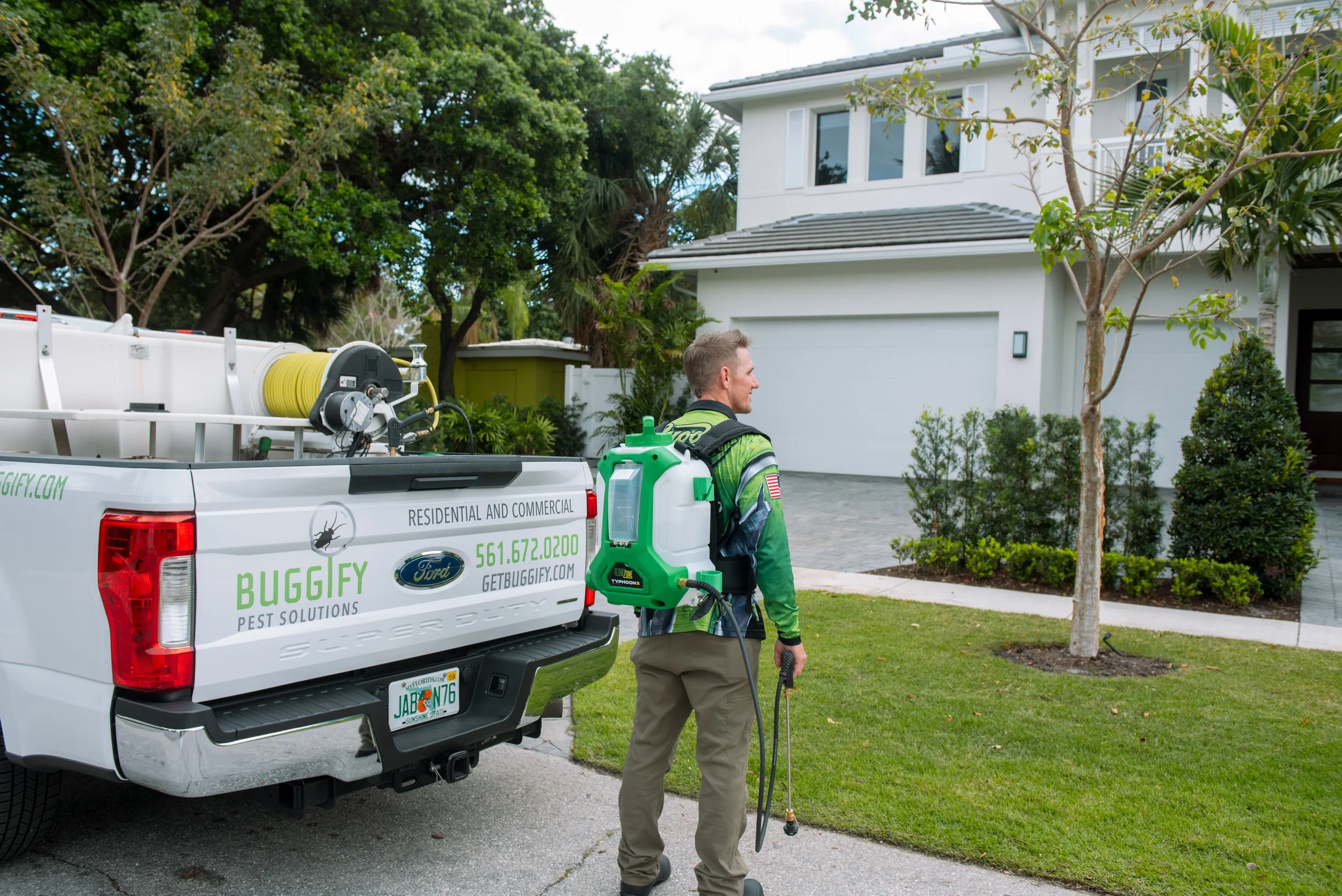
Marina + dockage-adjacent German cockroach transfer (Pompano Harbor Marina, Sands Harbor, Intracoastal dockage)
Documented commercial-grade transfer pressure from boat provisioning, cargo, and boat-storage cycles into shore facilities and adjacent residential. Treatment: transfer-vector inspection at shared utility rooms and dumpster zones, gel bait plus IGR at harborage points, coordinated HOA scheduling for marina-provisioning practices that concentrate cockroach populations.
Atlantic Blvd hospitality-corridor commercial-transfer
German cockroach migration from ground-floor restaurants and hotels into adjacent residential areas through shared electrical conduits, plumbing chases, and shared building envelopes. Treatment: wall-cavity commercial-transfer inspection, coordinated conduit and chase sealing, gel bait plus IGR at building-envelope harborage points.
American palmetto bug outdoor source across coastal residential
The parent Pompano city hub covers the coastal American palmetto bug outdoor source protocol in depth (outdoor lighting audit, mulch-line setback, sewer-vent area treatment). This Tier 3 page defers to the hub on that species and focuses on the German cockroach commercial-transfer side.
Standard inland German cockroach residential (Cresthaven, Cypress Bend, Kendall Green single-family)
Standard interior German cockroach work, harborage-first inspection behind refrigerator and dishwasher, gel bait plus IGR, no repellent perimeter (roaches never leave harborage to contact it). Standard 3-4 week resolution cycle.
Three technical details specific to Pompano cockroach work
Buggify's Pompano cockroach protocol depth in marina-transfer vector diagnosis, hospitality-corridor wall-cavity commercial-transfer, and coastal-humidity-adjusted IGR chemistry.
Marina-Transfer Vector Diagnosis
Marina-adjacent residential buildings need vector-source inspection, not just unit-level treatment. Tyler's marina-transfer protocol coordinates with HOA property management to walk the shared utility rooms, dumpster and recycling zones, and boat-provisioning staging areas. Traces the actual transfer path from marina-side infrastructure into the building envelope, seals the entry with copper mesh plus marine-formulation polyurethane, and treats the identified harborage points. Coordination with marina management on provisioning practices that concentrate cockroach populations often resolves the underlying vector.
Hospitality-Corridor Wall-Cavity Commercial-Transfer
Atlantic Blvd hospitality-adjacent residential (especially condo units directly above ground-floor restaurants) faces German cockroach migration through shared utilities. Tyler's protocol walks the wall-cavity transfer points at shared electrical conduit, plumbing chases, and shared HVAC penetrations, seals the transfer path at the residential side, treats the harborage points identified inside the residential envelope, and (where the commercial side is willing to coordinate) provides commercial-side treatment recommendations to the restaurant or hotel operator through the HOA property manager.
Coastal-Humidity IGR Pairing for German Cockroach Reproductive Cycle Interrupt
Coastal Pompano humidity levels support faster German cockroach reproductive cycling than dry inland conditions. IGR (insect growth regulator, typically pyriproxyfen or hydroprene) pairing with gel bait breaks the reproductive cycle even where bait uptake is incomplete. On coastal Pompano jobs, Tyler defaults to a bait + IGR combination protocol rather than bait-only, and expects a 3-4 week resolution cycle rather than the 6-8 week cycle typical of drier inland conditions.
Five Pompano conditions that shape cockroach work
Pompano's marina and dockage infrastructure, hospitality corridor, coastal humidity, mid-century residential density, and construction-era spread each affect the cockroach protocol.
Marina + Dockage Infrastructure (Pompano Harbor Marina, Sands Harbor, Intracoastal Dockage)
Two named marina complexes plus recreational and commercial dockage along the Intracoastal generate documented adjacent-transfer cockroach pressure. Boats and boat provisioning rotate cockroach populations between vessels and shore facilities in ways ordinary commercial premises do not. Residential properties within a few blocks of these complexes see the spillover.
Atlantic Blvd Hospitality Corridor (Downtown Pompano through Beachfront)
Restaurants, hotels, and mixed-use commercial from the beachfront pier inland through Downtown Pompano generate high-volume commercial-grade German cockroach pressure. Migration through shared utilities, electrical conduit, and plumbing chases affects adjacent residential, especially condo units directly above ground-floor commercial space.
Coastal Humidity Extends German Cockroach Reproductive Cycle
Coastal Pompano humidity levels support faster German cockroach reproductive cycling than dry inland conditions. Peak-humidity months (May-October) show accelerated recurrence rates on marginal treatment protocols. IGR (insect growth regulator) pairing with gel bait is more important here than in drier inland cities to break the reproductive cycle before recurrence.
Mid-Century Multi-Family Density (John Knox Village, Leisureville, Palm Aire Condo Sections)
Pompano has a higher concentration of mid-century multi-family and 55+ community stock than most cities Buggify serves. Shared-wall connectivity in these buildings drives building-envelope German cockroach work rather than unit-level. Coordinated multi-unit treatment in a single 24-72 hour access window is the standard.
Construction-Era Spread Creates Mixed-Vulnerability Housing Stock
Pre-1950 heritage stock has wall-void German cockroach vulnerabilities different from CBS-era construction. 1980s-onward condo tower stock has vertical-envelope transfer vulnerabilities unique to high-rise. Mid-century canal-corridor single-family has standard South Florida German cockroach patterns. Tyler's inspection aligns with the treatment approach for the housing age and type.
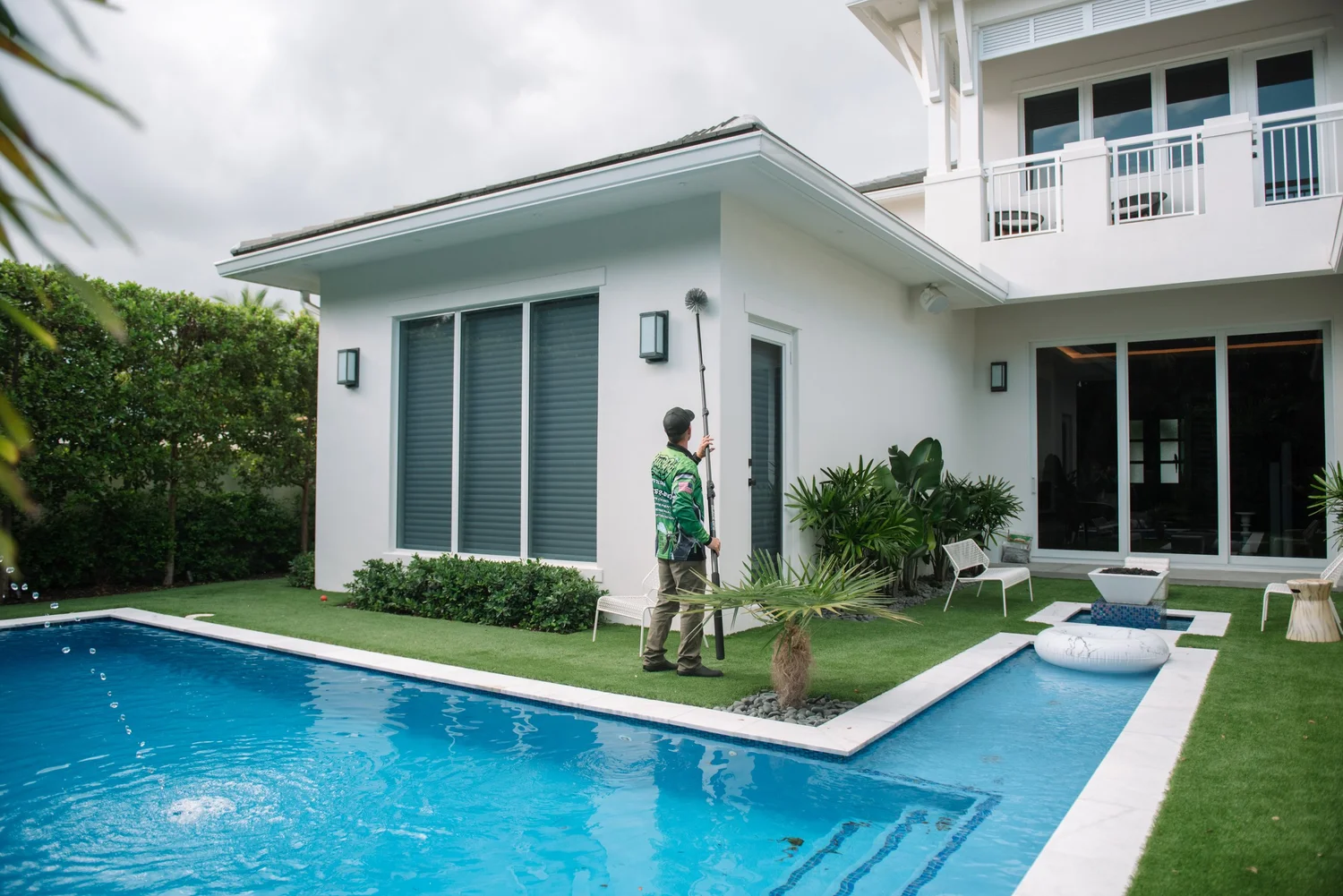
Pompano cockroach job pricing
Standard Buggify cockroach pricing with marina-transfer + hospitality-corridor work priced at the building-envelope level.
One-Time Treatment,from $195
Single-species interior treatment for standard inland residential. Species ID + gel bait + entry-point treatment.
Marina-Adjacent Building-Envelope,Custom
Priced per building for transfer-vector inspection + shared-utility room sealing + coordinated multi-unit treatment + HOA scheduling coordination. Building-envelope pricing scales by tower size and marina proximity.
Hospitality-Corridor Commercial-Transfer,Custom
Priced per building for wall-cavity commercial-transfer inspection + conduit and chase sealing + multi-unit coordinated treatment. Restaurant-side or commercial-side coordination handled where required.
Bi-Monthly Plan Coverage
All three bi-monthly plan tiers include cockroach coverage. Full Home Protection is the standard for typical Pompano residential. Complete adds attic and exclusion monitoring, plus a mosquito barrier, for coastal properties.
Buggify vs. National Pest Chains
Six-point comparison. Every row verifiable from how Buggify operates.
| Feature | Buggify in Pompano Beach | National Pest Chains |
|---|---|---|
| Marina transfer-vector inspection | Standard on Pompano Harbor + Sands Harbor + Intracoastal-dockage adjacent buildings | Unit-only treatment misses transfer source |
| Hospitality-corridor wall-cavity commercial-transfer | Standard on Atlantic Blvd adjacent residential | Interior spray only; commercial source untreated |
| Gel bait + IGR for German cockroaches | Correct chemistry, resistance-rotated + reproduction blocked | Repellent spray common, roaches never leave harborage |
| Species-ID before treatment | Standard on every Pompano cockroach inspection | Same product used regardless of species |
| Same technician every visit | Tyler runs every Pompano cockroach job | Rotating route techs |
| Contract structure | Bills per visit, cancel anytime, no fees | Multi-year contracts common |
Read what Pompano Beach customers say on Google directly
Pompano cockroach reviews cluster around the marina-transfer vector work and the hospitality-corridor commercial-transfer inspection. Customers with recurring pressure that ordinary residential protocols could not resolve often note that identifying the actual transfer source (a marina-side utility room, a shared conduit above a ground-floor restaurant) was the change that let the problem resolve. Google 5.0 Rated · live review feed.
Three things Buggify will never do to you
Three things Buggify will never do to you (full list of seven on Why Choose Buggify):
Quote a real treatment price without first inspecting the property. Phone gives a range; firm pricing comes after an on-site walkthrough.
Indoor spraying when the source is outside. Most Pompano Beach pest pressure is driven by outdoor harborage; indoor-only work is a short-term cover-up.
Long-term contracts that lock you in. Bi-monthly plans bill per visit and can be canceled anytime, no fees.
Call (561) 672-0200. Tyler answers, gives you a price range on the first call, and books your Pompano Beach appointment into the next dispatch window (standard scheduling runs same-week; stinging-insect emergencies get prioritized).
Six Pompano cockroach questions Tyler hears most often
My condo near the marina has recurring German cockroaches. Two spray treatments did not fix it. Why?
Almost certainly a marina-transfer vector, cockroach populations migrating in from a shared utility room, dumpster zone, or boat-provisioning staging area on the marina side of the building. Unit-level spray reaches none of the source. Tyler's marina-transfer protocol coordinates with HOA property management to identify the actual vector and seal it.
I live in a condo above an Atlantic Blvd restaurant. Am I getting the restaurant's roaches?
Possibly. Ground-floor restaurants generate high-volume commercial-grade German cockroach pressure that migrates upward through shared electrical conduit and plumbing chases. Tyler's hospitality-corridor protocol walks the wall-cavity transfer points, seals the transfer path at the residential side, and treats the harborage points identified inside your unit envelope.
I saw a big roach in my Cresthaven kitchen. Do I have an infestation?
Almost certainly not; probably a single American palmetto bug from your exterior mulched landscape or an outdoor lighting attraction. The parent Pompano city hub covers the outdoor palmetto bug source work in depth. Interior spray will not fix it, treating the exterior source will.
Why don't perimeter sprays work on German cockroaches?
German cockroaches never leave the harborage. They live in warm cracks and voids inside the home and forage only a few feet from the nest. A perimeter spray at the foundation line never touches them. Gel bait placed directly at the harborage works, paired with an IGR to prevent continuation of the reproductive cycle.
How much does marina-transfer vector cockroach work cost?
Custom-quoted per building for transfer-vector inspection, shared-utility room sealing, coordinated multi-unit treatment, and HOA scheduling coordination. Building-envelope pricing scales by tower size and marina proximity. Most jobs run $1,500-4,500 per treatment cycle depending on building size.
Are gel baits and IGRs safe for my kids and pets?
Yes. Gel bait is placed in tamper-resistant crack-and-crevice locations kids and pets cannot access. IGR is applied to interior surfaces at label rates and dries into an invisible residual. SDS available on request for every product Tyler uses.
Direct line to the technician serving Pompano Beach
Phone: (561) 672-0200 (Tyler answers) · Mon–Fri 8 am – 5 pm
Email: Getbuggify@gmail.com
Address: 22617 Middletown Dr., Boca Raton, FL 33428 (West Boca shop, primary dispatch)
License: FL DACS #JB268060 · Certified Operator: Tyler Craig
Call (561) 672-0200 or submit the form below for a free phone estimate. Tyler answers directly. Pompano Beach dispatch is owner-operator across a 20-25 mile route, so appointments are pre-scheduled rather than drop-in; most standard jobs book same-week.