

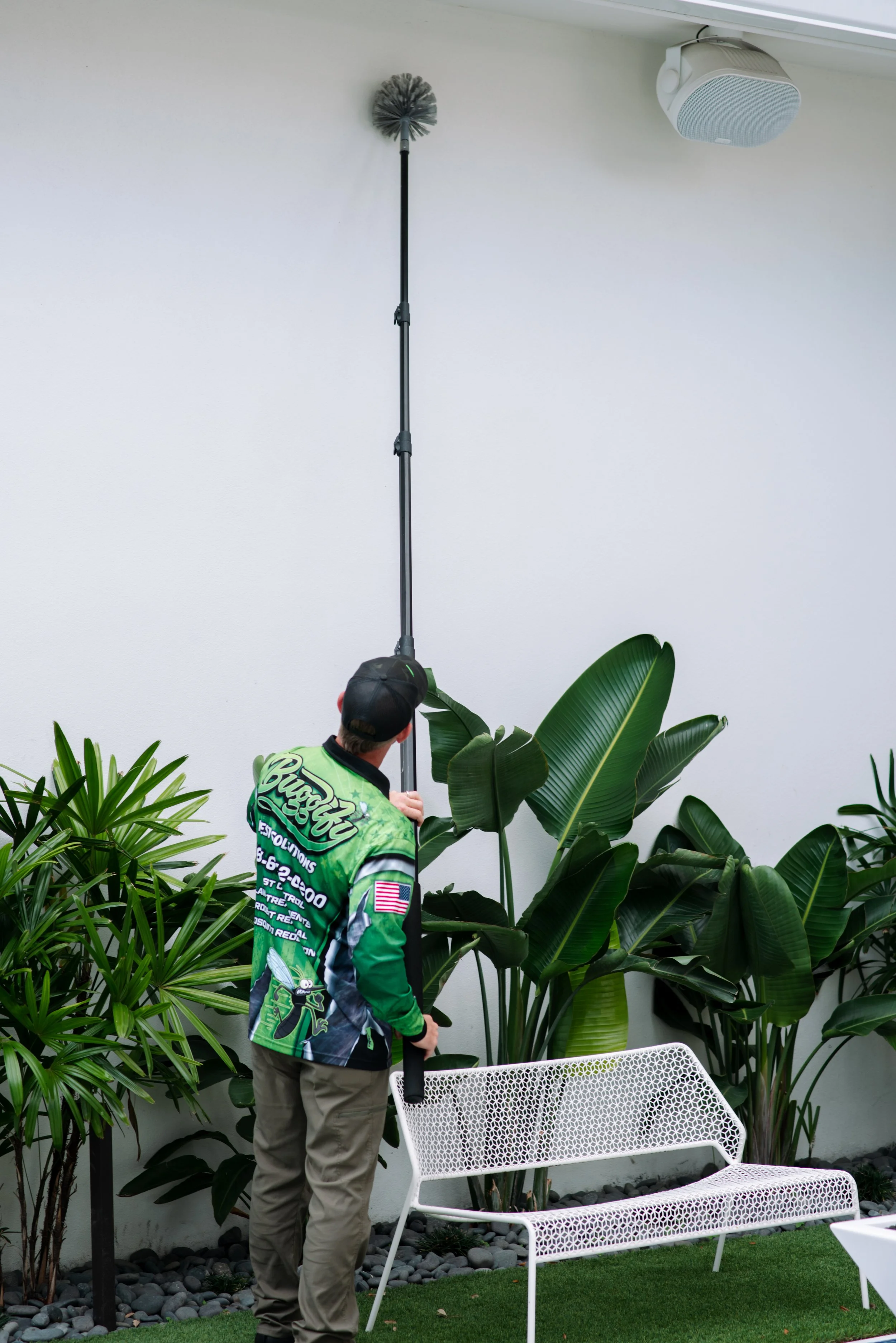
Rodent Control in Pompano Beach
Owner-operator work across Old Pompano heritage stock, barrier-island high-rise, and canal-corridor properties. Tyler runs every job.
- FL DACS License #JB268060 · Certified Operator Tyler Craig
- Bayer Authorized Applicator (Termidor)
- $1M general liability insurance
- Google 5.0 Rated · live review feed
- Family-owned · 1,000+ South Florida homes served since 2018
- Pet-safe and family-safe treatments by default
- Free phone estimates · no long-term contracts
Pompano Beach has a construction-age structure that most South Florida pest markets don't. The city was incorporated in 1908, and the Old Pompano and Downtown historic district still holds pre-1950 wood-frame housing, some of it dating to the 1896 railway-era settlement pattern. Overlay that with 1950s-70s canal-corridor mid-century single-family stock, 1980s-onward beachfront and barrier-island high-rise, and the picture is three distinct rodent-work environments in one city. Tyler's Pompano rodent protocol accounts for the age-of-stock sorting: heritage wood-frame gets wall-cavity concealed-nesting diagnosis, mid-century canal-corridor gets standard tile-roof and slab-penetration work, and barrier-island high-rise gets vertical-access + shared-wall coordination. Buggify's shop is 20-25 miles north in West Boca, so dispatch is an owner-operator model, not a same-address neighborhood presence, but the depth of specialty in pre-1950 heritage work is what customers switch to Buggify for on Pompano Rodent calls.
Pre-1950 Heritage-Stock Specialty
Old Pompano and Downtown wood-frame homes dating back to the 1908 incorporation era feature wall-void entry geometry that CBS-era protocols overlook. Tyler treats these differently.
Barrier-Island Access + Dispatch Planning
Beachfront and barrier-island properties add bridge-access constraints and high-rise coordination to routine rodent work. Tyler pre-plans access before dispatch.
Wall-Cavity Concealed-Nesting Diagnosis
Historic wood-frame construction hides nesting between original plaster-and-lath walls. Standard soffit-line inspection misses it. Tyler carries the diagnostic tools built for this.
Owner-Operator, Not a Chain Route
Tyler Craig is the only technician. Every Pompano rodent job runs from start to finish under one operator, one methodology, one accountable name.
Direct Line to Tyler
Mon–Fri 8 am – 5 pm. Same technician every visit. No callback queue.
No Multi-Year Bait Subscription
Bills per visit. Cancel anytime, no fees. Tyler quotes the actual job, not a subscription.
Every Pompano rodent issue Buggify handles
Pompano's construction-era sorting drives 5 distinct rodent-work profiles across the city.
Pre-1950 wood-frame heritage stock (Old Pompano, Downtown, Sanders Park, Blanche Ely)
Original wood-frame housing with wall voids between plaster-and-lath. Rodent nesting is hidden inside the wall cavity, invisible during soffit-line inspection. Treatment: wall-cavity acoustic + thermal diagnosis, targeted snap-trap deployment at active-void access, non-invasive exclusion sealing at fascia + eave line preserving historic exterior. Coordination with owner on any planned interior work that would expose the wall cavity is recommended.
Canal-corridor mid-century stock (Cresthaven, Cypress Bend, Loch Lomond, Kendall Green)
1960s-80s single-family CBS with canal exposure along Cypress Creek, Pompano Canal, and secondary drainage. Roof rats at the tile-roof entry lines; standard borescope + snap-trap + copper-mesh + polyurethane protocol applies. The canal exposure is documented on the parent city hub and drives the dual-species Norway rat work; this Tier 3 page focuses on the wall-and-roofline scope.
Barrier-island beachfront high-rise (Terra Mar, Harbor Village, Hillsboro Shores)
1980s-onward condo tower stock with shared building envelope, elevator-served utility chases, and HOA-managed common areas. Rodent work here is a building-envelope job rather than a unit job. Tyler coordinates with property management on shared-void access, dumpster-zone perimeter, and rooftop trash-chute inspection. Unit-level work follows only after building-envelope scope is defined.
Palm Aire + Country Club district single-family
Palm Aire's golf-course-adjacent single-family stock and the surrounding gated communities carry standard 1970s-90s tile-roof roof rat pressure. Some sections have canal exposure, adding Norway rat work along the fairway waterways. Standard tile-roof protocol with community vendor coordination.
Attic + wall-cavity exclusion across all Pompano stock
Post-trapping exclusion sealing is the work that ends the cycle. Copper mesh at soffit gaps, hardware cloth at gable + plumbing vents, marine-formulation polyurethane for coastal properties (salt-air degrades standard polyurethane faster; the parent hub covers the coastal salt-air cadence). Historic-property exclusion uses non-invasive methods that preserve exterior aesthetics.
Why Pompano rodent pressure sorts by construction era, not by neighborhood
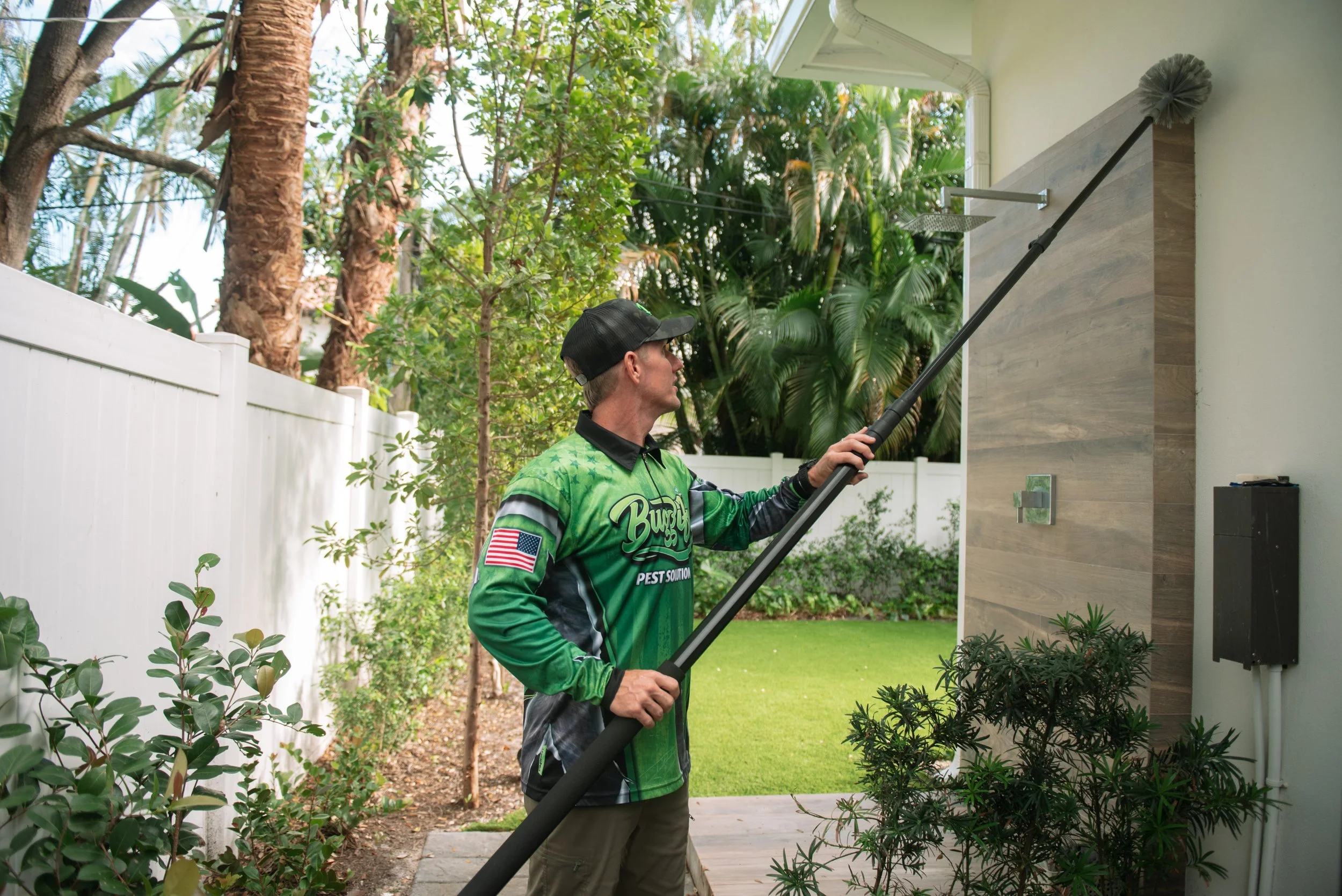
Pompano Beach's more than three dozen officially recognized neighborhoods span a wider construction-age range than any of the other South Florida cities Buggify serves. Old Pompano and Downtown carry pre-1950 wood-frame stock, some of it going back to the 1896 railway-era settlement and the 1908 town incorporation. Sanders Park, Blanche Ely, and parts of Northwest Pompano carry 1920s-40s bungalow and Bermuda-style housing. Cypress Bend, Cresthaven, Palm Aire, and Loch Lomond represent 1960s-80s mid-century single-family expansion. Terra Mar, Hillsboro Shores, Harbor Village, and the beachfront corridor feature 1980s-onward high-rise condos and coastal single-family homes. Each construction era hides rodent-entry geometry that the others don't.
Pre-1950 wood-frame construction hides Norway rat and roof rat activity inside wall voids between original plaster-and-lath, a nesting mode virtually absent from CBS (concrete block stucco) homes. Standard South Florida rodent inspection protocols developed for CBS-era stock miss this entirely. Tyler's heritage-property diagnostic includes wall-cavity thermal imaging and concealed-nesting acoustic checks that a soffit-only visual inspection cannot detect.
Barrier-island and high-rise properties add operational constraints on top of the diagnostic ones. Bridge access to the beach zone runs through a handful of crossings (Atlantic Blvd, NE 14th St, Hillsboro Blvd from the north). High-rise condo work requires HOA vendor coordination, elevator scheduling for equipment transport, and unit-turnover awareness for shared-wall assessment. Tyler pre-plans access before every barrier-island dispatch so the arrival window matches the property's practical constraints, not just the standard drive-time estimate.
Four Pompano conditions that shape rodent work
Pompano's construction-age spread, barrier-island access, historic district preservation constraints, and coastal storm-surge cycle define the rodent protocol.
Construction-Era Spread (1896–2020s in One City)
Pompano's 40 recognized neighborhoods span the widest construction-age range in Buggify's service area. Pre-1950 wood-frame in Old Pompano and Downtown, 1920s-40s bungalow in Sanders Park and Blanche Ely, 1960s-80s CBS canal-corridor in Cresthaven and Cypress Bend, 1980s-onward high-rise on the barrier island. Rodent-entry geometry varies markedly across these eras, and Tyler's inspection protocol adjusts for each property.
Barrier-Island Bridge Access (Terra Mar, Hillsboro Shores, Harbor Village)
Beach zone access runs through Atlantic Blvd, NE 14th St, and Hillsboro Blvd crossings. Peak-hour bridge queues and drawbridge openings can delay dispatch. Tyler pre-plans access for barrier-island jobs so the arrival window reflects the actual practical constraint, not the map drive-time estimate.
Old Pompano Historic District Preservation
Portions of Old Pompano and Downtown have historic property designations that restrict exterior modifications. Tyler's non-invasive exclusion protocol for these properties uses paint-matched sealants, existing-gap deep-recess methods, and interior work preferred over visible exterior changes. Homeowners are advised to check with the Pompano Beach Historic Preservation Board for any modification that would be visible from the public right-of-way.
Storm-Surge Coastal Displacement (Beachfront + Canal Corridor)
Hurricane and named-storm surge on the barrier island and canal-corridor properties displaces rodent populations from their normal harborages. Post-storm, expect a 2-4-week window of elevated activity as displaced populations seek new nesting sites. Complete plan customers get a post-named-storm re-inspection offer inside 72 hours of the National Weather Service all-clear.
Old Pompano 1935 heritage cottage: concealed wall-void nesting behind original bead-board
The call
A homeowner in an Old Pompano cottage built in 1935 reported intermittent scratching inside a hallway wall for six weeks. Two prior visits from a national-chain quarterly service had found no attic evidence and no soffit entry; the company had concluded no active rodent problem. Homeowner called Buggify after the scratching returned each week.
The initial inspection
Tyler ran an 85-minute walk-through. The attic was clean of visible droppings; the soffit line was intact. But an acoustic check along the hallway wall confirmed active movement inside a specific wall-cavity segment. Thermal imaging showed a warm zone consistent with a Norway rat nest between the plaster-and-lath about 6 feet up. Original 1935 construction had a foundation-vent penetration on the side yard that had never been properly screened, likely an entry point.
The diagnostic challenge
The nesting was inside a wall cavity that would require either interior demolition or a targeted access cut to reach. Tyler discussed both options with the homeowner. Interior demolition was declined on historic-preservation grounds; a targeted access cut on the exterior clapboard between two original studs was chosen. The exterior-side approach preserved the interior original bead-board completely.
The protocol
Snap traps deployed inside the exposed wall cavity from the exterior access cut. First trap sprung within 18 hours; second within 6 days; monitoring at day 14 and day 21 confirmed no further activity. Exterior clapboard restored with matching salvage material sourced from the homeowner's storage. Foundation vent properly screened with hardware cloth. Perimeter check completed at all similar penetrations on the property.
The outcome
Total job $2,150 across three weeks (acoustic + thermal diagnosis, targeted access cut and restoration, trap-out, foundation-vent screening, monitoring). Homeowner moved to Full Home Protection bi-monthly to catch any future entry-point activity early. The scratching stopped entirely. Case notes filed with the homeowner in case future preservation work touches the same wall.
Three technical details specific to Pompano rodent work
Buggify's Pompano rodent protocol depth in wall-cavity diagnosis, non-invasive heritage exclusion, and barrier-island dispatch operational planning.
Wall-Cavity Acoustic + Thermal Diagnosis on Pre-1950 Stock
Historic wood-frame construction hides rodent nesting inside plaster-and-lath wall cavities that visual attic and soffit inspection cannot reach. Tyler's heritage-property diagnostic uses acoustic listening at wall segments during active-movement hours (dawn and dusk) plus thermal imaging to identify warm zones consistent with active nests. This diagnostic distinguishes an actual rodent problem from a house-settling noise or a squirrel in the eaves and directs the trap-out to the actual nesting zone rather than the visible activity endpoint.
Non-Invasive Exclusion for Historic and Heritage Properties
Pre-1950 Pompano stock in the Old Pompano and Downtown historic district frequently has restrictions on visible exterior modification. Tyler's non-invasive exclusion methods use paint-matched marine-formulation polyurethane, deeply recessed copper mesh, and interior-side work where possible. When exterior access is unavoidable, Tyler proposes targeted access cuts on secondary elevations (non-street-facing sides) with matching salvage restoration. Coordination with the homeowner and, where required, with the Pompano Beach Historic Preservation Board precedes any visible exterior work.
Barrier-Island Dispatch Operational Planning
Beach zone and barrier-island properties impose operational constraints in addition to the diagnostic ones. Tyler's dispatch pre-planning for Terra Mar, Hillsboro Shores, and Harbor Village jobs accounts for bridge peak-hour delays, drawbridge scheduling, high-rise elevator coordination for equipment transport, and HOA gate access. This pre-planning is why beach-zone Pompano appointments run to the confirmed window rather than the map estimate.
Pompano rodent job pricing
Standard Buggify rodent pricing applies in Pompano, with a heritage-property surcharge for pre-1950 stock when wall-cavity or non-invasive exterior work is required.
Initial Visit,$250-700
Inspection + snap-trap deployment + first monitoring visit. Higher range on heritage properties requiring acoustic + thermal diagnosis, and on barrier-island high-rise work where HOA coordination adds inspection time.
Attic / Wall-Cavity Work,$900-2,200
Trap-out plus attic or wall-cavity access. Heritage properties requiring targeted exterior access cuts + matching restoration run at the upper end of the band.
Exclusion Sealing,$400-1,800+
Standard tile-roof soffit + gable-vent exclusion $400-800. Barrier-island coastal exclusion using marine-formulation polyurethane $600-1,200. Heritage-property non-invasive exclusion preserving original exterior $900-1,800+.
Complete Plan Includes Rodent Monitoring
Ongoing rodent monitoring bundles into Complete (Premium). Full Home Protection covers monitoring without active exclusion sealing. Basic plan does not include rodent scope.
Buggify vs. National Pest Chains
5-point comparison. Every row verifiable from how Buggify operates.
| Feature | Buggify in Pompano Beach | National Pest Chains |
|---|---|---|
| Heritage wood-frame specialty (Old Pompano, Downtown) | Standard, acoustic + thermal + non-invasive exclusion | Generic CBS-era inspection misses wall-cavity concealed nesting |
| Barrier-island access pre-planning | Standard on every beachfront and high-rise job | Standard dispatch estimate; frequent bridge-access delays |
| Wall-cavity concealed-nesting diagnosis | Acoustic + thermal imaging on pre-1950 stock | Visual attic + soffit only |
| Owner-operator continuity | Tyler runs every Pompano rodent job | Rotating route techs |
| Contract structure | Bills per visit, cancel anytime, no fees | Multi-year bait contracts common |

Read what Pompano Beach customers say on Google directly
Pompano rodent reviews cluster around two Buggify strengths: the heritage-property wall-cavity work and the barrier-island dispatch pre-planning. Customers who switched from a national chain often note that a previous quarterly-plan technician had missed active nesting because it was inside a wall cavity that visual attic inspection cannot reach. Google 5.0 Rated · live review feed.
Three things Buggify will never do to you
Three things Buggify will never do to you (full list of seven on Why Choose Buggify):
Quote a real treatment price without inspecting the property first. Phone gives a range; firm pricing comes after an on-site walkthrough.
Indoor spraying when the source is outside. Most Pompano Beach pest pressure is driven by outdoor harborage; indoor-only work is a short-term cover-up.
Long-term contracts that lock you in. Bi-monthly plans bill per visit and can be canceled anytime, no fees.
Call (561) 672-0200. Tyler answers, gives you a price range on the first call, and books your Pompano Beach appointment into the next dispatch window (standard scheduling runs same-week; stinging-insect emergencies get prioritized).

Seven Pompano rodent questions Tyler hears most often
My 1935 Old Pompano home has scratching in a wall but no attic droppings. Do I have rodents?
Likely yes, hidden inside the wall cavity between the plaster-and-lath. Historic wood-frame construction hides nesting invisible from attic inspection. Tyler's acoustic + thermal diagnostic identifies whether it is active rodent nesting or a house-settling noise, then routes the trap-out to the actual nesting zone.
Can you do exclusion work on a Pompano historic-district home without changing the exterior appearance?
Yes. Non-invasive exclusion methods use paint-matched marine-formulation polyurethane, deeply recessed copper mesh, and interior-side work where possible. When exterior access is unavoidable, targeted access cuts on non-street-facing elevations preserve the visible exterior. Historic Preservation Board coordination handled where required.
My condo is on the barrier island. How is high-rise rodent work different from single-family?
It is a building-envelope job rather than a unit job. Tyler coordinates with property management for shared-void access, dumpster-zone perimeter, and rooftop trash-chute inspection. Unit-level treatment follows only after building-envelope scope is defined and the HOA has authorized the coordinated approach.
How does bridge access to the beach zone affect appointment timing?
Beach zone access runs through Atlantic Blvd, NE 14th St, and Hillsboro Blvd bridges. Peak-hour queues and drawbridge openings can delay a standard drive-time estimate. Tyler pre-plans barrier-island dispatch so the appointment window reflects the actual practical constraint.
I live in Cresthaven, near the Pompano Canal. Is my rodent work different from the beach zone?
Yes. Canal-corridor properties get the standard tile-roof roof rat and slab-penetration Norway rat protocol described in more depth on the parent Pompano city hub. The wall-cavity heritage work covered on this page applies to Old Pompano and Downtown pre-1950 stock specifically.
How much does a typical Pompano rodent job cost?
Initial visit $250-700 (higher on heritage properties requiring acoustic + thermal diagnosis). Attic or wall-cavity work $900-2,200 depending on access complexity. Exclusion sealing $400-1,800+. Most Pompano rodent jobs total $1,500-3,500 across the trap-out and exclusion phases combined.
How long does the full trap-out plus exclusion take on a heritage property?
Typically 3-4 weeks. Heritage properties often add a week for coordinated access-cut restoration and, where applicable, Historic Preservation Board notification. Straight canal-corridor CBS jobs run at the standard 4-6 week cycle.
Direct line to the technician serving Pompano Beach
Phone: (561) 672-0200 (Tyler answers) · Mon–Fri 8 am – 5 pm
Email: Getbuggify@gmail.com
Address: 22617 Middletown Dr., Boca Raton, FL 33428 (West Boca shop, primary dispatch)
License: FL DACS #JB268060 · Certified Operator: Tyler Craig
Call (561) 672-0200 or submit the form below for a free phone estimate. Tyler answers directly. Pompano Beach dispatch is owner-operator across a 20-25 mile route, so appointments are pre-scheduled rather than drop-in; most standard jobs book same-week.