

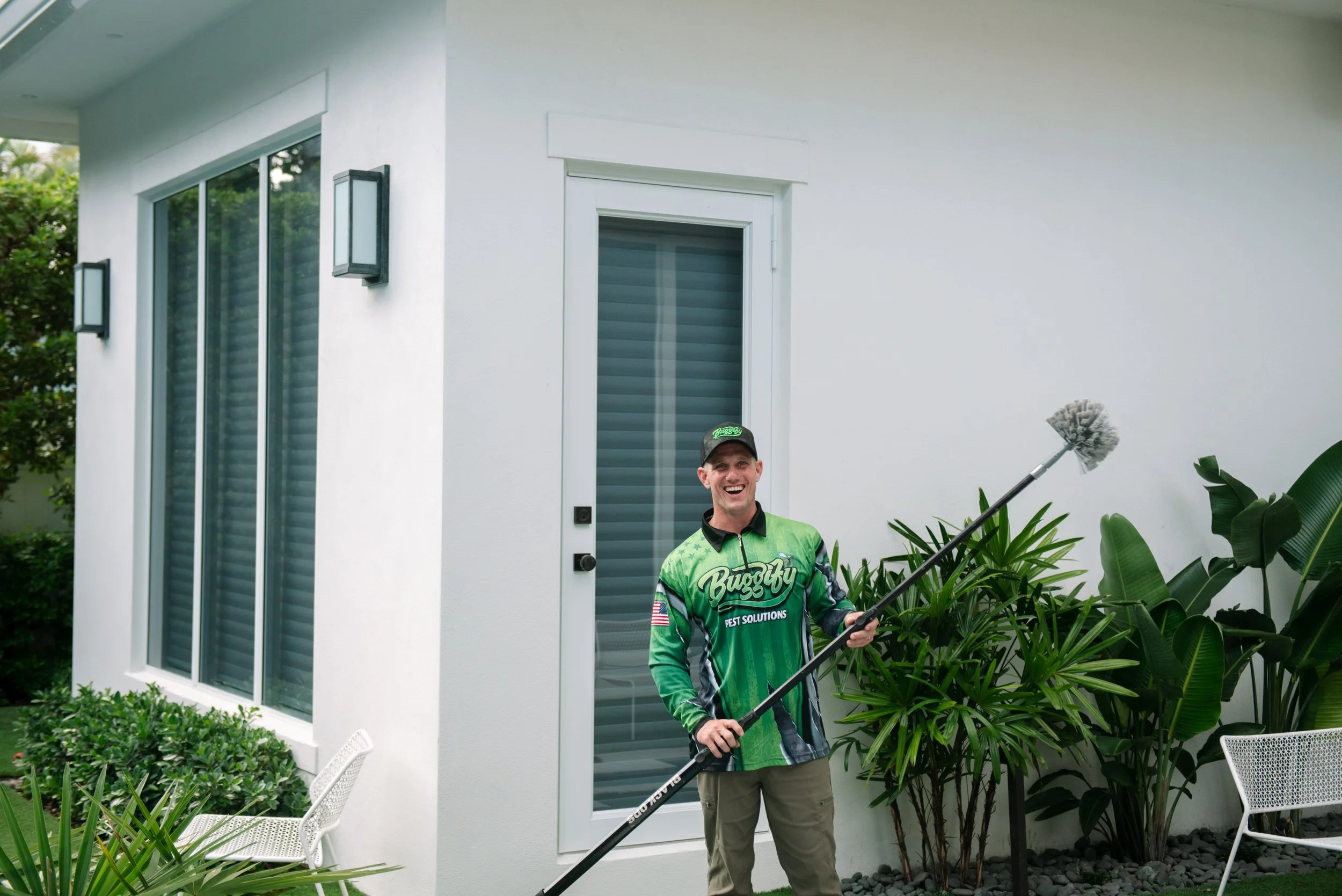
Wasp, Bee & Hornet Removal in Pompano Beach
Coastal mud dauber prevalence in seawall drainage vents plus continuous tidal-corridor Africanized honey bee tracking. Same technician on every job.
- FL DACS License #JB268060 · Certified Operator Tyler Craig
- Bayer Authorized Applicator (Termidor)
- $1M general liability insurance
- Google 5.0 Rated · live review feed
- Family-owned · 1,000+ South Florida homes served since 2018
- Pet-safe and family-safe treatments by default
- Free phone estimates · no long-term contracts
Pompano Beach's coastal stinging-insect profile is defined by three overlapping conditions most inland service areas do not share: mud dauber prevalence in seawall drainage vents and dock-line infrastructure, tidal-corridor honey bee swarm activity moving inland from the coast during spring migration, and Intracoastal-adjacent paper-wasp density on waterfront patio and pool-cage frames where warm salt air extends the active season. Mud daubers are solitary wasps that don't defend nests but leave stucco-staining mud tubes on seawalls, dock structures, and lower siding, which most homeowners want removed before they stain permanently. Honey bee swarms crossing the tidal corridor during March–May sometimes establish in the aged tile-roof soffit voids of waterfront properties, and the same species-identification protocol used elsewhere applies. Parent Pompano Beach city hub covers the coastal roof-rat, Intracoastal salt-marsh mosquito, and marina-district cockroach work in depth; this Tier 3 page focuses on the coastal and tidal-corridor stinging-insect dimension the hub does not address at length.
Seawall & Dock Mud Dauber Specialty
Coastal seawall drainage vents and dock infrastructure are prime nesting sites for mud daubers. Removal + surface cleaning avoids permanent stucco staining.
Tidal-Corridor Africanized Bee Tracking
Spring honey bee swarm migration across the tidal corridor. Species identification precedes any removal decision on established colonies.
Salt-Air Extended-Season Paper Wasp Work
Warm salt air extends the active season for paper wasps on waterfront patios and pool cages. Treatment cycles run longer than inland properties.
Same Technician Every Visit
Tyler runs every Pompano stinging-insect job.
Direct Line to Tyler
Mon–Fri 8 am – 5 pm.
No Contract Lock-In
Bills per visit.
Three Pompano Beach conditions that shape stinging-insect work
Coastal salt-air seasonality, seawall and dock infrastructure, and tidal-corridor honey bee migration each shape the wasp and bee protocol.
Coastal Salt-Air Extended Season
Warm salt air maintains paper-wasp activity into late fall and starts new-colony establishment earlier in spring. The treatment schedule runs longer than for inland properties.
Seawall, Dock and Boat-Lift Infrastructure
Coastal properties have seawall drainage vents, dock hardware, and boat-lift infrastructure that provide sheltered near-water nesting sites for mud daubers and occasional paper wasps.
Tidal-Corridor Africanized Bee Monitoring
Spring honey bee swarm migration crosses the tidal corridor from coast to inland. Species identification is not optional; it drives the removal approach on any cavity find.
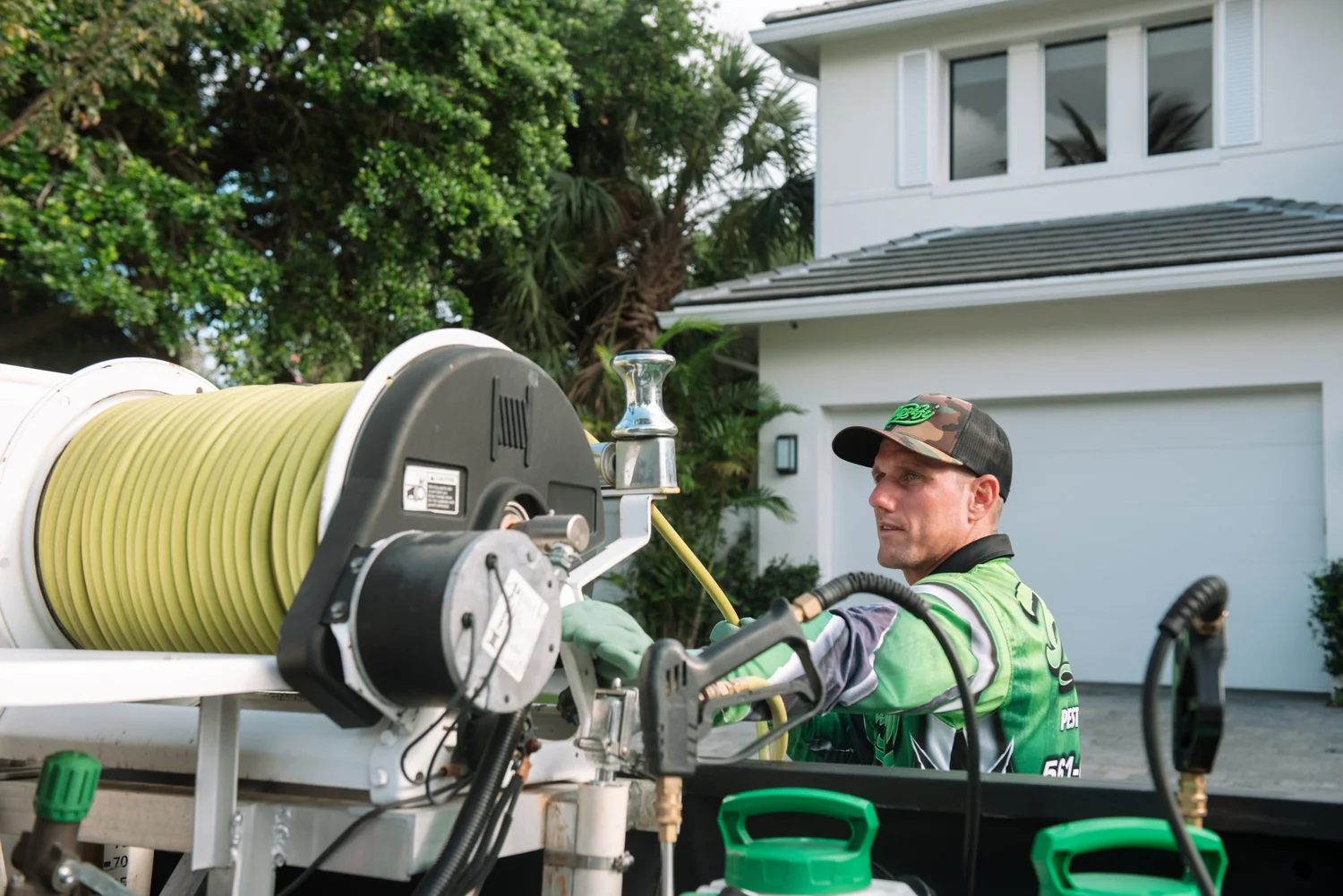
Five technical details specific to Pompano Beach wasp, bee, and hornet work
Seawall inspection technique, mud dauber removal and surface cleaning, salt-air treatment scheduling, waterfront species testing protocol, and pollinator timing on shoreline vegetation each drive the Pompano standard.
Seawall and Dock Infrastructure Inspection
Waterfront perimeter inspection covers the seawall face, drainage vent line, dock hardware, boat lift frame, and lift motor housing. Nest and mud-tube documentation before treatment.
Mud Dauber Removal + Surface Cleaning Coordination
Direct nest removal + vent-mouth residual to discourage re-nesting. Coordination with power-washing or exterior-cleaning contractors to ensure surface cleaning occurs after residual knockdown.
Salt-Air Extended Treatment Cycle Scheduling
Coastal properties often need two treatment cycles per year vs one inland. Treatment scheduling aligns with the extended season and the property owner's budgeting preference.
Waterfront Honey Bee Species-Identification Protocol
Aged tile-roof soffit voids on Intracoastal-adjacent properties occasionally receive spring-migration swarm establishment. Standard species-identification protocol: behavioral observation and worker morphometrics; UF Honey Bee Lab DNA testing is the recognized authority for definitive identification.
Pollinator-Timing on Shoreline Vegetation
Shoreline hedges and native landscape support pollinator foraging. Treatments timed outside foraging windows (early morning or dusk) on request; direct nest application avoids broadcast exposure.
Seawall mud dauber case: 40 feet of tube deposits removed and surface cleaned
The condition
A Pompano Beach waterfront homeowner had allowed mud dauber activity on the property seawall to accumulate over two seasons. Approximately 40 linear feet of the seawall face showed mud-tube deposits at the drainage vent line, with active mud daubers still cycling. The homeowner wanted the deposits removed before the scheduled seawall power washing to prevent staining.
The inspection and treatment
Tyler confirmed the presence of active mud daubers at 6 vent locations along the 40-foot seawall run. Because mud daubers are solitary and non-defensive, treatment was direct nest removal and vent-mouth residual application to discourage re-nesting for the season. Treatment run took under two hours.
The surface cleaning coordination
Tyler coordinated timing with the seawall power-washing contractor so that surface cleaning would happen the following week, after residual had knocked down any hidden hatchings. The seawall was cleaned to bare stucco; no permanent staining developed.
The follow-up
Homeowner enrolled in a quarterly waterfront-perimeter inspection to catch mud dauber re-establishment before it required another 40-foot removal cycle.
Every Pompano Beach wasp, bee and hornet issue Buggify handles
Six work profiles that match the coastal stinging-insect load.
Mud dauber nests on seawalls, docks, boat lifts
Solitary wasp mud tubes on seawall drainage vents, dock hardware, and boat-lift infrastructure. Removal + surface cleaning avoids permanent stucco staining.
Waterfront paper-wasp on lanai and pool-cage frames
Extended-season paper-wasp activity on pool cages, lanai ceilings, and patio furniture. Treatment cycles run longer than inland.
Honey bee cavity finds on aged waterfront tile roofs
Spring swarm migration crosses the tidal corridor; occasional cavity establishment in aged tile-roof soffit voids on Intracoastal-adjacent properties. Species identification precedes treatment.
Yellow-jacket ground nests near landscape and shoreline
Aggressive underground colonies at landscape edges and near shoreline drainage. Nighttime treatment on ground nests.
Bald-faced hornet aerial nests in shade trees
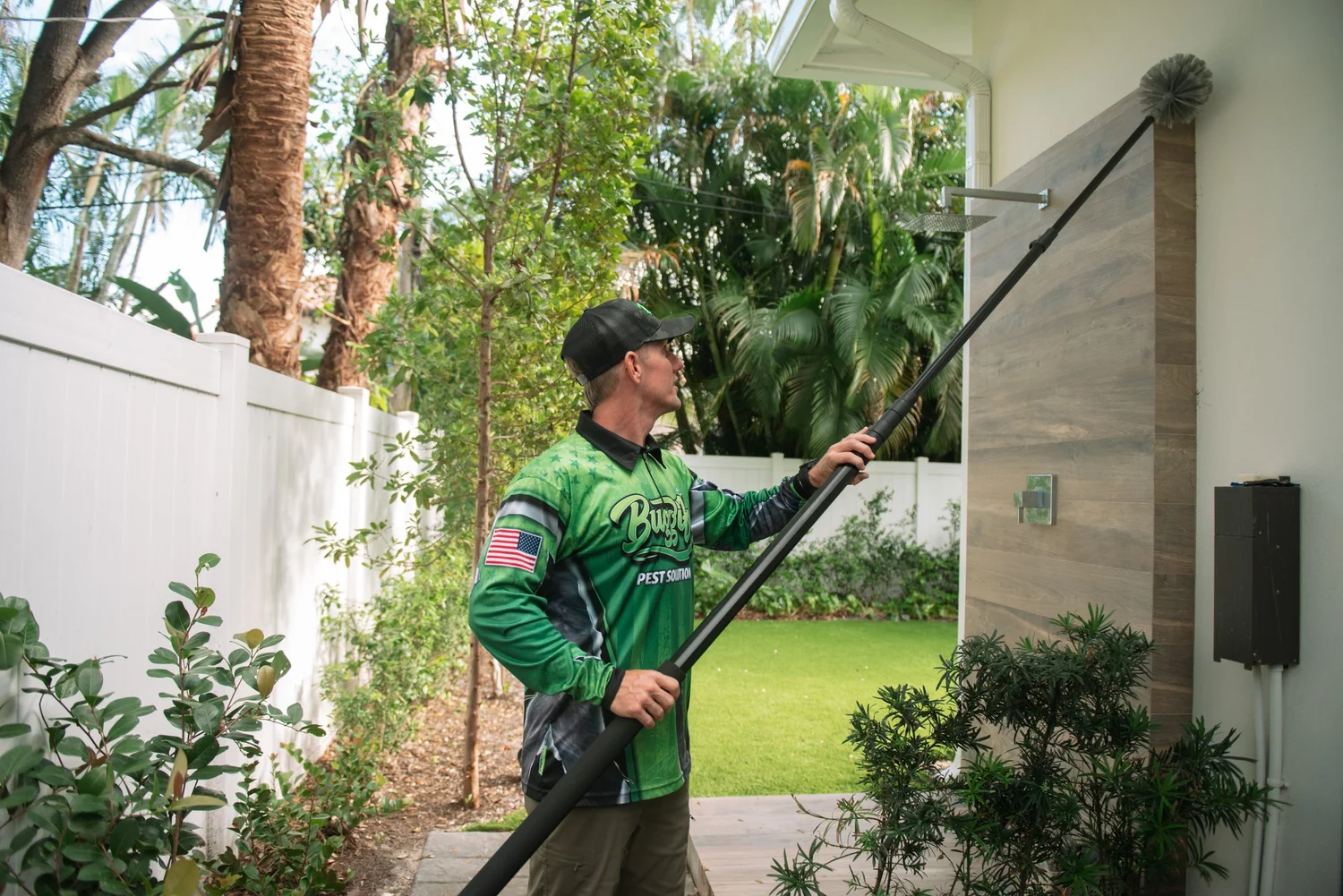
Grey aerial nests in oak and gumbo-limbo canopies on waterfront lots. Extended-reach applicator work.
Cicada killer and solitary wasp burrows on sandy soils
Sandy coastal soils support ground-burrowing solitary wasp activity. Removal is optional; these species pose no defensive risk.
Why Pompano stinging-insect work runs on a coastal-extended cycle
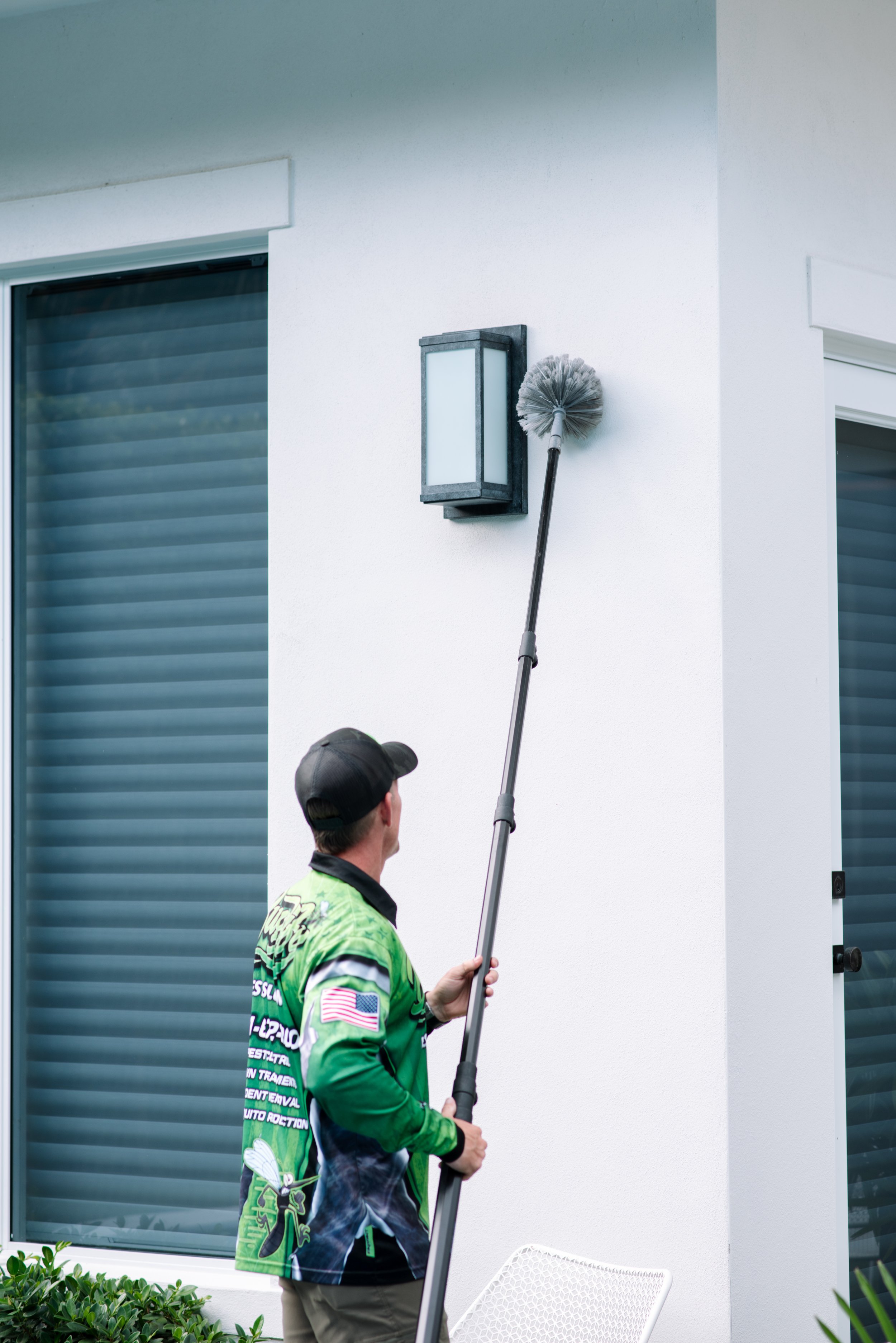
Inland stinging-insect activity ramps in March and tapers in October. Pompano Beach waterfront and near-Intracoastal properties run a longer cycle because warm salt air maintains paper-wasp activity into late fall and starts new-colony establishment earlier in the spring. That extended season shifts the treatment schedule and matters for return-visit budgeting: a property that would need one treatment inland may need two coastal-cycle treatments per year.
Mud daubers are a particularly coastal nuisance because seawall drainage vents, dock hardware, and boat-lift infrastructure provide solitary wasps with the sheltered, near-water nesting sites they prefer. They don't defend nests and pose almost no sting risk, but the mud-tube deposits stain stucco and require periodic removal to keep waterfront exteriors clean. Removal + surface cleaning is the standard work profile.
Parent Pompano hub covers coastal roof rats, Intracoastal salt-marsh mosquito breeding, and marina-district hospitality-corridor cockroach work. This Tier 3 page focuses on the seawall, tidal corridor, and salt-air stinging insect dimensions.
What Pompano Beach wasp, bee, and hornet removal costs
Firm stinging-insect pricing follows an on-site inspection because access, nest location, hive size, and species drive the work required. A phone conversation gives a range and confirms whether emergency dispatch is appropriate.
Phone estimate
Free, Tyler gives a treatment range on the first call after confirming access, nest location, and suspected species. On-site inspection sets firm pricing.
Emergency dispatch note
Stinging-insect calls involving allergic occupants, children, pets, or aggressive swarm behavior get priority scheduling. Standard scheduling runs same-week.
Included in every job
Species identification (paper wasp, mud dauber, yellow jacket, hornet, honey bee, carpenter bee), nest removal, treatment residual, and a written condition-of-treatment note.
21-day return
If the nest re-establishes at the treated location within 21 days, Tyler returns at no additional charge.
Buggify vs. National Pest Chains
Seven-point comparison. Every row verifiable from how Buggify operates.
| Feature | Buggify in Pompano Beach | National Pest Chains |
|---|---|---|
| Who answers when you call? | Tyler Craig, the licensed operator | Call center or booking bot |
| Same technician every visit | Yes, Tyler runs every job | Different rotating techs |
| Live-bee relocation policy | Coordinated with a beekeeper before removal for honey bee finds | Kill-and-remove default |
| Africanized-bee protocol | Bee identification before treatment; DNA-testing referral available | Standard chemical treatment regardless |
| Allergy notification | Written allergy-aware protocol for occupants before treatment | Not standard |
| Return-visit policy on stinging insects | Included when a nest re-establishes within 21 days at no charge | Extra visit fee typical |
| Contract lock-in | None. Bills per visit; cancel anytime. | Annual contracts common |
Read what Pompano Beach customers say on Google directly
Real Google reviews from Pompano Beach residents drive most of Buggify's new stinging-insect calls. Tyler answers, talks through the situation, and quotes a range on the first phone call. The live widget below pulls current reviews directly from Google, with a five-star average across all pest categories, with wasp and bee removal jobs mentioned frequently by name.
Three things Buggify will never do to you
Three things Buggify will never do to you (full list of seven on Why Choose Buggify):
Quote a real treatment price without inspecting the property first. Phone gives a range; firm pricing comes after an on-site walkthrough.
Indoor spraying when the source is outside. Most Pompano Beach pest pressure is driven by outdoor harborage; indoor-only work is a short-term cover-up.
Long-term contracts that lock you in. Bi-monthly plans bill per visit and can be canceled anytime, no fees.
Call (561) 672-0200. Tyler answers, gives you a price range on the first call, and books your Pompano Beach appointment into the next dispatch window (standard scheduling runs same-week; stinging-insect emergencies get prioritized).
Pompano Beach wasp, bee and hornet FAQ
Why does my seawall get mud dauber tubes and my neighbor's inland lawn doesn't?
Mud daubers prefer sheltered near-water nesting sites, seawall drainage vents, dock hardware, and boat-lift infrastructure. Inland properties without water infrastructure rarely see the same accumulation. Coastal geography is the differentiator.
Will removing the mud tubes damage my seawall stucco?
No, mud tube removal is manual with hand tools. Surface cleaning is coordinated with a power-washing contractor after residual knockdown removes any staining residue. Seawall stucco is not affected by the treatment approach.
How often do coastal properties need paper-wasp treatment vs inland?
Coastal salt-air properties typically require two treatment cycles per year (early spring and mid-fall), whereas inland properties require only one. Warm salt air extends the active season on both ends.
Do you handle honey bee finds in Pompano Beach waterfront properties?
Yes, with the standard species-identification protocol: behavior observation, worker morphometrics on collected samples; UF Honey Bee Lab DNA testing is the recognized authority for definitive identification. European colonies get live-relocation coordination; Africanized colonies get controlled treatment.
Can Tyler coordinate treatment timing with my seawall or dock contractor?
Yes. Coordination with power-washing, seawall repair, or dock contractors is standard on Pompano waterfront work. Treatment application before or after contractor visits is timed to keep both workflows on schedule.
Direct line to the technician serving Pompano Beach
Phone: (561) 672-0200 (Tyler answers) · Mon–Fri 8 am – 5 pm
Email: Getbuggify@gmail.com
Address: 22617 Middletown Dr., Boca Raton, FL 33428 (West Boca shop, primary dispatch)
License: FL DACS #JB268060 · Certified Operator: Tyler Craig
Call (561) 672-0200 or submit the form below for a free phone estimate. Tyler answers directly. Pompano Beach dispatch is owner-operator across a route from the West Boca shop, so appointments are pre-scheduled rather than drop-in; most standard jobs book for the same week.