

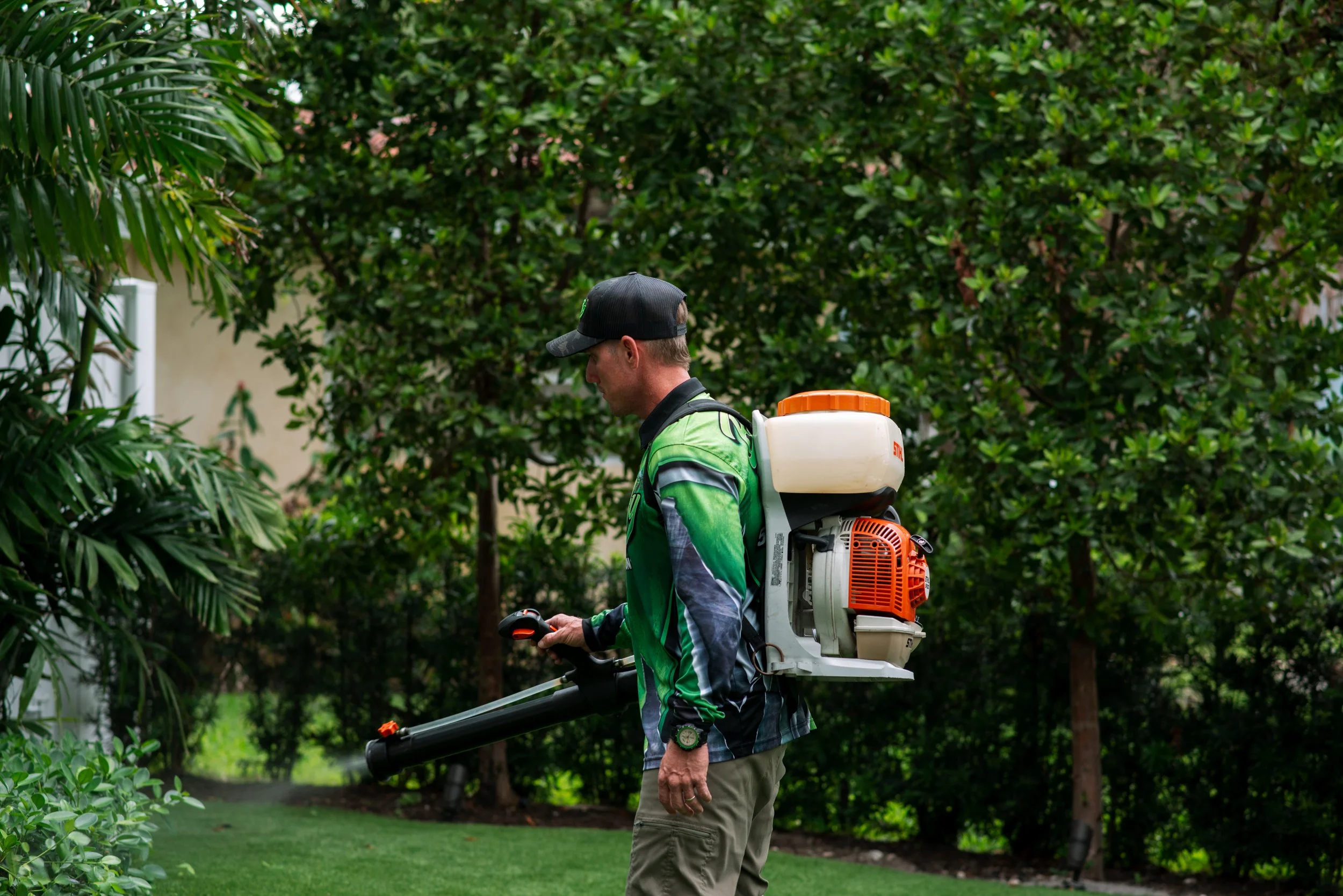
Mosquito Control in Boynton Beach
Boynton Inlet brackish mixing zone produces a species profile that pure freshwater or pure salt-marsh protocols miss. Species-appropriate treatment, not a generic coastal cadence.
- FL DACS License #JB268060 · Certified Operator Tyler Craig
- Bayer Authorized Applicator (Termidor)
- $1M general liability insurance
- Google 5.0 Rated · live review feed
- Family-owned · 1,000+ South Florida homes served since 2018
- Pet-safe and family-safe treatments by default
- Free phone estimates · no long-term contracts
Boynton Beach has a mosquito profile that pure inland freshwater or pure coastal salt-marsh protocols miss. The Boynton Inlet is where the Intracoastal Waterway meets the Atlantic Ocean, producing a brackish mixing zone with a distinct ecology. Salt-tolerant salt-marsh species (Aedes taeniorhynchus) and salt-intolerant freshwater edge species (various Culex) both live in the mixing zone depending on tidal cycle and rainfall. Neither the tidal-cycle protocol appropriate for pure salt marsh (Hillsboro Inlet, Pompano) nor the rainfall-cycle protocol appropriate for pure freshwater (inland Everglades edge, Coral Springs) fits the mixing zone alone. Tyler's Boynton mosquito protocol reads the mixing zone as its own ecology and combines tidal + freshwater dual cadence on inlet-adjacent properties. The parent Boynton Beach city hub covers the Loxahatchee NWR wetland-edge freshwater work in depth; this Tier 3 page focuses on the inlet brackish mixing-zone dimension that the hub does not cover.
Boynton Inlet Brackish Mixing Specialty
The Boynton Inlet is where the Intracoastal meets the Atlantic, producing a brackish mixing zone with a species profile distinct from either pure environment.
Salt-Marsh + Freshwater Edge Species Mix
Brackish inlet ecology supports both salt-tolerant salt-marsh species and salt-intolerant freshwater edge species depending on tidal cycle. Neither pure cadence fits.
Tidal + Freshwater Dual Cadence
Tidal-cycle timing catches salt-marsh emergence; freshwater rainfall-cycle catches inland species. Both apply on inlet-adjacent Boynton properties.
Same Technician Every Visit
Tyler tracks the inlet mixing pattern across visits and adjusts cadence to observed species response.
Pet-Safe + Family-Safe by Default
Yard safe to re-enter once the barrier dries. SDS available on request.
No Long-Term Contract
Bi-monthly plans bill per visit and cancel anytime.
Three Boynton conditions that shape mosquito work
Boynton's coastal inlet geometry, brackish mixing ecology, and interior wetland/canal proximity each shape the mosquito protocol.
Boynton Inlet Brackish Mixing Zone (Where Intracoastal Meets Atlantic)
The Boynton Inlet exchanges Atlantic saltwater with Intracoastal brackish water on every tidal cycle, producing a mixing zone with a distinct mosquito species ecology. Salt-marsh + freshwater edge species mix depending on the tidal cycle, and cadence appropriate for either pure environment misses the other half of the pressure.
Loxahatchee NWR Wetland-Edge + Lake Worth Canal Corridor (Parent Hub Reference)
The freshwater wetland-edge and canal-corridor mosquito work is covered on the parent Boynton Beach city hub with monthly cadence + Bti tablet deployment year-round. Inlet-adjacent properties with wetland or canal exposure reference both.
Coastal-Inland Transect Across Boynton's East-West Extent
Boynton runs from the Atlantic coast through inland residential areas to Loxahatchee-adjacent western zones. Mosquito species exposure varies substantially east-to-west. Property-specific inspection scoring matches cadence to actual water-source exposure.

Why Boynton mosquito work needs dual-cadence treatment on inlet-adjacent properties
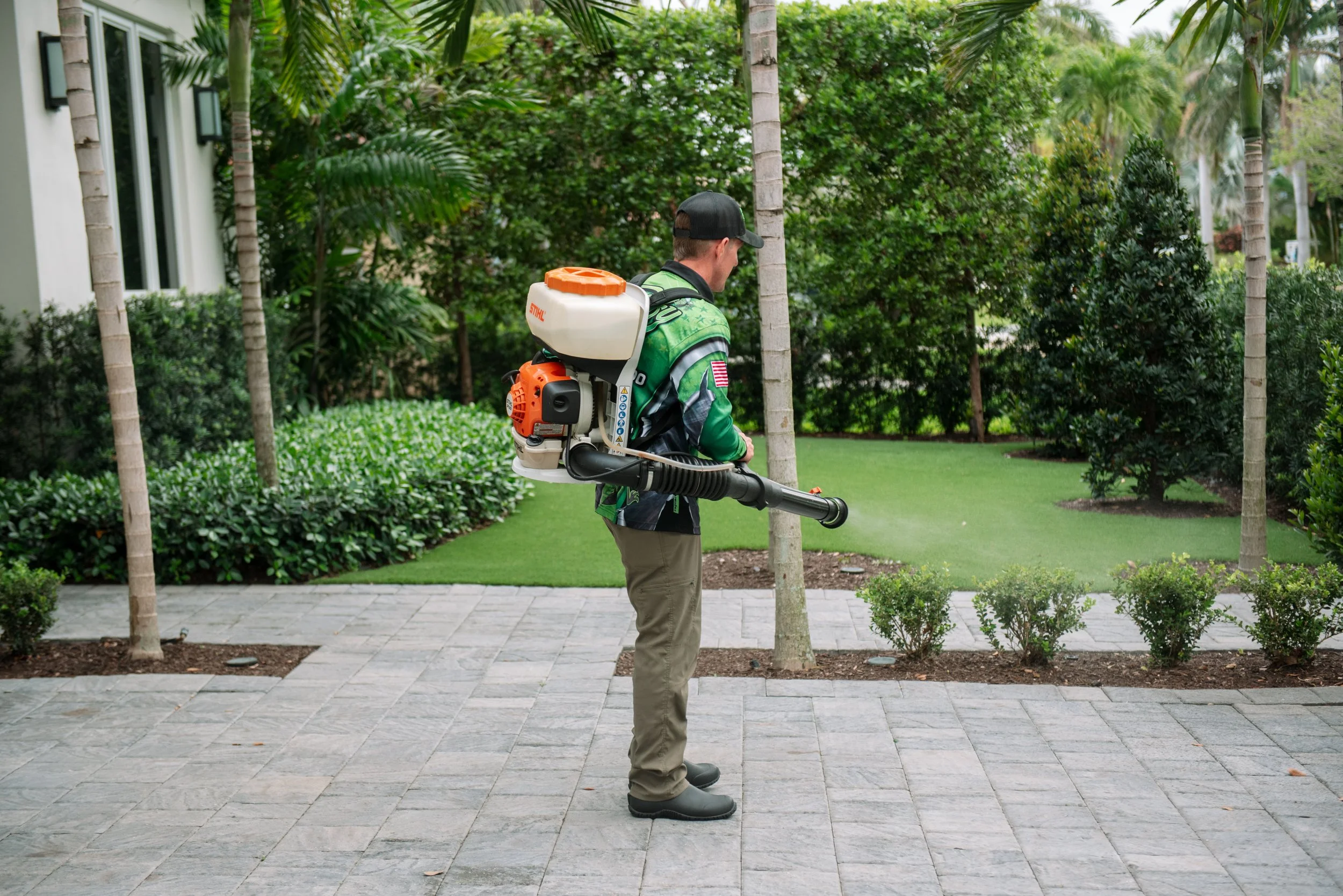
Standard coastal mosquito protocols assume either pure salt-marsh ecology (with tidal-cycle emergence timing) or pure freshwater ecology (with rainfall-cycle timing). Boynton Beach breaks the assumption on inlet-adjacent properties. The Boynton Inlet exchanges Atlantic saltwater with Intracoastal brackish water on every tidal cycle, producing a mixing zone where salt-tolerant and salt-intolerant species coexist depending on the tidal state.
On the flood tide (Atlantic water pushing in), salt-marsh species (Aedes taeniorhynchus) find the inlet edges and Intracoastal fringe hospitable, and their tidal-cycle emergence timing dominates. On the ebb tide (Intracoastal brackish and rainwater pushing out), freshwater edge species (various Culex) find the same water hospitable, and their rainfall-cycle timing dominates. Over the tidal cycle, both species contribute to the total mosquito pressure, and either single-cadence protocol misses about half of it.
Tyler's inlet-adjacent Boynton mosquito protocol reads the mixing zone as its own ecology. Dual cadence combines the tidal-cycle pre-emergence targeting (per Pompano Hillsboro Inlet approach) with monthly freshwater-cadence barrier work (per inland freshwater standard). Inspection on inlet-adjacent properties identifies which species is dominant that week and which cadence needs immediate attention. Interior Boynton residential without inlet exposure fits the standard freshwater protocol; wetland-edge and canal-corridor properties defer to the parent hub for those specific scope areas.
Five technical details specific to Boynton mosquito work
Brackish mixing zone ecology, tidal + freshwater dual cadence, species identification across salt-tolerance spectrum, inlet-tidal-forecast integration, and coordination with parent hub scope.
Brackish Mixing Zone Species Ecology Reading
Brackish inlet mixing zones support both salt-tolerant Aedes taeniorhynchus (the black salt-marsh mosquito) and salt-intolerant Culex species (Culex nigripalpus, Culex quinquefasciatus) in the same water depending on the tidal state. Tyler's inspection identifies which species dominates the specific inlet-adjacent property that week, using species-specific rest postures, coloration, and habitat-context observations. The species mix drives which cadence needs immediate application priority.
Tidal + Freshwater Dual Cadence Protocol
Inlet-adjacent properties get combined cadence, tidal-cycle pre-emergence targeting 3-5 days ahead of forecast new-moon and full-moon high-tide events (per Hillsboro Inlet approach on Pompano beachfront), plus monthly freshwater cadence barrier May-October (per inland freshwater standard). Roughly six monthly visits + four to six additional tidal-window treatments annually on high-mixing-zone properties.
Boynton Inlet Tidal Forecast Integration
NOAA Boynton Inlet tidal forecast is the input for pre-emergence timing on salt-marsh species. Tyler tracks the forecast for the standard 28-day lunar cycle and schedules pre-emergence treatments 3-5 days ahead of each flood event. Forecast integration is why the tidal windows land at the right time rather than at the calendar-monthly cadence.
Species Identification Across the Salt-Tolerance Spectrum
Aedes taeniorhynchus (jet-black with distinctive white leg banding) is salt-marsh dominant. Culex nigripalpus (browner, more uniform) is freshwater dominant. Both can appear in brackish mixing water on different tidal states. Habitat context (proximity to inlet, tidal timing, rainfall history in the preceding week) further narrows the species identification. Correct species identification drives cadence and chemistry selection.
Coordination with Parent Hub Loxahatchee + Canal Scope
Loxahatchee NWR wetland-edge freshwater work and Lake Worth Drainage canal-corridor work are covered on the parent Boynton Beach city hub. Properties with both inlet exposure and wetland or canal exposure combine the inlet-adjacent dual cadence covered on this page with the wetland or canal cadence covered on the hub. Combined-exposure properties often run on Complete-tier plans.
Every Boynton mosquito issue Buggify handles
Three Boynton mosquito-work profiles sorted by water-source ecology.
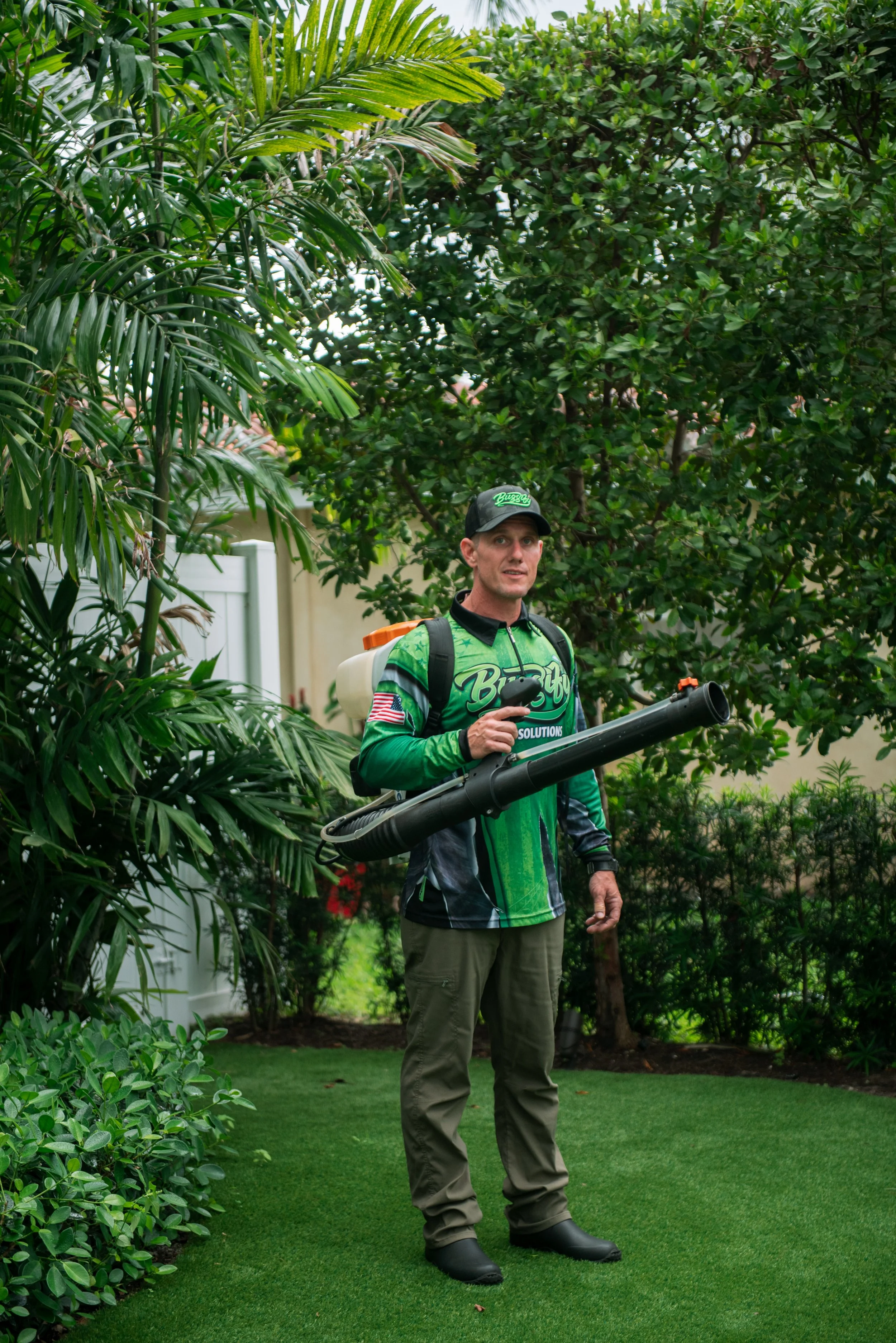
Inlet-adjacent brackish mixing zone (eastern Boynton, Intracoastal-facing)
Distinctive Boynton work. Tidal + freshwater dual cadence on inlet-adjacent properties. Species identification per tidal state. Pre-emergence targeting per Boynton Inlet tidal forecast.
Loxahatchee NWR wetland-edge + Lake Worth canal (parent hub reference)
Freshwater wetland-edge and canal-corridor mosquito work covered on the parent Boynton Beach city hub. Monthly cadence + Bti tablet deployment year-round.
Standard inland Boynton residential (interior single-family, non-water-adjacent condos)
Standard bi-monthly plan coverage on interior properties without inlet, wetland, or canal exposure. Complete-tier plan bundles mosquito barrier.
Three-season pattern discovery: Intracoastal-facing Boynton property with cycling mosquito activity
The unexplained cycle
An Intracoastal-facing Boynton homeowner had a standing bi-monthly plan through Buggify for three years. The yard was usable most weeks but had recurring 1-2 week windows of heavy activity that did not correlate with rainfall or the standard freshwater breeding cycle. Homeowner asked Tyler about the pattern in year two.
The pattern observation
Tyler began logging visit-level species observations and activity intensity across the third year. By season's end, the pattern crystallized: heavy activity windows corresponded to specific new-moon and full-moon high-tide events, matching the salt-marsh mosquito emergence cycle. The property was inlet-adjacent enough to be affected by tidal-cycle Aedes taeniorhynchus emergence, but not obviously coastal enough to have triggered the tidal protocol on original inspection.
The protocol addition
Added tidal-window pre-emergence treatments to the standing bi-monthly cadence. Post-full-moon and post-new-moon flood windows dropped from 5-7 days of unusable yard to 1-2 days of light activity. Family got back the specific week-long windows that had been unusable each month.
The learning
Inlet-adjacent Boynton properties may not obviously self-identify as tidal-cycle candidates on first inspection. Pattern observation across seasons is sometimes the diagnostic that surfaces the tidal-cycle dimension. The property has been on combined tidal + freshwater dual cadence for two years now with consistent results.
The extension across the corridor
After this case, Tyler expanded pattern observation to other inlet-adjacent Boynton properties on the standing plan roster. Roughly a third of Intracoastal-facing Boynton properties turned out to have similar unrecognized tidal-cycle dimensions. Cadence adjustments across those properties addressed activity windows that had been running unrecognized for years.
Boynton mosquito pricing
Standard Buggify mosquito pricing with tidal + freshwater dual cadence programs for inlet-adjacent properties.
One-Time Treatment,$125-225
Single visit. Inlet-adjacent properties at the upper end because of the tidal-window targeting complexity.
Tidal + Freshwater Dual Cadence Program,Custom
Recommended for inlet-adjacent Boynton properties. Combines monthly freshwater cadence May-October with tidal-window pre-emergence treatments 3-5 days ahead of forecast new-moon and full-moon high tides. Custom-quoted.
Bi-Monthly Plan Coverage
The Complete (Premium) bi-monthly plan includes a mosquito barrier at an 8-week cadence. Works on inland Boynton residential without inlet, wetland, or canal exposure. Full Home Protection covers routine perimeter.
Backyard Event Fogging,$150-250
One-time ULV cold fogger sweep 2-6 hours before an outdoor event.
Buggify vs. National Pest Chains
Six-point comparison. Every row verifiable from how Buggify operates.
| Feature | Buggify in Boynton Beach | National Pest Chains |
|---|---|---|
| Boynton Inlet brackish mixing zone recognition | Standard on inlet-adjacent inspections | Generic freshwater or salt-marsh protocol |
| Tidal + freshwater dual cadence | Standard on inlet-adjacent properties | Single-cadence protocol misses the other half of pressure |
| Boynton Inlet tidal forecast integration | NOAA forecast tracked for pre-emergence timing | Calendar-monthly cadence only |
| Species identification across salt-tolerance spectrum | Standard on inlet-adjacent inspections | One-species-fits-all assumption |
| Same technician tracking pattern across seasons | Tyler runs every Boynton mosquito job | Rotating techs, no cross-season pattern awareness |
| Contract structure | Bills per visit, cancel anytime | Multi-year quarterly contracts common |
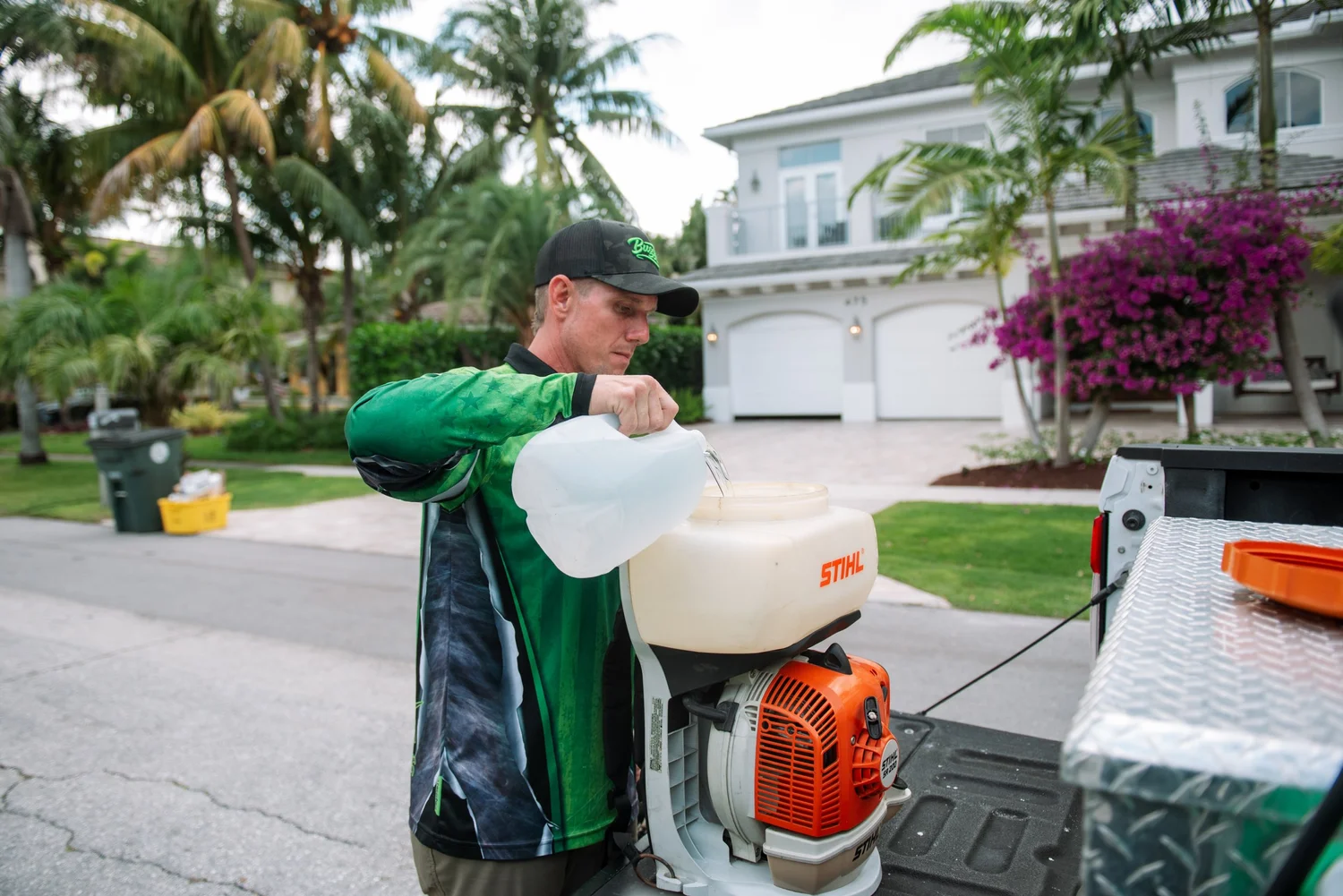
Read what Boynton Beach customers say on Google directly
Boynton mosquito reviews from inlet-adjacent property owners often reference the tidal-window pattern discovery. Homeowners with recurring unusable-yard windows describe getting the pattern explanation across seasons as the change that let cadence match the actual driving ecology. Google 5.0 Rated · live review feed.
Three things Buggify will never do to you
Three things Buggify will never do to you (full list of seven on Why Choose Buggify):
Quote a real treatment price without inspecting the property first. Phone gives a range; firm pricing comes after an on-site walkthrough.
Indoor spraying when the source is outside. Most Boynton Beach pest pressure is driven by outdoor harborage; indoor-only work is a short-term cover-up.
Long-term contracts that lock you in. Bi-monthly plans bill per visit and cancel anytime, no fees.
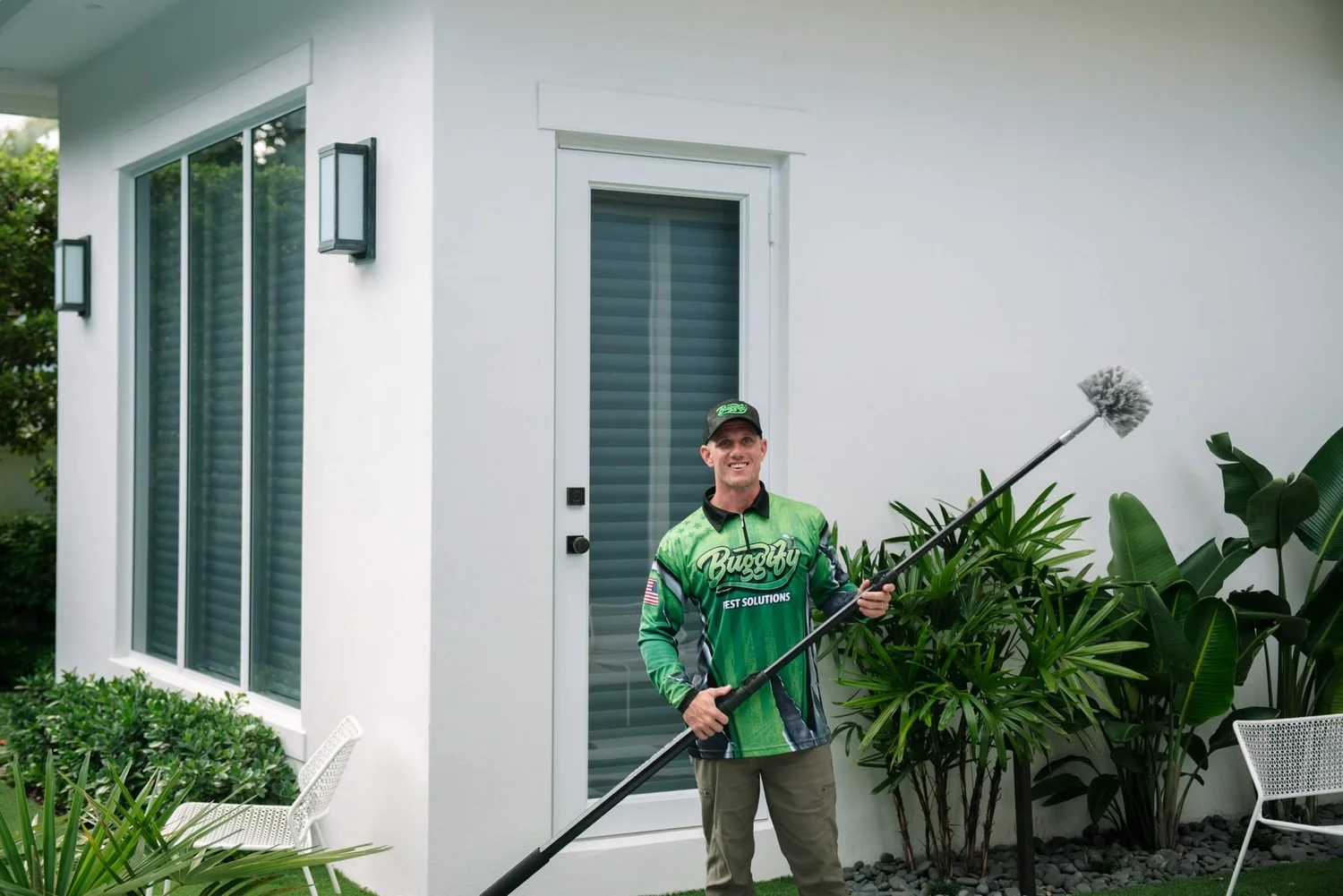
Call (561) 672-0200. Tyler answers, gives you a price range on the first call, and books your Boynton Beach appointment into the next dispatch window (standard scheduling runs same-week; stinging-insect emergencies get prioritized).
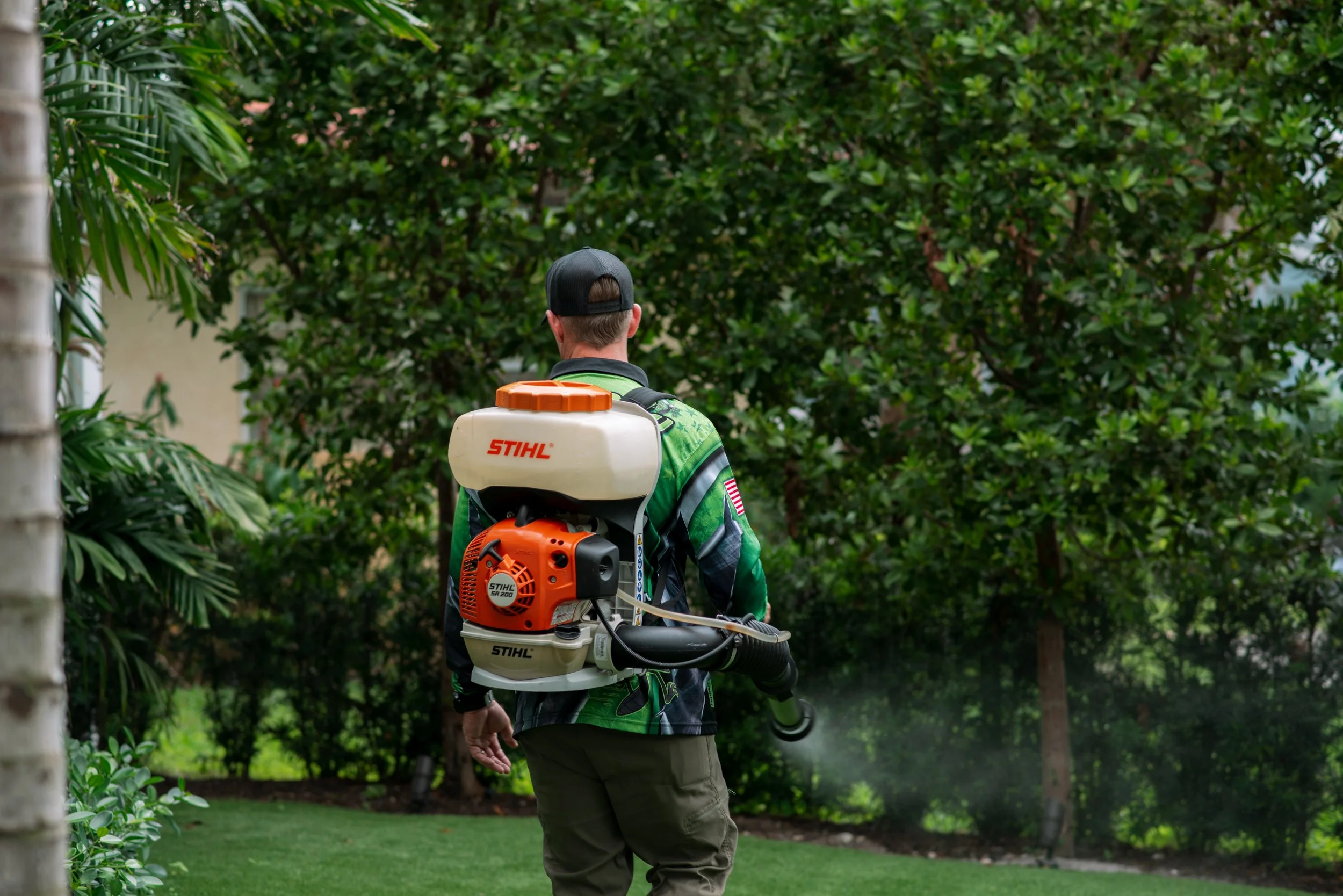
Six Boynton mosquito questions Tyler hears most often
My Intracoastal-facing yard is unusable for a week after every full moon. Why?
Likely Aedes taeniorhynchus (salt-marsh mosquito) emerging on the tidal cycle following flood-tide events. Tidal-window pre-emergence treatment 3-5 days before the forecast flood intercepts emerging adults before they disperse into the yard.
What is brackish mixing zone ecology?
Where the Intracoastal Waterway meets the Atlantic through the Boynton Inlet, saltwater and freshwater exchange on every tidal cycle producing a mixing zone that supports both salt-tolerant and salt-intolerant species. Neither pure freshwater nor pure salt-marsh habitat fits the mixing zone alone.
I live inland in Boynton, no inlet exposure. Does the tidal protocol apply to me?
Probably not. Inland Boynton residential without inlet, wetland, or canal exposure fits the standard bi-monthly plan. The tidal-cycle protocol applies specifically to inlet-adjacent and Intracoastal-facing properties.
My property is on the Loxahatchee wetland edge. Do I use this page or the parent hub?
Parent hub. The Loxahatchee NWR wetland-edge freshwater mosquito protocol is covered there. This page covers the inlet brackish mixing zone. Combined-exposure properties reference both.
What is the difference between Aedes taeniorhynchus and Culex nigripalpus?
Aedes taeniorhynchus is the black salt-marsh mosquito, jet-black with distinctive white leg banding, salt-tolerant, tidal-cycle emergence timing. Culex nigripalpus is a freshwater species, browner and more uniform, salt-intolerant, rainfall-cycle emergence timing. Correct species identification drives which cadence dominates.
Are Bti larvicide + monthly residuals safe for pets and kids?
Yes. Bti is a bacterial larvicide, safe for beneficial insects, pets, and children. Monthly residuals applied at label rates dry into an invisible barrier, and the yard is safe to re-enter after 30-60 minutes. SDS available on request.
Direct line to the technician serving Boynton Beach
Phone: (561) 672-0200 (Tyler answers) · Mon–Fri 8 am – 5 pm
Email: Getbuggify@gmail.com
Address: 22617 Middletown Dr., Boca Raton, FL 33428 (West Boca shop, primary dispatch)
License: FL DACS #JB268060 · Certified Operator: Tyler Craig
Call (561) 672-0200 or submit the form below for a free phone estimate. Tyler answers directly. Boynton Beach dispatch is owner-operator across a 20-25 mile route, so appointments are pre-scheduled rather than drop-in; most standard jobs book same-week.