

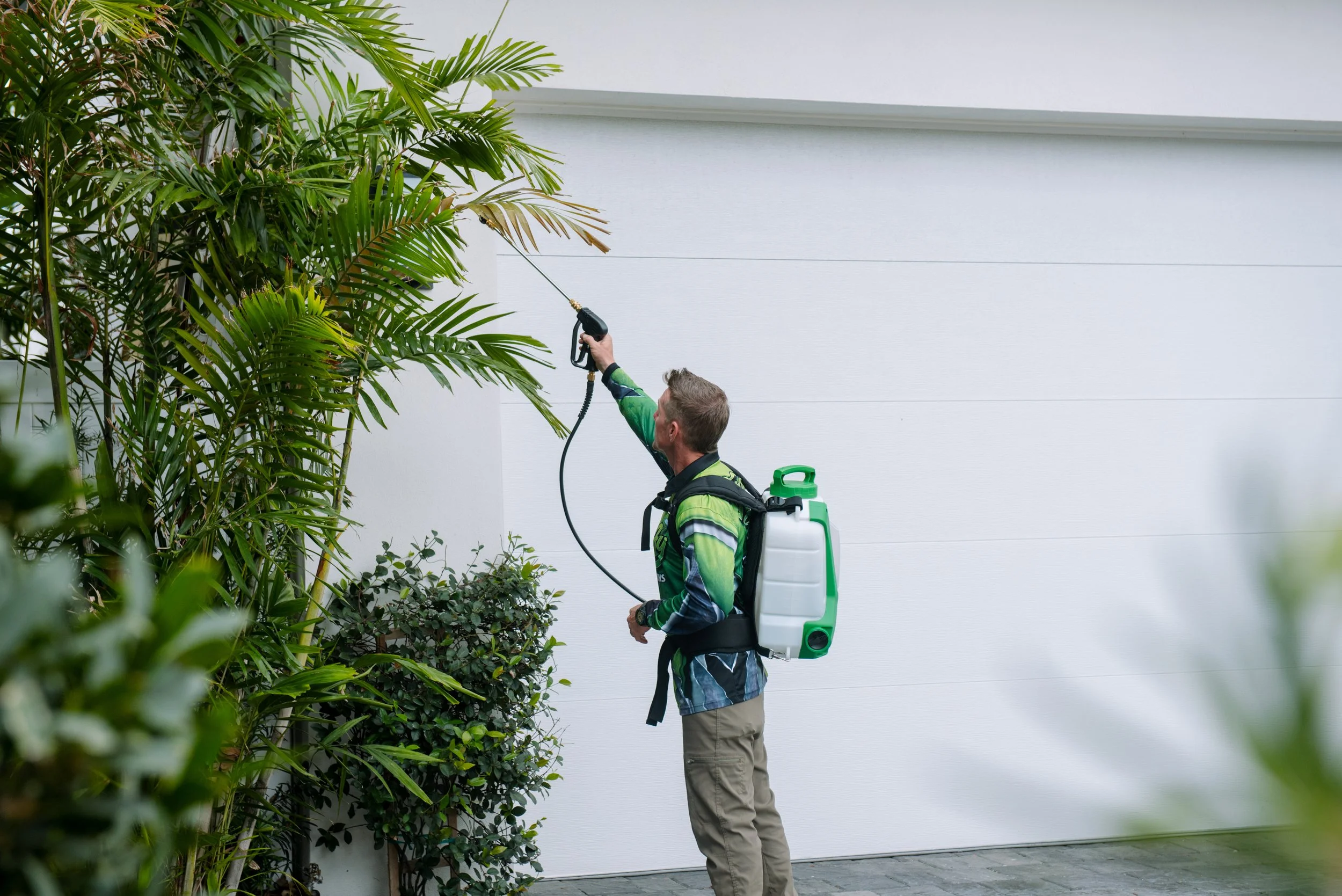
Cockroach Control in Boynton Beach
Snowbird seasonal-vacancy German cockroach establishment during unoccupied windows + return-detection protocol for winter re-occupancy.
- FL DACS License #JB268060 · Certified Operator Tyler Craig
- Bayer Authorized Applicator (Termidor)
- $1M general liability insurance
- Google 5.0 Rated · live review feed
- Family-owned · 1,000+ South Florida homes served since 2018
- Pet-safe and family-safe treatments by default
- Free phone estimates · no long-term contracts
Boynton Beach has a cockroach pressure vector most South Florida cities do not concentrate. The snowbird resident population (winter-only residents who depart Boynton for northern states in April-May and return in October-November) creates a specific 4-6 month unoccupied-property window each year. During that window, German cockroach establishment risk on Boynton snowbird properties is elevated substantially: no residents active in the home, no daily disruption to harborage zones, water and food traces that slowly accumulate before departure, adjacent-unit activity that migrates into the unoccupied unit through shared walls in multi-family stock. Returning snowbird owners in October-November frequently discover pest activity that established during their absence without any prior warning. Tyler's Boynton snowbird protocol combines pre-departure prevention treatment (before the vacancy window closes) with a return-detection diagnostic (distinguishing what was established during the vacancy from what predated it). The parent Boynton Beach city hub covers the 55+ multi-family German cockroach inter-unit work in depth; this Tier 3 page focuses on the snowbird seasonal-vacancy dimension.
Snowbird Seasonal-Vacancy Specialty
Boynton has one of the highest snowbird resident concentrations in South Florida. Unoccupied 4-6-month windows are a specific risk for German cockroach establishment.
Return-Detection Diagnostic on Winter Re-Occupancy
Returning snowbird owners often discover pest activity that established during the unoccupied window. Return-detection distinguishes recent from longstanding establishment.
Pre-Departure Prevention Protocol
Pre-departure cockroach prevention treatment before the vacancy window closes reduces the establishment risk during the unoccupied period.
Gel Bait + IGR, Not Perimeter Spray
German cockroaches never leave the harborage; residual perimeter spray never touches them.
Same Technician Every Visit
Tyler tracks snowbird schedules and coordinates pre-departure + return work across seasons.
No Long-Term Contract
Bi-monthly plans bill per visit. Cancel anytime, no fees.
Three technical details specific to Boynton snowbird cockroach work
Pre-departure prevention protocol, return-detection diagnostic, and integration with parent hub 55+ multi-family work.
Pre-Departure Prevention Protocol
Applied in the 2-4 weeks before a snowbird owner departs for the northern spring/summer. Standard interior gel bait plus IGR application at kitchen and bathroom harborage zones, plus exterior perimeter treatment on non-repellent product for adjacent-property migration prevention. Water-source elimination inspection (dripping faucets, standing water in appliances, condensate lines) since even small water sources become significant attractants during the unoccupied window. Departure-week inspection is optional but recommended for higher-risk properties (multi-family units with recent adjacent activity, prior recurring cockroach history).
Return-Detection Diagnostic Framework
Applied within 1-2 weeks of the returning snowbird's arrival back to Boynton. The diagnostic distinguishes three scenarios: no cockroach activity established (predeparture prevention held; standard bi-monthly resumes), single-forager sightings (individual insects only, no life-stage evidence in the interior; likely exterior-sourced, treat exterior only), and established interior colony (multiple life stages, egg cases present, active harborage; full multi-week bait plus IGR protocol required). Categorization drives the treatment response rather than a default full-protocol, regardless of the actual finding.
Coordination with Parent Hub 55+ Multi-Family Work
The 55+ community German cockroach inter-unit transfer protocol is covered on the parent Boynton Beach city hub: driver-unit identification plus wall-cavity sealing plus IGR application. Snowbird 55+ community residents combine this Tier 3 page's pre-departure and return-detection protocol with the parent hub's multi-family coordination protocol for shared-wall exposure.
October snowbird return: Sterling Village-adjacent condo, discovered pre-existing establishment
The pre-departure preparation
April 2024, a snowbird owner in a Sterling Village-adjacent condo scheduled a pre-departure prevention visit. Tyler applied interior gel bait plus IGR at kitchen and bathroom harborage zones, inspected water sources, treated the exterior perimeter with a non-repellent product, and flagged one condensate-line drip in the AC closet as a water-source risk. Owner departed for New York in early May.
The return-detection call
Owner returned to Boynton late October. Called Buggify within a week of return, unsure whether the isolated cockroach sightings she noticed near the kitchen sink were normal or a problem. Scheduled a return-detection diagnostic visit.
The categorization
Tyler ran the diagnostic framework. Found evidence of an established colony in the kitchen wall cavity, multiple life stages, egg cases, active harborage. The AC condensate drip flagged in April had continued through the unoccupied window and created the water source that supported the establishment. Not a single-forager sighting; established interior colony requiring full protocol.
The response
Full multi-week bait plus IGR protocol across kitchen and adjacent bathroom. Owner arranged to have the AC condensate line repaired within a week. Follow-up monitoring at 4 weeks confirmed no active cockroach activity. Owner moved to a Buggify pre-departure + monthly-during-vacancy monitoring plan for the following winter season (Tyler makes a monthly check-and-treat visit to the unoccupied property, catching any activity establishing rather than allowing full-window development).
Why Boynton cockroach work includes a snowbird seasonal dimension inland cities do not carry
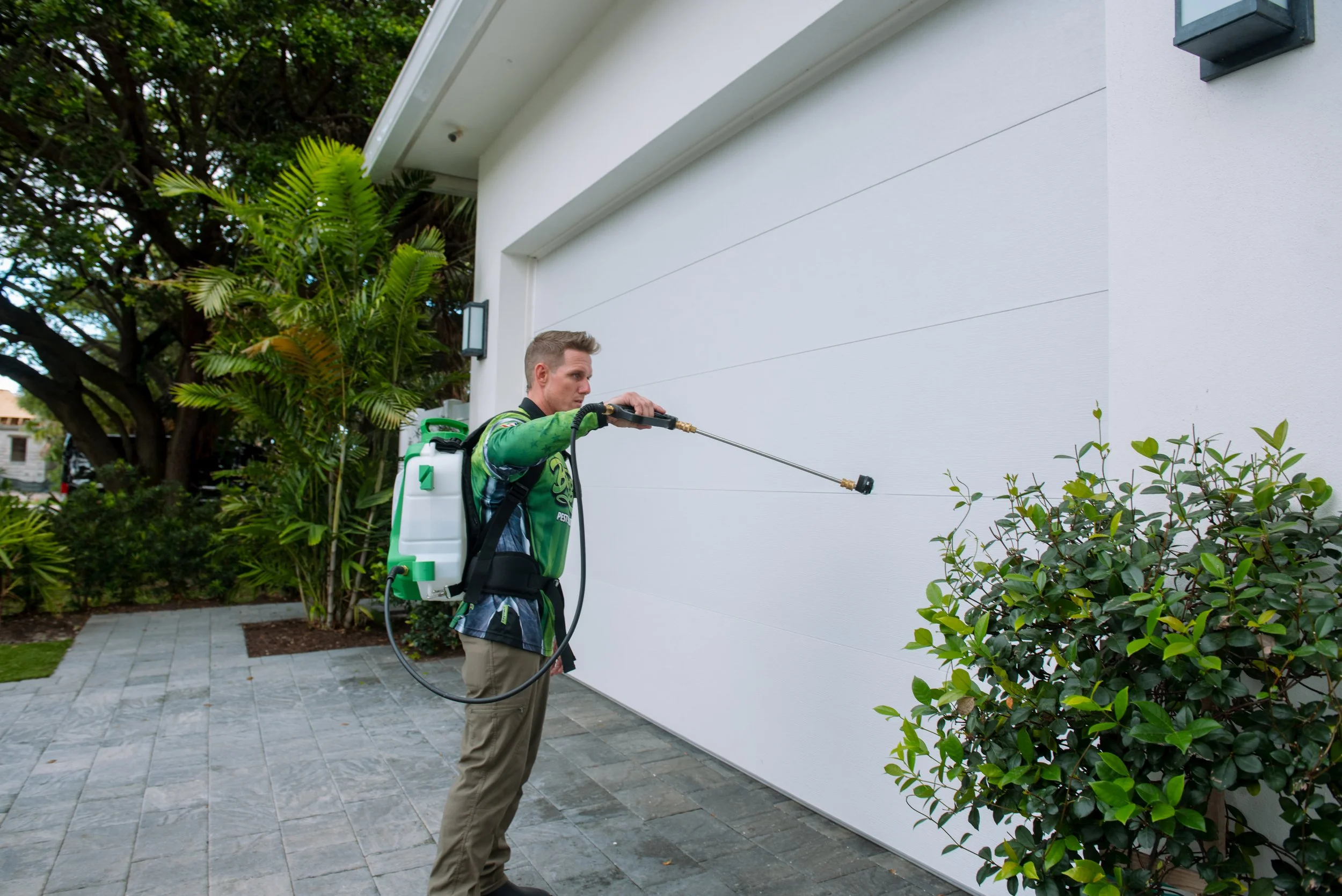
Standard South Florida cockroach protocols assume year-round occupancy. Boynton Beach breaks that assumption on snowbird properties. The snowbird resident population departs for northern states in April-May and returns in October-November, creating an annual 4-6 month unoccupied-property window that has no equivalent in year-round-occupancy cities.
That unoccupied window is a specific German cockroach establishment risk. No resident activity disrupts harborage zones; water traces (condensate lines, small drips, appliance moisture) become significant attractants without daily use to disturb them; and multi-family shared-wall exposure lets adjacent-unit activity migrate into the unoccupied unit unchecked. Returning snowbird owners frequently discover pest activity that established during the window without any warning, and standard default full-protocol response often over-treats what turns out to be minor.
Tyler's snowbird protocol addresses both ends of the window, pre-departure prevention treatment before the vacancy closes (with water-source elimination inspection as a critical component), and return-detection diagnostic on winter re-occupancy that distinguishes established colony from single-forager sighting. The parent Boynton Beach city hub covers the 55+ multi-family German cockroach inter-unit work; snowbird 55+ residents combine both.
Four Boynton conditions that shape snowbird cockroach work
Boynton's snowbird resident concentration, seasonal vacancy dynamics, multi-family shared-wall exposure, and coordination with parent hub scope each shape the protocol.
Snowbird Resident Concentration
Boynton has one of the highest snowbird resident concentrations in South Florida. Roughly a substantial share of the residential inventory operates on an annual 4-6 month unoccupied window pattern. Snowbird-specific cockroach protocols are more relevant here than in year-round-occupancy cities.
Seasonal Vacancy 4-6 Month Windows
The unoccupied window from April-May departure to October-November return is the specific risk for German cockroach establishment. Water-source elimination inspection at pre-departure is the highest-leverage prevention step.
Multi-Family Shared-Wall Exposure Amplifies Vacancy Risk
Snowbird condo and townhouse units with shared-wall exposure to year-round-occupied adjacent units face amplified vacancy risk; adjacent-unit activity migrates into the unoccupied unit through shared walls unchecked by resident presence. Multi-family snowbird stock benefits from monthly-during-vacancy monitoring visits.
Coordination with Parent Hub 55+ Multi-Family Scope
55+ community German cockroach inter-unit work is covered on the parent Boynton Beach city hub. Snowbird 55+ residents combine both.
Every Boynton cockroach issue Buggify handles
Three Boynton cockroach-work profiles sorted by occupancy pattern and property type.
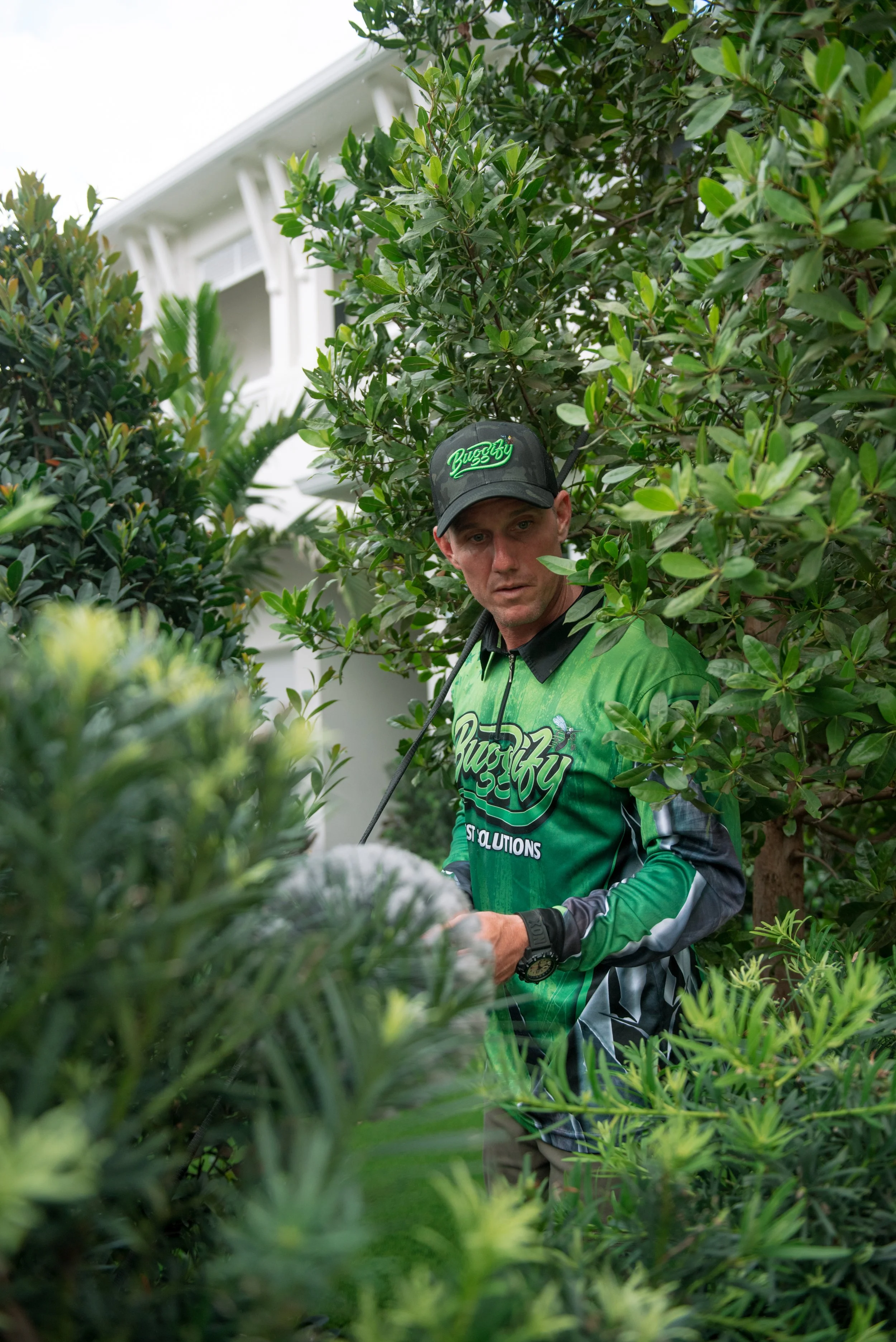
Snowbird pre-departure prevention + return-detection (distinctive Boynton work)
Pre-departure prevention treatment 2-4 weeks before the unoccupied window opens, plus return-detection diagnostic within 1-2 weeks of winter re-occupancy. Optional monthly-during-vacancy monitoring visits on higher-risk multi-family snowbird stock.
Year-round occupancy standard cockroach work
Standard South Florida cockroach protocol for year-round-occupancy Boynton residential. Species ID on inspection, gel bait plus IGR for German cockroach, exterior source treatment for American palmetto bug, coordinated multi-family work per parent hub for 55+ shared-wall stock.
55+ multi-family inter-unit work (parent hub reference)
Standard 55+ German cockroach inter-unit transfer work at Sterling Village, Hunters Run, Indian Spring, Quail Ridge, and Leisureville covered on the parent Boynton Beach city hub. Snowbird 55+ residents combine both scope areas.
Boynton cockroach job pricing
Standard Buggify cockroach pricing with snowbird pre-departure prevention + return-detection diagnostic + optional monthly-during-vacancy monitoring programs.
One-Time Treatment,from $195
Standard interior cockroach treatment for year-round-occupancy Boynton residential.
Snowbird Pre-Departure Prevention,from $250
Pre-departure interior gel bait + IGR + exterior perimeter + water-source elimination inspection. Applied in the 2-4 weeks before the unoccupied window opens.
Return-Detection Diagnostic,from $220
Extended diagnostic within 1-2 weeks of winter re-occupancy. Categorizes activity as no-establishment / single-forager / established colony. Treatment scaled to finding rather than default full-protocol.
Monthly-During-Vacancy Monitoring,Custom
Optional add-on for higher-risk snowbird multi-family stock. Monthly check-and-treat visits during the unoccupied window catch establishment before full-window development. Priced per month by property size and access complexity.
Buggify vs. National Pest Chains
5-point comparison. Every row verifiable from how Buggify operates.
| Feature | Buggify in Boynton Beach | National Pest Chains |
|---|---|---|
| Snowbird pre-departure prevention protocol | Standard scheduling for departing snowbirds | No pre-departure preventive treatment offered |
| Return-detection diagnostic on winter re-occupancy | Standard framework, treatment scaled to finding | Default full-protocol regardless of actual establishment |
| Monthly-during-vacancy monitoring option | Available for higher-risk multi-family snowbird stock | No unoccupied-window monitoring available |
| Water-source elimination inspection | Standard component of pre-departure work | Not part of standard protocol |
| Same technician tracking snowbird schedule across seasons | Tyler tracks the annual pattern per customer | Rotating techs, no cross-season awareness |
Read what Boynton Beach customers say on Google directly
Boynton cockroach reviews from snowbird property owners often reference the pre-departure and return-detection framework. Owners with prior winter-return surprise-discovery experiences describe the pre-departure prevention and return-detection categorization as the change from stress-inducing arrival to expected inspection routine. Google 5.0 Rated · live review feed.
Three things Buggify will never do to you
Three things Buggify will never do to you (full list of seven on Why Choose Buggify):
Quote a real treatment price without inspecting the property first. Phone gives a range; firm pricing comes after an on-site walkthrough.
Indoor spraying when the source is outside. Most Boynton Beach pest pressure is driven by outdoor harborage; indoor-only work is a short-term cover-up.
Long-term contracts that lock you in. Bi-monthly plans bill per visit and cancel anytime, no fees.
Call (561) 672-0200. Tyler answers, gives you a price range on the first call, and books your Boynton Beach appointment into the next dispatch window (standard scheduling runs same-week; stinging-insect emergencies get prioritized).
Eight Boynton cockroach questions Tyler hears most often
I am a snowbird returning to Boynton in October. What should I expect on cockroach activity?
Range from no activity (if pre-departure prevention held) to established colony (if water sources were present and unaddressed during vacancy). Tyler's return-detection diagnostic within 1-2 weeks of arrival categorizes what you find and matches treatment to the actual pattern rather than defaulting to full-protocol regardless.
What is snowbird pre-departure prevention?
Interior gel bait plus IGR at kitchen and bathroom harborage zones, exterior perimeter treatment on non-repellent product, and water-source elimination inspection applied 2-4 weeks before you depart Boynton for the northern spring/summer. Substantially reduces the establishment risk during the unoccupied window.
Should I have my Boynton condo checked during the vacancy?
For higher-risk multi-family snowbird stock, yes. Monthly-during-vacancy monitoring visits catch establishment before full-window development. Optional add-on to the standard snowbird protocol; priced per month.
Why are unoccupied windows a specific cockroach risk?
No resident activity disrupts harborage zones, water traces (condensate lines, small drips, appliance moisture) become significant attractants without daily use disturbing them, and multi-family shared-wall exposure lets adjacent-unit activity migrate into the unoccupied unit unchecked. All three combine to make the unoccupied window a much higher establishment risk than year-round occupancy.
I live in Sterling Village 55+, and I am a snowbird. Do I use this page or the parent hub?
Both. The parent Boynton Beach city hub covers the Sterling Village 55+ multi-family German cockroach inter-unit work. This page covers the snowbird seasonal-vacancy dimension. Snowbird 55+ residents combine both scope areas.
What is the return-detection diagnostic framework?
Three scenarios distinguished on the return visit: no activity established (pre-departure prevention held), single-forager sightings (individual insects, likely exterior-sourced), established interior colony (multiple life stages, egg cases, active harborage). Treatment matches the finding rather than default full-protocol.
Why don't perimeter sprays work on German cockroaches?
German cockroaches never leave the harborage. Perimeter spray at the foundation line never touches them. Gel bait placed directly at the harborage plus IGR to prevent reproductive cycle continuation is what works.
How fast can Tyler dispatch to Boynton for return-detection?
Boynton is 20-25 miles south of the shop; standard scheduling books same-week. Return-detection appointments for snowbird customers on the roster get priority scheduling in the October- November peak-return window.
Direct line to the technician serving Boynton Beach
Phone: (561) 672-0200 (Tyler answers) · Mon–Fri 8 am – 5 pm
Email: Getbuggify@gmail.com
Address: 22617 Middletown Dr., Boca Raton, FL 33428 (West Boca shop, primary dispatch)
License: FL DACS #JB268060 · Certified Operator: Tyler Craig
Call (561) 672-0200 or submit the form below for a free phone estimate. Tyler answers directly. Boynton Beach dispatch is owner-operator across a 20-25 mile route, so appointments are pre-scheduled rather than drop-in; most standard jobs book same-week.