
Ant Control in Boynton Beach
Wetland-edge fire ant surges + eastern coastal humidity-driven ghost ant work for non-55+ Boynton residential.
- FL DACS License #JB268060 · Certified Operator Tyler Craig
- Bayer Authorized Applicator (Termidor)
- $1M general liability insurance
- Google 5.0 Rated · live review feed
- Family-owned · 1,000+ South Florida homes served since 2018
- Pet-safe and family-safe treatments by default
- Free phone estimates · no long-term contracts
Boynton Beach ant work sits between two distinctive local pressure patterns. Loxahatchee National Wildlife Refuge borders western Boynton residential, and the wetland-edge ecology drives heavier fire ant pressure than typical suburban stock; wetland disturbance and drainage produce recurring seasonal surges, especially in the post-storm windows. Eastern Boynton coastal and Intracoastal-adjacent residential areas experience consistently high humidity due to ocean proximity, and that humidity drives elevated ghost ant activity across the eastern zones. Between the western wetland-edge and eastern coastal humidity zones, standard six-species South Florida ant work applies to non-55+ Boynton single-family residential. This Tier 3 page focuses on the non-55+ Boynton ant work; the parent Boynton Beach city hub covers the 55+ community pharaoh ant protocol in depth. Buggify's shop is 25 miles north in West Boca; dispatch to Boynton is an owner-operator model with specialty depth on the wetland-edge and eastern-coastal work.
Wetland-Edge Fire Ant Specialty
Loxahatchee-adjacent Boynton residential faces heavier fire ant pressure than typical suburban stock; wetland disturbance and drainage produce recurring seasonal surges.
Coastal Humidity Ghost Ant Work
Eastern Boynton coastal properties see elevated ghost ant pressure from consistently high humidity. Non-repellent bait is the required chemistry.
Post-Storm Seasonal Surge Awareness
Hurricane and named-storm events drive fire ant emergence surges 2-4 weeks post-event as displaced colonies establish new mounds.
Same Technician Every Visit
Tyler tracks seasonal ant patterns across visits and adjusts treatment for the specific Boynton ecology.
No Long-Term Ant Contract
Bi-monthly plans bill per visit and cancel anytime.
Pet-Safe + Family-Safe Placement
Bait in tamper-resistant crack-and-crevice locations. Kids and pets safe throughout.
Every Boynton non-55+ ant issue Buggify handles
Four Boynton ant-work profiles sorted by pressure ecology (55+ pharaoh work covered on parent hub).
Wetland-edge fire ant work (western Boynton, Loxahatchee-adjacent)
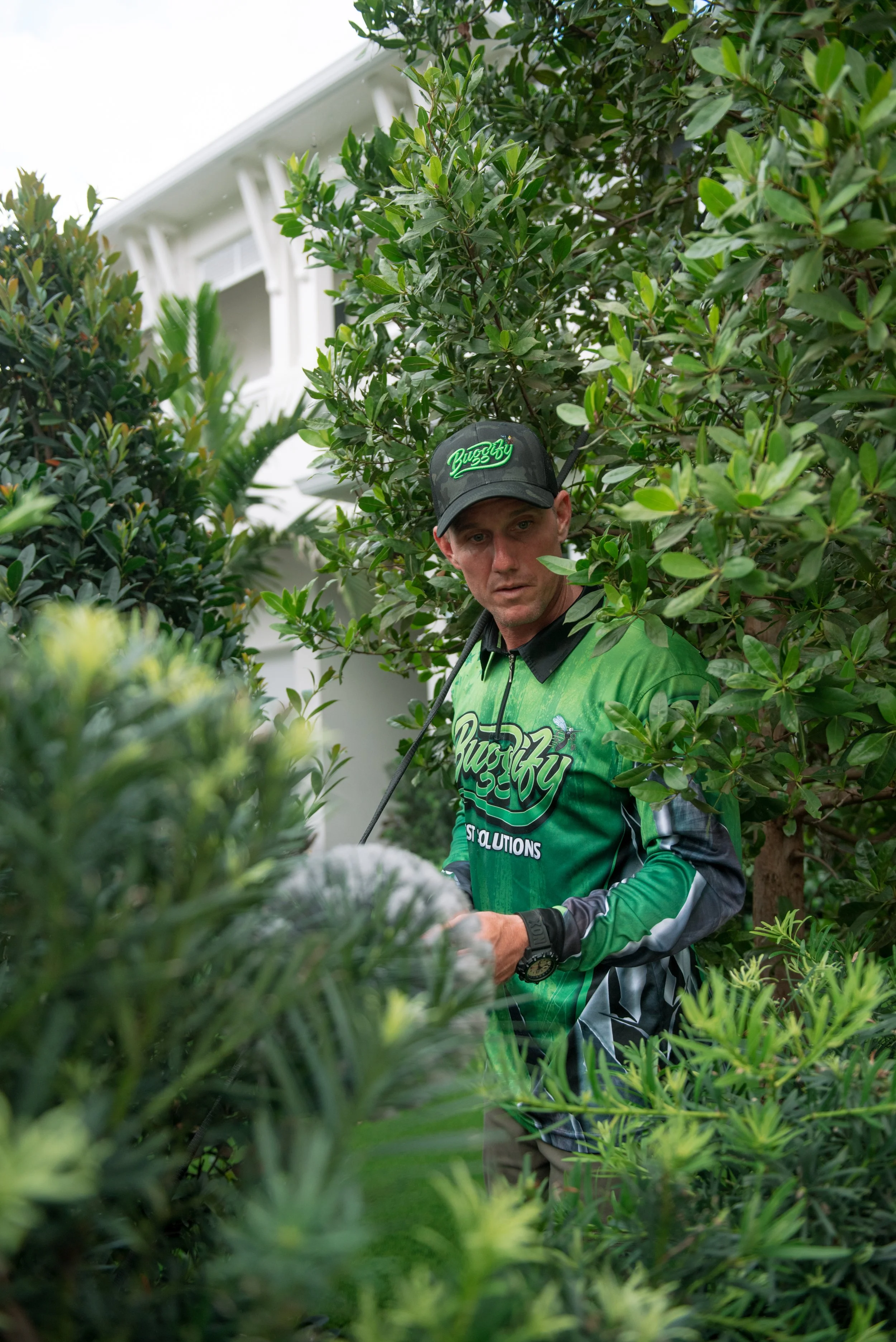
Loxahatchee-adjacent Boynton residential faces heavier fire ant pressure than typical suburban stock. Wetland disturbance, drainage work, and post-storm displacement drive recurring seasonal surges. Direct mound injection with a wand for visible mounds, broadcast granular bait for yard-wide light infestations. Post-storm surge monitoring 2-4 weeks after named events.
Coastal ghost ant work (eastern Boynton, Intracoastal-facing)
Consistently high humidity from ocean and Intracoastal proximity drives elevated ghost ant activity. Non-repellent bait is the required chemistry (repellent spray splits ghost ant colonies through wall voids). Interior gel bait plus exterior perimeter non-repellent treatment.
Standard six-species non-55+ single-family
Interior Boynton single-family residential without wetland or coastal proximity sees the standard South Florida six-species ant picture, species ID on inspection, matched bait chemistry, species-appropriate placement.
Carpenter ant moisture-source work (older Boynton wood-frame stock)
Older single-family stock with wood-frame construction sees moisture-adjacent carpenter ant activity behind soft trim or damp threshold framing. Treatment: identify and resolve the moisture source (referred out for structural repair where needed), targeted non-repellent carpenter ant bait.
Post-Hurricane fire ant surge: Loxahatchee-adjacent Boynton, October 2022
The seasonal signal
October 2022, three weeks after Hurricane Ian's outer bands hit Palm Beach County. A Loxahatchee-adjacent Boynton homeowner reported sudden fire ant mound proliferation across the yard, over a dozen new mounds where none had been present a month earlier. She had been on a Buggify bi-monthly plan for four years without fire ant issues at this scale.
The seasonal surge diagnosis
Tyler recognized the pattern as a post-storm fire ant surge, common on Loxahatchee-adjacent Boynton residential in the 2-4 week window after named-storm events. Hurricane displacement floods wetland fire ant colonies, displacing them into surrounding higher-ground residential where they re-establish new mounds. Not this homeowner's first surge (previous surges had been much smaller), and not the last.
The surge protocol
Broadcast granular bait sweep across the affected yard zone within 48 hours of the report. Direct mound injection at the largest visible mounds. Post-surge monitoring at week 3 and week 6. Yard clear of active mounds by week 8. Homeowner moved to Complete-tier plan for ongoing wetland-edge monitoring.
The pattern documentation
Tyler tracks post-storm fire ant surges across Loxahatchee-adjacent Boynton properties as a documented seasonal pattern rather than treating each surge as an isolated event. Post-named-storm re-inspection offer is standard on wetland-edge Complete-tier customers within 2 weeks of the National Weather Service all-clear.
Why Boynton ant work sorts by wetland-edge and coastal humidity ecology
Standard South Florida ant work assumes suburban ecology with mixed water-source exposure. Boynton Beach shifts the emphasis. Western Boynton residential borders the Loxahatchee National Wildlife Refuge, and the wetland-edge ecology drives heavier fire ant pressure than typical suburban stock. Wetland disturbance from routine maintenance, drainage adjustments, and hurricane and named-storm displacement each produce fire ant surges that cascade into adjacent Boynton residential.
Eastern Boynton coastal and Intracoastal-adjacent residential sits at the opposite end of the transect. Consistently high humidity from ocean proximity drives elevated ghost ant activity; ghost ants (Tapinoma melanocephalum) favor consistent-humidity conditions, and the eastern Boynton zone provides them year-round. Non-repellent bait is the required chemistry; repellent spray splits ghost ant colonies through wall voids and produces multiple satellite nests within days.
Between the wetland-edge fire ant work and the eastern coastal ghost ant work, standard six-species South Florida ant work applies to non-55+ Boynton single-family residential. The 55+ community pharaoh ant protocol is covered in depth on the parent Boynton Beach city hub; this Tier 3 page focuses on the non-55+ wetland and coastal work.
Five technical details specific to Boynton non-55+ ant work
Wetland-edge fire ant seasonal surges, coastal humidity ghost ant chemistry, post-storm surge monitoring, six-species mapping across Boynton ecology, and coordination with parent hub 55+ scope.
Wetland-Edge Fire Ant Seasonal Surge Pattern
Loxahatchee-adjacent Boynton residential faces recurring fire ant surges tied to wetland disturbance events, routine drainage maintenance, hurricane and named-storm displacement, and seasonal water-level shifts. Tyler tracks the pattern across wetland-edge Boynton customers and documents post-event surges as expected rather than surprising. Post-named-storm re-inspection within 2 weeks of the all-clear is standard on wetland-edge Complete-tier customers.
Broadcast Granular vs Mound-Injection Decision Framework
Individual mound injection with a penetration wand kills the queen fast per mound but only treats visible mounds. Broadcast granular bait treats yard-wide light infestations over 4-6 weeks through the worker foraging cycle. Tyler's decision framework for wetland-edge surges: fewer than 6 mounds gets mound injection only; 6-20 mounds gets mound injection on the largest plus broadcast bait yard-wide; 20+ mounds (typical post-storm surge) gets broadcast bait primary plus selective mound injection.
Ghost Ant Non-Repellent Chemistry Selection
Ghost ants (Tapinoma melanocephalum) bud off to form satellite colonies when disturbed by any repellent product. Coastal humidity conditions in eastern Boynton produce ghost ant activity at levels where repellent-spray responses can dramatically worsen the problem within a week. Tyler's coastal-Boynton ghost ant protocol uses non-repellent product selection exclusively, gel bait interior placement plus non-repellent perimeter treatment.
Six-Species Mapping Across Boynton Ecology
Tyler tracks the dominant ant species per Boynton property based on ecology; wetland-edge western zones lean fire ant + carpenter ant (moisture-adjacent); eastern coastal zones lean ghost ant + big-headed ant; interior non-water-adjacent single-family leans mixed six-species; older wood-frame stock adds carpenter ant risk. Species-appropriate treatment on inspection rather than one-bait-fits-all.
Coordination with Parent Hub 55+ Pharaoh Scope
55+ community pharaoh ant work (Leisureville, Sterling Village, Hunters Run, Indian Spring, Quail Ridge) is covered on the parent Boynton Beach city hub with bait-only multi-unit coordinated protocol. 55+ community customers with wetland-edge or coastal exposure reference both the parent hub (for pharaoh work) and this page (for fire ant or ghost ant work if applicable).
Five Boynton conditions that shape non-55+ ant work
Loxahatchee wetland-edge ecology, eastern coastal humidity, post-storm displacement dynamics, older wood-frame stock, and mixed east-west transect each shape the ant protocol.
Loxahatchee NWR Wetland-Edge Fire Ant Ecology
Western Boynton residential bordering the Loxahatchee NWR faces heavier fire ant pressure than typical suburban stock. Wetland disturbance, drainage work, and post-storm displacement drive recurring seasonal surges. Post-named-storm re-inspection within 2 weeks of the all-clear is standard on wetland-edge Complete-tier customers.
Eastern Coastal Humidity Ghost Ant Zone
Consistently high humidity from proximity to the Atlantic and Intracoastal drives elevated ghost ant activity across eastern Boynton. Non-repellent bait chemistry is required; repellent spray splits ghost ant colonies.
Hurricane and Named-Storm Displacement Dynamics
Storm events displace fire ants from wetland zones into adjacent residential 2-4 weeks post-event. Post-storm-surge monitoring of wetland-edge Complete-tier customers captures displacement before mound establishment matures.
Older Wood-Frame Stock Carpenter Ant Risk
Older Boynton single-family stock with wood-frame or partial wood-frame construction can carry moisture-adjacent carpenter ant activity. Moisture-source identification is a prerequisite to chemistry.
Mixed East-West Ecology Transect
Boynton's ecology varies dramatically east-to-west, coastal humidity, interior standard, wetland-edge. Property-specific species-and-treatment approach on inspection rather than citywide default.
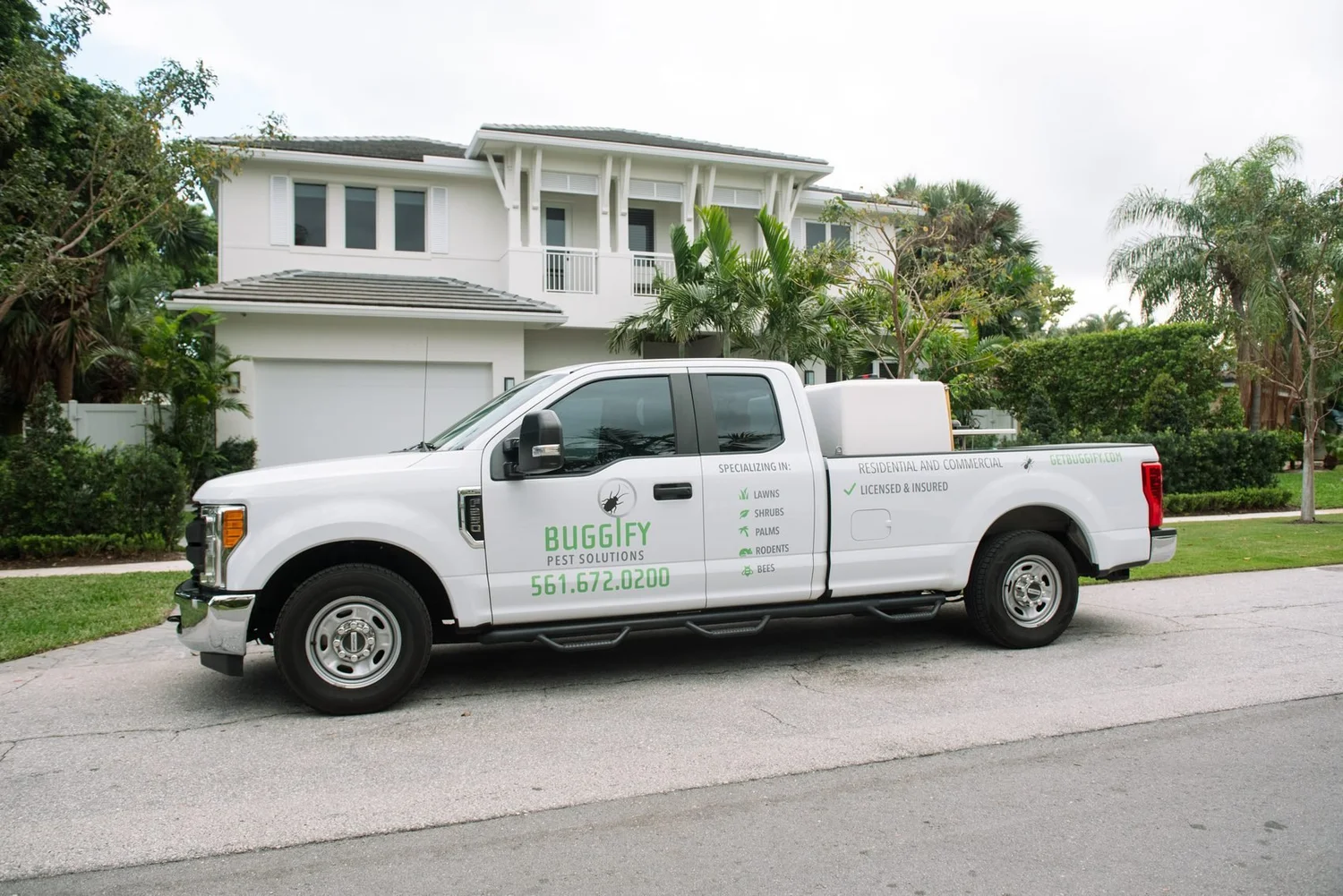
Boynton ant job pricing
Standard Buggify ant pricing with wetland-edge post-storm surge programs and coastal ghost ant non-repellent bait protocols.
One-Time Treatment,from $175
Single-species interior or perimeter treatment. Wetland-edge post-storm surge work at the upper end because of broadcast granular bait application over wider yard zones.
Post-Storm Surge Response,Custom
Priced per event for wetland-edge post-storm fire ant surge response. Broadcast granular bait plus mound injection plus 3-6 week monitoring. Custom-quoted by yard size and mound count.
Fire Ant Yard Treatment,Custom
Priced by mound count and yard size. Individual mound injection plus optional broadcast granular bait for light yard-wide infestations.
Bi-Monthly Plan Coverage
All three bi-monthly plan tiers include ant coverage. Wetland-edge and coastal-humidity Boynton properties often benefit from Complete-tier ($900-1,400/year) for the post-storm and humidity monitoring.
Buggify vs. National Pest Chains
5-point comparison. Every row verifiable from how Buggify operates.
| Feature | Buggify in Boynton Beach | National Pest Chains |
|---|---|---|
| Wetland-edge fire ant seasonal surge awareness | Standard on Loxahatchee-adjacent properties | Post-storm surges treated as surprise, one at a time |
| Ghost ant non-repellent chemistry selection | Standard on eastern coastal Boynton | Repellent spray common, splits ghost ant colonies |
| Six-species mapping across Boynton ecology | Standard, matched per property | One-bait-fits-all approach common |
| Post-named-storm re-inspection within 2 weeks | Standard on wetland-edge Complete-tier | No storm-response protocol |
| Same technician every visit | Tyler runs every Boynton ant job | Rotating route techs |
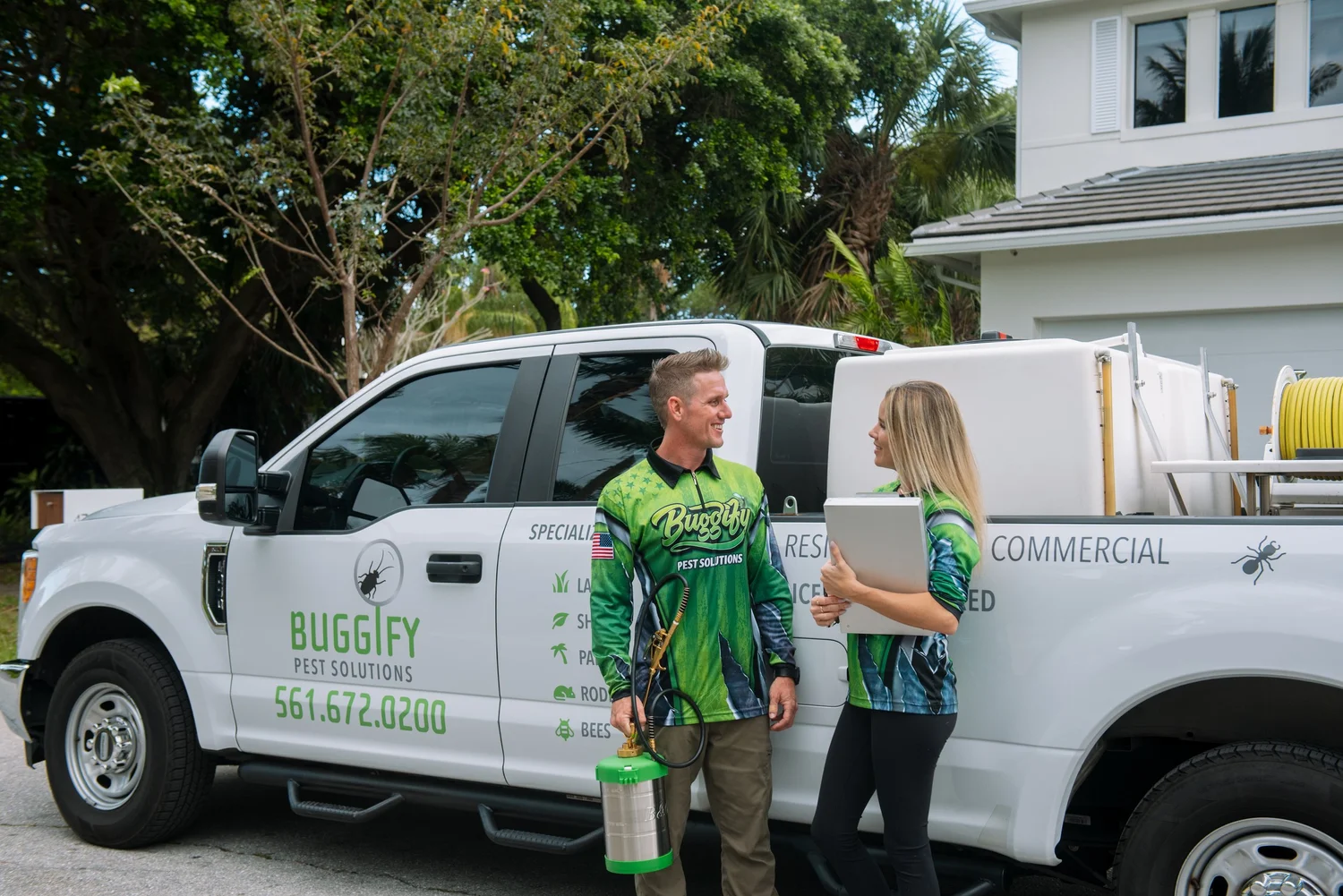
Read what Boynton Beach customers say on Google directly
Boynton ant reviews from wetland-edge property owners often reference the post-storm surge recognition. Homeowners who had experienced yearly post-hurricane surges as surprise-emergency events describe the documented seasonal pattern approach as the change from reactive scramble to expected preparation. Google 5.0 Rated · live review feed.
Three things Buggify will never do to you
Three things Buggify will never do to you (full list of seven on Why Choose Buggify):
Quote a real treatment price without inspecting the property first. Phone gives a range; firm pricing comes after an on-site walkthrough.
Indoor spraying when the source is outside. Most Boynton Beach pest pressure is driven by outdoor harborage; indoor-only work is a short-term cover-up.
Long-term contracts that lock you in. Bi-monthly plans bill per visit and can be canceled anytime, no fees.
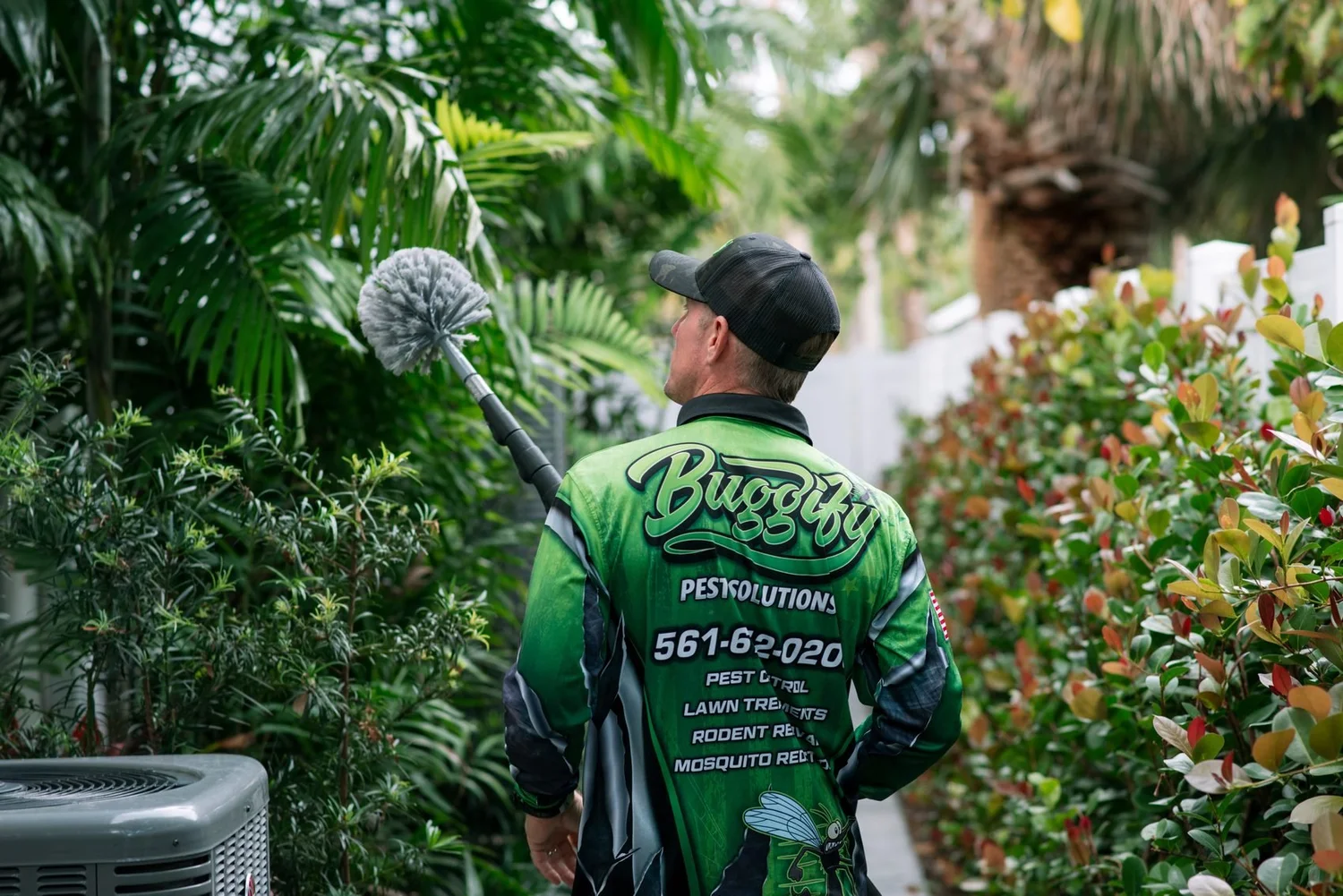
Call (561) 672-0200. Tyler answers, gives you a price range on the first call, and books your Boynton Beach appointment into the next dispatch window (standard scheduling runs same-week; stinging-insect emergencies get prioritized).
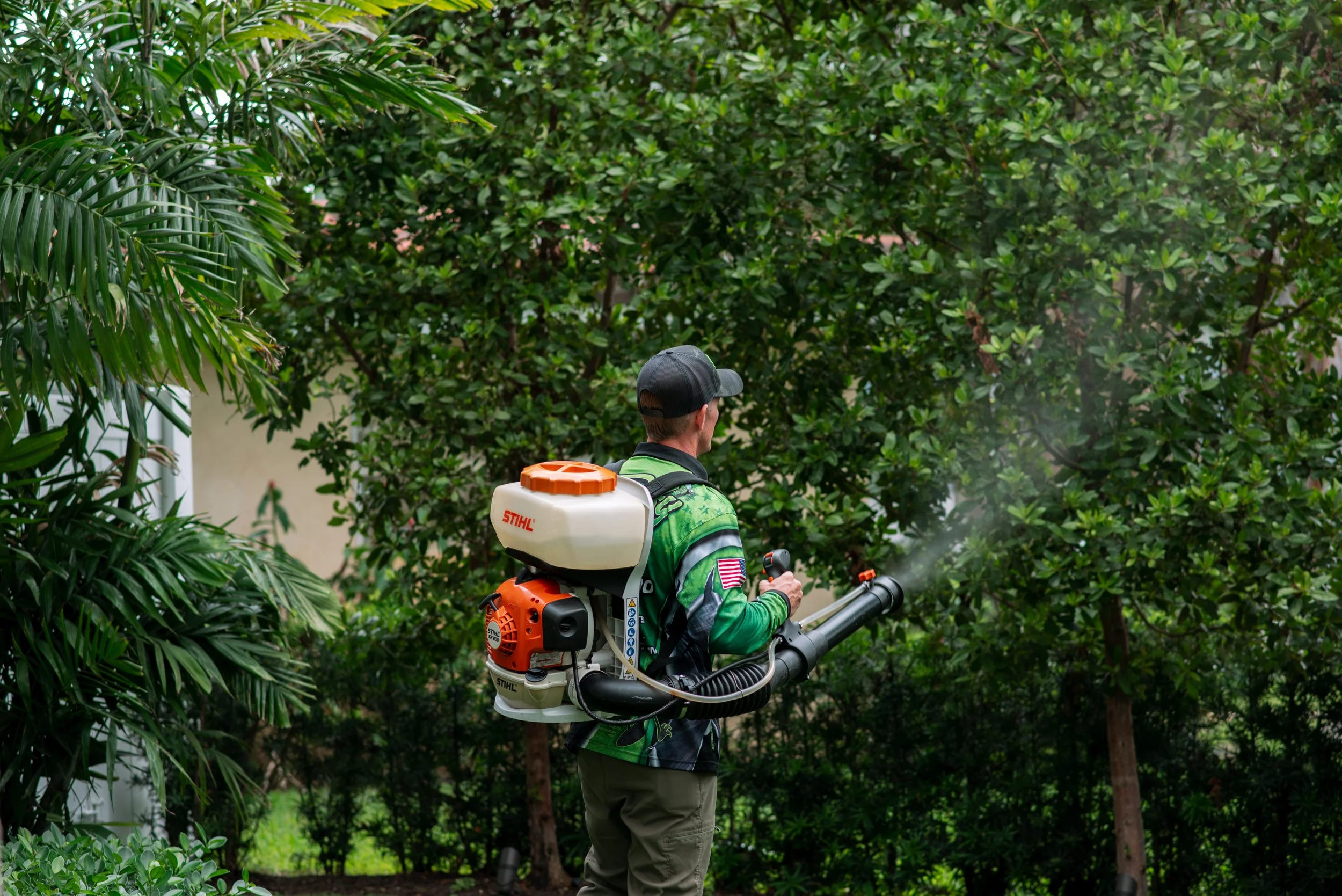
Eight Boynton ant questions Tyler hears most often
My Loxahatchee-adjacent property has fire ant mounds proliferating after every hurricane. Is that normal?
Yes, and predictable. Wetland disturbance from storm events displaces fire ant colonies into adjacent higher-ground residential where they re-establish 2-4 weeks post-event. Tyler tracks this as a documented seasonal pattern on wetland-edge properties and offers a post-named-storm re-inspection within 2 weeks of the all-clear.
My eastern Boynton home has recurring ghost ants, and previous treatments made it worse. Why?
Almost certainly repellent spray was used. Ghost ants bud into satellite colonies when disturbed by any repellent product. One colony splits into multiple within a week. Tyler's coastal-Boynton ghost ant protocol uses non-repellent product exclusively: gel bait interior plus non-repellent perimeter treatment.
I live in a 55+ community. Do I use this page or the parent hub?
Parent hub. The Pharaoh ant work at Leisureville, Sterling Village, Hunters Run, Indian Spring, and Quail Ridge is covered there. This page covers non-55+ Boynton residential ant work.
How much does a post-storm fire ant surge response cost?
Custom-quoted by yard size and mound count. Typical post-storm surge on a wetland-edge Boynton property runs $350-750 for broadcast bait plus mound injection plus 3-6 week monitoring.
What is the difference between broadcast granular and mound injection?
Broadcast granular bait spreads product over a wider yard zone and works over 4-6 weeks through the worker foraging cycle. Mound injection uses a penetration wand to kill the queen at a specific visible mound within 24-48 hours. Tyler's decision framework matches the method to the mound count and yard size.
My older Boynton home has ants in the door frame. Carpenter ants?
Possibly. Older wood-frame Boynton stock can carry moisture-adjacent carpenter ant activity behind soft trim or damp threshold framing. Tyler's diagnostic identifies the moisture source and refers structural repair where needed alongside the ant treatment.
Are non-repellent baits safe for pets and kids?
Yes. Bait is placed in tamper-resistant crack-and-crevice locations kids and pets cannot access. Non-repellent perimeter product applied at label rates dries into an invisible residual. SDS available on request.
How fast can Tyler dispatch to Boynton for a post-storm surge?
Boynton is 20-25 miles south of the shop; standard scheduling books same-week. Post-storm surge responses on Complete-tier customers get priority scheduling within 2 weeks of the National Weather Service all-clear.
Direct line to the technician serving Boynton Beach
Phone: (561) 672-0200 (Tyler answers) · Mon–Fri 8 am – 5 pm
Email: Getbuggify@gmail.com
Address: 22617 Middletown Dr., Boca Raton, FL 33428 (West Boca shop, primary dispatch)
License: FL DACS #JB268060 · Certified Operator: Tyler Craig
Call (561) 672-0200 or submit the form below for a free phone estimate. Tyler answers directly. Boynton Beach dispatch is owner-operator across a 20-25 mile route, so appointments are pre-scheduled rather than drop-in; most standard jobs book same-week.