
Lawn Pest Control in Boynton Beach
Snowbird return-service lawn pest audit for absentee-summer properties. UF/IFAS Palm Beach County Extension ficus-whitefly guidance applied across Boynton residential.
- FL DACS License #JB268060 · Certified Operator Tyler Craig
- Bayer Authorized Applicator (Termidor)
- $1M general liability insurance
- Google 5.0 Rated · live review feed
- Family-owned · 1,000+ South Florida homes served since 2018
- Pet-safe and family-safe treatments by default
- Free phone estimates · no long-term contracts
Boynton Beach's lawn pest work reflects the specific population profile of its residential base: a substantial snowbird population that leaves the property for the May-October summer window and returns to Boynton in October-November each year. That absentee-summer pattern means chinch bug, sod webworm, and fire ant activity develops through the peak season on unattended turf and produces significant visible damage by the time owners return. The working standard for snowbird-owned Boynton properties is a return-service diagnostic audit within two weeks of the owner's return, catching accumulated pest damage at recoverable stages before decline becomes established. Boynton is also within the UF/IFAS PBC Extension ficus-whitefly guidance that county agricultural extension monitors on a rolling basis, and residential ficus-hedge inventory across the community carries ongoing Singhiella simplex pressure. The Boynton protocol coordinates with returning snowbird owners on the audit schedule and reads the county ficus-whitefly context on hedge treatments. Parent Boynton city hub covers general pest scope, Boynton Inlet brackish mixing zone mosquito, and multi-community coordination in depth; this Tier 3 page focuses on the snowbird return-service audit and county ficus-whitefly transect dimensions.
Snowbird Return-Service Audit
October-November return diagnostic audit catches summer-accumulated pest damage at recoverable stages.
County Ficus-Whitefly Transect Awareness
Palm Beach County agricultural extension transect data informs residential ficus-hedge treatment cycles.
Multi-Community Property Coordination
Boynton multi-community residential arranged through property management on absentee-summer inspection schedules.
Same Technician Every Visit
Tyler runs every Boynton lawn pest job.
Direct Line to Tyler
Mon-Fri 8 am - 5 pm.
No Contract Lock-In
Bills per visit.
Why Boynton snowbird return-service audit changes the seasonal lawn pest calendar
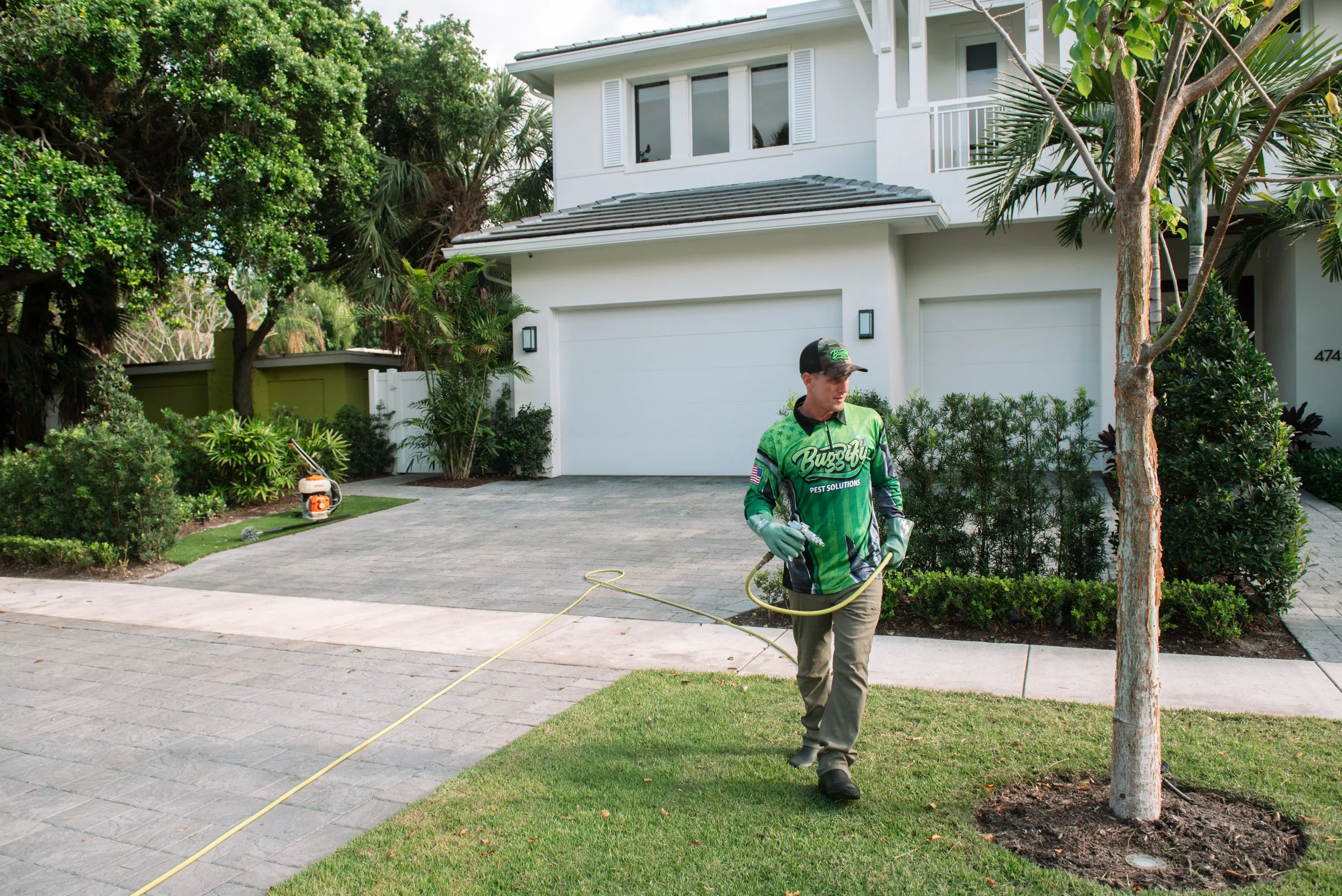
Standard Florida lawn pest protocols assume year-round owner presence and reactive treatment on visible damage. Boynton Beach's snowbird population changes that assumption: owners depart in April-May and return in October-November, leaving the property unattended through the peak May-October pest window. Chinch bug pressure develops on unattended St. Augustine; sod webworm larvae feed at night through the summer; fire ant colonies establish on retention-pond edges and yard perimeters without early intervention. Visible damage accumulates over the summer and reads as significant lawn decline by October return.
The working standard on snowbird-owned Boynton properties is a return-service diagnostic audit within two weeks of owner return, covering full-yard chinch bug transition-zone inspection, sod webworm larval-base sampling, and fire ant colony mapping across yard perimeters and any retention-pond adjacency. Damage at recoverable stages receives targeted treatment; damage beyond recovery is documented for a turf-replacement recommendation to the owner or the HOA landscape service.
The Parent Boynton hub covers the general pest scope across the multi-community residential density and Boynton Inlet brackish mosquito zones. This Tier 3 page focuses on the snowbird return-service audit and county ficus-whitefly transect dimensions.
Three technical details specific to Boynton Beach lawn pest work
Snowbird return audit protocol, ficus-whitefly county-transect coordination, and multi-community common-area treatment documentation.
Snowbird Return-Service Audit Protocol
Full-yard diagnostic within two weeks of owner return: chinch bug transition-zone inspection, sod webworm larval-base sampling, fire ant colony mapping. Damage stage classification (recoverable vs beyond-recoverable) drives treatment vs replacement recommendation.
Ficus-Whitefly UF/IFAS PBC Extension Coordination
Palm Beach County agricultural extension transect data inform residential ficus hedge treatment cycles. Systemic soil-drench chemistry with follow-up underleaf inspection at 21 and 45 days.
Multi-Community Common-Area Treatment Documentation
Written condition-of-treatment note per treated common-area zone. Arranged through property management on notification distribution and post-treatment safety windows. Filed with community records.
Three Boynton Beach conditions that shape lawn pest work
Snowbird absentee-summer pattern, county ficus-whitefly transect context, and multi-community common-area coordination each shape the lawn pest protocol.
Snowbird Absentee-Summer Pattern
May-October absentee-summer window on substantial residential base. A return-service diagnostic audit within two weeks of the October-November return is the working standard.
Palm Beach County Ficus-Whitefly Transect
County agricultural extension monitors ficus-whitefly on an ongoing published-guidance basis across Boynton residential. Systemic hedge treatment cycles informed by UF/IFAS PBC Extension published context.
Multi-Community Common-Area Coordination
Boynton residential density is largely multi-community with shared common-area landscape. Property management coordination on common-area work is standard workflow.
Every Boynton Beach lawn and ornamental pest issue Buggify handles
Five work profiles across snowbird-owned, year-round, and multi-community Boynton residential.
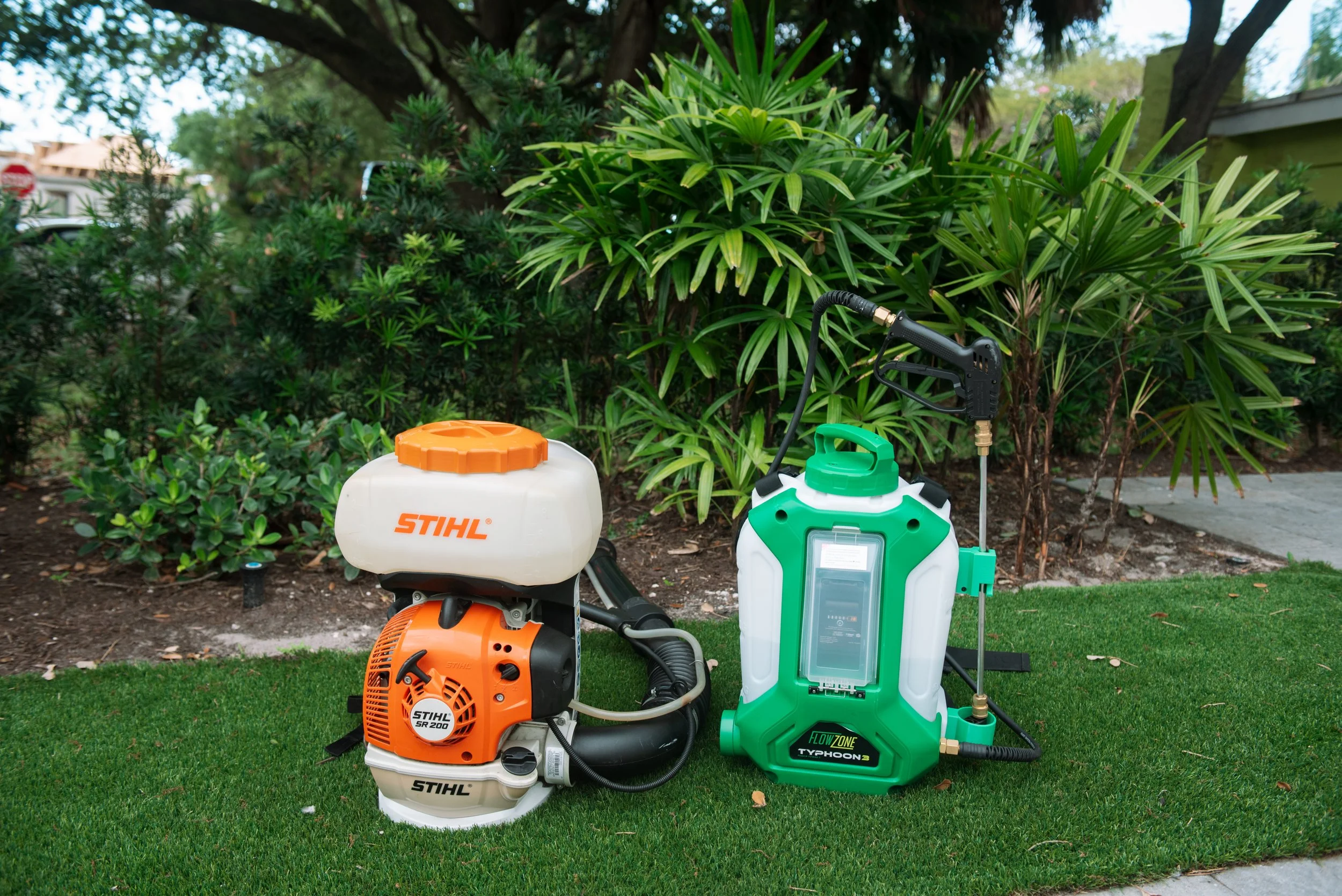
Snowbird return-service diagnostic audit
Full-yard chinch bug, sod webworm, and fire ant inspection within two weeks of October-November owner return. Recoverable-stage damage treated; beyond-recoverable-stage documented.
Absentee-summer monitoring service coordination
Optional summer-window monthly inspection service for snowbird owners preferring active-summer coverage. Coordinated with property management or house-check services.
Ficus-whitefly hedge treatment on county-transect residential
UF/IFAS Palm Beach County Extension guidance on residential ficus-hedge inventory. Systemic soil-drench treatment with follow-up underleaf inspection.
Retention-pond edge fire ant on multi-community common areas
Multi-community common-area fire ant colony management coordinated with property management. Written pre-treatment notification protocol.
Standard St. Augustine chinch bug and sod webworm on year-round Boynton residential
Standard May-October chinch bug and July-September sod webworm treatment on year-round-owner Boynton residential.
Snowbird return audit case: recoverable-stage chinch bug damage stabilized after October return
The return
A Boynton Beach snowbird owner returned to the property in late October after a May-through-October absentee summer. Front and side lawns showed circular brown patches spreading across roughly 40% of the total turf area. The owner had no contact with the property since the May departure and had no summer inspection service.
The audit
Tyler's return-service diagnostic audit identified active chinch bug populations at the transition zone of every brown patch, plus a late-summer sod webworm larval population still active in the healthy transition zones. Diagnosis was compound chinch bug and sod webworm; damage was at the boundary between recoverable and beyond-recoverable.
The treatment sequence
First-pass treatment: targeted turf treatment for chinch bug population knockdown plus sod webworm larval treatment across the full yard. Second pass at 14 days confirmed population collapse and applied recovery-support treatment to the transition zone. Third pass at 45 days confirmed no recurrence of chinch bug or sod webworm.
The recovery outcome
Full front-lawn recovery over 8 weeks. Side-lawn damage at the beyond-recoverable stage documented for turf-replacement recommendation to the owner's HOA landscape service. Owner enrolled in a snowbird-standard return-service audit for future October returns.
What Boynton Beach lawn pest control costs
Firm lawn and ornamental pricing follows a walkthrough because turf species, hedge count, palm inventory, and pest signature drive the work. A phone call establishes a range and identifies whether coordinated ornamental + turf visits will help.
Phone estimate
Free, Tyler walks through your yard footprint (approximate square footage, turf species if known, hedge count, palm inventory) and gives a treatment range.
Bi-monthly programs
Turf and ornamental care works best with a rotational treatment. Programs bill per visit; cancel anytime.
Included in every visit
Pest identification, targeted application, condition-of-yard note, and treatment product disclosure.
30-day return
If chinch bug, sod webworm, or whitefly pressure returns within 30 days of a treatment, Tyler returns at no additional charge.
Buggify vs. National Pest Chains
Seven-point comparison. Every row verifiable from how Buggify operates.
| Feature | Buggify in Boynton Beach | National Pest Chains |
|---|---|---|
| Who answers when you call? | Tyler Craig, the licensed operator | Call center or booking bot |
| Turf ID first, treatment second | Confirms St. Augustine vs Zoysia vs Bermuda and identifies the specific pest before chemistry selection | Broadcast treatment without turf-species distinction |
| Pollinator-safe application windows | Whitefly and hedge treatments timed outside pollinator foraging windows on request | Standard-schedule application regardless |
| HOA landscape coordination | Written condition-of-treatment note suitable for HOA architectural review | Not standard |
| Return-visit policy on turf pests | Included when pressure returns within 30 days of a confirmed treatment | Extra visit fee typical |
| Contract lock-in | None. Bills per visit; cancel anytime. | Annual contracts common |
| Ornamental + turf coordination | One technician handles both zones as a connected landscape | Separate crews or vendors |
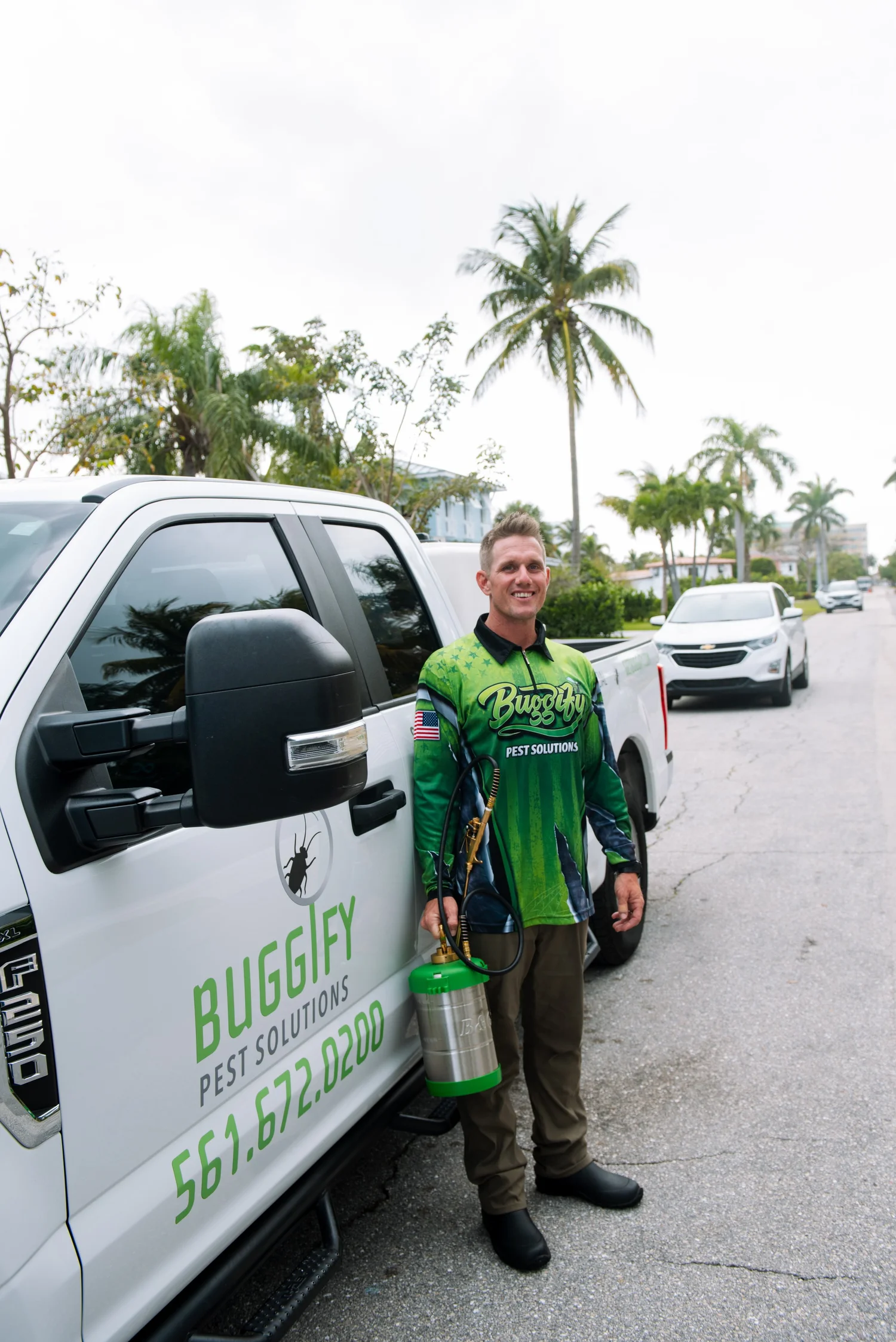
Read what Boynton Beach customers say on Google directly
Real Google reviews from Boynton Beach residents driving lawn and ornamental calls. Tyler walks the yard on the first visit, identifies the specific pest signature (chinch bug, sod webworm, ficus whitefly, palm scale), and matches chemistry to turf species. The live widget below pulls current reviews directly from Google.
Three things Buggify will never do to you
Three things Buggify will never do to you (full list of seven on Why Choose Buggify):
Quote a real treatment price without inspecting the property first. Phone gives a range; firm pricing comes after an on-site walkthrough.
Indoor spraying when the source is outside. Most Boynton Beach pest pressure is driven by outdoor harborage; indoor-only work is a short-term cover-up.
Long-term contracts that lock you in. Bi-monthly plans bill per visit and can be canceled anytime, no fees.
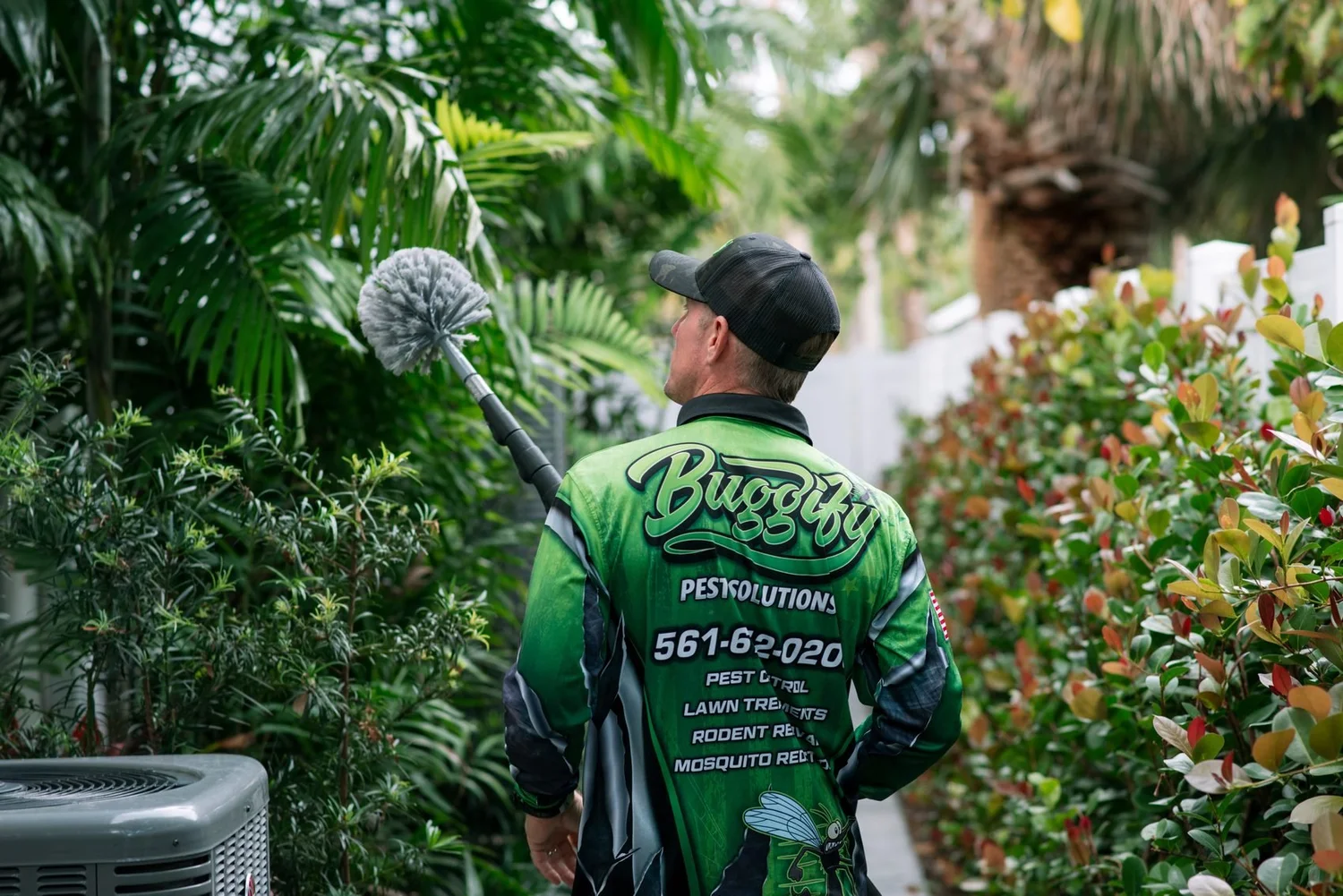
Call (561) 672-0200. Tyler answers, gives you a price range on the first call, and books your Boynton Beach appointment into the next dispatch window (standard scheduling runs same-week; stinging-insect emergencies get prioritized).
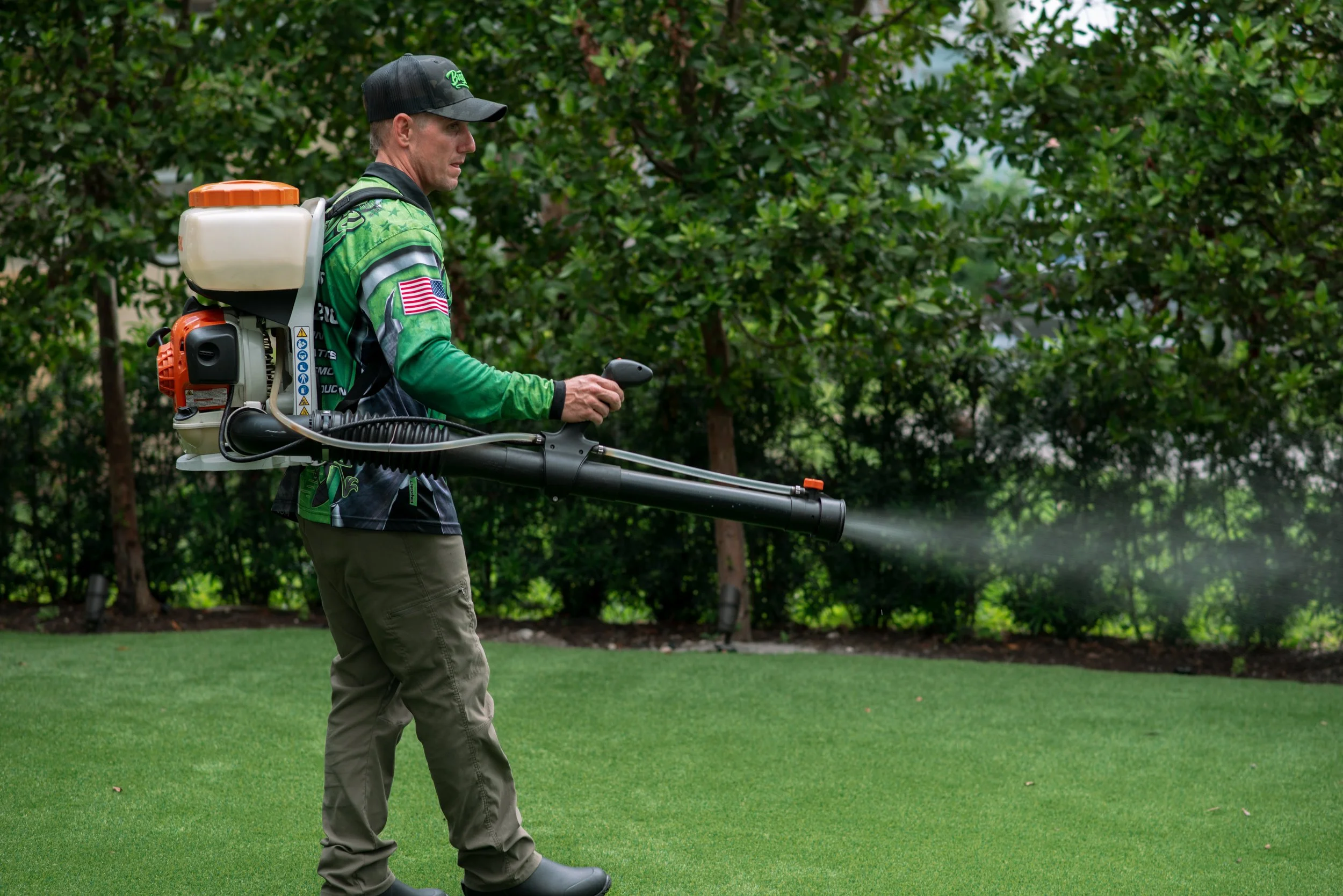
Boynton Beach lawn pest FAQ
What should I schedule when I return from the summer up north?
A snowbird return-service diagnostic audit within two weeks of return catches summer-accumulated chinch bug, sod webworm, and fire ant damage at recoverable stages. A full-yard inspection with damage-stage classification drives the treatment vs. replacement recommendation.
Can you monitor my Boynton property while I'm away for the summer?
Yes. Optional summer-window monthly inspection service coordinates with property management or house-check services. Written condition-of-treatment note, per inspection cycle, emailed to the owner regardless of the return date.
What's the UF/IFAS PBC Extension ficus-whitefly guidance and does it affect my treatment?
UF/IFAS Palm Beach County Extension publishes ongoing guidance on ficus whitefly (Singhiella simplex) population pressure across the county. Buggify tracks that guidance and matches systemic soil-drench treatment timing to reported population buildup periods.
How do you coordinate with our multi-community property manager on lawn work?
Written pre-treatment notification through property management, coordinated treatment window scheduling, and written condition-of-treatment note filed with community records. Standard workflow on multi-community common-area work.
Will my summer-damaged lawn recover, or do I need to replace the sod?
Damage stage classification during the return-service audit drives the recommendation. Recoverable-stage damage (the transition zone still shows healthy grass) responds to targeted treatment and recovery-support applications. Beyond-recoverable-stage damage (transition zone gone, only bare soil visible) needs turf replacement through an HOA landscape service or sod contractor.
Do you treat ficus whitefly on absentee-summer properties too?
Yes. Ficus-whitefly monitoring is often part of the summer-window monthly inspection service on absentee properties. Systemic soil-drench treatment applied during the summer window prevents hedge decline by the time the owner returns.
How does fire ant work on a Boynton multi-community common area?
Common-area fire ant colony mapping and treatment coordinated with property management. Written pre-treatment notification distributed to affected units 24-48 hours ahead. Treatment during low-traffic hours; documented condition-of-treatment note filed with community records.
Do you offer year-round programs or is it always seasonal?
Both. Year-round bi-monthly programs and seasonal targeted treatment cycles both available. Programs bill per visit; cancel anytime.
Direct line to the technician serving Boynton Beach
Phone: (561) 672-0200 (Tyler answers) · Mon–Fri 8 am – 5 pm
Email: Getbuggify@gmail.com
Address: 22617 Middletown Dr., Boca Raton, FL 33428 (West Boca shop, primary dispatch)
License: FL DACS #JB268060 · Certified Operator: Tyler Craig
Call (561) 672-0200 or submit the form below for a free phone estimate. Tyler answers directly. Boynton Beach dispatch is owner-operator across a route from the West Boca shop, so appointments are pre-scheduled rather than drop-in; most standard jobs book for the same week.