

Sewer Roaches Upstairs? The Drain Route No One Checks
You find a large roach on the second floor, in a guest bathroom or hallway, nowhere near the kitchen, and the usual advice doesn't apply. Nobody left food out up there. There's no trash can, no pet bowl, nothing to draw an insect in from outside through a window screen or a door gap. The kitchen downstairs is clean. So why is it here?
The answer usually has nothing to do with what's on the floor and everything to do with what's inside the walls. Every drain in the house, upstairs or downstairs, ties into the same network of pipes that runs to the sewer main, and that network has two structural weak points that have nothing to do with housekeeping: a water seal that can dry out and a vent that opens directly to outside air. Once you know where those two points are, an upstairs roach with no obvious food source stops being a mystery and starts being a maintenance question.
Why a Roach Upstairs Doesn't Fit the Usual Story
Most cockroach advice assumes an indoor colony feeding on crumbs and grease, which is a fair assumption for a busy kitchen but a poor fit for a guest bath, a laundry closet, or a spare bedroom that barely gets used. Those rooms usually fail the two tests that explain most roach activity: there's no steady food source and no obvious entry point through the building envelope.
What those same rooms almost always have is a drain: a sink, a shower, a floor drain in a laundry closet, or a fixture serving a room that sits empty for stretches at a time. A drain is not just a place water goes. It is a direct, continuous pipe connection to the sewer main and, through the vent system, to open air above the roofline. Under normal conditions, that connection is sealed at both ends. When it isn't, distance from the kitchen or the ground floor no longer matters because the roach isn't coming in through a door. It's coming up through the plumbing.
How One Vent Stack Connects Every Drain in the House
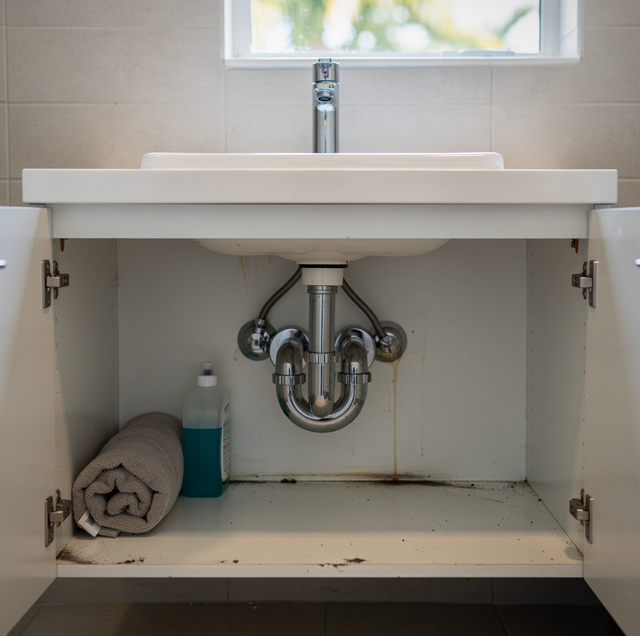
Every fixture with a drain, upstairs or down, has a P-trap: the curved section of pipe just below the sink, tub, or floor drain that holds a standing column of water. That water is the seal. It blocks sewer gas and anything living in the sewer line from reaching the room on the other side of the fixture.
A trap alone isn't enough to make the system work, though. Drain lines also need to vent to the outside air, so wastewater flows smoothly instead of gurgling or siphoning the trap dry as it drains. That venting happens through a vertical pipe, usually tied into the same stack that carries waste down to the main line, that runs up through the wall and penetrates the roof. On most homes, that penetration is a straight pipe stack with a roof boot around it; it's easy to walk past on a roof inspection and assume it's just a vent, nothing more. Structurally, it's also an opening straight through the building envelope, at roof height, connected on the inside to the exact same pipe network every trap in the house drains into.
That's the part that makes an upstairs sighting make sense. The plumbing system doesn't care how many floors separate a fixture from the ground. A second-floor guest bath, a laundry closet, and the kitchen sink downstairs are all plumbed into the same vertical stack. A weak point anywhere in that shared system, a dried trap on one floor or an open vent terminus at the roof, gives access to the whole network, not just the fixture closest to the opening.
What Dries Out a Guest Bathroom's Trap
A P-trap only works while it stays full. Every time water runs through a fixture, the trap refills. A sink or shower used daily never has a chance to dry out. A guest bathroom that sees a handful of visits a year is a different story.
A guest bath or spare-room sink used only a few times a year: The water sitting in that trap slowly evaporates with no new water running through to replace it, and once the seal is gone, the fixture's drain is an open pipe straight to the sewer line with nothing blocking what comes up it.
South Florida has a specific version of this pattern that shows up constantly: seasonally occupied homes. A household that's here for the winter months and closed up for the rest of the year leaves every rarely used fixture, guest baths, a pool-bath sink, a laundry closet off a garage, sitting dry for months at a stretch. The home isn't neglected. It's simply plumbed the same as any other house, and the fixtures nobody uses behave exactly the way an unused fixture behaves anywhere: the seal goes first, quietly, with no smell and no sign until something shows up in the room.
Floor Drains Have the Same Blind Spot
Floor drains get overlooked even more than guest-bathroom sinks because there's no faucet handle to prompt anyone to think about them. A laundry closet floor drain, a utility-room drain near a water heater pan, or a garage floor drain all rely on the same trap-and-water-seal principle as a sink, and none of them get water run through them unless something spills or a washing machine backs up.
If a laundry closet's floor drain hasn't taken on water in months because the washer hose has never leaked, that trap is likely dry for exactly the same reason the guest bath's is. It just tends to go unnoticed longer, since there's no faucet to remind anyone it exists.
A floor drain or guest-bath sink left unused for months can lose its water seal to evaporation. Running the tap through it for about a minute every few weeks keeps the trap full, and the seal closed.
Why the Roof Vent Itself Is Part of the Route
A dry trap opens the connection from the inside. The vent terminus at the roof is the other end of the same pipe, open to the outside from the start. On a tile roof, that vent stack passes through the same field of underlayment, battens, and roof penetrations that soffit vents, plumbing boots, and flashing all share, and it's exactly the kind of gap-prone penetration that already drives entry problems for other pests around the roofline here. A roach that can climb, and the larger species that turn up in this scenario, climb readily, doesn't need much of an opening at that terminus to get into the stack itself and work its way down toward whichever trap in the house happens to be dry.
This is also why sealing a ground-floor entry point, a door sweep, or a gap under a garage door doesn't touch this particular route at all. The roach isn't crossing the yard and slipping under a door. It's already inside the pipe network before it ever reaches open air in the house.
What Actually Closes the Route
Because the two failure points are structural, not behavioral, the fix isn't about cleaning more or spraying where you saw the insect. It's about restoring the seal and checking the opening.
Do not pour bleach, ammonia, or a drain cleaner into a dry trap to sterilize it. Those products do not restore a water seal, and mixing residues inside a closed line can release irritant fumes.
Keeping every fixture's trap full, as the tip above describes, is a task a homeowner can manage directly, especially for anything used only seasonally. Beyond that, confirming the roof vent's boot and flashing are intact and that the pipe terminus isn't cracked or gapped is a roofing or plumbing inspection question, not a pest-control one, and worth raising with whoever services the roof.
The pest-control side of it is narrower than most people expect: confirming which fixture's trap is dry, checking the crack-and-crevice and harborage points along the route the roach took to reach the room, and treating that path directly rather than guessing at a food source that was never there to begin with.
An upstairs roach with no obvious source isn't a bigger problem than a kitchen sighting. It's a different one, tied to a part of the house most people never think about until something shows up in a room it has no reason to be in.
Frequently Asked Questions
Some species, including the American cockroach, can survive being submerged for a surprisingly long stretch by sealing the breathing openings along the sides of their body, called spiracles, and slowing their oxygen use. That means a trap holding only a shallow or partial water column doesn't block them as reliably as a fully sealed one does, even though the trap technically still has water in it.
Both. The same water column that blocks insects also blocks hydrogen sulfide and other sewer gases from venting into the room, so a dry trap in a rarely used bathroom often shows up first as a faint rotten-egg smell before anyone notices a pest. If a guest bath develops that odor with no other explanation, a dry trap is worth checking before anything else.
Yes. A trap primer valve is a small mechanical fitting a plumber can install inline on the supply side of a floor drain or similar fixture; it senses pressure changes elsewhere in the plumbing and doses a small amount of water into the trap automatically, which is the standard fix for a floor drain that predictably goes unused for long stretches. It's a plumbing modification, not something a pest technician installs.
It's worth ruling out. Some remodels or additions use an air admittance valve, a mechanical one-way valve, instead of running a true vent stack to the roof for that fixture. If that valve fails or was installed backward, the fixture can lose proper venting protection independent of whether its trap has water in it, which is a different repair than simply running water through the drain.
Some are built for it. A floor drain expected to see infrequent use, in a laundry closet or a mechanical room, is sometimes fitted with a deep-seal trap, which holds roughly twice the water column of a standard trap specifically to buy more time before evaporation empties it. Not every home has one installed, so it's worth checking rather than assuming.
The larger species associated with this route are strong nocturnal foragers, most active in the hours after the house cools and quiets down, which is also when they range farthest from where they entered, looking for moisture. A late-night sighting in a rarely used room isn't a sign of a bigger problem than a daytime one; it's just closer to when this particular species is naturally active.
Get the drain-and-vent route checked — a route most DIY fixes never touch. Buggify Pest Solutions serves Boca Raton, West Boca, and communities across Palm Beach and northern Broward. Call Tyler: (561) 672-0200.
