

Rodent Control for Snowbirds: What Vacancy Changes
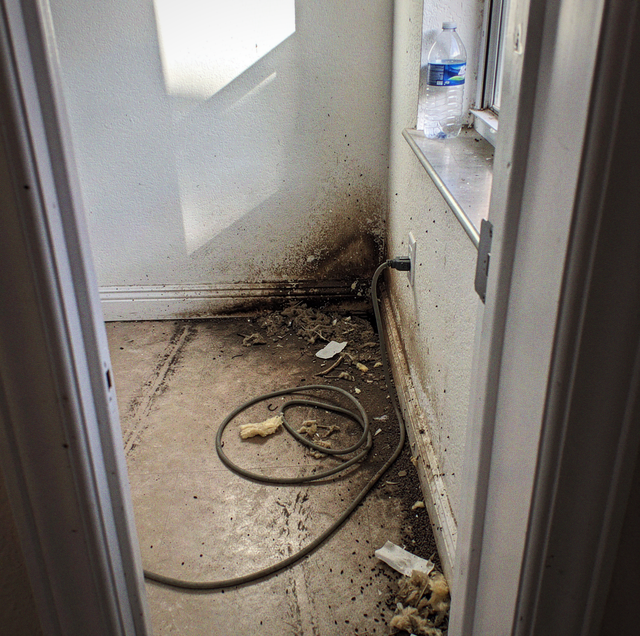
Quick Answer: A home that sits unoccupied does not become more attractive to rodents. It loses the conditions that surface a problem early: someone present to hear it, and an interior disturbed often enough that new sign reads as new.
A house that nobody is living in behaves differently than the same house occupied, and almost none of that difference shows from the street. Nobody walks past a pantry, a garage corner, or an attic hatch several times a day without thinking about it. What changes is physical and mechanical: how much gets heard, how the building's own systems behave without anyone setting them day to day, how much gets disturbed indoors, and how long anything left behind sits before a person finds it. Whatever happens with rodents at a property like that follows from those changes rather than from a schedule of its own. An animal already working the perimeter of a building responds to what vacancy actually alters, not to vacancy as an idea.
Nobody Is There to Hear the First Sign
The first sign of a rodent problem in most houses is a sound: scratching in a ceiling void at night, movement behind a wall while a room is quiet. That sign depends entirely on a person being present in that part of the house at the time the activity occurs. In an empty house, the same sound still occurs, with nobody in earshot to register it as a change.
That an emptier interior removes interruption is one of the general triggers behind rodent activity; what follows here is what vacancy does to detection once activity is present. If something is working a ceiling void, the channel that normally produces a first report is switched off. A homeowner in an occupied house often calls after a single restless night. A property with nobody sleeping in it produces the same sound night after night, and there is nobody in the building to consider it worth mentioning. What would have been an early call in one house goes unmade in the other, and that gap widens for as long as nobody is there to close it.
What Runs Differently, or Not at All
Some of a house's systems are tied directly to the people living in it, and some are not, and vacancy treats those two groups differently. Water use, cooking, and the general churn of a lived-in home stop almost entirely once nobody is there day to day, and a thermostat is usually set back to a wider range rather than shut off outright, so it cycles on a different pattern than it would with people setting it morning and night.
Other systems keep running exactly as they always have, because they were never tied to a person's presence at all. Automatic irrigation continues on its timer regardless of who is home, which keeps a water source running at grade with nobody present to see what uses it. Exterior lighting on a timer or photocell still switches on every evening and still draws insects to the same doorways. Pool and spa equipment already on a schedule stays on it. The exterior half of the picture around the building carries on unchanged while the interior half of it goes unwatched, and that combination is the one that matters here: the conditions that bring an animal up to the structure hold steady, and the conditions that would catch it once it is inside are the ones that stop.
An Interior with Nothing to Interrupt It
A lived-in house is constantly disturbed in ways nobody thinks of as maintenance. A pantry gets opened and closed most days. A garage gets walked through carrying something. None of that is cleaning in any formal sense, but each pass moves things, knocks things loose, and puts a person's eyes on a space they would otherwise never look at closely.
Take the people out of the house and that ordinary churn stops with them. A stack of boxes in a garage corner sits exactly as it was left. A low cabinet nobody opens stays closed for the entire stretch. Whatever is sitting in those spaces stays undisturbed for as long as the house does, because there is no routine activity left to move it, notice it, or put it back differently than it was.
If someone else is checking the property, ask for specifics rather than "everything looked fine." What they actually noticed near ground level and close to the doors is more useful than a general impression from walking through.
What a Closed-Up House Does to the Evidence Trail
In an occupied house, whatever gets found tends to be recent, because the space itself gets disturbed often enough that anything sitting there for long would already have been seen or moved. A dropping on a counter or a mark on a baseboard shows up against a surface someone was looking at last week. That built-in comparison is what lets a fresh sign read as fresh.
An unoccupied property has no such comparison point. Nobody wiped that counter or opened that cabinet since the vacancy began, so whatever turns up when someone finally looks could belong to any point across the whole stretch the house has been empty. A single visit at the end of a long vacancy sees one flat picture, with no way to tell whether what it shows started early in the vacancy or close to its end. Everything that happened is still sitting there in the order it happened, and none of it carries an interval anyone can place it in.
If anything found on a return, droppings, nesting material, or a carcass, has to be moved before a professional visit, it is handled with gloves and containment, never bare-handed. Sweeping or vacuuming it is not the way to take it up.
Who Checks on the Property, and How Often
Leaving a house entirely unattended for a long stretch, and having someone check on it periodically, are two different arrangements, and the difference matters more than most owners expect. This is not a question of what an owner should personally seal or repair before leaving; closing up a building envelope is trade work, not a departure checklist. What is worth deciding in advance is who has eyes on the property, and on what rhythm.
That decision covers more range than it first appears. A neighbor stopping by casually is a different arrangement from a house sitter on a set schedule, which in turn differs from a pest control service that checks specific points regardless of who else looks in. A property can reasonably use more than one at once: someone watching general condition, and a service watching for rodent activity on an interval that does not depend on anyone remembering to stop by.
What a Walkthrough Can Confirm, and What It Cannot
A single pass through a house, whether it is an owner returning or someone checking in partway through the vacancy, answers a narrower question than it feels like it should. It can confirm what is visible in the areas actually walked through, from normal eye level. It cannot confirm what is happening inside a wall void, above a ceiling, or in any space not physically opened and looked into.
That limitation follows from the shape of a walkthrough rather than from how carefully anyone does it. A person walking through a quiet house can reasonably say whether anything looks obviously wrong in the rooms they were in. They cannot say, from that same walk, whether a sign they did not see started a week into the vacancy or three days ago, or whether a space they did not open is holding something nobody has looked at yet. A walkthrough is a real check, and also a bounded one, and treating its silence as a clearance it never gave is where a property's real condition and what an owner believes about it start to drift apart.
Frequently Asked Questions
Change between two visits. A second look at the same spot is the only thing that puts an interval around anything: material present in March and absent in February belongs somewhere within that gap, and a mark that was already there on the last visit no longer counts as new information. One visit at the end of a long vacancy produces a list of what is present with no interval attached to any of it. Two visits, even casual ones, turn that list into a sequence.
Yes. Water sitting in the trap under a sink or floor drain that goes unused for a long stretch can evaporate, and once that water is gone the trap no longer holds its seal between the room and the drain line behind it. That is a separate issue from an infestation, and worth mentioning to whoever is arranging periodic checks, since a single end-of-vacancy walkthrough would not necessarily reveal it.
Without the system cycling in its usual pattern, the attic loses the incidental effect that regular conditioning of the rooms below it normally has on it. Heat and moisture up there can diverge further from the conditioned interior than they would with someone setting the thermostat day to day, simply because that space no longer receives the same indirect benefit.
Two things at once. The material itself, cardboard and paper sitting undisturbed near an entry, can end up used as nesting material if anything is already working that area. Separately, a visible pile is one of the few signals apparent from outside the house that nobody has been by recently, useful to whoever is deciding how closely to watch a given property.
Yes. Soft goods and paper stored low, folded textiles, cushions, cardboard, stacked paper, are nesting material as well as cover, so a room that already supplies what a nest is built from asks less of whatever is working it. Sealed bins hold the same items without offering them. That is a different consideration from visibility, and it applies to the same low cabinets and garage corners for a separate reason.
Yes. A property with monitoring points already in place and checked on a regular schedule has a written record of what happened throughout the vacancy, regardless of whether the owner or anyone else was present that week. An unmonitored property has no equivalent record; whatever is known is limited to what a person happened to notice and remember to mention.
Ask about standing rodent monitoring for a property that sits empty for long stretches — get a record of what happened while nobody was there to see it. Buggify Pest Solutions serves Boca Raton, West Boca, and communities across Palm Beach and northern Broward. Call Tyler: (561) 672-0200.
