

How Long Do Mosquito Eggs Survive Dry? Longer Than Expected
Quick Answer: Aedes mosquito eggs can survive dry conditions for several months, sometimes longer, stuck to the inside walls of a container above the old waterline. Water covering them is what starts hatching, even if the container looked completely empty.
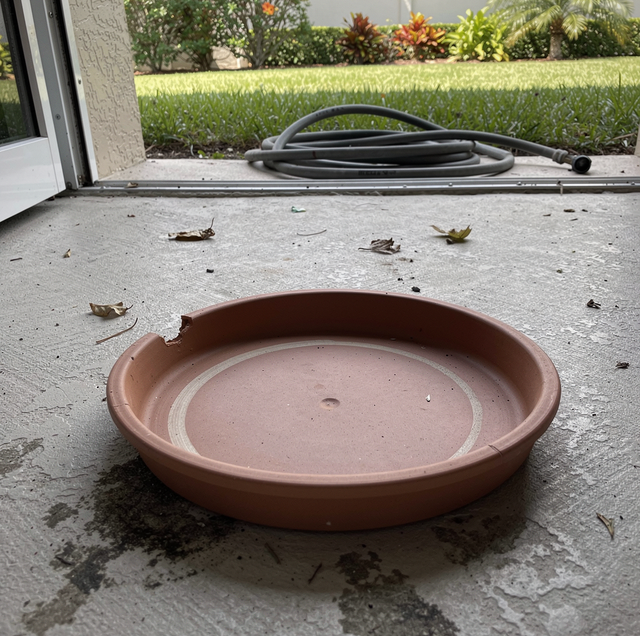
A flowerpot saucer on your patio has sat bone dry for six weeks. No standing water, nothing you could have missed with a hose, nothing an inspection would have flagged. Then an afternoon storm drops half an inch of rain into it, and three days later you find the saucer full of larvae. Nothing stood in that saucer during the dry stretch, so where did the mosquitoes come from?
The answer is in the container, not the weather. *Aedes* mosquitoes do not lay their eggs on the surface of water the way you probably picture it. They lay them just above it, on the damp inside wall of whatever is holding the water, and those eggs are built to wait out a dry spell. Once you know where the eggs actually sit and what keeps them alive without water, the rest of the pattern makes sense: why the first rain after a dry stretch produces so many mosquitoes at once, and why a container you would swear has been empty for weeks can still be the source of what is biting you.
Where the Eggs Actually Sit in Your Containers
A female Aedes mosquito does not drop her eggs onto open water. She lands on the inner surface of a container just above the current waterline, where the material is still damp from splashing or capillary action, and glues her eggs there, one at a time. That damp band just above the water is her target.
This habit is why a container in your yard can look completely dry to you and still be armed. Your plant saucer, the gutter section over the driveway, the folded tarp behind the shed, the hollow in a downed limb: each one can carry a ring around its inside wall where eggs from earlier in the season are stuck in place, waiting for the water level to come back up to meet them. When you drain a container, you remove the water. You do not remove that ring.
Why this matters for inspection:
A quick glance into a container tells you whether it is holding water today. It tells you nothing about whether the walls above that water are carrying eggs laid weeks earlier. Both questions decide whether your yard keeps producing mosquitoes, and only one of them is answerable from where you are standing.
Drying Out Puts the Embryo on Pause
Once an Aedes egg is laid and finishes its early development, its outer shell becomes tough enough to keep the embryo inside from drying out even after the surrounding surface goes bone dry. The embryo essentially pauses. It is alive and intact, and it is not doing anything that requires water, so the dry stretch you are counting on does not kill it the way it would kill an exposed larva.
How long that pause can last varies. Depending on the species, temperature, and humidity where the eggs are sitting, viable eggs have been shown to hold on for several months, and under favorable conditions, some can last close to a year before the water they need finally arrives. There is no single fixed number that applies everywhere. A shaded, humid corner of your yard favors longer survival than a container baking in full sun on the pool deck, and the same batch of eggs can behave differently from one season to the next.
Flooding Is the Condition an Egg Waits On
An egg that has been sitting dry in one of your containers for months does not hatch because a calendar date arrives or because the weather turns humid. It hatches after water rises high enough to cover it. Until that happens, the egg remains in the same paused state, no matter how long the dry period lasts.
Water covering the egg is the necessary condition, which is why the same dry container can produce mosquitoes during one rainy stretch, sit inert through a drought, and then produce mosquitoes again when water returns. What releases the egg is a physical event on your property, and nothing on the calendar does it on its own. Whether a given covered egg goes on to hatch depends on additional conditions in that particular water, which is worth knowing before you assume one soaking has emptied a container's supply. Your yard can go months without a single larva and still be holding a full stock of eggs the entire time, waiting on the one condition they need.
Why Does the First Rain After a Dry Spell Produce a Wave?
During a dry period, eggs do not stop accumulating just because nothing is hatching. Females that found a damp surface before a container fully dried out, and any that visited briefly during a passing shower, keep adding eggs to that band above the waterline. Weeks of laying can stack up in a single container on your property while it sits dry and looks, to you, like nothing is happening.
When a heavy rain finally refills that container, all of those accumulated eggs are exposed to water at roughly the same time. One flooding event triggers a large batch at once, where a wet season on its own would have spread the same hatching out as a slow trickle. That is the mechanism behind what you notice after the first storm following a dry stretch. The mosquitoes did not appear out of nowhere. Weeks of laying finally met the water they had been waiting on.
Why Doesn't Emptying a Container Once End the Problem?
When you tip the water out of a saucer or a bucket, you remove the immediate larvae and any eggs that happened to be floating, but you do nothing to the eggs already glued to the walls above where the water sat. Those eggs are attached, and letting the container dry out does not dislodge them or kill them. The container looks solved to you. The eggs are still there.
That gap between emptied and eliminated is easy to miss. A container you drained today and left dry for a month has not necessarily stopped being a mosquito source. It is holding a dormant batch and waiting for the next refill, whether that refill comes from rain, irrigation overspray, or you topping off a saucer without knowing what is stuck to the sides. A single pass through your property catches whatever looks obvious that day. It does not account for what is dry today and still viable.
Breaking the Cycle Means Finding the Dry Containers Too
Ending the pattern in your yard means finding the containers holding eggs alongside the ones holding water. That is the point of a breeding-source audit: checking the containers that hold water and hand it back, your plant saucers and the cupped leaf bases of your bromeliads among them, whether or not any of them look wet on the day someone walks the property with you. The container that is bone dry this month can be the one producing larvae next month.
A breeding-source audit does not stop at standing water. It also checks containers that are bone dry, since eggs already stuck to the walls can turn into a new generation the moment water returns.
Because the trigger is water and the supply is eggs that can last for months, a single visit to your property captures only a snapshot. Regular checks, run monthly through the warmer months and roughly every other month through the cooler ones, catch your containers as they refill. A single look misses whatever was armed and waiting on the day it happened. The pattern is less about a single fix and more about staying ahead of a mechanism that resets itself every time a container fills back up.
Frequently Asked Questions
Being covered by water is the necessary first step, and it is not the whole signal. As water sits in one of your containers, bacteria and decaying debris use up the oxygen dissolved near the egg's surface, and that drop in oxygen is part of what tells the embryo to hatch. Clean, oxygen-rich water can leave eggs sitting longer even while they are technically covered, which is one reason a saucer you just refilled with a hose and a saucer that has held leaf litter for a week do not behave the same way.
No. Even when a flooding event covers every egg in one of your containers, only a portion of them typically hatch right away. The rest stay dormant and hatch during a later flooding, which spreads their chances across several separate rain events. No single storm carries the whole batch. The same container can hand you larvae after two separate rains for exactly that reason.
It does, in two ways you would not see by looking. A rough, porous surface- unglazed terracotta, bare concrete, weathered wood- holds moisture in its pores long after the visible water is gone, and that lingering dampness in the thin layer right around an egg tends to favor survival through a dry stretch. Smooth plastic and glazed ceramic shed their surface water quickly and then sit truly dry, so eggs on your plastic saucer face a harsher dry period than eggs the same age on the unglazed pot rim a foot away. The second difference is grip: a rough wall gives the glue more to hold onto, so eggs on porous material stay put through handling that would knock some off a slick one. Two containers on your patio, same size, same shade, different material, are not carrying the same risk.
Abrasion is what separates them. The bond holding an egg to a wall is mechanical, so friction is what takes it off: a stiff brush, a scouring sponge, a rag worked hard around the inside rim. A container that has had that done to it refills to a far smaller supply, because a real share of what was stuck to the wall went out with the scrubbing. A container that was only tipped out still carries its ring intact. The two are indistinguishable to you on a dry afternoon, which is why the habit worth keeping is a mental note of which of your saucers, buckets, and trays have actually been scoured at some point this season and which have only ever been emptied. The next rain reads that difference even though you cannot.
It changes it in both directions at once. Screen keeps a good share of egg-laying females out of the enclosure, so the containers you keep under a cage generally accumulate fewer eggs than the same containers sitting in the open yard. What screen also does is hold humidity in and cut out sun and moving air, and those are exactly the conditions that favor long egg survival. So the eggs that do get laid in there, by a female that came through a door left open or a gap at the base of the screen, sit in a far gentler spot than eggs baking on an open deck. A potted plant tray inside your cage is taking less traffic and holding on to what it takes for longer.
No, and that is a meaningful difference. Some other common mosquitoes lay their eggs directly on the surface of standing water instead of on a damp wall above it, and those eggs lack the drying tolerance described here. That is why your property can host more than one breeding pattern at once, each waiting on water of a different kind and on a different schedule.
Have the containers been found that are still holding eggs weeks after they went dry — a breeding-source audit walks the dry ones alongside the wet ones. Buggify Pest Solutions serves Boca Raton, West Boca, and communities across Palm Beach and northern Broward. Call Tyler: (561) 672-0200.
