

What Attracts Spiders to Your Yard: Mulch, Palms, and Water
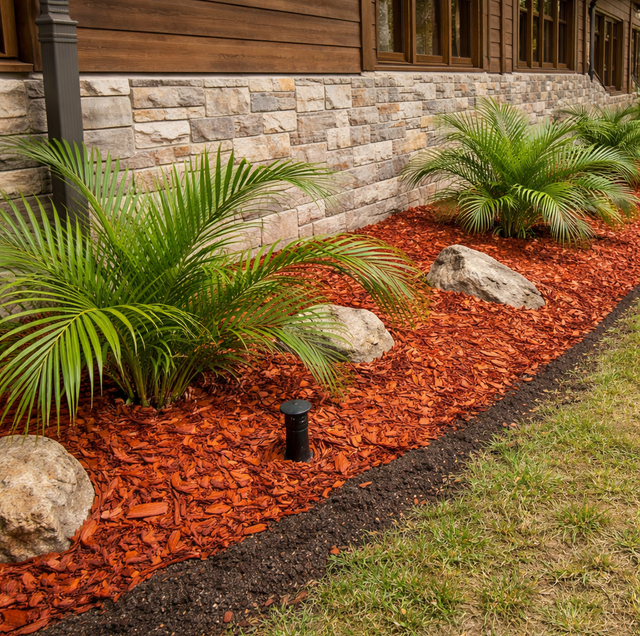
A mulch bed pulled right up against the foundation. A palm crown still carrying last season's dead fronds. A sprinkler head that mists a few feet past the bed it's supposed to cover. None of that looks like a spider problem; it looks like ordinary yard upkeep, done well or skipped. Walk the perimeter the morning after a rain, though, and the fresh webs on the porch rail, the mailbox post, or the garage door track usually line up with the wettest spot on the property, not the biggest planting bed or the darkest corner.
The webs aren't there because of the yard work itself. They're there because that work, or the lack of it, changed where moisture and insect activity concentrate close to the house, and insects are what a web-building spider is actually tracking, not water directly. Spiders don't drink standing water the way mosquitoes breed in it; they set up where the small flying and crawling insects they eat are thickest, and those insects gather wherever the ground and the air near the structure stay damp longer than the rest of the yard dries. Mulch, palm crowns, and a sprinkler system are the three most common reasons that the band around a house stays wetter than it should.
Keep organic mulch pulled back 12 to 18 inches from the foundation and no more than two to three inches deep. That gap dries faster between waterings and gives ground-hunting spiders less cover near entry points.
Mulch Beds Against the Foundation Trap Moisture and Prey
Shredded wood mulch does exactly what it's sold to do: it holds water against the soil surface so plants need less frequent watering. The tradeoff is that the same layer stays damp for a day or two after the surrounding lawn has already dried, and that dampness feeds a small ecosystem living in and under it. Pillbugs, sowbugs, crickets, ants, and small beetles work the decomposing wood and the moist soil beneath it, and that steady food supply is what draws ground-hunting spiders like wolf spiders to set up right at the mulch line rather than out in the open lawn. Wolf spiders don't spin a web to catch that food; they hunt it actively after dark and retreat into the damp mulch to wait out daylight, which is why a bed that looks empty at noon can still be carrying a healthy population.
The problem compounds where mulch is pushed flush against siding, stucco, or a foundation wall. That strip stays wet regardless of how much or little it rains, because it's shaded by the structure and shielded from drying wind. It's also exactly where weep holes, expansion joints, and door thresholds sit, so the same conditions that support the insect population also put spiders within a few inches of the gaps they can use to get onto a porch or into a garage. A mulch bed piled deeper than three or four inches holds that moisture even longer between waterings, which is why a thick, fresh-looking bed right after a mulching job often produces more web activity in the following weeks, not less.
Un-trimmed Palm Crowns Create High, Sheltered Harborage
A palm that hasn't had a crown cleaned in a while carries dead and drooping fronds low around the trunk, and where each frond attaches, there's a boot, the persistent leaf base that doesn't fully shed. Rain, pollen, and dead insect matter collect in that pocket, and because it sits above ground level and out of direct sun and wind, it stays humid and undisturbed far longer than anything at ground level does. That combination, shelter plus a steady insect food source, is what a web-building spider is looking for, and a palm crown that hasn't been cleaned in a season or two can hold a dense population of both without anything at eye level giving it away. The crown's height above the ground also puts a web across the natural flight path of moths and small beetles moving between the canopy and a nearby porch light, which is a second reason activity concentrates there rather than lower on the trunk.
Dead fronds that sag down against the trunk or brush a nearby roofline give spiders a direct bridge from the crown down to an eave, a porch post, or a window frame, which is usually why webs cluster on whichever side of the house sits closest to an untrimmed palm rather than spreading evenly. Brown widow spiders in particular favor tight, undisturbed crevices near structures over open ground, so an untrimmed crown right next to an entryway is one of the more common places a brown widow will settle rather than a house spider or an orb weaver. Clearing dead frond boots and crown litter away from windows, porches, and eaves removes that shelter without needing to touch the healthy green canopy.
Irrigation Overspray Keeps the Perimeter Damp Around the Clock
Sprinkler heads aimed at a planting bed frequently throw part of their spray past the root zone, onto the mulch strip, the siding, or the base of a stucco wall. That keeps the band nearest the house wetter well after the rest of the yard has dried, which is the same microclimate the mulch-dwelling insects favor, so spider activity often tracks closest to whichever zone runs most often on the irrigation timer rather than to whatever gets the most sun or shade. A worn or partly clogged nozzle makes this worse: instead of throwing a controlled fan pattern within its rated radius, it mists in a wider, uneven arc that extends several extra feet beyond where the head was originally set to cover, catching siding and mulch that a working head would have missed entirely.
Watering schedule matters as much as head placement. Several short cycles spread across the day keep the top inch of soil damp almost continuously, while one longer, less frequent cycle lets that top layer dry out between waterings and forces roots deeper, where they belong anyway. A zone that's been running short daily cycles for months, aimed even slightly toward the wall instead of the bed, can turn a narrow strip of siding and mulch into a permanently damp corridor that neither direct sun nor a dry week ever fully clears.
When One Fix Isn't Enough
Handling only one of these three often leaves the web activity mostly unchanged, because the moisture and the insects they feed on move through the same 10- to 15-foot band around a house. Trim the palm but leave the mulch pushed against the siding, and the spiders that lost their crown harborage settle into the mulch line instead. Pull the mulch back, but leave a sprinkler head misting the wall three times a day; the strip stays damp regardless of how far the mulch is pulled back.
Checking mulch depth and setback, crown condition, and irrigation pattern together in the same walk-through is what actually moves the number of webs down rather than just relocating them a few feet. A yard that also gets a mosquito treatment often sees a side benefit here too: a barrier application aimed at breeding sites knocks down part of the same flying-insect population spiders are hunting. It doesn't reach every source, though. A web built at a porch light or tucked into a soffit corner draws from insects that barrier treatment was never aimed at, so the mulch, crown, and irrigation fixes still carry most of the load on their own. If the activity remains heavy after fixing all three, or if brown widows keep turning up near an entry point, a licensed technician can knock down existing webs and egg sacs and treat the harborage directly, which does more than any one homeowner can fix on their own.
Frequently Asked Questions
Most of what's building webs outside- orb weavers on the porch rail, wolf spiders in the mulch- rarely crosses the threshold. Brown widows and the far rarer black widow prefer tight, undisturbed gaps like an electric meter box, a stack of empty planters, or garage clutter, and only move indoors if a door sweep or window seal has already failed, so a sealed threshold matters more than trying to spray every web in the yard.
Match the webs to the wettest spot instead of guessing. Push a finger an inch into the mulch: if it's still damp two full days after the last watering or rain, the bed is the driver. Check the palm crown with a flashlight after dark; a scatter of small beetles or moths circling the frond boots points to the crown instead. Look at the siding a few feet out from any sprinkler head; a dark mineral streak or a patch of algae on stucco means overspray, not the bed, is keeping that section wet. Most yards have webs clustered near more than one of the three, since the damp zones usually overlap wherever a mulched bed sits under a palm on the same irrigation zone.
Rock or gravel mulch holds far less moisture than shredded wood and doesn't decompose, so it removes the insect food source that draws spiders to the bed. It also absorbs and reflects more heat in direct sun, though, so it works better on a south- or west-facing bed than in a shaded strip near AC equipment where extra heat isn't welcome.
A hurricane cut strips a palm down to just the newest few fronds. It removes healthy green fronds the tree still needs along with the dead ones, which can stress the palm over the following growing seasons. A proper crown clean removes only dead, drooping, or boot-trapped material and leaves the healthy canopy intact, which is the version that reduces spider harborage without hurting the tree.
Yes, and it can be worse, because it runs during every rain event instead of on a timer you can adjust. A downspout with a missing or crushed extension dumps roof runoff straight against the foundation instead of carrying it three or four feet away, and a gutter seam that's separated or clogged with palm debris overflows along one stretch of fascia every time it rains, soaking the mulch and siding underneath it. A splash block or a flexible extension that routes the water away from the wall clears that wet strip faster than adjusting a sprinkler zone would, since the irrigation timer was never the source in a gutter-driven case.
Pressure-washing physically removes existing webs and egg sacs, which is useful right before an inspection or an event. An orb weaver can rebuild a full web overnight, though, so washing alone, without addressing the mulch line, the palm crown, and the irrigation pattern feeding it, just resets the visible mess rather than reducing the population behind it.
Schedule a spider inspection — a technician checks your mulch beds, palm crowns, and irrigation pattern for moisture and prey sources that draw spiders in, then treats and excludes the entry points that matter. Buggify Pest Solutions serves Boca Raton, West Boca, and communities across Palm Beach and northern Broward. Call Tyler: (561) 672-0200.
