

Wolf Spiders and Jumping Spiders: When to Leave Them Alone
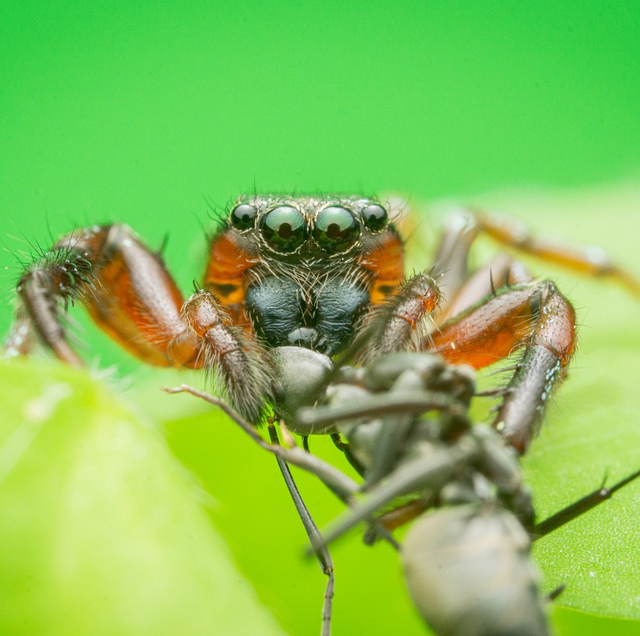
Quick Answer: Wolf spiders and jumping spiders hunt roaches and crickets without building webs; treatment turns on population thresholds and specific signs, not species alone. Leave a single sighting alone; a growing indoor population, especially with egg sacs, is worth a closer look.
Two spiders account for a fair share of the sightings that get reported around South Florida yards without any real problem behind them: the wolf spider and the jumping spider. Both hunt insects for a living, and neither strings the kind of web that becomes a nuisance. These two are generally left alone because they're beneficial predators; treatment, when it happens, is based on population thresholds and specific problem signs, not species alone. They're already working through the roaches, crickets, moths, and small flies that would otherwise be turning up somewhere less welcome, and treating a working predator on sight trades a useful ally for one less spider and, usually, more of whatever it was eating.
Why These Two Get Left Off the Treatment List
A wolf spider hunts on foot, and a jumping spider stalks and pounces; neither builds a snare web to catch a meal, which is most of why they don't generate the same complaints as a spider that leaves visible webbing across a lanai corner or a picture frame. What each one looks like and how it moves are covered in full elsewhere on this site, so this piece isn't about identification. It's about the decision that follows once you already know which spider you're looking at: whether it needs anything done about it at all.
Integrated pest management (IPM) practice generally treats active hunting spiders like these as beneficial by default, reserving actual treatment for population thresholds and nuisance levels rather than presence alone. That framing matches how a source-first visit works here too. A spider isn't the target; whatever drew it in is. Roaches, crickets, ants, moths, and other small insects are the food supply, and a yard or home that's producing more of that food supply is producing more spiders as a downstream effect, not the other way around.
When Leaving Them Alone Is the Right Call
One wolf spider crossing an open garage floor after dark, or one jumping spider working a sunny patio wall, is ordinary background activity for this climate and not something to act on. A single sighting, especially outdoors or in a garage, carport, or screened lanai, is exactly the kind of incidental encounter that happens in any yard with insects to hunt. The presence of either spider in that setting is closer to a sign the yard is functioning than a sign something's wrong.
A lone individual outdoors or in a garage: Normal, no action needed.
A spider that vanishes after one appearance: It moved on to hunt somewhere else; that's what it does.
Fewer roaches or crickets turning up than usual: If that's happened alongside a spider sighting, it may be part of a broader change in the yard, not something to read too much into on its own.
A repeat sighting is not automatically a population problem. One spider crossing the same corner nightly is likely working one prey trail, not multiplying; several distinct individuals in the same week is the pattern worth flagging.
When the Population or the Pattern Crosses a Real Line
The calculus changes on a few specific, checkable signals, not a vague sense that there are "a lot" of spiders around. These are the actual criteria worth using:
Density inside living space, not just outdoors: A wolf spider on the patio is unremarkable; three or four turning up inside a bedroom or kitchen in the same week is not, because indoor prey density that high doesn't happen without a reason.
Egg sacs or juveniles appearing repeatedly: A single adult passing through is one animal. Egg sacs, or small juveniles showing up alongside adults in the same area, point to an established breeding presence rather than a stray that wandered in.
A spike in the prey base, not just the predators: If wolf spider or jumping spider sightings climb at the same time you're also seeing more crickets, roaches, or moths, the spiders are a symptom. The prey population is very likely the thing actually worth addressing, since it's what's sustaining both.
Sightings clustered at one entry point: The same gap under a garage door, the same unscreened vent, or the same low window producing repeat sightings signals a structural opening that's letting insects and spiders in together, not a spider-specific problem.
Structural entry points belong on the list regardless of how you feel about the spider using them. A gap in weatherstripping, a torn lanai screen panel, or a low masonry crack lets in far more than one predator, and it's worth sealing on its own merits even when the spider itself isn't the concern.
What Happens Instead of Spraying the Spider
A broad-spectrum residual applied to baseboards, mulch beds, or turf doesn't distinguish a beneficial hunter from the insects it eats; it reduces both at once, and it tends to leave the actual prey supply to rebound faster than the predator that had been keeping it in check. That's the practical case against reflexively spraying for a wolf spider or a jumping spider: it removes free pest control and does little to fix what pulled the insects in to begin with.
That kind of visit instead looks at what's actually feeding the cycle: exterior lighting drawing moths and flies after dark, irrigation overspray keeping mulch beds damp enough to hold crickets and roaches, pet food left out overnight, or a torn screen panel letting insects move from the lanai into the house. Correcting those points reduces the prey supply the spiders were hunting, which naturally thins out spider activity too, without removing predators that were doing useful work in the meantime. If an indoor population has actually crossed the line described above- egg sacs, repeat clusters, a specific entry point- that visit also means physically removing the excess spiders and closing the opening they used, rather than treating the whole yard for something that was mostly helping.
The Same Logic Applies Beyond These Two
Wolf spiders and jumping spiders aren't the only predators that fall into this category; they're just the two that generate the most calls. The goal in a yard with real insect pressure isn't zero spiders. It's balance: enough of a working predator population that the insects they eat don't get out of hand, and structural gaps closed off before either one turns a passerby into a resident. Judging that balance takes more than counting spiders, which is exactly why the entry points and the food supply, not the spider on the wall, are what actually get inspected first.
Frequently Asked Questions
Both can bite if trapped against skin, but it's rare, and any swelling or redness typically fades within a day, comparable to a mosquito bite for most healthy adults. The more useful comparison is to the brown widow, which sometimes hides in the same mulch beds, patio furniture, or fence rails and is the one spider in this region whose venom carries a real medical risk. That contrast is a big part of why treatment decisions run on species and population thresholds rather than a blanket reaction to any spider sighting: a wolf spider or jumping spider crossing a patio where a brown widow could also be hiding gets very different handling.
Location is the faster tell than time. A stray that wandered in through a gap tends to turn up somewhere random and exposed: a hallway floor, a bathtub, the middle of a kitchen, because it's still searching for a way back out or a prey trail to follow. An actual indoor population instead clusters near a consistent resource: the same closet, the same laundry room corner, the same spot behind stored boxes in a garage, night after night. That pattern, repeat sightings anchored to one specific area rather than scattered around the house, is a stronger signal than counting individual spiders, and it's the detail worth mentioning if a visit gets booked over it.
Porch lights and unshielded exterior fixtures attract moths and flies after dark, which draw hunting spiders in behind them; that's an outdoor lighting pattern with an easy fix: switching to a yellow or motion-triggered bulb cuts the draw. Sightings clustered specifically in a kitchen or pantry instead point to an indoor food-source issue, such as stored-product pests or crumbs behind an appliance, which is worth checking on its own.
It depends more on the product than the pest being targeted. A broad-spectrum residual sprayed across baseboards, mulch, or turf doesn't distinguish predator from prey and can reduce both at once. Targeted methods, gel baits placed in cracks and voids, or bait stations rather than surface sprays, are more selective because they're designed to be picked up by the target insect specifically rather than contacting anything that crosses the treated surface. A homeowner who wants to keep the yard's spider activity intact can ask the technician to rely on crack-and-crevice bait placements rather than broadcast spraying wherever the target pest allows.
Generally not from venom. A pet that catches and mouths one of these two spiders typically ends up with nothing worse than mild drooling or a brief upset stomach from the insect itself, not a toxic reaction. The more relevant caution in a South Florida yard is encountering a brown widow in the same mulch bed or under the same patio furniture, which carries a real risk of venom and warrants keeping pets away from that specific spot.
The inspection follows the same outside-in order used for any spider call: entry points and prey source first, torn screens, gaps in weatherstripping, exterior lighting, standing moisture, before any product goes down. Any control step targets the insects sustaining an unusually large population rather than the spiders themselves, and excess adult spiders or egg sacs found during that same visit get cleared with a long-handled duster or brush rather than sprayed or handled directly, the same removal method used for any species during a spider visit. What differs here is the follow-up: because the goal is to thin an overgrown population rather than eliminate the species, a technician is more likely to note whether the same handful of spots continue producing sightings on the next scheduled visit than to treat it as resolved after one pass.
Not sure if what's crossing your patio is one wolf spider passing through or a sign of a bigger prey-insect problem — get it looked at and find out what's actually drawing them in. Buggify Pest Solutions serves Boca Raton, West Boca, and communities across Palm Beach and northern Broward. Call Tyler: (561) 672-0200.
