

How to Read a Rodent Inspection Report and Its Photos
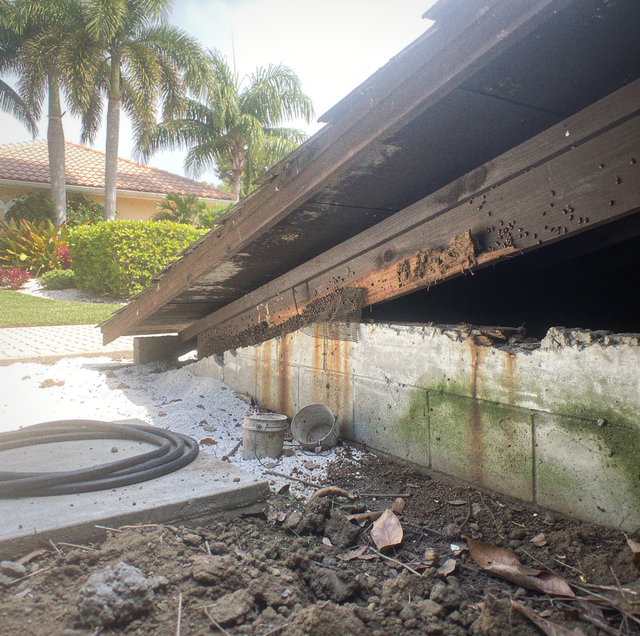
Quick Answer: Read a rodent inspection report for whether it can be checked: findings numbered and tied to a location you could return to, photos whose captions match the finding they belong to, and a recommendation that names the findings it follows from.
The report lands in an inbox after the inspection and gets opened on a phone at the kitchen counter. A few short paragraphs, one photo, a recommendation at the bottom. Nothing in it is wrong, exactly. The trouble is that nothing in it can be checked either, not by the person holding it or by anyone who comes to the house later.
A rodent inspection report matters less for how many rooms got walked through than for what ended up in writing afterward. It is the only record of what a technician found, where, and whether the recommendation on the last page follows from what came before it. Before acting on one, there are a few things worth checking on the page itself.
The Numbering That Ties a Report Together
Every finding needs a location attached to it, because a line reading "rodent activity present" gives nobody a place to stand, the same requirement a written scope of work carries and one argued in full in the scope-of-work article.
What is specific to a report, and what separates a usable one from a page of prose, is the index. Findings numbered, one line each. Photos carrying those same numbers. Captions repeating them. A recommendation that cites the numbers rather than gesturing at what came above it.
Numbering sounds clerical until a page carries several findings and several photos with nothing linking them. Then the reading is guesswork. The dim shot of a corner might belong to the soffit line or to the slab line. The recommendation calling for work along the north side might follow from one of those findings or from none of them, and nothing on the page settles it. An index removes that entirely: a number on the finding, the same number on the photo, the same number in the caption, and a recommendation line that names it.
Photo Captions and What They Have to Match
A photo attached to a finding is supposed to be evidence, not decoration. The test is simple: read the caption, then look at the image, and ask whether the image actually shows the thing the caption names.
A caption that says "entry point, rear roofline" attached to a wide, dim shot of a general attic corner does not meet that test. Neither does one photo reused to represent several different findings, or a findings list running down the page with a single image attached to the whole thing. Each finding worth writing down is worth a photo taken close enough, and clear enough, to show the specific thing described rather than the general area around it.
The caption itself carries weight too. It should match the language and the location named in the findings section, closely and consistently. A photo captioned differently from the finding it is supposed to support is a photo you cannot actually tie back to anything else on the page.
Current or Old, and the Basis for the Label
Droppings, gnaw marks, and staining can sit in the same frame and mean entirely different things. What the page has to do about that is narrow: attach a label to each finding, current or old, and state what that label rests on.
A report that lists them together under one line, "signs of rodent activity," has flattened two pieces of information into one that tells you less than either did alone. A finding entered with no label leaves the reader unable to tell which of two very different houses they have: one with active droppings and no old damage, one with old gnaw marks and nothing fresh anywhere.
The basis matters as much as the label. "Old damage" written beside a finding on its own is an assertion. The same words with the reason for that reading stated on the same line is something a second reader can weigh, agree with, or question. Sorting fresh signs from old ones is inspection work; what belongs on the page is which label got assigned to each finding, and why.
The recommendation depends on this distinction more than on anything else in the report. If the labels are missing, there is no way to tell which house you actually have.
Areas the Report Says It Did Not Reach
Every inspection has a physical boundary. Houses have spaces that do not get checked on a given visit, for perfectly ordinary reasons, and that on its own is not a problem.
What matters is whether the page says so. A report that states in writing that a particular area was not reached on that visit is making a narrower claim than one that says nothing about it, and the narrower claim is the more useful one, because it tells the reader exactly how far the findings section extends.
If a space on the property never appears anywhere in the report, ask which line covers it. An area the page never names is an area the report is not actually claiming anything about, one way or the other.
A report that lists several findings and states plainly that one area was not reached that day is telling you something true and limited. The same report with nothing written about that area at all is making a claim it never earned, and the reader has no way to see the difference from the page alone.
The Recommendation and the Findings Behind It
The last section of most reports is a recommendation: trap-out, exclusion work, monitoring, or some combination of those. It is also the section most likely to be dropped in regardless of what came before it, because it is the part every report needs and the part easiest to reuse from the last job.
Check it against the findings above it, by number. If the findings describe activity confined to the attic and the recommendation calls for treatment across the whole house, ask why. If the findings note only old, inactive damage and the recommendation calls for an urgent multi-week trap-out, ask what in the findings supports that urgency. A recommendation that traces back to specific numbered findings is a different piece of work from one that reads the same regardless of what the findings section says.
What a Follow-Up Report Has to Carry Forward
A second report on the same house, written after work is finished or after activity resumes, is worth having only if it builds on the first one. The original finding numbers and locations should reappear, each with a status written against it: closed and with what material, still open, no longer showing activity, or newly found during the work and added to the list.
That last category is the one most often lost. Openings found while the work is underway, in places nobody could see during the inspection, belong on the written record with their own numbers rather than in a technician's memory.
A follow-up that starts a clean list of its own reads as a fresh inspection of a house with no history, which is exactly what it is not. The value of a second report lies in comparison, and comparison requires the first report's structure to remain intact within it.
Frequently Asked Questions
A photo with no fixed reference in the frame, a tape edge, a gloved hand, or a framing member you can gauge against can confirm that something is there but not how large it is or how far it sits from a landmark you could find again. Two companies can photograph the same gap and hand you images that read completely differently in scale, with neither one lying about what is actually in the picture.
A photo without a timestamp cannot be distinguished from one taken on an earlier visit to the same house, or from one taken on a different job entirely on a busy route day. If a follow-up report reuses an image without a date, there is no way to confirm whether it shows a current condition or one that was photographed earlier.
It should name the specific area and the reason it was not reached, rather than a single boilerplate line like "some areas were not accessible," which could describe any house along the route. A named area with a named reason gives you something exact to ask about before the next visit. The boilerplate version reads identically on every report the company writes and tells you nothing about yours.
The report becomes unreadable to anyone except its author. A second company handed a findings list and a photo set that share no numbering cannot reconcile them at all: it can see that photos exist and that findings exist, but not which image was offered as evidence for which line. What should have been a head start becomes a full re-inspection, and the first company's photos sit there unusable as a baseline.
A useful second opinion references the same physical locations the first report named and states plainly whether it agrees, disagrees, or found something different at that same spot. A second report that reads as a completely fresh list, with no mention of what the first company found, does not tell you which one actually looked more carefully. It just leaves you holding two reports instead of one.
Less than it appears, and it settles far more easily than a disagreement about location. Both companies found the same thing in the same place, so what is in dispute is the label and the basis behind it, which is why each should be asked what its reading rests on rather than asked to repeat the conclusion. Visits made at different points can also disagree honestly, since a finding recorded as old on one and current on the next is a real change worth knowing about.
Have the house inspected and written up with numbered findings and matching photos — you end up with a record you can compare line by line against any other report. Buggify Pest Solutions serves Boca Raton, West Boca, and communities across Palm Beach and northern Broward. Call Tyler: (561) 672-0200.
