

Spiders in the Garage: Why It Behaves Like an Outdoor Space
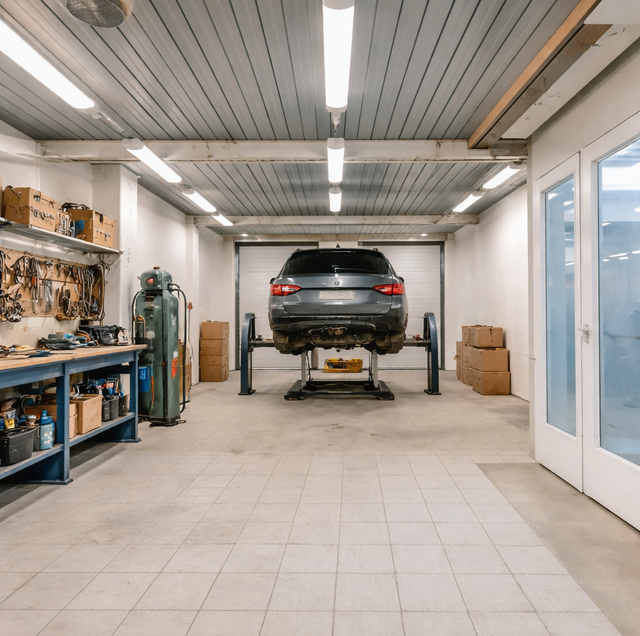
Quick Answer: A garage acts like outdoor space because it meets three conditions a yard offers: undisturbed clutter for shelter, a bottom door seal that lets insects in, and a light fixture that draws prey after dark. Sweeping the floor changes none of it.
The garage gets treated like the inside of the house: swept on a good week, maybe reorganized once a year, the trash cans wheeled through it twice a week. But structurally and functionally, it behaves nothing like the linen closet ten feet away through the connecting door. It has more in common with a shed or a covered patio than with any other room under the same roof. If spiders keep turning up in the garage while the rest of the house stays quiet, that split isn't random. The garage functions as an outdoor space that happens to have a roof, four walls, and a door that goes up.
What Piles Up and Never Gets Disturbed
A garage collects the household's least-touched belongings by default: the things that don't have another home get set down here and stay set down, sometimes for years. Stacked cardboard boxes, sports equipment corners, and workbench junk left in place for months at a time are exactly the kind of undisturbed void a spider looks for. Pest-control guidance commonly flags cardboard specifically, since the cellulose and adhesive in the box itself are a food source for silverfish and roaches, and those insects are what draws a web-building spider in behind them. A garage rarely gets the box-by-box reshuffling a closet gets during a seasonal clean-out, so a stack that goes untouched from one holiday season to the next gives a spider months of uninterrupted shelter in a single spot.
Workbench clutter and lidless bins: Loose hardware, coiled extension cords, and open bins of parts create the same kind of small, dark voids that a spider uses between hunts, and because a workbench gets used in bursts rather than daily, those voids go unchecked for long stretches too.
What Happens Every Time the Door Cycles
Every time the garage door goes up, the space opens directly to outside air the way no other part of the house does, and the seal at the bottom of that door is what's supposed to close that gap back off between the openings. Garage door professionals point to the bottom weatherstripping as the single largest gap on the garage, because it's a wear part: rubber that compresses under the door's weight, cracks in heat, and stops sitting flush against an uneven slab over time. A seal that no longer makes even contact with the concrete leaves a gap running the full width of the door, and that gap doesn't discriminate between a spider walking in on its own and the flying and crawling insects a spider would rather eat. The corners tend to fail first, where the seal meets the track and takes the most flexing every time the door cycles. A slab that's settled slightly, common in Florida's sandy soil, widens that same gap further without the seal itself doing anything wrong.
Check the bottom seal on a mild afternoon, not right after the door has run. A seal that doesn't touch the slab evenly along its full width is worth replacing before it becomes a spider entry as well as an insect one.
What Changes After Dark and After the Car Comes Home
A garage light left on at dusk, or a door left open while unloading groceries after dark, pulls in the same moths and gnats that gather at a porch fixture, and for the same reason: those insects key in on light rather than avoiding it. The bulb-color fix that works at a front door, swapping a standard warm-white LED for an amber or true-yellow bulb, applies here too and cuts that draw without leaving the garage dark. A parked car adds a second factor a porch doesn't have: an engine radiating heat for an hour or more after the car is shut off, and an air-conditioning evaporator whose condensate drain tube can drip onto the slab underneath a recently run vehicle. That combination of warmth and moisture, hedged here because it varies by vehicle and by how long the car sits, gives cockroaches and other moisture-seeking insects one more reason to be in the garage, which in turn gives a spider one more reason to stay.
Why Low Foot Traffic Lets Both Patterns Run Unchecked
A kitchen gets walked through, wiped down, and visually scanned dozens of times a day; a garage gets vacuumed a fraction as often and, aside from parking and unparking a car, might get real attention once or twice a week. That gap in foot traffic is what lets a web anchored in a ceiling corner near the door track, or low against a stack of bins, sit undisturbed long enough for the spider using it to grow, molt, and in some cases lay an egg sac before anyone notices. It isn't that a garage attracts more spiders than a similarly cluttered closet would; it's that nobody's in the garage often enough to catch either pattern, the slow buildup or the daily cycle, early enough to matter.
What You Can Fix Yourself
Decluttering the floor and lower shelves first makes the biggest visible difference, since it removes the ground-level voids fastest, but the details matter more than the general tidy-up.
Store belongings off the floor and away from the walls: Raising bins six inches off the slab and pulling them a few inches from the wall removes the tucked-against-the-corner spot a spider prefers, without needing new storage furniture.
Break down old cardboard rather than restacking it: Replacing long-term cardboard storage with sealed plastic totes removes both the shelter and the insect food source cardboard provides.
Check and replace the bottom door seal: a new seal is a quick, DIY-friendly fix, and it's worth checking annually since heat and UV exposure degrade the rubber gradually rather than all at once.
Swap the garage light's bulb color: An amber or true-yellow bulb at the fixture nearest the door reduces insect draw, as it does on a front porch, without sacrificing usable light while the door's open.
Where DIY Reaches Its Limit
Decluttering, sealing the door, and changing the bulb address the conditions that build spider activity over time, but they don't remove spiders that are already established, and they won't tell you which species is actually in the garage. A web population that keeps rebuilding within days of being cleared, egg sacs found in more than one storage spot, or any spider found low and tucked into stored items rather than up in open air are all signs worth a professional look rather than another round of sweeping. A visit that starts by identifying the harborage and entry points specific to that garage, rather than spraying the open floor, is what actually changes the pattern instead of resetting it for a week.
Frequently Asked Questions
Yes, and the differences matter for spotting them. Common house spiders build irregular, cobweb-style webs in ceiling corners and along the garage door track, where the structure gives them a fixed anchor point. Wolf spiders don't build webs at all in a garage; they hunt on foot along the floor near the threshold and duck into gaps at the base of stored items during the day. Brown widows tend to favor low, tucked spots, specifically under a workbench, inside a stacked bin's handle, or behind a paint can, rather than open air, as an orb weaver would on a screened patio. A garage is exactly the semi-outdoor exception to that pattern: it isn't really living space, so a species that otherwise stays almost entirely outdoors still turns up there.
It can, and it's a separate seal from the big overhead door. The threshold and weatherstripping on the interior door leading into the house are often original to the build and get far less attention than the exterior garage door, since nobody thinks to check them the same way. A gap there gives both insects and the spiders they attract a more direct path into a hallway or laundry room than the overhead door does, so it's worth a look on its own, not just as an afterthought to the bigger door.
The bottom gets the most attention because it's the widest gap when it fails, but the side and top jamb seals, the strips that run along where the door meets the frame on either side and across the top, wear out too and are easy to miss during a quick check. A gap at a side jamb is narrower than a failed bottom seal, but it sits at a height that's harder to notice without deliberately running a hand along it, and it lets in the same insects and spiders a bottom gap does.
They can, and for a different reason than floor-level bins. Ceiling-mounted racks and rafter storage put items even further from regular foot traffic than floor clutter does, since almost nobody climbs up to check them between seasonal uses. That height also puts stored items closer to the ceiling corners where house spiders already tend to anchor webs, so an overhead rack can end up sitting directly above, or feeding into, a web site that would otherwise go unnoticed for months.
They can add a few small voids, though they're a minor factor compared to clutter and the door seal. The torsion spring assembly above the door and the metal tracks the rollers ride in have narrow gaps where dust and old lubricant collect, and those spots can shelter a spider just as a corner joint would, but on a smaller scale. It's not usually worth treating as a priority on its own, but it's one more reason a professional inspection covers the mechanical hardware near the door, not only the walls and floor.
Yes, more than most other stored items, because they sit completely untouched for the longest stretch of any garage item. Hurricane panels, holiday totes, and seasonal decorations that only come out once a year give a spider close to twelve straight months of undisturbed shelter in one spot, which is longer than almost anything else stored in a typical garage. Checking those specific items when they're pulled out for the season, not just glancing at the general clutter, catches activity that a routine tidy-up would otherwise miss entirely.
Ready to stop treating the garage as a lost cause — get the harborage and entry points addressed at the source instead of resetting the web every week. Buggify Pest Solutions serves Boca Raton, West Boca, and communities across Palm Beach and northern Broward. Call Tyler: (561) 672-0200.
