

Is There Really a Roach Season? What Drives the Pattern
Quick Answer: South Florida roaches stay active year-round, but visible activity still varies. Heavy rain pushes outdoor species like American and smokybrown roaches toward structures earlier, while indoor German roach colonies tend to become noticeable later as they grow.
Is there a roach season in South Florida, or is that an idea that just doesn't apply down here? Both are true at once, and the way they fit together is what predicts when you'll actually see roaches.
You already know South Florida's climate keeps cockroaches active outdoors year-round. There's no hard freeze in this region that wipes out a population and forces the genuine reset that winter provides farther north, which is also why a general pest control plan here typically runs on an every-8-weeks cadence instead of a four-season quarterly one. But "no off-season" and "no pattern" are two different claims, and only the first one is actually true. Even where roaches never fully disappear, the visible pressure you notice- roaches on a patio, roaches inside a kitchen cabinet, roaches near a garage door seal- still rises and falls across the year. The pattern is real. It's driven by weather and biology, not by a date on a calendar.
Why "No Off-Season" Still Has a Rhythm
Cockroach activity is governed by temperature and moisture even in a climate where the population never actually dies back. Warmer, wetter conditions raise a roach's metabolism, which widens its foraging range and speeds up colony reproduction. Cooler, drier conditions slow all of that down: less roaming, slower reproduction, and less of the visible activity you'd otherwise notice and remember. The roaches are still there in harborage either way. What changes is how much of that population is moving, and how often it crosses paths with you.
That's the mechanism behind the seasonal pattern in a place that technically has no season-based die-off. It isn't that cockroaches appear and disappear on a schedule; it's that their activity level tracks the same weather swings that drive plenty of other outdoor behavior you already notice in this region, just without the hard stop a freeze would otherwise provide.
The Outdoor Roaches Move First: What Heavy Rain Does
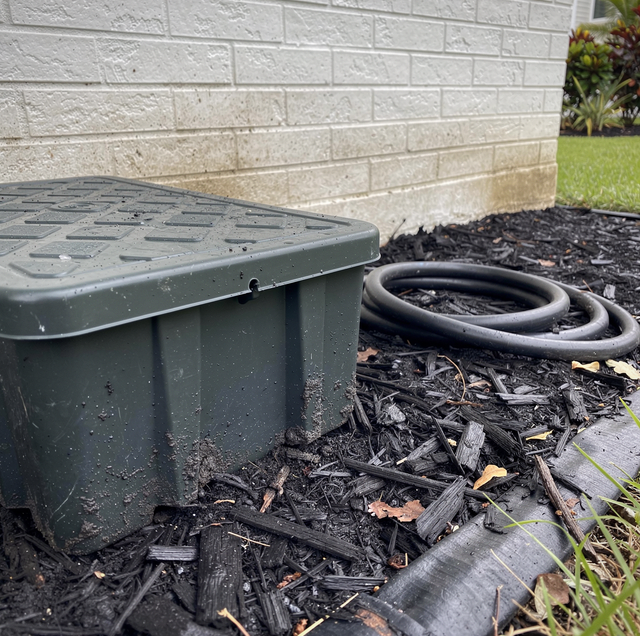
The species you're most likely picturing when you say "roach" outdoors in Florida, the American cockroach and the smokybrown cockroach, both commonly nicknamed palmetto bugs, live primarily outside your home rather than inside it. Their harborage is below grade and in your landscaping: mulch beds, irrigation valve boxes, woodpiles, and the underside of AC condensate lines.
Storm drain and irrigation box harborage: This below-grade infrastructure retains moisture and stays cooler than open air, making it prime real estate for outdoor roach populations for most of the year. A sustained stretch of heavy rain raises the local water table enough to flood that harborage, and a flooded storm drain vault or waterlogged valve box gives a roach two options: stay submerged or move. They move, typically upward and toward the nearest dry vertical surface, which is often your home's exterior wall, a garage door track, or a soffit edge.
This is why the earliest wave of outdoor-roach pressure tends to build as sustained rain becomes more frequent, rather than at the single hottest point of the year. Heat alone doesn't flood a valve box. Rain does.
Why Indoor Infestations Show Up Later
The German cockroach behaves nothing like its outdoor cousins. It doesn't live in your mulch or your storm drains: it lives inside your structure, in crack-and-crevice harborage behind a dishwasher, under a sink cabinet toe-kick, or inside a motor housing where warmth and a food source sit close together. A German roach colony also grows differently. It compounds. A handful of roaches you might not even notice in early spring can, given consistent warmth, become a population large enough to spot by late summer, simply because each generation adds to the one before it faster than most homeowners expect.
That growth curve is the reason an indoor infestation tends to become a visible problem, and a phone call, later in the warm season than the outdoor pressure wave described above. The colony didn't suddenly appear. It was there earlier, small enough to stay hidden in crack-and-crevice spaces, and it took the warm months to become obvious to you.
The Lower-Pressure Window: What the Cooler, Drier Months Are Good For
South Florida's dry season, the stretch of the year with less sustained rainfall and cooler nights, isn't a time when roach pressure hits zero for you. It's a time when both mechanisms above run more slowly: less flooding to push outdoor harborage toward your structure and slower colony growth indoors. That combination makes the dry season a real lower-pressure window, and treating outdoor harborage and indoor crack-and-crevice spots during it means getting ahead of both waves before they build, rather than catching up once they're already visible in your home.
Even so, waiting for the slow months isn't itself a strategy in a climate with no true off-season. Activity never drops to zero, and an unusually wet or warm stretch can arrive outside the typical pattern. A consistent service cadence that doesn't pause during the slower months is what catches whichever pressure, outdoor or indoor, happens to be building at the time.
Frequently Asked Questions
South Florida does see occasional overnight lows in the low-to-mid 40s during the cooler months, but that's rarely low enough or long enough to kill an established outdoor colony. American and smoky brown roaches retreat deeper into harborage, such as storm drain vaults, irrigation valve boxes, and tree root systems, where soil and buried infrastructure retain heat far longer than open air does. A hard freeze that actually resets a population outdoors is a temperate-climate event, not something this region experiences.
Not in the same way. A drop into the 50s or 60s slows an outdoor roach down rather than sending it looking for a heated space, and there's no roach equivalent of the seasonal denning behavior that pushes a roof rat toward a soffit line. What actually moves an outdoor roach toward your walls is a change in its harborage: water filling a valve box, or the top few inches of mulch drying out far enough that the humid layer underneath disappears. Either one can happen in any month of the year.
Often, yes. When outdoor movement is already low, a roach you spot indoors is less likely to have simply wandered in and more likely to indicate harborage already established inside, commonly near your water heater, a dishwasher's motor compartment, or in an AC closet where condensate keeps the air humid. That distinction changes where an inspection should start.
It can flatten the pattern considerably. A dry season only reduces outdoor harborage moisture if the ground actually dries out, and an irrigation system running on a fixed schedule keeps mulch beds, valve boxes, and the soil under ground cover damp regardless of rainfall. A well-watered lawn, or a bed sitting downhill of a neighbor's overspray, can hold steadier year-round American and smokybrown activity than the rainfall pattern alone would predict, which is part of why two houses on the same street don't always see the same thing in the same month.
Timing changes what a treatment is getting ahead of, not whether it works. Gel bait paired with an IGR, an insect growth regulator, is most effective against an indoor colony before it starts producing viable egg cases in volume, so treating during a lower-pressure stretch interrupts the reproduction curve before a warm-season growth spike takes hold. Waiting until the visible peak means treating a larger, more established colony instead of a smaller one.
Yes, the shape of the spike tells you rain caused it. A flooded-harborage event produces a cluster of sightings that begins within a day or two of the ground saturating and tapers off once it drains, spanning a few days rather than weeks. Activity that starts during a wet stretch and then holds at the same level long after everything has dried out isn't the storm at all; that's an indoor population you noticed because the weather had you looking.
None of this makes the pattern you're noticing a mystery. It's the same weather-and-moisture mechanism that drives roach activity everywhere else, just compressed into a climate that rarely lets any of it fully rest. Reading the pattern has less to do with marking a month on a calendar and more to do with recognizing which pressure, outdoor or indoor, is building around your house at a given point, and treating the source before it turns into the kind of problem you can't ignore.
Schedule a cockroach inspection — get ahead of whichever pressure wave is building. Buggify Pest Solutions serves Boca Raton, West Boca, and communities across Palm Beach and northern Broward. Call Tyler: (561) 672-0200.
