

Spiders in Florida: Why Activity Peaks Every Year
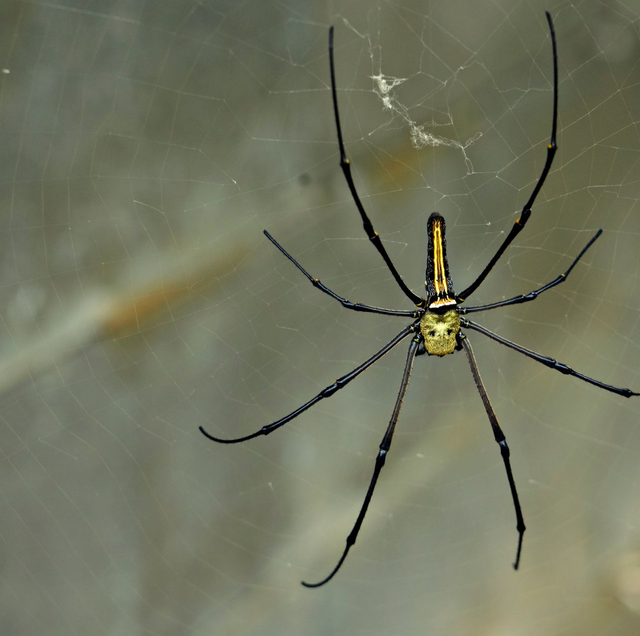
Quick Answer: Spider activity in South Florida builds every year as insects multiply through the warm months, then peaks in late summer into fall. The state's warmth keeps spiders active year-round, so the climb is a matter of degree, not an on-off switch.
Ask a handful of South Florida homeowners when they notice the most spiderwebs and most will point to roughly the same stretch of the calendar: the lanai screen that had one small web in June somehow has four by September, orb weavers seem to double in size overnight, and a corner of the garage nobody visits collects a new egg sac before you've dealt with the last one. It feels sudden, but it isn't. It's the tail end of a buildup that started months earlier and repeats on a schedule almost as reliable as the rain.
That pattern is worth understanding on its own terms, separate from any single week's weather. Spiders don't wake up one August morning and decide to get busy. They're tracking something else entirely, and once you know what it is, the yearly swing in web activity around a South Florida home stops looking random and starts looking like exactly what it is: a predictable, repeating cycle tied to the insects spiders eat.
What's Actually Driving the Climb
A spider builds a web where the food is, and the food supply itself follows a curve. Flying and crawling insects, moths, small flies, mosquitoes, and the general background hum of prey steadily increase in number across the warm months as generation after generation breeds in the heat and humidity. By the time a South Florida summer has run its course, the insect population feeding into any given yard is at its largest for the year, and spiders that have spent months maturing on that same supply are near full adult size and spinning their biggest, most visible webs. Web-building species respond directly to how much prey is moving through the air around them, so more insects almost always means more silk.
More prey, bigger webs: An orb weaver spinning a web to catch a handful of small moths a night builds something modest; the same spider working a yard thick with late-season insect activity spins something several times the size, and it shows.
Why This Isn't a Summer-Only or Fall-Only Story
It's tempting to file this under "fall spiders" or "summer bugs," but neither label fits South Florida cleanly, and treating it as a one-season event misses how the region actually works. Cooler snaps that would freeze insect life to a standstill farther north barely register here. Humidity stays high enough that professional pest residuals tend to break down within roughly three to four weeks even in the cooler months, which is itself a sign of how little the climate actually slows down. Insects don't disappear in January the way they do in a state with a hard winter; they just breed at a slower pace. Spiders track that same rhythm, staying active and building webs in every month of the year, just at a lower baseline than the late-summer-into-fall peak.
That's the real shape of it: not a switch that flips from "no spiders" to "spider season" and back, but a curve that rises through the warm months, tops out as prey numbers peak, and eases back down without ever bottoming out. A homeowner checking the eaves in February will still find webs. There just won't be as many, and they won't be rebuilt as fast, as the ones that show up when the cycle is climbing toward its yearly high.
The Spiders Behind the Webs
Two groups account for most of what shows up around a South Florida house during the climb. Orb weavers, the large, brightly patterned spiders that spin the classic wheel-shaped web across a porch light or between two shrubs, are the most visible because their webs are built to be seen: wide, symmetrical, often anchored overnight in a spot that was clear the evening before. They're drawn to exterior lighting because that's where the flying insects concentrate, and a lanai or entryway light left on through the night is effectively an invitation.
Brown widows are the second group, and they behave almost nothing like an orb weaver. Instead of a wide open web, a brown widow builds a messy, low, irregular tangle wherever a tight, shaded gap gives her something to brace against: a loose downspout bracket, a stack of stored planters, the underside of a window ledge, a coiled length of garden hose. They're far less visible than an orb weaver's showpiece web, which is part of why an egg sac in one of those spots often goes unnoticed until there are several. Both groups are established, common, and active in South Florida year-round; what changes with the season is how much prey is available to support their numbers, not whether they're present at all.
A handful of new webs over a week or two is the normal seasonal climb. Several fresh webs in one day, or a web rebuilt the same day it's cleared, signals a population already outpacing what's typical for the time of year.
Egg Sacs Are the Part Most Homeowners Miss
The visible webs get the attention, but the egg sacs are where the population actually compounds. As adult spiders reach full size on a season's worth of prey, mating and egg-laying follow, and a single orb weaver or widow can leave behind an egg sac holding well over a hundred eggs. South Florida's climate doesn't hold that reproduction to a single seasonal trigger the way a colder state would: egg sacs are produced and hatch on a rolling basis across the whole year, tracking the same year-round activity as the adult spiders themselves. What changes at the late-summer-into-fall peak isn't a one-time hatch; it's volume. More prey supports more spiders reaching maturity at once, and more maturing spiders means more egg sacs being produced in the same stretch of weeks, which is why the visible jump in webs and the jump in egg-laying happen together rather than one setting up the other months later. A yard that goes into that peak with unmanaged harborage, thick mulch beds, overgrown shrub lines against the house, screens with gaps, carries that compounding forward into the following months instead of it resetting once the weather cools.
Getting Ahead of a Cycle Instead of Reacting to It
Because the underlying driver is prey volume rather than a single trigger you can spray away, one-time web removal solves almost nothing. Clearing every visible web on a Tuesday does not affect the insect population feeding the next batch, and it does nothing to address egg sacs already tucked into a screen track or a stack of stored planters. That's the mismatch at the center of the yearly climb: removing a web clears one day's evidence, but the population producing it keeps compounding underneath as long as the prey supply and the shelter sites stay untouched.
Reducing the food supply: Exterior lighting is one of the biggest levers a homeowner actually controls, since a warmer-spectrum bulb attracts noticeably fewer flying insects overnight than a bright white or blue-toned one, which in turn gives orb weavers less reason to set up on that fixture in the first place.
That's also why spider pressure here tracks better as an ongoing cycle than a one-time call once webs get bad. South Florida's insect populations, and the spiders following them, don't take an off-season, so a single knockdown only addresses what's visible that day, not the prey supply or the harborage feeding the next batch.
Frequently Asked Questions
The overall shape holds, but the intensity shifts with the year's rainfall and insect activity. A wetter, buggier stretch produces a noticeably bigger spider showing than a drier one, since more standing moisture and vegetation growth support more prey insects feeding into the cycle. Entomologists generally describe this as weather-modulated rather than fixed to a specific date, which is why the peak can feel earlier or later, or heavier or lighter, from one year to the next even though the underlying late-summer-into-fall pattern repeats.
No. The banana spider, or golden silk orb weaver, is the species most often mistaken for something threatening because of its size, but it's not aggressive and its bite, on the rare occasion one happens, is typically compared to a bee sting for most people rather than anything medically serious. The far greater risk in a yard with heavy web activity is usually a brown widow tucked into a low, sheltered gap rather than the large, obvious weaver spinning in plain sight.
They're useful predators in most cases. A single orb weaver can take in dozens of flying insects over the life of one web, and that includes mosquitoes and moths that would otherwise be adding to the yard's overall insect pressure. The tradeoff most homeowners want isn't "zero spiders"; it's fewer webs in walkways, entryways, and storage areas while the outdoor population keeps doing its job at a distance from the house, which is the actual goal of source reduction rather than blanket spraying.
Airflow accounts for more of the gap than most people expect. Still air near dense shrubs or a tucked-in lanai corner traps flying insects the way an open, breezy stretch of yard doesn't, so a poorly ventilated corner can carry several times the web density of a spot a few feet away that stays breezy. Exterior lighting layers on top of that same effect, which is why the heaviest webs usually sit where both conditions overlap.
Usually not on its own. Most of the species active in South Florida, orb weavers and brown widows included, build and maintain their webs outdoors and only wander inside as occasional strays, often ones that follow prey through a gap around a door or window rather than ones that establish a web indoors. Repeated indoor sightings in the same room over several weeks are a better signal of an actual entry point than a single spider found once, and that pattern is worth mentioning to whoever inspects the exterior.
Leave the removal to a method that contains it rather than knocking it loose, since disturbing a sac can scatter eggs into a gap where they're harder to fully clear. A sealed, sturdy container works better than a broom or a hose for the same reason. Locations near HVAC lines, dryer vents, and other unsealed penetrations are common overlooked spots for a sac to sit through a full season unnoticed, which is part of why a full exterior check catches more than checking the obvious spots alone.
Seeing more webs than usual around the eaves or lanai — get the source addressed, not just the webs cleared. Buggify Pest Solutions serves Boca Raton, West Boca, and communities across Palm Beach and northern Broward. Call Tyler: (561) 672-0200.
