

Roach Infestation Signs: The Order They Actually Appear In
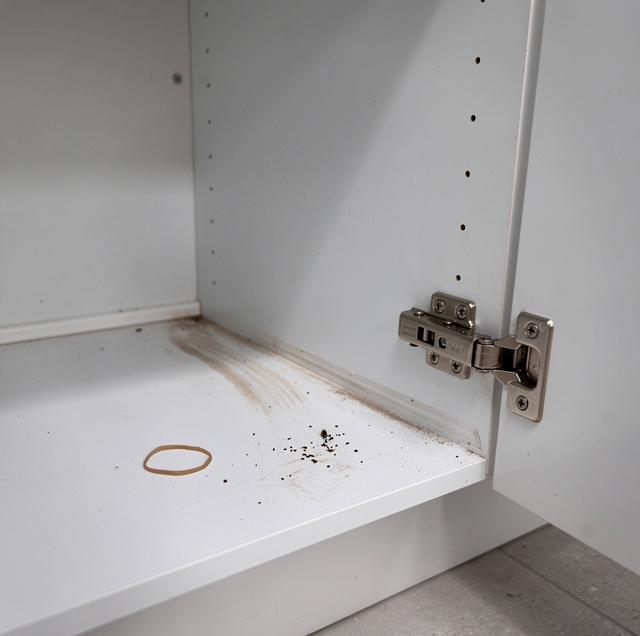
Most homeowners assume the first sign of a roach problem is a roach. It rarely is. A cockroach population builds in stages, and the stage you actually notice, a live insect crossing the kitchen floor at night, sits near the end of that sequence, not the start. Smear marks in a cabinet corner and a handful of dropping specks behind the toe-kick usually show up weeks before that sighting, not after it. Understanding the real order matters because it changes what a given piece of evidence tells you: a live sighting isn't the first crack in the door; it's a sign the population has already been established long enough to get crowded.
Quick Answer: Smear marks and dropping clusters appear first, often weeks before a live sighting. Egg cases and shed skins follow as the population breeds. A daytime sighting is usually the last sign to appear, not the first.
Why the Order Runs Backward From What You'd Expect
Cockroaches are nocturnal and photophobic, meaning they actively avoid light and stay tucked into harborage, a cabinet hinge, a wall void, the gap behind an appliance, for nearly all of daylight hours. A small, newly established population can run its entire life cycle out of sight: feeding briefly after dark, retreating before sunrise, and leaving behind only physical residue for a homeowner to find later. That residue accumulates continuously from the moment the harborage is occupied, while a visual sighting depends on something else entirely: enough roaches competing for the same hiding space that some get pushed out into view, including into daylight hours they would otherwise avoid.
That's the mechanism behind the order. Evidence of presence- droppings, smears, cast skins, an occasional odor- builds on a population curve that starts small and grows quietly. A live sighting depends on a threshold: enough individuals sharing the same cracks that overcrowding, not simple bad luck, puts one where you can see it. The evidence almost always arrives first because it doesn't require crossing that threshold.
The Sequence, Sign by Sign
The table below lines up common signs with roughly how early each one appears relative to a live daytime sighting, based on what actually produces each kind of evidence.
| Sign | How Early It Typically Appears | What It Means |
|---|---|---|
| Smear marks and small dropping clusters in cabinet corners, hinge lines, or behind appliances | Earliest; often visible weeks before any live sighting | A harborage is active and occupied; the population is still small enough to stay fully hidden |
| Egg cases (oothecae), loose or cemented in a crack or void | Early, often overlapping with the first droppings | Breeding is underway; the population is about to expand through one or more nymph generations |
| Shed skins from molting nymphs, translucent and papery, in the same voids | Early to mid-stage, once the first generation starts maturing | Multiple generations are now present; this is no longer a single founding adult or pair |
| A faint musty or oily odor concentrated near the harborage | Mid to late; only detectable once density climbs | The population has grown large enough to be smelled, not just found in physical traces |
| A live roach spotted at night with a flashlight | Late | Confirms what the physical evidence already indicated; not a new development on its own |
| A live roach seen crossing the floor in daylight | Latest | Harborage crowding has pushed activity outside the normal nocturnal window |
What Each Early Sign Is Actually Telling You
Dropping patterns and egg case placement each carry more diagnostic detail than a glance suggests, down to the species involved and roughly how established the harborage is; reading that detail correctly is its own skill and its own set of clues to sort through. What matters for the sequence is simpler: both categories of evidence are typically the earliest physical traces a household finds, often the only sign present for a stretch of time before anything else shows up.
Shed skins tend to arrive on a similar early-to-mid timeline but for a different reason. A cockroach nymph doesn't reach adulthood in one step; it passes through several nymphal stages, molting and shedding its exoskeleton each time it advances. Cast skins measure elapsed time, not just presence: Finding them in a void means enough time has passed for at least one generation to work through part of that cycle, which puts you past a single stray adult and into an established, breeding population.
The odor comes later for a simple reason: it takes a meaningful concentration of insects, along with the residue and secretions that go with them, before the smell is strong enough for a person to register it while walking past a cabinet or opening a closet door. A household that catches a faint, musty note near a specific cupboard is usually smelling a population that has already been building for some time, not catching an early warning of one just getting started.
Why a Daytime Sighting Comes Last, Not First
A live roach out in the open during the day gets treated as the moment a problem "started," but the biology runs the other direction. Roaches avoid light because it exposes them to predators and dries them out faster than the humid, enclosed space of a harborage crack. A small population has no trouble staying inside that preference; there's enough hidden space for every individual, so nothing forces one into view. Daytime activity shows up specifically when that balance breaks: harborage space fills up faster than the population can spread into new cracks, and competition for the best spots pushes some individuals out during hours they would normally avoid entirely.
That's why a single daytime sighting deserves more attention than the same sighting at night, and why it's a late indicator rather than an early one. It isn't telling you roaches just arrived. It's telling you that the harborage behind that sighting has been supporting a population large enough to run out of room, which typically takes considerably longer than the single evening it takes to notice.
Using the Sequence While It's Still Early
The practical value of knowing the order isn't just correcting the assumption that a sighting marks day one. It changes how you use the evidence you already have. A cabinet corner with a scattering of specks and no live activity yet isn't a false alarm to dismiss until something bigger happens; it's the earliest and often most useful evidence you'll get, collected while the harborage is still small enough to be dealt with before it produces the later stages on this list. Waiting for a daytime sighting to take the smear marks seriously means waiting until the population has reached the stage where hiding space has already run out.
Frequently Asked Questions
Mainly German cockroaches, since they're the species most likely to breed indoors and build the enclosed, reused harborage this sequence describes. American and smokybrown roaches are outdoor-sourced foragers that wander in through gaps and entry points, including soffit-fascia gaps common on tile-roof homes across Boca Raton, Parkland, and West Boca, so a live sighting from one of those species can show up earlier in the timeline, sometimes before any droppings, because it's searching for food or moisture rather than establishing an indoor colony.
A German cockroach nymph typically molts six to seven times before reaching adulthood, so a single skin could be from one nymph passing through that spot once. Several skins accumulating in the same crack or void over time is the stronger signal, since it points to more than one individual completing part of that cycle in the same harborage rather than a single insect molting once and moving on.
Not as reliably. Heat and humidity spikes, like during an AC outage, can push roaches out of harborage during the day, even in smaller populations, since the crack they're hiding in gets too hot or too dry to tolerate. A daytime sighting during a known heat event is a weaker indicator of population size than the same sighting on an ordinary day with normal indoor conditions.
The odor comes from compounds released by glands on the roach's abdomen, used for aggregation and alarm signaling between individuals, combined with the buildup of droppings and shed material in an enclosed space. It tends to stay concentrated in the specific cabinet, closet, or void where the harborage is, rather than spreading evenly through a room, which is part of why it's often noticed only when that particular door or drawer is opened.
It can compress. A population re-establishing in a partially treated space, or moving into a gap that was missed during an earlier job, often has less available harborage to fill before crowding sets in, so a live sighting can appear closer behind the first droppings than it would in an untreated space. The physical evidence typically still arrives first; there's just less time between it and a sighting.
Frequent cleaning is the usual explanation. Daily vacuuming or wiping down cabinets removes droppings and can dislodge a loose egg case before anyone notices either, but it doesn't remove the roach itself or close off the harborage that produced it. A nighttime sighting with no visible physical evidence more often means the early signs are being cleaned away as fast as they appear, not that the population skipped a stage.
Reading the sequence instead of waiting for a sighting means catching the problem while the smear marks and a few scattered droppings are still the whole story, before crowding turns it into something you see crossing the floor.
Get the harborage identified before it reaches the crowding stage — early signs are easier to treat than an established population. Buggify Pest Solutions serves Boca Raton, West Boca, and communities across Palm Beach and northern Broward. Call Tyler: (561) 672-0200.
