

Found a Cockroach Egg Case? What It Reveals About the Infestation
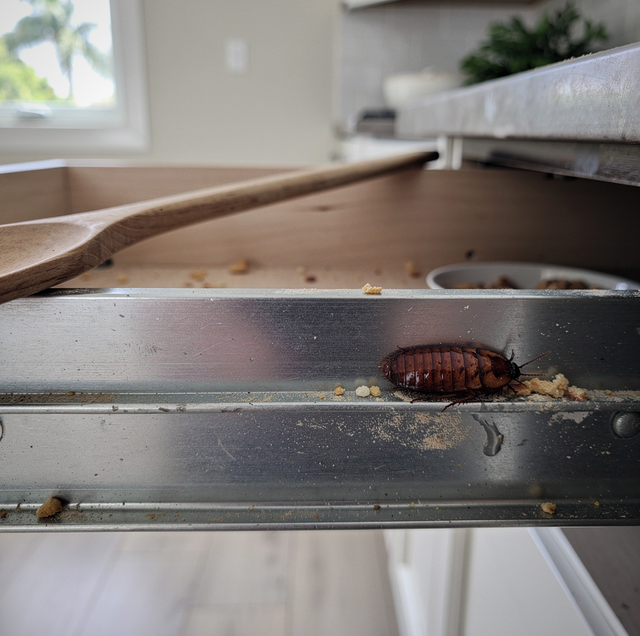
What an Ootheca Actually Is
Cockroaches don't lay individual eggs the way a fly or a beetle does. A female's body secretes a protein substance around a cluster of fertilized eggs, and that substance hardens into a single reddish-brown to blackish capsule called an ootheca. Inside, the eggs sit in two neat rows sharing a common wall, which is why most cases show fine ridges running along one edge: each ridge marks the seam between two adjoining eggs. The hardened shell does real work. It holds moisture in during a period when a bare egg would dry out fast in a dry void or an air-conditioned interior, and it gives the eggs a degree of physical protection that a loose cluster wouldn't have.
What differs by species isn't the basic construction. It's what the female does with the case after she produces it, and that behavioral difference is the single most useful thing you can read from where and how you found one.
Carried Versus Glued: The Difference That Makes a Case Readable
A German cockroach female keeps her ootheca attached to the tip of her abdomen for most of its development, carrying it with her through the harborage as she moves, feeds, and hides. She only drops or expels it in the final days before the eggs are ready to hatch. An American or smoky brown female does the opposite: she cements the case to a surface within hours of producing it. She walks away, leaving it fixed in place for the full incubation period regardless of where she goes next.
That single difference in behavior is what turns a case you find into a diagnostic clue rather than just an ID exercise.
| Case Appearance | Carried or Glued | Where You're Likely to Find It | Species | What It Tells You About the Population |
|---|---|---|---|---|
| Reddish-brown to blackish, ridged capsule roughly a third of an inch long, sitting loose and unattached to any surface | Carried by the female until close to hatch, then dropped | Cabinet track, drawer runner, dishwasher toe-kick, behind a switch plate, an HVAC access panel — usually within a few feet of where it's found | German cockroach | The female was carrying it right up until recently; a loose case means you're standing close to an active indoor harborage, not just a wandering roach |
| Dark reddish-brown, capsule-shaped, cemented flat against a hard surface and won't move when nudged | Glued in place within hours of laying, then abandoned | Cardboard box seam, underside of a shelf, a utility closet, near a floor drain or exterior door threshold | American cockroach | Evidence of one laying visit from an outdoor-sourced roach; the adult that left it isn't necessarily still on that spot |
| Similar capsule shape, dark brown, wedged and glued into a rough or sheltered spot rather than sitting flat on an open surface | Glued, often to a rough or vertical surface, then abandoned | Soffit vents, attic rafters, gutter debris, bark near the roofline, tops of upper cabinets | Smokybrown cockroach | Points to an outdoor or attic-adjacent breeding source tied to the roofline, not an indoor colony |
| Empty capsule with a ragged split seam along one edge, sometimes with pale nymph fragments still inside | Already hatched, regardless of species | Wherever it was carried or glued when it split | Any of the above | A historical record, not current evidence — the batch it held has already emerged and dispersed |
If you vacuum a cabinet instead of leaving the case in place, a viable German ootheca can ride into the canister or bag intact and hatch there. Empty it into a sealed bag and take it outside the same day.
Why a Loose German Case Is the More Urgent Signal
The German cockroach is the species most likely to breed inside the structure itself, and its carrying behavior is what makes a loose case such a specific tell. Because the female keeps the ootheca attached to her body for nearly its entire development, you rarely find one sitting free on a shelf unless she dropped it close to hatch time, or unless it was knocked loose while she was still carrying it, which is rare. Either way, the case ending up loose and unattached, rather than tucked inside her, means the female herself was in that exact spot within roughly the last few days.
That narrows the search dramatically. A loose case on a kitchen cabinet track or behind a dishwasher's kick plate is telling you the harborage is that crack, not the cabinet three feet over. It's also why a professional response to a confirmed German cockroach problem relies on crack-and-crevice gel bait placed directly into harborage rather than a general surface spray, paired with an insect growth regulator that prevents the next generation from reaching reproductive maturity. Spraying the general area does little against a female tucked deep in a void; targeting the specific crack the case came from does.
What a Glued Case Means for American and Smokybrown Roaches
American and smoky brown cockroaches read differently because the females' behavior differs. She glues the case down almost immediately and moves on, so the case's location tells you where she laid it, not necessarily where she or her offspring are living now. Finding a cemented case near a floor drain, a laundry standpipe, or an exterior door threshold usually points to an American cockroach that entered from outside, most often through a plumbing penetration or a gap under a threshold, and treated the interior as a brief stop rather than a permanent home.
Smokybrown cases run the pattern differently again. This species is a strong flier and favors the roofline over ground-level entry points. Tile-roof construction across Boca Raton, Parkland, and West Boca creates soffit-fascia gaps and tile-edge penetrations that give a smokybrown roach a direct route from the canopy into the attic, and a glued case wedged into a soffit vent or gutter debris is consistent with that outdoor-to-attic pattern rather than a kitchen-level problem. A glued case near an entry point, with no droppings or live sightings elsewhere: This combination usually means an outdoor population is periodically finding its way in, not that it has established an indoor harborage yet.
Reading the Case as One Piece of Evidence
A single ootheca, on its own, tells you a lot about timing and likely species, but it's still one data point. Pair it with what else is around: fresh droppings clustered nearby point toward an established harborage, while an isolated case with nothing else in the area is closer to a one-time visitor. If you can leave the case where you found it rather than disturbing the site, its exact position, loose or fixed, flat or angled, indoors or at a roofline gap, stays available as information a technician can use to confirm the source instead of having to reconstruct it from a vague description.
The case itself isn't the infestation. It's a record of a female cockroach doing what her species does, left behind in a spot that tells you more about the how and where than the insect ever will on its own.
Frequently Asked Questions
It depends on the species. A German cockroach ootheca typically holds 30 to 40 eggs, more than most other species produce in a single case, which is part of why German cockroach populations build up faster than American or smoky brown ones under the same starting conditions. An American cockroach case usually holds around 16.
At room temperature, a German cockroach ootheca generally hatches in about 30 days from the time it was produced, while an American cockroach case can take closer to 56 days under the same conditions. Cooler, less humid conditions stretch both timelines out further, so an older case sitting in an air-conditioned interior may take noticeably longer than one left outdoors.
Usually not reliably. The hardened protein shell that protects the eggs from drying out also limits how far a surface-contact insecticide can penetrate, which is a large part of why professional German cockroach treatment targets the adult female and the harborage itself, using bait and an IGR, rather than treating cases directly wherever they're spotted.
Because American and smokybrown females glue their cases to hard surfaces and move on, a case can travel into a home attached to used furniture, appliances, moving boxes, or even luggage from a trip, arriving fully formed with no local harborage behind it yet. That's a different situation from a case found already inside a cabinet or wall void, so mention where the item came from when you describe the find to a technician.
No. Brown-banded cockroaches also turn up here, and their oothecae look different from the other three: smaller, under a quarter inch, tan rather than reddish-brown, and typically glued close together in small clusters on ceilings, upper walls, or furniture in warm rooms, since this species favors temperatures above roughly 80 degrees rather than the damp, ground-level spots German and American roaches prefer.
Not necessarily. In a shared-wall or shared-plumbing-chase community, a single American or smokybrown case near a common wall or utility line can be evidence of a neighboring unit's population using the same penetration to move between units, rather than proof that breeding is happening inside your own walls. A loose German case found deep inside your own cabinetry is a much stronger indoor signal than one glued case near a shared boundary.
Get the species and source confirmed before it spreads further — a technician can trace an egg case back to the harborage that produced it. Buggify Pest Solutions serves Boca Raton, West Boca, and communities across Palm Beach and northern Broward. Call Tyler: (561) 672-0200.
