

Roaches in Your Apartment? Why the Real Source May Be Next Door
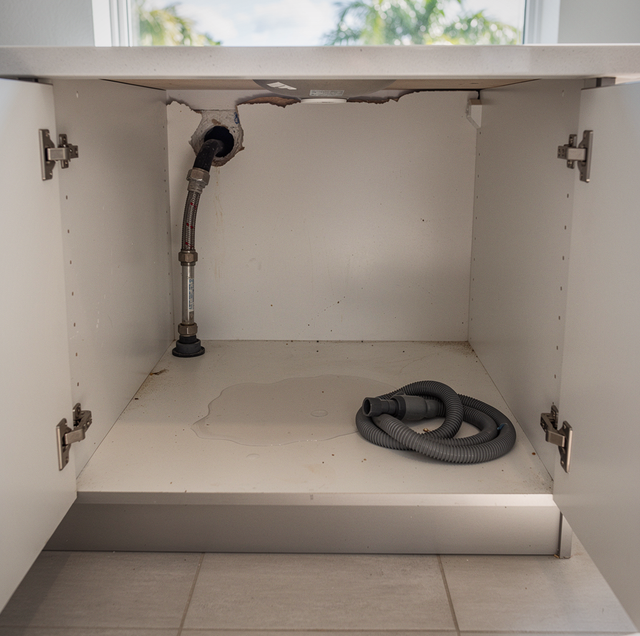
Quick Answer: Treating your apartment helps, but German roaches move through shared plumbing chases and wall voids. If neighboring units still harbor an active colony, expect activity to persist until the shared pathway is addressed as well.
If you live in a duplex, a garden-style apartment building, or an attached townhome, the roaches in your kitchen are not necessarily a verdict on your own housekeeping. German cockroaches, the small tan roach behind almost every indoor infestation in South Florida, do not stop at the wall where your unit ends. They follow moisture, warmth, and tight, dark spaces, and in attached housing, those things run along a continuous path behind more than one unit. Before you assume the problem starts and ends inside your four walls, it helps to read the pattern of where and when you are seeing activity, because that pattern tells you something specific about where the colony is really living.
What the Pattern in Your Unit Is Telling You
Not every roach sighting in an attached unit means the same thing. The scenario you are actually living in points to a different, likely source and a different, realistic outcome from treatment.
| What you're seeing | Likely explanation | What it means for you |
|---|---|---|
| Activity only in your unit, worst near the kitchen sink, dishwasher, or bathroom | A self-contained harborage inside your own walls or under a fixture, not connected to a neighbor's colony | Standard crack-and-crevice treatment of your unit alone is likely to hold |
| Multiple units along the same vertical plumbing stack seeing roaches at roughly the same time | A shared plumbing chase or wall void running between units is carrying the population | Your unit's treatment will suppress activity but may not eliminate it until the shared chase is treated too |
| A sudden spike right after a neighboring unit goes vacant, gets renovated, or has its own pest treatment | A displaced colony pushed out of disturbed harborage, scattering into adjoining units looking for new cover | Usually temporary; use the window to seal your entry points, and expect it to settle over the following weeks |
| Roaches concentrated along one specific shared wall, near an outlet, or below a soffit run, and nowhere else | A point-source entry through a wall penetration, electrical box, or soffit gap on that one wall | Sealing that specific entry point does as much work as the treatment itself |
| Roaches keep coming back weeks after your unit was treated, at a steady low level rather than a spike | An active colony in an adjoining unit or a shared common area is continuing to reseed yours | Your unit's treatment has a real ceiling here; a building-wide or multi-unit approach reaches what single-unit treatment cannot |
How Roaches Actually Move Between Attached Units
German cockroaches are thigmotropic, meaning they seek out surfaces that press against their body on more than one side: the inside of a wall void, a plumbing chase, the gap behind a baseboard. In a single-family house, those voids mostly dead-end. In the attached construction, many of them do not. A plumbing chase is the vertical utility shaft that carries a building's water supply and drain-waste-vent stack from the slab up through each floor, and it is typically shared by the units stacked on that same line. Electricians and plumbers cut the penetrations for outlets, switch boxes, and pipe runs through common walls, and those penetrations are rarely sealed airtight once the drywall goes back up. A gap behind an outlet plate, a dryer vent penetration, or an unsealed cable line is often wide enough: an adult German roach is roughly a half-inch long. It flattens its body enough to use the gap a cover plate leaves around an outlet box, an opening almost nobody reads as an opening at all.
Add a shared soffit run above a dropped kitchen or bathroom ceiling, common in garden-style and mid-rise apartment construction, and you have a second horizontal path connecting units that never touch at the wall. Roaches aggregate along these paths using a fecal pheromone trail, the same chemical signal that produces a visible dark speckling pattern where a colony has been active for a while. That aggregation behavior is also why activity tends to show up first at the edges: the outlet on the shared wall, the cabinet nearest the plumbing chase, the corner under the sink, rather than spread evenly across the unit.
What You Can Control From Inside Your Own Walls
None of this means your own actions do not matter. A resident who addresses the interior side of a shared-wall problem changes the outcome in a real way, even when the source is partly outside their control.
Seal the penetrations you can reach: Caulk around outlet and switch plates on shared walls, the gap where a dishwasher or garbage disposal line enters the cabinet, and any visible gap around a dryer vent or cable line.
Remove the moisture that draws them in: A slow drip under the kitchen sink, a leaking supply line to the icemaker, or standing water in a drain pan gives a colony a reason to stay even after treatment starts.
Keep food sources locked down: Pet food left out overnight, an unsealed cereal box, or grease buildup behind a stove all read as an open harborage to a roach that just crossed the wall from a treated unit next door.
Ask what building-wide service is already in place: Many attached-housing communities already have pest service for common areas and building exteriors. Asking whether the existing service reaches shared plumbing chases or whether a coordinated multi-unit visit is possible is a practical question to raise, separate from anything your own unit's technician does.
Where a Single Unit's Treatment Reaches Its Limit
A technician who treats only your unit can do real, lasting work on everything inside your walls: locating harborage, applying gel bait to the crack-and-crevice points roaches travel through, and using an insect growth regulator to disrupt the colony's reproduction over several weeks. What that same technician cannot do is walk into your neighbor's apartment and treat it. If the pattern in the table above points to a shared plumbing chase, an active colony next door, or a common soffit run still carrying activity, your unit's treatment has a real ceiling, not a failure of the treatment itself. That is a limit of the geometry, not a sign anything was done wrong on your side of the wall.
The honest answer is that a single treated unit inside a larger, untreated harborage will usually see the roach count drop and then plateau rather than reach zero, because the source keeps reseeding it. Knowing that ahead of time changes what you should expect and ask for: track where you see activity relative to shared walls and plumbing lines, share that pattern with whoever is treating your unit, and mention it to whoever coordinates building maintenance if it extends beyond your own four walls. That is the honest scope of what one resident, and one unit's treatment, can actually accomplish.
Frequently Asked Questions
Yes, in a specific way: ground-floor units sit closer to slab-level plumbing penetrations and are more exposed to irrigation-driven moisture at the foundation, while upper-floor units in a stacked building tend to pick up activity through the vertical riser connecting them to the units below, so the entry point to look at is different depending on which floor you're on.
Yes, and it's worth fixing yourself: shut off power to that circuit at the breaker, pull the cover plate, and run a bead of paintable acrylic latex caulk around the box, not expanding foam, which can swell against the wiring and isn't rated for use inside an electrical box. A few minutes of work closes a gap a roach can use every day it's open.
It can, and in attached housing it can make it your neighbor's problem too. A total-release fogger scatters the surviving colony deeper into the shared wall void and toward adjoining units rather than reaching the harborage, and the repellent residue it leaves behind can steer roaches away from gel bait placements for weeks afterward, working against the treatment your technician is trying to establish.
Gel bait and an insect growth regulator do not kill on contact the way a fogger does. The IGR interrupts the molting cycle across roughly two to three generations, so the decline is gradual: sightings should be noticeably down within the first few weeks, with the population continuing to fall as fewer nymphs reach reproductive age, rather than an immediate drop to zero.
Partly. A non-repellent residual placed into the shared-wall penetrations, rather than a repellent one, is the version that does not push a neighbor's population back the other way, since repellents at a shared boundary tend to redirect a colony instead of reducing it. Copper mesh packed into an oversized pipe or cable penetration before it is sealed adds a physical stop that sealant alone does not, because a roach can work past a soft bead over time but not past packed mesh. Neither substitutes for the source being treated, but both make the crossing harder.
It can help, but keep it factual and low-key: mentioning where you're seeing activity relative to the shared wall gives them, and your own technician, useful information to pinpoint a shared source faster. You're not in a position to know or dictate what happens in their unit, only to share your own observations and ask questions on your own end.
One thing worth doing while any of this is in motion: keep a dated note of where you see activity, down to which cabinet and which wall, for a few weeks. A single sighting is an anecdote and easy to wave off, but four entries clustered on one side of a kitchen over three weeks is a map, and it is the difference between a technician searching your unit and a technician walking straight to the penetration.
Schedule a cockroach inspection — Tyler will trace where German roach activity is entering your unit and treat the harborage at its source rather than just what you can see. Buggify Pest Solutions serves Boca Raton, West Boca, and communities across Palm Beach and northern Broward. Call Tyler: (561) 672-0200.
