

Smokybrown Roaches Live at the Roofline, Not the Kitchen
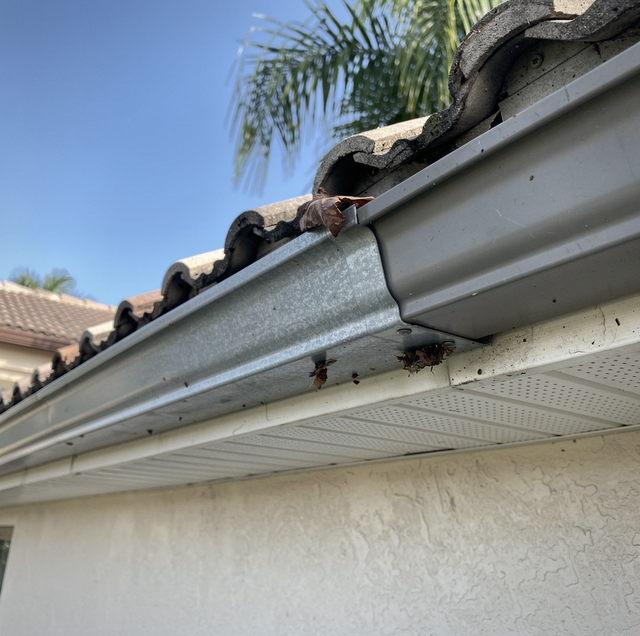
You spot it at dusk: a large, dark roach clinging to the soffit near your gutter, or dropping out of a palm frond onto the lanai screen. It's bigger than anything you've seen indoors, and unlike the small roaches that vanish into a crack the second the kitchen light comes on, this one takes flight. If your first assumption is that a roach at roof height means an infestation is working its way down into the house, the biology says otherwise. The smokybrown cockroach doesn't live in your kitchen. It lives above it, and understanding why changes what that sighting actually tells you.
What Is a Smokybrown Cockroach
The smokybrown cockroach (Periplaneta fuliginosa) is one of the largest roach species you'll encounter in South Florida, typically 1 to 1.5 inches long as an adult, with a uniform, glossy mahogany-to-black body and no pale collar or banding behind the head. That solid dark color and glossy sheen are the first tell that separates it from the roach most homeowners picture when they hear "cockroach."
The German cockroach, the species responsible for the vast majority of true indoor infestations, is a different animal entirely: half the size, tan with two dark racing stripes behind the head, and winged but effectively grounded, running for a crack rather than taking off. German roaches thrive in the warm, food-adjacent moisture of a kitchen or bathroom, where they can complete a generation in roughly two months indoors and build a colony numbering in the hundreds behind an appliance. The smoky brown is built for an entirely different environment, and its body reflects that, from the wings down.
Wings that extend past the abdomen: Unlike the German roach's shorter wings, a smokybrown's wings run past the tip of its body, which is part of what gets it airborne at all.
Bark and canopy harborage rather than plumbing-line moisture: It seeks out loose bark, tree cavities, gutter debris, and damp leaf litter, spots that hold humidity on their own without the food residue and leak-fed water a German roach depends on.
Why It Flies When Kitchen Roaches Don't
Flight isn't incidental to this species; it's central to how it finds habitat. A smoky brown roach loses body moisture through its exoskeleton faster than most roaches of its size, which makes any long crawl across dry, exposed ground a real risk to it. Flight is how it sidesteps that: short, gliding hops launched from a canopy branch or a gutter edge move an adult between moist microhabitats in seconds instead of the minutes a ground-level route would take, and it lands with the humidity of the new site already close by.
That's also why sightings cluster at dusk and after dark. Smokybrowns are most active in the evening, when humidity rises and temperatures drop, which is exactly the window that suits a fast-drying insect looking to relocate. A German roach has no equivalent behavior and no need for one: indoor harborage behind a dishwasher or under a sink stays humid and food-rich year-round, so nothing about that life calls for long-range moisture-seeking.
A smokybrown roach on a lit porch or screened lanai after dark is usually just drawn to the light while moving between the tree canopy and a nearby moist harborage, not colonizing your house.
The Canopy-to-Gutter Habitat Loop
Given how fast a smokybrown loses moisture, it needs a habitat that stays humid without any help from a kitchen faucet or a leaking pipe. That's the canopy, the gutter line, and the leaf litter under it, not the inside of a home.
Live oaks, palms, and other tree cover across South Florida yards hold moisture in bark crevices, tree holes, and Spanish moss long after a storm has passed. Add mulch beds, gutters that collect wet leaf debris, and the shaded, humid interior of an attic void behind a soffit vent, and you have a chain of habitat that never requires the roach to come down to ground level or enter living space at all. A smokybrown colony can live out its entire life cycle in that raised, outdoor loop: tree canopy to gutter, gutter to soffit gap, soffit gap to attic insulation, and back out again to forage.
This is the mechanism that separates a smokybrown problem from a German roach problem in a single sentence: German roaches move toward your food and plumbing; smokybrowns move toward moisture and elevation, and your roofline happens to offer more of both than your countertop does.
What a Roofline or Attic-Vent Sighting Actually Means
Seeing a smoky brown at gutter height, on a soffit vent screen, or dead on the attic floor after an inspection doesn't mean the same thing as a roach under the stove would. It means the outdoor population near your house has grown large enough, or the harborage close enough to the structure, that individuals are now using the attic void or soffit cavity as an extension of their canopy habitat. That's a proximity and entry-point signal, not evidence of an indoor colony.
The distinction matters for what happens next. An indoor German roach sighting calls for locating baiting sites in cabinets and behind appliances. A smoky brown sighting calls for tracing the outdoor harborage, gutters, mulch beds, woodpiles, tree cover near the roofline, and identifying where the roofline itself is giving that population a way into the structure's void spaces rather than just its exterior surfaces.
Occasional wanderers do turn up inside a house, usually one at a time, often near a door left open at dusk or a gap around a utility penetration. Those are individuals that flew in and, without the humidity they need, will not last long, which is a different finding from a cluster of German roaches behind a trash can.
How the Roofline Becomes the Entry Point
Across Boca Raton, Parkland, and West Boca, most homes are built with tile roofing, and tile-roof construction creates a specific set of gaps that a flying, elevation-seeking insect is well positioned to exploit: soffit-fascia joints where the roofline meets the wall, tile-edge penetrations along the roof deck, and the openings around plumbing vent stacks that pass up through the attic. None of those gaps exist because of anything a homeowner did wrong. They're a byproduct of how tile roofs are built and how they settle and shift over years of Florida heat cycling.
A smokybrown doesn't need to squeeze through a door threshold the way an ant column might. It flies to the roofline, lands near a gap it can sense is drier or more sheltered than open air, and walks the last few inches into the void behind the soffit. From there, the attic space functions as an extension of the tree-hole habitat it would otherwise use, dark, raised, and buffered from direct sun.
Roofline work carries its own risk. Wet or aged barrel tile shifts underfoot, and reaching blind into a soffit gap can put your hand into a paper wasp nest, since wasps favor those same sheltered corners. Work from a ladder.
Closing those specific gaps is exclusion work, not a roach treatment, and it relies on the same soffit-fascia and tile-edge geometry addressed on the rodent-exclusion side of pest control, using copper mesh and polyurethane sealant applied by a technician rather than a caulk gun project a homeowner tackles solo. The roach side of the response is different: it targets the population using that gap as an access point, not the gap itself.
Aiming the Treatment at the Canopy and Gutter Line
The work starts where the population actually sits, the same outdoor-source logic that applies to American cockroaches, another large, moisture-dependent species: identify the harborage, then apply a targeted crack-and-crevice treatment along the entry geometry itself, the soffit line, the gutter run, the base of exterior lighting, using professional-grade residuals and an insect growth regulator that reaches the next generation as well as what is active today.
Indoor gel baiting, the standard German roach tool, has limited value against a species that rarely establishes an indoor colony in the first place. The more useful indoor step is a lighter perimeter application at ground-level entry points, doors, garage thresholds, utility penetrations, aimed at the occasional wanderer.
What Turns a Sighting Into Something Worth Acting On
One smoky brown on a lit lanai in the evening is close to background noise here. What changes the picture is a pattern: the same soffit run producing sightings on consecutive evenings, or activity that persists through a dry stretch, when outdoor harborage should be at its least comfortable, and the population has the least reason to press toward the house. The place to settle it is the attic side of that soffit run, checked with a light after a rain, where ridged cylindrical droppings and shed skins caught in the insulation separate a population that is using the void from individuals that only ever landed on the outside of the house.
Frequently Asked Questions
They aren't aggressive and won't bite. Still, a female smokybrown carries her egg case, called an ootheca, at the tip of her abdomen for about a day before gluing it into a sheltered crevice with roughly two dozen eggs inside, where it can take several weeks to hatch depending on temperature. Because that egg-laying happens in outdoor harborage rather than indoor cabinets, the disease-transmission risk associated with German roach infestations, which stems from an established indoor colony contaminating food-prep surfaces, doesn't apply the same way to an outdoor-source species passing through.
Unlike northern roach populations that die back hard in winter, South Florida rarely sees a freeze long enough to kill off a smokybrown population. Nymphs shelter in leaf litter and mulch, where an insulating layer of damp organic debris buffers the few hours a cold snap actually spends near its low, which is part of why the canopy-to-gutter population here stays active in some form year-round rather than dying back the way it might in a four-season climate.
Light attraction in this species, a behavior called positive phototaxis, peaks during dispersal flights: the weeks immediately after an individual molts into its winged adult stage (a process called eclosion), when unmated adults range widely in search of new territory and mates. Once that dispersal window passes, individuals settle into stable harborage, and sightings around exterior lights taper off on their own, so a run of several weeks with roaches at the porch light usually marks a seasonal dispersal wave rather than a colony that has taken up residence at your door.
The fastest tell is on the immatures, which are what you are more likely to turn up in harborage anyway: a smokybrown nymph carries two pale white marks on the shield behind its head and a distinct white band partway along each antenna, markings an American nymph does not have at all. On adults, it comes down to the shield, solid and uniform, set against a smoky brown, against the American's pale yellowish figure-eight. Habitat splits them as well, with American roaches working ground-level storm drains and irrigation valve boxes while smokybrowns hold the canopy and gutter line.
Rarely. A typical air-conditioned home holds humidity well below what a smokybrown needs to avoid drying out, and without the raised, humid microhabitat it depends on, an indoor wanderer usually dies within days rather than establishing a breeding population. That's a key reason a single indoor smokybrown sighting doesn't carry the same infestation risk as finding even one or two German roaches in a kitchen, where the indoor environment already meets everything that species needs to reproduce.
Clearing wet leaf debris from gutters is a reasonable general home maintenance task and has a secondary benefit: standing water and organic buildup in a clogged gutter are also mosquito breeding drivers, so keeping gutters flowing addresses two pest pathways at once. What a gutter cleanout won't do is reach the harborage inside a soffit cavity or attic void, which needs a targeted crack-and-crevice application delivered with professional equipment along the roofline itself, not a consumer spray bottle aimed up from a ladder.
Schedule a cockroach inspection — Buggify will trace the harborage from your canopy and gutter line to the roofline entry point and treat the actual source, not just the kitchen. Buggify Pest Solutions serves Boca Raton, West Boca, and communities across Palm Beach and northern Broward. Call Tyler: (561) 672-0200.
