

What Does a Spider Bite Look Like? Not a Recluse Photo
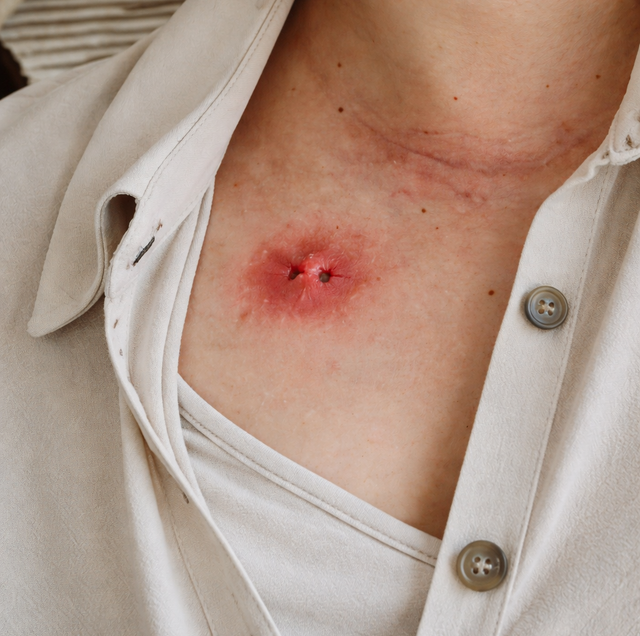
Quick Answer: A typical spider bite here starts as a small red mark with mild swelling that fades over a few days. The species people actually encounter, the brown widow, rarely resembles the severe recluse photos online.
A spider bite in South Florida almost never looks like the photos that dominate a search for "spider bite." Those images, close-up shots of open wounds and skin that's clearly broken down over days, are almost always labeled brown recluse bites, and that's the wrong reference for nearly everyone in this part of the state: brown recluse spiders have no established population here (covered in more detail elsewhere on this site). What actually produces most local bites, when a spider is involved at all, is a brown widow or, less often, a black widow, and both look and behave nothing like the worst-case photos an image search returns. The mismatch is worth walking through stage by stage, because knowing what a real local bite does, and doesn't do, is what actually tells you whether it needs a same-day doctor's visit or just a few days of watching it.
This isn't a diagnosis. Only a physician can tell you what actually happened to your skin. What follows is a general reference, drawn from widely available medical and poison control sources, for what a typical bite from the species actually found here tends to look like at each stage, so you have something more useful to compare against than a worst-case photo that was never going to match.
What a Fresh Spider Bite Actually Looks Like
In the first few minutes, most widow bites don't look like much. Case descriptions from poison control centers and emergency medicine references describe the initial sensation as a sharp pinprick, sometimes barely noticed, sometimes sharp enough to make you look down right away. What you'll typically see at that point is one or two tiny puncture marks spaced only a couple of millimeters apart, sitting inside a small area of pink or light red skin. There's rarely any raised welt yet, and rarely any visible bruising. If the bite happened somewhere you weren't watching, a hand reaching into a shoe, an arm brushing a stored planter, the mark can be easy to miss entirely until the skin around it starts to react.
A faint double puncture: Two small marks close together, not a single scrape or scratch line, is one of the few visual clues pointing toward a bite rather than a sting or scrape, though it isn't reliable enough on its own to confirm a spider was involved.
How the Bite Site Develops Over the Next Few Hours
Over roughly the next thirty minutes to a few hours, the skin around the puncture typically reddens further and swells into a firm, warm patch. Local pain tends to build rather than start severe, moving from a dull ache to a more noticeable, sometimes throbbing discomfort right at the site. In a meaningful share of recorded black widow bites, the local reaction is accompanied by muscle cramping that can spread well beyond the bite itself into the abdomen, back, or chest, a pattern clinicians refer to as latrodectism. Brown widow bites, the species actually established across South Florida, more often stay milder and stop at the local redness-and-swelling stage without that broader muscular involvement, though individual reactions vary and shouldn't be assumed in advance.
What you generally will not see, at this stage or later, is the skin itself breaking down into an open, worsening sore. That kind of progressive tissue breakdown doesn't happen with a widow bite; the section below on why the online photos look so different explains why.
Seek medical care for any bite with spreading muscle cramping, rigidity, difficulty breathing, or a bite in a young child, an older adult, or anyone with an existing health condition, rather than waiting to see if it resolves.
What's Normal Versus What's a Reason to See a Doctor
A widow bite that stays local, redness, mild swelling, tenderness, and a dull ache that gradually eases over one to three days is the pattern most reported cases follow, particularly with brown widow. Many reported bites of that kind are managed without emergency care, though any of the symptoms below still warrant a physician's evaluation rather than assuming a bite will stay mild.
Signs that point toward something needing medical attention sooner rather than later include pain that keeps intensifying rather than easing after the first several hours, cramping or rigidity that spreads to the abdomen or chest, sweating, nausea, or a rise in blood pressure, and any bite on a small child, since a child's smaller body size means the same amount of venom has a proportionally larger effect. None of that describes skin breakdown or an expanding wound, the visual most people brace for after an image search; it's a different symptom pattern entirely, centered on muscle and nervous system response rather than damage at the bite site.
Why the Photos Online Look Nothing Like a Real Bite Here
The graphic photos aren't fake; they're just the wrong venom entirely. Recluse venom contains an enzyme, sphingomyelinase D, that breaks down cell membranes directly at the bite site, which is why a confirmed recluse bite can progress to a slow-healing, tissue-damaging wound over days; the damage occurs in the skin itself. Widow venom works through a different mechanism, a neurotoxin (alpha-latrotoxin) that acts on nerve signaling rather than tissue, which is why a widow bite produces cramping, pain, and the systemic symptoms described above but essentially never an expanding open wound. A local bite compared against a recluse photo is being measured against the wrong biological process, not a milder version of the same one.
Brown Widow or Black Widow: What Actually Differs Beyond Looks
Both species carry the same broad class of venom components: neurotoxins that affect nerve signaling rather than directly break down tissue. The practical difference between them shows up less in what the bite looks like in the first hour and more in how far the reaction tends to go. A full black widow bite more often produces the broader cramping and body-wide symptoms described above. Brown widow, the species that has been established across South Florida since the 1930s, is generally described as injecting less venom per bite and producing a milder, more often strictly local reaction, which aligns with why most South Florida bite reports resolve without progressing to that wider pattern. Neither difference is a reason to skip a physician's evaluation; it's simply why the two get discussed separately in medical references.
What This Actually Means Around Your Home
A bite that resolves on its own over a few days doesn't tell you where the spider that caused it, or others nearby, are actually living. Widow spiders build their webs in the same tight, undisturbed, shaded spots regardless of whether anyone gets bitten: under patio furniture, behind a shutter, along a lanai screen track, inside an unused mailbox or storage bin. Treating the bite is a matter for a physician; finding and clearing those web sites, and cutting back the outdoor prey supply that draws spiders there in the first place, is a separate job.
Frequently Asked Questions
Yes, and it happens often enough that visual identification alone isn't reliable. A firm red bump with a central mark can just as easily be a flea or mosquito bite, an ingrown hair, or early contact dermatitis from a plant like poison ivy or certain ornamental shrubs. Without an actual sighting of the spider, or a specimen captured for identification, a physician evaluating a bite is often working from the same ambiguous visual clues a homeowner is.
Not reliably by sight alone; the more useful clue is where and how the bite happened. Black widow bites more often occur when the spider is pressed directly against skin, reaching into an undisturbed woodpile, a shed corner, or under a stored object where the spider has nowhere to retreat, since black widows tend to be shier around structures than brown widows. Brown widow bites more often trace back to routine contact with something people handle every day, a hand in a mailbox, a grip on patio furniture, a stored planter lifted without checking underneath, because the species readily builds its web in exactly those human-made spots. Matching the circumstance of the bite is a more reliable clue than comparing swelling side by side.
This is common. Widow puncture marks sit only a couple of millimeters apart and often fade within the first hour as swelling sets in around them, so by the time discomfort is noticeable enough to check, the original marks can already be too faint to see without magnification. A physician can still evaluate the reaction pattern, swelling, tenderness, and any spreading symptoms without needing to see intact puncture marks.
Yes, though the risk shows up differently in each. In children, the harder problem is often just noticing it happened: a toddler bitten on a bare foot or ankle from playing at ground level typically can't describe cramping or spreading pain, so irritability, refusal to bear weight on a limb, or unusual fussiness can be the only early sign, which is why any bite or suspected bite on a young child warrants a same-day call to a physician rather than a wait-and-see approach. Pets show yet another pattern: watch for a dog or cat repeatedly licking or biting at one spot, localized swelling, or unusual lethargy, and contact a veterinarian rather than assuming it will resolve on its own.
It can. A bite near the abdomen or lower back is more likely to produce cramping that mimics an internal issue like appendicitis or a gallbladder problem, a pattern occasionally described in medical literature as resembling an acute abdomen, which is one reason a physician evaluating unexplained abdominal pain will sometimes ask about a possible bite even when no mark is visible. A bite on a limb tends to stay more clearly localized to that limb.
Yes, and a second bite in the same household is the clearest sign the source was never actually addressed: widow spiders don't relocate once a web site is producing prey successfully, so if anyone else at home gets bitten in the following weeks, especially from the same general area of the yard or garage, that points to the original web and its neighbors still being active rather than a coincidence. Checking behind stored items, under outdoor furniture, and along screen tracks with a flashlight at dusk, when a fresh web catches the light most easily, is a more useful next step than waiting to see whether anyone else gets bitten first.
Get the webs and harborage around your home inspected and treated — not just the spider you noticed, but the population producing it. Buggify Pest Solutions serves Boca Raton, West Boca, and communities across Palm Beach and northern Broward. Call Tyler: (561) 672-0200.
