

Spider Bite in Florida: When to Actually See a Doctor
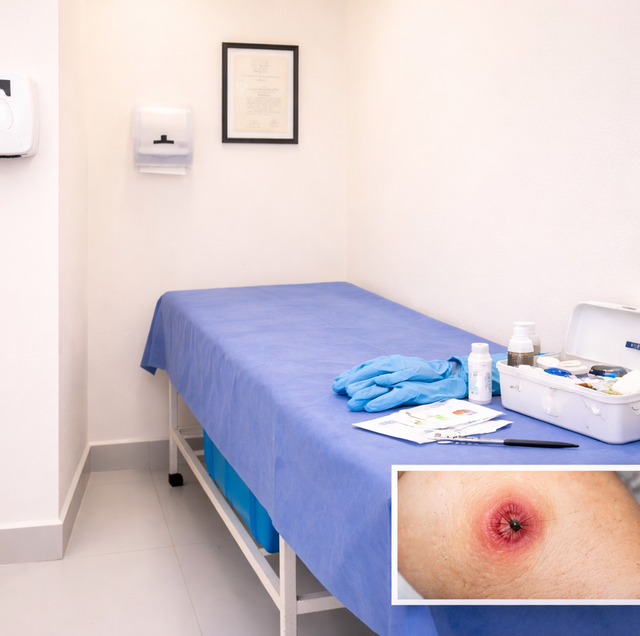
Quick Answer: Most spider bites here stay minor and settle in a few days. See a doctor if the redness keeps spreading, cramping develops, a fever appears, or the bite is on a child or an older adult.
Almost every spider bite reported in South Florida turns out to be a minor event: a small red mark, some local swelling, mild soreness that fades over a couple of days. That's the honest baseline, and it's worth saying plainly before anything else, because most of what circulates online about spider bites is written around a worst-case outcome that doesn't reflect what actually happens to most people who get bitten here. But "usually minor" isn't the same as "never worth a second look," and the harder question isn't what a bite looks like (covered in more detail elsewhere on this site); it's what it's doing, hour to hour, that tells you whether to keep watching it or pick up the phone.
This is not a diagnosis, and nothing here replaces a physician's judgment about your specific situation. What follows is a practical decision framework, drawn from widely available medical guidance, for sorting a bite that's behaving normally from one that isn't.
What Counts as a Normal Bite Reaction
A typical local reaction stays exactly that: local. Expect some combination of redness, mild swelling, itching, or a dull ache right at the site, and tenderness when you press on it. That local reaction usually peaks within the first day and then gradually eases, with most people back to normal within two to three days without any treatment beyond basic first aid. A little warmth right at the bite itself is common too; skin that's actively fighting off a minor puncture runs warmer than skin around it, and that alone isn't a red flag.
A bite that stays roughly the same size: Doesn't grow a wider red ring, doesn't sprout new symptoms a day later, and gradually feels better rather than worse, is the pattern most people can reasonably watch rather than act on immediately.
The Symptoms That Mean It's Time to Call a Doctor
A handful of specific signs separate a bite worth watching from one worth evaluating, and they're worth naming individually rather than as a vague "if it seems bad" instruction.
Redness that keeps expanding after the first day: A ring of red skin that grows noticeably wider than it was six or twelve hours earlier, rather than staying roughly the same size, points toward either a spreading local reaction or a developing skin infection, and either one is worth a physician's look.
A red line or streak running away from the bite: A thin red streak tracking up an arm or leg from the bite site is a classic sign of the infection moving into the lymphatic system, sometimes called lymphangitis, and it warrants prompt medical attention rather than a wait-and-see approach.
Muscle cramping or rigidity that spreads beyond the bite: Cramping that starts near the bite and then shows up in the abdomen, back, chest, or a limb far from where the bite happened is a pattern associated with widow bites specifically and is not something to manage at home.
Fever, chills, or a general sick feeling: A fever developing within a day or two after a bite, on its own or alongside local symptoms, suggests the body is responding to something beyond a simple local reaction and warrants evaluation.
Difficulty breathing, throat tightness, or swelling of the face, lips, or tongue: These are signs of a possible allergic reaction and are treated as an emergency, not a wait-and-watch symptom, regardless of how the bite itself looks.
Nausea, vomiting, heavy sweating, or a noticeable jump in heart rate or blood pressure: These systemic symptoms, layered on top of local pain, point toward a broader reaction that a physician should assess rather than something to ride out.
Treat any of these as reasons to call a doctor promptly rather than waiting: spreading redness past the first day, a red streak leading away from the bite, muscle cramping or rigidity, fever, or any trouble breathing or swallowing.
Widow Bites Add a Different Pattern: Cramping That Spreads
If a widow is behind the bite, species-level detail on brown versus black widow lives elsewhere on this site; the call to make hinges on cramping, not appearance. Cramping that stays mild and stays right at the bite site is still watch-and-wait territory. The moment it starts migrating to the abdomen, back, chest, or a limb away from the bite, or shows up alongside heavy sweating, a climbing heart rate or blood pressure, or restlessness that won't settle, that's the threshold for calling rather than continuing to monitor. Migration and the accompanying symptoms are the signals that matter, not how intense the cramping feels in the first few minutes.
When the Patient Is a Child, an Older Adult, or Someone With a Health Condition
The same symptom checklist applies to everyone, but the threshold for calling should be lower in a few situations. A young child has less body mass to absorb the same amount of venom, so treat any suspected bite on a child as a same-day call rather than a wait-and-see situation, even if the visible reaction still looks mild. An older adult, someone with heart disease, or someone taking blood pressure medication is more vulnerable to the cardiovascular effects of a systemic reaction, a faster heart rate or higher blood pressure among them, so what looks like a moderate reaction in a healthy adult carries more risk in that group. Anyone with a known spider-venom or insect-venom allergy, or a history of a severe reaction to a prior bite or sting, should treat any new bite as an emergency-room-level concern rather than a home-observation one, even before symptoms appear.
What to Do if a Bite Happens to a Pet
The same lower threshold applies to pets: because a dog or cat can't describe what's happening, treat any suspected bite with new swelling, limping, or lethargy as a same-day call to the vet rather than a wait-and-see situation. Cats in particular can develop a more pronounced systemic reaction to venom than dogs of a similar size, so unusual quietness or a refusal to move around normally in a cat is worth taking more seriously, and sooner, than the same behavior in a dog. Contact a veterinarian, or an emergency animal clinic outside normal hours, rather than treating a suspected pet bite the same way you'd treat a mild one on yourself.
When It's Reasonable to Watch and Wait
Not every bite needs an urgent-care trip, and treating every red mark as an emergency isn't realistic or necessary. A bite that stays local, mild swelling, some redness that isn't expanding, tenderness that's gradually easing rather than building, in an otherwise healthy adult, is reasonable to manage at home with basic first aid and a day or two of checking on it. The practical habit is simple: note roughly where the redness ends on day one, maybe with a photo taken next to something for scale, and check the next day again. If the border hasn't moved and the person feels the same or better, that's consistent with a normal reaction resolving on schedule. If anything on the list above shows up, or the area is visibly bigger than it was the day before, that's the point to stop waiting and call.
Where the Line Actually Falls
The distinction that matters isn't "spider bite, yes or no." It's whether the reaction is staying contained and improving, or spreading and adding new symptoms. A bite that's roughly the same size, feels a bit better than yesterday, and hasn't produced cramping, fever, or breathing trouble rarely needs an emergency visit. A bite that's visibly bigger than it was twelve hours ago, or that comes with cramping, a red streak, fever, or any breathing difficulty, has crossed from "watch it" to "get it looked at," and for a child, an older adult, or anyone with a relevant health condition, that line sits closer to the bite itself than it does for a healthy adult managing a mild reaction alone.
Frequently Asked Questions
Yes, and it's a separate risk from the venom effects described above. Anyone with a known history of anaphylaxis to insect venom, or who carries an epinephrine auto-injector for that reason, should treat facial swelling, hives spreading beyond the bite site, or throat tightness after any bite as an emergency regardless of which spider was involved, since the allergic response is driven by the person's immune sensitivity, not by which species bit them.
Yes. A dated photo taken next to a coin or ruler on day one, then again roughly 24 hours later, gives a physician or telehealth provider an objective way to assess whether the redness has actually spread, rather than relying on memory, which tends to either downplay or exaggerate the change. Tracing the outer edge of the redness with a ballpoint pen before the photo makes a same-day comparison even clearer: a faded pen line by evening means the swelling has receded, while redness that's grown past the line means it hasn't. If you end up calling a doctor or Poison Control, have ready the approximate time of the bite, where on the body it happened, the symptoms present right now, any medication already taken with dose and time, and any known drug or venom allergies, since that's what they'll ask for first and having it ready shortens the call.
Local pain and swelling usually build within the first thirty minutes to a few hours. Cramping and other systemic symptoms associated with widow bites most often appear within one to eight hours of the bite, though timing varies by individual. An allergic reaction, by contrast, can develop within minutes. A skin infection from bacteria introduced at the bite site typically takes longer to show, often twenty-four to seventy-two hours, which is part of why a bite that seemed fine on day one but looks worse on day two or three still deserves a look.
It can mask one signal without addressing the underlying issue. Ibuprofen and similar pain relievers can lower a mild fever enough that it's no longer obvious something changed, and an antihistamine can quiet itching and mild swelling without doing anything for muscle cramping or a spreading infection. Taking either is reasonable for comfort, but it shouldn't be the reason to skip the day-one and day-two check described above.
It depends less on the clock than on how confident you are about what you're seeing, and the practical rule is to err toward calling whenever a symptom is borderline: treating a marginal case as urgent costs a phone call, while treating a genuine one as minor can cost time you don't want to lose. Most urgent care centers close by 9 or 10 p.m. and don't reopen until mid-morning, so a symptom that develops at midnight leaves a real gap: the only same-night options are an emergency room or the Poison Control hotline, which is staffed around the clock, not a walk-in urgent-care visit. Mild local swelling and soreness with none of the warning signs described above can reasonably wait for a regular daytime appointment, and calling Poison Control is a reasonable middle step at any hour if you're unsure which category a symptom falls into.
Usually not, but a few things are worth confirming before closing it. If a doctor was involved at any point, ask specifically whether a follow-up visit is needed; most local reactions don't require one, but a bite that involved cramping, fever, or an ER visit sometimes warrants a short recheck to confirm that the systemic symptoms have fully resolved. If antibiotics were prescribed for a secondary skin infection at the bite site, finish the full course even after the redness looks normal again, since stopping early is one of the more common reasons a skin infection resurfaces days later. And if the skin at the bite site stays discolored, numb, or unusually sensitive to touch for more than a couple of weeks after everything else has cleared, mention it at a routine visit rather than assuming it will fade on its own.
Get the yard, lanai, and garage inspected for the webs producing spider activity around your home — not just the one bite you noticed. Buggify Pest Solutions serves Boca Raton, West Boca, and communities across Palm Beach and northern Broward. Call Tyler: (561) 672-0200.
