

How to Get Rid of Mosquitoes in Your Yard After They Return
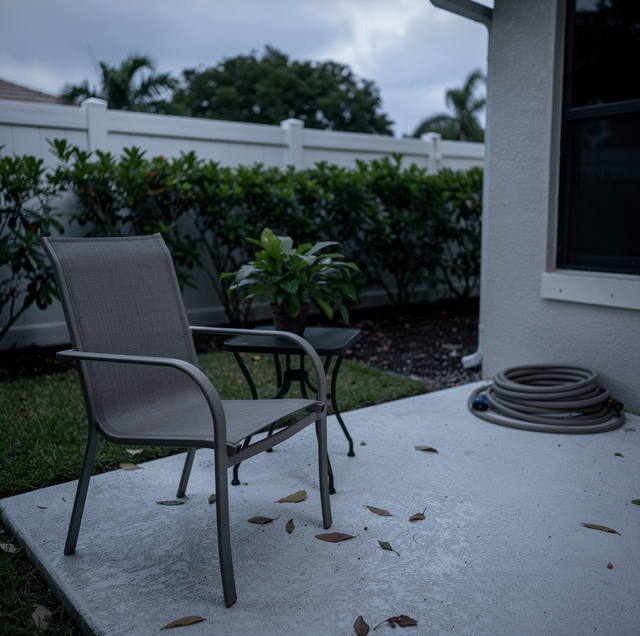
You stood in the yard at dusk on the second evening after the treatment, and nothing landed on you. No bites, no swatting at your ankles, nothing hovering near the porch light. It felt finished, so you stopped thinking about it. By the fourth evening you were slapping at your calves before you'd made it past the patio steps, and your yard smelled the same as it did before anyone sprayed it. Nothing about the visit looked like it had failed. Someone walked your property, treated the foliage along the fence line, hit the shaded corners near the pool cage. Two quiet days, then a return right on cue. But a return at the three- or four-day mark is not random, and it is not proof the product was weak. It is a specific window, and what happens inside it points to exactly where the miss sits.
Quick Answer: A yard treatment clears the adults present on the day it is applied. Cutting the sources that produce new ones is separate work that takes two to four weeks, which is why your yard can refill during the gap.
A Three-Day Return Points to a Specific Kind of Miss
A barrier treatment produces a fast, measurable knockdown. The biting population in your yard typically drops by 60 to 80 percent within 48 to 72 hours of application because the first pass kills the adults flying or resting where the treatment reached your foliage. The larger, longer reduction, the kind that keeps your yard quiet for weeks at a stretch, comes from removing the sources that keep producing new mosquitoes, and half of the work plays out over two to four weeks. Three days was never going to cover it. A rebound that lands right at the 72-hour mark usually is not a failed spray. It is the seam between the fast knockdown and the slower source work catching up, and it tells you which side of that seam still needs attention. Two data points from your own yard sort this out quickly: how many days passed before bites resumed, and whether the count came back as a slow trickle or all at once. A trickle reads differently from a full return overnight, and each points to a different cause below.
Note the exact day bites resumed, not just that they did. A return on day three or four points to a miss in the current treatment; a return after three or four weeks points to the residual simply running its course.
The Barrier Only Ever Killed What Was Already Flying
A residual barrier works on contact. Mosquitoes land on treated foliage and pick it up from there, so it only ever affects mosquitoes that were already adults when your yard was treated, or shortly after, while the film was still active. Anything still developing in your water, or still days from emerging, was never exposed to it at all, because it was never in a position to touch the treated surfaces. The number of mosquitoes biting you on day one tells you almost nothing about how many were already coming up behind them.
Why this matters for a fast return:
If your yard held a healthy population of near-mature larvae the day the technician treated your foliage, that pipeline ran straight through the visit untouched. Those mosquitoes finished developing on their own schedule and started biting you on theirs, regardless of what happened to the adults flying around them that afternoon.
Water Was Already Holding the Next Generation
Aedes mosquitoes need about half an inch of standing water to lay in, and your yard almost certainly carries five to ten active micro-breeding sites at any given time: plant saucers, clogged gutter sections, a tarp fold, a low spot that holds runoff after your irrigation runs. Eggs already sitting in that water when your foliage was treated were never exposed to the barrier, since the treatment targets where adults rest, not where eggs sit in water. Aedes go from egg to biting adult in about 7 to 10 days during summer heat, so a batch that was two or three days along on treatment day is exactly old enough to be landing on you by day four or five, right as the rest of the yard was starting to look clear.
The Resting Population Never Got Touched
Adult mosquitoes spend 23 of every 24 hours resting on the undersides of leaves and in dense plantings, not flying or biting. That resting group is typically 10 to 100 times larger than the number actually biting at any moment you'd notice them. If the pass through your yard covered open areas and fence lines but skipped dense interior foliage, hedges, or thick ground cover, the count you could see from the patio still dropped, because those mosquitoes were in reach. The much larger reserve sitting deeper in your plantings was never contacted at all. It didn't die off. It was never in the path of what got sprayed, and it stayed put through the whole visit, waiting.
New Adults Crossed the Property Line
Mosquitoes fly. If your property backs onto untreated water or dense, untreated vegetation next door, you have a constant source of new arrivals that has nothing to do with how well your own yard was treated. In canal-adjacent communities, that math shifts further: Coral Springs threads an extensive engineered canal network through its neighborhoods, and Lighthouse Point was built around its canal system, so if the yard borders that water, you sit next to a continuous corridor of resting and breeding habitat that a single property's barrier was never going to reach. A rebound in that setting can mean your yard held fine, and the mosquitoes biting you on day four simply flew in from water your treatment never covered. A yard set well back from any canal, preserve edge, or shared retention pond does not carry that outside pressure, so a fast return on a property set back that far usually traces to a source inside your own property line.
The Residual Window Closed Faster Than Expected
Bifenthrin and lambda-cyhalothrin barriers are rated to hold an adulticide effect for about 21 to 30 days under high humidity, and South Florida yards regularly sit at 70 to 85 percent humidity through the warm months, which pushes that window toward its shorter end. If heavy rain or irrigation runoff hit your foliage within the first thirty to sixty minutes after application, before the residual had finished drying, some of it can wash down before it ever settled into the leaf. Once the residual is gone from the leaves it was applied to, any mosquito moving through your yard afterward, newly hatched or newly arrived, passes through untouched, exactly as it would have before the visit. This is the least common reason a rebound shows up at the three or four day mark, since the usual window has weeks left in it, but a wet week close behind a treatment date changes the math.
Frequently Asked Questions
Species timing differs here. Culex mosquitoes take about 10 to 14 days to develop from egg to biting adult in summer heat, which is too slow to account for a return inside four days on its own. A bounce-back that fast almost always points to mosquitoes that were already adults before your yard was treated, either resting adults the barrier missed or new arrivals flying in from off your property.
Yes. Container plants that hold water in their leaf cups are a concentrated breeding source in their own right, separate from anything happening on your lawn or in your beds. If you have 10 or more bromeliads, the water in that cup alone can produce over 1,000 adult mosquitoes a month.
A feature that stays in place year-round is managed on its own larvicide timeline, separate from the foliage barrier covering the rest of your yard. Bti acts on the larval stage, and that side of the work runs on roughly a 30-day window of its own. Because the two timelines are independent, a pond in your yard can be accounted for without reading one against the other.
The applied residual dries on your foliage within about 30 to 60 minutes, and a full visit to an average property typically takes 30 to 60 minutes depending on lot size and how dense your plantings are. Once the treated surfaces are dry, your yard is fine to use normally.
By the second time bites return on the same schedule, the useful question stops being whether the treatment worked and becomes where the repeat is anchored. A technician re-walking your property is reading for a pattern that holds across both cycles: the same corner producing bites each time, a container that refills on the same trigger, an interior hedge run with no sign of residue on the leaf undersides. A rebound that repeats at the same interval and in the same part of your yard points to a fixed source that survived both visits, which narrows the search a great deal compared with a one-off return you cannot place.
Because your yard physically changed between the treatment and the return. Trimming, mulching, or replanting strips treated foliage out of the property and swaps in untreated surfaces, so the barrier can lose a meaningful share of its coverage in a single afternoon with nothing wrong with the application itself. Fresh mulch and newly turned beds also hold moisture differently, which can open resting cover that was not there on treatment day. If bites came back within a day or two of crew work in your yard, the change in surfaces is the first thing worth mentioning when you call, since it points somewhere completely different than a rebound on an untouched property.
Describe what you saw and when — the day the bites eased, the day they started again, and where in the yard it happened, so a follow-up visit lands on the exact miss. Buggify Pest Solutions serves Boca Raton, West Boca, and communities across Palm Beach and northern Broward. Call Tyler: (561) 672-0200.
