

Brown Widow Spiders in Your Mailbox: What Draws Them In
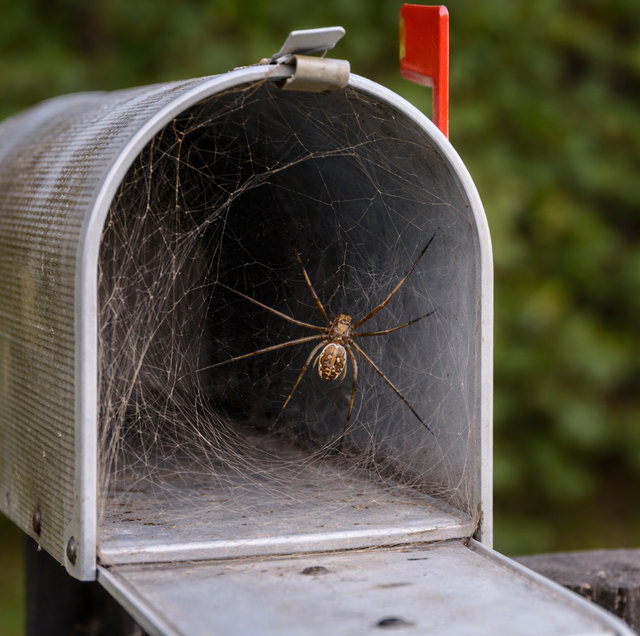
Flip the small metal flag down or lift the mailbox lid, and there is a fair chance you'll spot it before your hand ever reaches the envelopes: a loose, messy tangle of silk strung across the back corner, and tucked into it, a mottled brown spider about the size of a pea, legs drawn in tight. You pull your hand back. That reaction is the right one. The mailbox is one of the most commonly reported spots for a brown widow encounter, and the reason has nothing to do with bad luck. It has to do with what the box itself offers.
Brown widow spiders (Latrodectus geometricus) build in small, dark, rarely disturbed voids close to a structure, and a mailbox checks every one of those boxes at once. The same logic that puts a brown widow under a lanai porch rail or behind a patio post cap, dark, quiet, and within a few feet of the house, applies just as well to the inside corner of a mailbox mounted on a post at the curb.
Before reaching in, glance at the interior corners with a flashlight or tap the underside of the flag with a rolled envelope. A disturbed brown widow usually drops or retreats into the crack rather than moving toward your hand.
Why the Mailbox Itself Is Prime Real Estate
A standard mailbox is a small, mostly enclosed metal or plastic box with one opening that is used at most once a day, and on many properties, less often than that. To a brown widow, that single narrow doorway matters more than the size of the space inside. Predators and disturbance come through the opening, not the walls, so a spider tucked into the back corner or the underside of the lid goes days or weeks without anything larger than an envelope passing near its web.
Temperature plays a role too. The exterior of a metal mailbox absorbs direct sun and can get uncomfortably hot to the touch by midafternoon, but the interior corner where a brown widow actually sits is shaded by the box's own walls and rarely gets that same direct exposure. A plastic box behaves the same way. This is not a spider looking for cold, and it is not a spider that needs constant shade. It is looking for a surface temperature that does not swing much over the course of a day, and the inside back corner of a mailbox holds a steadier temperature than the exposed top or front.
Height off the ground matters as well. Brown widows are recorded most often in raised, corner-type voids: entryway corners, eaves, stacked nursery pots, patio furniture frames, rather than loose ground debris. A mailbox mounted on a post puts its interior a few feet above grade, out of reach of the ants, ground beetles, and other small predators that make leaf litter and mulch a riskier place to build a web. The box gives a brown widow the height of an eave with the privacy of a crevice.
The Flag Mechanism Adds a Second Hidden Gap
Most curbside mailboxes have a separate hinge assembly for the outgoing-mail flag, and that hardware creates its own narrow void independent of the main compartment. The flag pivots on a small rod or spring, and the gap between the flag arm and the box wall behind it is rarely more than a quarter inch wide. Nobody reaches into that gap to check the mail. It only moves when someone raises the flag itself, which in many households happens a handful of times a month rather than daily.
That narrow, low-traffic slot is exactly the kind of crevice a brown widow uses to anchor a web, often strung between the flag arm, the mounting bracket, and the box wall in an irregular, tangled pattern rather than a neat, wheel-shaped orb. If you've ever raised the flag and felt it catch on something soft before you saw the web, that is usually why.
Cluster Boxes and Freestanding Posts Are Not the Same Risk
Not every mailbox is a single box on a single post. HOA and master-planned communities commonly use cluster box units, a bank of individually locked compartments built into one large housing, often with a separate, larger parcel-locker compartment for packages. The small letter compartments get opened close to daily by whichever resident owns that slot, which keeps them relatively disturbed and less attractive to a spider looking for an undisturbed retreat. The parcel locker compartment is a different story: it sits empty and closed for days or weeks between deliveries, and its interior corners get the same dark, still conditions as a private mailbox, just on a larger scale.
A freestanding post box at a single-family home swings the other way. There's no shared housing and no other resident opening a neighboring slot, so the only disturbance the box gets is whatever one household generates, which on a light-mail week might be every other day. Older post boxes with a worn or slightly bent door that no longer seats flush against the frame give a brown widow an even easier gap to use, since the door doesn't have to fully open for the spider to come and go.
What the Web and the Spider Actually Look Like
Confirming a brown widow before you reach past it mostly comes down to recognizing the web, not the spider. Brown widows build a loose, irregular tangle of silk close to their retreat rather than the neat, spiral pattern an orb weaver uses for prey capture; expect a haphazard sheet of strands, sometimes with a bit of debris caught in it, low in a corner rather than stretched across the opening. The spider itself runs roughly a quarter to three-eighths of an inch in body length, tan to dark brown with a mottled, almost marbled pattern on the legs and abdomen, and an orange or yellowish hourglass mark on the underside that is usually paler and less sharply defined than a black widow's red one.
The clearest confirmation, if you see it, is the egg sac. A brown widow's egg sac is covered in small pointed silk spikes and looks almost like a tiny spiked seed pod, distinct from the smooth, round, papery sac a black widow produces. Finding one tucked into the flag mechanism or a rear corner is a strong sign the box has hosted more than one visiting spider.
Checking the Box Without Getting Bitten
None of this means avoiding the mailbox. It means changing a few habits around it so that a spider has a chance to retreat before contact occurs.
- Glance at the interior corners and the underside of the flag before you reach past them, especially after several days without a mail pickup.
- Use the mail itself, a rolled newspaper, or a pen to nudge a web or the flag mechanism rather than your bare hand.
- Wear a glove when clearing out a box after a vacation or an extended trip, when the interior has gone the longest without disturbance.
- Shake mail out over a hard surface, like a driveway or porch step, instead of against your body, in case a spider rode out with the envelopes.
Brown widow venom is potent per drop in laboratory measurements, on par with or slightly ahead of black widow venom by some comparisons, but the bites reported in practice run mild. Brown widows are reluctant to bite compared to black widows and typically inject a smaller amount of venom, so most reported bites bring localized pain, redness, and mild swelling that settles within a day or two rather than the full-body cramping associated with a severe black widow bite. If pain spreads well beyond the bite site, or symptoms worsen rather than improve, that's a reason to contact a doctor rather than wait it out.
A Small Space Worth a Second Look
The mailbox isn't unusual because it attracts spiders that wouldn't otherwise be on the property. It's unusual because it's a void people reach into with a bare hand, on a schedule that gives a brown widow days at a time to settle in undisturbed. The same habits that make sense at the mailbox- a glance before you reach, a tool instead of a bare hand when something looks off- apply just as well to a grill cover, a water meter box, or any other small enclosed space near the house that only gets opened once in a while.
Frequently Asked Questions
Not always. House spiders and cellar spiders also build loose, irregular webs in enclosed spaces and are far more common than brown widows in most mailboxes. The giveaway is the spider itself: a brown widow has that mottled tan-to-brown coloring and the pale hourglass mark underneath, while a common house spider is usually smaller, uniformly brown or gray, and lacks any hourglass pattern at all.
Galvanized steel is still the more common material for curbside mailboxes in older subdivisions, while newer builds increasingly use molded plastic or polymer units. A steel box's interior temperature swings faster with the sun than a plastic one, which holds heat more evenly, but that difference isn't large enough to change whether a brown widow moves in, since the spider is following the dark, undisturbed void rather than a specific temperature. What does shift with material is the gaps themselves: older steel boxes develop rust-widened seams around the door and hinge that plastic units don't, and those wider seams give a spider more entry points over time.
A direct spray kills the spider that's there, but it doesn't change the void that made the box attractive in the first place. A new brown widow wandering in from nearby harborage, like a mulch bed, a woodpile, or a lanai post base, can move into the same corner within a few weeks, sometimes faster if that harborage sits close to the post. Lasting control means reducing the outdoor harborage near the mailbox itself, not just treating inside the box, and checking the post base and any nearby shrubs or ground cover on the same schedule as the box.
Wash the area with soap and water, apply a cold compress to ease swelling, and try to get a photo of the spider before it retreats, since that helps confirm the species if symptoms don't settle down. Most bites are mild enough to manage with the cold compress and an over-the-counter pain reliever alone. The exceptions worth a call to a doctor or poison control right away are a bite to a young child, an older adult, or anyone with a heart condition, since those groups are more likely to have a stronger reaction, on top of the general rule that spreading pain or worsening symptoms call for medical attention.
For the small individual letter compartments, it's typically whoever holds the key, as with a single-family mailbox. The shared parcel locker compartment and the housing itself are usually common-area equipment, which puts responsibility on the HOA or property manager rather than any one resident. A cluster unit's parcel locker that consistently hosts webs is worth reporting to the HOA, since it covers the shared space in a way one resident spraying their own small compartment can't.
A flip-up flag that pivots on an exposed hinge tends to leave a slightly wider, more consistent gap behind the arm than a pull-down flag that seats flatter against the box wall, making it a marginally easier anchor point for a web. Either style still leaves enough of a gap to use, so the difference is minor compared with how often the box gets opened overall.
Schedule a spider inspection — a Buggify technician can check mailbox posts, lanai edges, and other small overlooked voids around the property. Buggify Pest Solutions serves Boca Raton, West Boca, and communities across Palm Beach and northern Broward. Call Tyler: (561) 672-0200.
