

Why Overhead Rat Noise Gets More Noticeable as Nights Cool
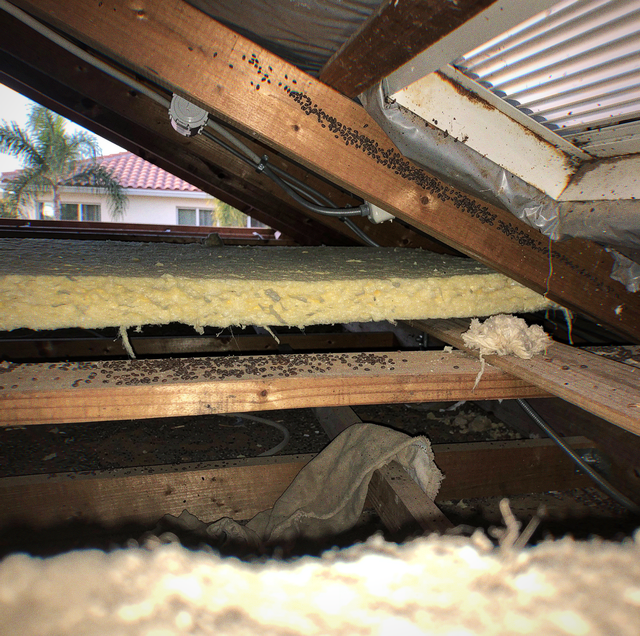
Quick Answer: Cooler nights change how well a household can hear an attic more than they change what a rat is doing. A quieter house overnight, fewer competing sounds outdoors, and more hours spent indoors make an already-present population easier to notice.
The first evidence a household reaches for is usually a date. The scratching overhead started the week the evenings finally turned cooler, so the weather seems to be the cause and something arriving from outside looks like the explanation. What a date actually records is when a sound was first noticed, and noticing is its own event with its own causes. It can sit a long way downstream of whenever the activity began. The same animal, or the same small population, already living near or in a structure can go a long stretch unheard and then become easy to hear once several things around it change at once.
Does Cooler Weather Push a Rat Toward the Structure?
This is the assumption doing most of the work whenever a new overhead sound lines up with the first cool evenings. Cooler nights, the reasoning goes, thin out what a rat has been living on outdoors, so the animal gives up the yard and moves in under a roof. Small pieces of that hold up on their own. Fewer insects are active after dark once nights cool, and a yard that has stopped putting on summer growth offers less soft green material to forage through.
The part that gives way is the schedule. South Florida lacks the kind of outdoor stretch that drives rodents toward buildings on a predictable date, which is why activity here tracks events specific to one property instead: a food source appearing or disappearing nearby, ground disturbance on an adjoining lot, a seam opening in the building envelope, an interior that goes quiet for a stretch. Any of those can land in any month of the year. A rat working a route along a roofline through the summer has that same route once the nights cool, and uses it for the reasons it always did.
What does move closer to a schedule is the household and the house around it. A route across a joist or through a soffit void can carry the same traffic it did during the warmest months and still produce a first complaint weeks later, because the conditions for hearing it have improved. That effect is real, and it explains most of what a household notices change as the season turns.
What Changes in the House's Own Background Noise
Every house carries a baseline of sound, and that baseline shifts throughout the year for reasons that sit entirely outside the attic. Air conditioning that ran on a long, steady cycle through the hottest stretch of the year starts cycling differently once outdoor temperatures ease, sometimes running for shorter stretches with longer gaps of true quiet in between. Afternoon storms that provided a steady wash of outdoor sound taper off as the wetter part of the year gives way to the drier one, and insects that keep up a background chorus outside a bedroom window through the warmest months thin out as well.
Each of those is a change in the cover over a sound, while the sound itself carries on as it was. A rat's scratch and drag along a joist competes with whatever else is audible in the same moment, and as the competing noise drops away, the same overhead sound reaches a sleeping household more clearly. A quieter house simply passes through more of what was already there.
What Changes in How the Household Uses the House
People change their routines as the weather shifts, too, which changes what gets noticed. Evenings spent outside on a patio or by a pool move indoors as the light fades earlier, which means more hours spent in bedrooms and living areas directly under an attic instead of out in the yard, where an overhead sound stays well out of earshot. A household that used to fall asleep to a system holding a steady tone might now be running one that shuts off for longer stretches overnight, which changes what a room sounds like in the middle of the night.
Bedtime itself often shifts earlier as evenings get shorter, which means more of a household's sleeping hours overlap with a rat's most active hours after dark. Every one of those changes acts on the listener, adding hours during which a person lies still, awake or in light sleep, in a position to register a sound that had been passing unheard.
Why an Already-Present Population Becomes Audible
Put those changes together, and they line up in one direction: the house goes quieter around a route that was already there, the outdoor sound that used to wash over it drops away, and the people inside are both more present under the ceiling and more likely to be lying still while a rat is active. Each affects the household's ability to hear, with the animal's behavior held constant. Together, they are enough to turn an activity that has been present for a while into one a homeowner suddenly registers.
That distinction matters because the instinct is to treat first-time hearing as first-time presence, and those are two different questions. A population with steady, low-key access to a structure produces the same noise pattern as a population that arrived last week, right up until someone traces what is actually up there. Reading a cooler-weather increase in noise as proof of a bigger problem, or a brand-new one, skips past a simpler and more common explanation: the same activity, heard under better hearing conditions.
What This Shift Does, and Does Not, Tell You
What a jump in overhead noise reliably tells a homeowner is that something is active near or inside the structure, worth having looked at rather than waited out. What it does not reliably tell anyone, on its own, is how large the population is, how long it has actually been there, or whether it just arrived. Those are separate questions, and guessing at the answers from noise alone tends to run in one direction: assuming the newest or largest version of the problem, while the same noise sits equally well with a smaller, older one that simply became easier to hear.
Sorting out an actual timeline, how many are up there, and which openings are carrying traffic is its own process, handled once an inspection actually happens. Ahead of that, the date a sound was first heard is best treated as a fact about the listening, with the timeline left to what an inspection turns up.
A short written note of the date, the room, and the time of night a sound is heard carries further at an inspection than a general impression of a noisy month. Where and when it repeats points toward a specific route.
Frequently Asked Questions
Not reliably by itself. Frequency and volume are the parts of a noise pattern most affected by everything above: background sound, routine, sleeping hours, so those two on their own read the same way for a bigger population and for the same one heard under quieter conditions. A more useful signal is whether the sound starts turning up in more rooms or across a wider stretch of ceiling than before, since that points to activity actually spreading rather than the same route simply being easier to hear.
Often, yes, and a timer is the clearest case. A pool pump or a whole-house dehumidifier set to run on a fixed schedule adds and removes background sound at the same hours every night, on a cycle answering to a control panel and to nothing outdoors. Change that schedule, or start running one at a different hour, and an overhead sound can turn obvious or fade out on a date driven entirely by equipment. That is why a calendar coincidence is weak evidence in either direction.
Distance matters more than most people assume. In a single-story house, the attic sits directly over every room, so overhead sound passes through roughly the same one layer of ceiling material no matter where someone is standing. In a two-story house, the attic primarily sits above the top floor, which places an entire occupied floor between a downstairs room and the attic. Upstairs bedrooms in a two-story home often pick up the first and clearest signal, while a downstairs living room can stay quiet for a long stretch with the same activity overhead.
For roof rats, a trap-out generally runs four to six weeks from the start of the work. That window follows the animals' own caution and route habits, and it holds regardless of the month the call came in or how long they had been in the structure before anyone heard them. Norway rats generally run shorter at three to four weeks, and house mice, shorter still, at two to three weeks. A household that first heard the sound during a cool week and one that first heard it at the height of summer sit on the same timeline once work begins.
It varies by space. A wall cavity near a headboard or nightstand can carry sound at very close range even though the space itself is small, so a house getting quieter overnight can make wall activity newly obvious. A garage tends to work differently: it's often unoccupied at night and already carries its own noise from whatever equipment is stored in it, so it holds its own masking through the night, and activity there can stay as easy to miss as it always was.
Quiet is a change in conditions at least as often as it is a change in occupancy. The same factors that made the sound audible in the first place- an unusually still stretch, a household's own schedule, a run of warmer nights after a cool one- can shift back the other way and muffle a route that stayed open the whole time. A stretch of quiet is a reading on current listening conditions, and anything past that comes from an actual look at the space.
Schedule an inspection before the cooler months make the attic noisier — find out what's actually up there before assuming it's new. Buggify Pest Solutions serves Boca Raton, West Boca, and communities across Palm Beach and northern Broward. Call Tyler: (561) 672-0200.
