

Rats in Attic: What Happens from First Call to Last Trap
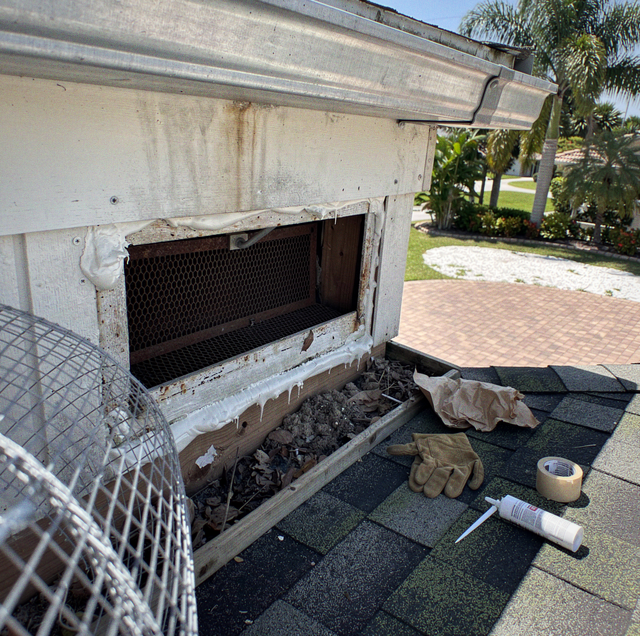
Quick Answer: A rat-in-the-attic job runs in order: an intake call, an inspection, every inactive opening sealed while the active route is deliberately left open, a trap line along that route, monitoring until it goes quiet, and the active opening sealed last.
Once the noise overhead has been identified as coming from rats rather than squirrels or raccoons, the question changes. It's no longer what is that up there; it's what happens now, and in what order. Expect a sequence of visits rather than one appointment: an intake call that gathers specifics, an inspection that confirms scope, every inactive opening closed while the route the rats are actually using stays open on purpose, a trap line placed along that route, monitoring visits until the attic stops producing catches, and the last opening sealed only after that. Skipping a step in that order, or trying to compress two into one, is the version of this job most callers end up regretting. Here is the order it actually runs in and what each stage decides before the next one starts.
The First Call: What Gets Asked Before the Truck Leaves
A rat call starts with a short set of questions, and the answers determine what gets loaded into the truck before it ever pulls into the driveway. Where is the noise coming from: over a bedroom, near the eaves, along one side of the house? Is it happening at a specific time of night? Has anyone seen droppings, chewed insulation, or a rat itself, dead or alive? In Boca Raton and the surrounding county, the species is almost always the roof rat, which travels along rooflines, power lines, and overhanging branches to reach an attic from above rather than digging in from ground level. That distinction shapes expectations for how the rest of the job unfolds.
The operator is licensed under FL DACS #JB268060, and because one technician runs the whole route himself, there is no rotating tech assigned to a job partway through. The person answering the first call is the same person who inspects the attic, places the trap line, and reads it on every subsequent visit.
The Inspection: What It Has to Settle Before Anything Goes Up
An inspection is not a walkthrough to confirm rats exist. The first call already established that much. Its job is to read how many are up there, where they're traveling, how active the population currently is, and which specific openings are carrying that traffic. Whether droppings are current or left behind by animals that moved on months ago gets called with a borescope held inches from the pile rather than judged from across an attic. Grease trails along joists and rafters mark repeated travel routes, since rats tend to reuse a path once they've learned it rather than wandering a new one each trip. Gnaw marks on wood and wiring, insulation pulled and shredded into a nest, and urine concentrated in one corner are all noted, because that picture determines where the trap line goes later and which one or two openings have to stay open while it runs.
Roof rats reproduce roughly every 21 to 25 days, which is part of why this inspection happens promptly rather than getting scheduled out. A small population left alone for even a few weeks can be a noticeably larger one by the time trapping actually starts.
Attics reach dangerous temperatures in Florida summers, and insulation can hide unstable footing over joists. Inspection, trap placement, and monitoring are handled by a technician, not attempted from a ladder or a partial attic entry on your own.
Sealed First, Trapped Next, Sealed Last
This is the stage most rat jobs get ordered wrong, so it is worth naming the sequence plainly. The order is not seal-then-trap: every opening the inspection reads as inactive gets closed right away; the one or two openings showing current traffic are deliberately left open; the trap line goes in on that route; and that last opening is sealed only after the line has gone quiet. Closing an active opening early seals rats in rather than out, and the odor and secondary pest problems that follow are worse than the noise that started the call.
Whatever material goes into a gap has to survive outside, unprotected, for years. It can't corrode from repeated exposure to humidity, and it can't be something a rat can simply chew back open, which rules out a few materials that look adequate on the day they're installed. Copper mesh packed into the gap and sealed over with polyurethane is the combination that holds up; vent openings get hardware cloth instead of the same treatment used on a solid gap.
The trap line follows the map the inspection produced, not the shape of the attic floor. Traps go along grease trails, near the nest site, and at the points where joists meet the roofline, and each location is marked so the same spots are checked in the same order on every visit, rather than a fresh search starting from scratch. Trapping, not bait, is how an attic population gets removed here; why bait is a poor fit for an attic is covered separately.
Traps stay where the technician set them. Do not reposition, reset, or empty one, and do not remove a caught rat. A catch stays in the trap until the scheduled monitoring stop, which is what keeps the line readable.
What Changes Between Visit Two and Visit Five
Visits after the first trap line goes in run roughly every 7 to 10 days. That interval isn't arbitrary. It's close enough to catch a line before it goes stale, since a sprung and unreset trap does nothing for the rest of the interval, and spaced enough to let a real trend show up instead of noise from one unusually quiet or unusually active night. What changes across those visits is not the interval; it's what each one is deciding.
Visit two is the first honest read on placement. A trap that produced nothing while a fresh grease mark runs past it a few feet away means the station is in the wrong spot, not that the attic is empty, and it gets moved rather than simply reset. Sprung-but-empty traps say something about approach angle or sensitivity at that station. Catches clustered at two or three stations say the travel map was read correctly, and those stations stay exactly where they are.
By visits three and four, the line stops changing shape. Placement has settled, the productive stations are known, and those that have never produced are consolidated toward the routes that have. Fresh droppings start appearing in fewer places rather than across the whole attic. The opening left deliberately open gets checked every visit too, because traffic still moving through it is a direct statement that the line is not finished, no matter how the catch count looks that week.
By visit five, the reading has flipped from what got caught to what is no longer showing up: no new droppings where the attic had already gone quiet, no new grease marks on a joist that was clean the visit before, marked stations sitting untouched. Because the same technician set the line originally, the comparison is against what he remembers finding a week or two earlier rather than against a report from someone else's visit.
Why Activity Falls Off Fast
Activity typically drops sharply within the first two weeks of a trap line being active. That's the combined effect of two things working at the same time: every inactive opening is already closed, so the population can't be resupplied through the rest of the house, and the trap line sits directly on the one route still open, so traffic through it runs into the line rather than past it. Without both pieces in place, the numbers can hold steady or even appear to improve temporarily before rebounding once the population rebuilds. With both running together, most jobs go quiet by around the four-week mark for a roof rat population. A Norway rat or house mouse job runs on a shorter clock of its own, but the underlying pattern, a fast early drop followed by a quiet plateau, holds across all three.
The Last Empty Check
The trap line runs until it stops producing anything worth noting: no catches, no fresh droppings appearing where the attic had already gone quiet, no new grease marks showing up on a joist that was clean the visit before. A roof rat trap-out generally runs about 4 to 6 weeks start to finish, though a smaller or larger population can push the job toward either edge of that range. An empty line for a single visit isn't treated as the finish line on its own, since rats can go several days without leaving a visible sign while still living in the attic, which is why the quiet has to hold across a full run of visits before anything gets closed. What the trapping phase hands off is a line with nothing left to catch and one opening still deliberately open, waiting on the final seal that closes the job.
Frequently Asked Questions
House mice move through smaller spaces and tend to form smaller colonies than either rat species, and a trap-out for mice typically runs about 2 to 3 weeks, shorter than the timeline for a rat job of either kind.
Not exactly. Norway rats nest at ground level and in crawlspaces more often than they climb into attics, so trap placement shifts toward those areas. A Norway rat trap-out generally runs about 3 to 4 weeks, a shorter window than for roof rats because they're less likely to be traveling along the full roofline.
Not automatically. Mice can fit through gaps smaller than a quarter inch, which is why vent openings are fitted with hardware cloth rather than relying on the same seal used for larger rat-sized entry points.
Both fail over time in ways that matter outdoors: steel wool corrodes in humidity and eventually crumbles, spray foam gets chewed through, and caulk fails when exposed to Florida's moisture swings. Each of those gives way on its own terms, and none of them announces it from the ground, so a gap closed with one can be open again before anyone has reason to look at it.
Properly sealed entry points typically hold for 10 or more years. However, the exclusion work itself usually carries a 30- to 90-day warranty period, which covers the period when a missed or newly opened gap is most likely to show up.
Snap traps hold the catch in place rather than releasing it, so a rat caught between visits stays put until the next scheduled monitoring stop. Nothing about how the trap line works requires a same-day return trip to be effective.
Ask about a full trapping sequence for your attic — from the first call through the last empty check, run start to finish by the same technician. Buggify Pest Solutions serves Boca Raton, West Boca, and communities across Palm Beach and northern Broward. Call Tyler: (561) 672-0200.
