

Roof Rat vs. Norway Rat: How to Tell Which One You Have
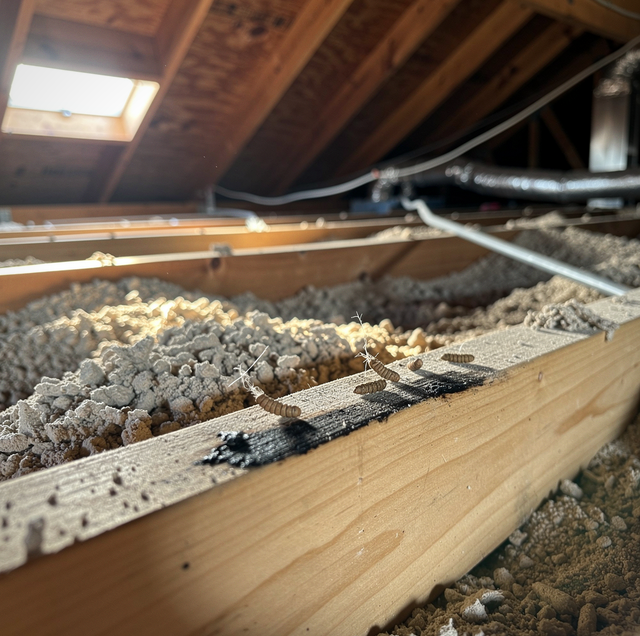
The Rat You Can't See Yet
Scratching in the ceiling at eleven at night doesn't tell you much by itself. Is it moving along a truss above the guest room, or working the perimeter under the house near a downspout? The sound alone won't answer that. Location is the fastest clue to which of two very different rats is actually sharing your address.
Two species turn up in homes constantly, and they live almost opposite lives. One climbs. One digs. One nests above your head; the other nests beneath your feet. Mix up which is which and you'll set traps in the wrong room, seal the wrong gap, and watch the noise continue for weeks. Get the species right, and the fix usually falls into place fast, because the biology tells you exactly where to look.
Why Roof Rats Live Up, and Norway Rats Live Down
The short version: Roof rats are built to climb, and Norway rats are built to burrow, and that single difference explains almost everything else about where each one turns up.
Roof rats (Rattus rattus) have a slim, athletic build, curved claws suited to gripping bark and stucco, and a tail longer than their own head and body combined, which they use as a counterbalance while running along wires, fence tops, and palm fronds. Height is safety for a roof rat. Ground-level predators, standing water, and competition from the bulkier Norway rat all push roof rats upward, into attic insulation, soffit returns, garage rafters, and dense canopy near the roofline.
Tile roofing hands roof rats an almost frictionless path inside. Overlapping curved tiles leave small triangular gaps at the ridge and hip lines. Soffit-to-fascia joints flex and gap slightly as a house settles. Plumbing vent boots on the roof deck are made of rubber that cracks and shrinks with sun exposure, and a gap about a half-inch across is enough for a roof rat to squeeze through: the ribcage and shoulders compress, but the skull doesn't, so skull width is the real limit on what a roof rat can fit through. None of those entry points require the rat to ever touch the ground.
Norway rats (Rattus norvegicus) are the heavier, thicker-bodied cousin, and they're not built for climbing the way roof rats are. Their tail is shorter than their head and body; they're stronger diggers than jumpers, and they gravitate toward ground-level cover: dense mulch beds, woodpiles, storm drains, and standing water or irrigation edges where food and water sit close together. A Norway rat burrow typically starts as a smooth, worn opening two to three inches across at a slab edge, foundation gap, or under a shed, with a short tunnel leading to a nest chamber.
Roof Rat vs. Norway Rat At a Glance
| Trait | Roof Rat | Norway Rat |
|---|---|---|
| Size | Slender, 6-8 inches body length, 5-9 oz | Stocky, 7-9.5 inches body length, up to 1 lb |
| Tail-to-Body Ratio | Tail longer than head and body combined | Tail shorter than head and body |
| Ear Size | Large, nearly hairless, covers the eye when folded forward | Small, close to the head, does not reach the eye when folded |
| Typical Location Found | Attic insulation, soffit returns, garage rafters, upper cabinets, tree canopy | Foundation perimeter, crawl spaces, mulch beds, storm drains, ground-floor voids |
| Droppings Shape | Spindle-shaped with pointed ends, roughly 1/2 inch | Capsule-shaped with blunt, rounded ends, roughly 3/4 inch |
| Entry Behavior | Climbs siding, wires, and trees; enters through soffit-fascia gaps, tile-edge openings, and plumbing vent returns | Burrows and travels at grade; enters through slab-edge gaps, foundation cracks, and ground-level pipe penetrations |
Reading the Signs: Droppings, Runways, and Rub Marks
Droppings are the fastest confirmation once you already suspect one species over the other. Roof rat droppings taper to a point at both ends and show up scattered along rafters, on top of insulation, or piled inside a soffit return where the rat has been resting. Norway rat droppings are blunter and heavier, and they cluster near baseboards, under sinks, along the outside foundation line, or inside mulch where a burrow entrance sits nearby.
Rub marks tell a similar story from a different angle. Roof rats leave dark, greasy smudges along the same truss or rafter edge every time they pass, because they reuse the identical route night after night. Norway rats leave the same kind of mark lower down, along baseboards and pipe runs, and their burrow entrances often show fresh, loose soil kicked out to the side after a night of digging, which is a reliable sign the burrow is still active rather than abandoned.
Sound placement matters too: Scratching or scurrying that seems to come from directly overhead, especially near the roofline or in a garage ceiling, points toward roof rats. Sound that seems to originate from wall bases, under cabinets, or beneath a slab points toward Norway rats.
Where the Two Overlap and Where They Split
In a single yard, both species can be present at once, and where each one settles often comes down to competition as much as preference. Norway rats are larger and more aggressive at ground level, and where a strong Norway rat population already holds the perimeter and crawl space, roof rats tend to get pushed upward into the attic and canopy rather than competing for the same ground-floor territory. That's part of why a home can have an active attic population and an active perimeter population running simultaneously, with little interaction between them.
Food source proximity still plays a role for both. Roof rats favor fruit trees, palm seed clusters, and pet food left in a garage, all of which can be reached without coming down to open ground. Norway rats need closer, steadier access to water, so yards near standing water and irrigation edges, along with low ground cover near a water feature, tend to hold Norway rat activity longer than a dry, upland lot would.
Age of the structure plays a role too. Older tile roofs with original bird stops and first-generation vent boots tend to show more roof rat activity than a recent reroof, simply because rubber gaskets and mortar closures degrade over years of sun and rain, opening gaps that weren't there when the roof was new. A property that has gone a decade or more without roof maintenance is a stronger candidate for an active attic population than one reroofed in the last few years.
Why the ID Changes Where an Inspection Starts
Species identification isn't a formality before treatment. It sets the entire inspection plan. A borescope inspection run through a suspected roof rat entry point, the kind of small camera that can be threaded into a soffit gap or vent boot without cutting into drywall, confirms the exact opening being used rather than guessing from a dropping pile alone. That confirmation determines where a trap-out is placed: inside the attic near the active runway for a roof rat problem, or along the foundation and at burrow entrances at grade for a Norway rat problem. Placing bait or traps in the wrong zone is one of the most common reasons a rat problem seems to linger even after someone has tried to address it.
Exclusion follows the same logic once trapping has cleared active animals. Copper mesh packed into the confirmed gap and sealed over with polyurethane holds up whether that gap sits at a tile edge sixteen feet up or at a foundation return at ground level, because the material resists gnawing in a way that plain caulk or foam alone does not. Both trapping and exclusion happen in occupied homes with pets and kids present, and there's no real off-season that lets the timeline slip. That focus on confirming the entry point before anything gets set or sealed is what separates a lasting fix from a repeat call.
What DIY Traps Usually Get Wrong
The most common DIY mistake isn't the trap itself; it's the location. Snap traps set along a baseboard will do nothing for an active roof rat population living entirely in the attic, and bait placed in the attic won't touch a Norway rat that never leaves the crawl space. The second most common mistake is sealing an entry gap with steel wool or a bead of caulk and calling it closed. Rats can and do gnaw through both over time, especially at a gap they've already used successfully once, which is why a mesh-and-sealant combination that resists chewing tends to hold where softer materials fail within a season.
Frequently Asked Questions
Yes, and it's common enough on properties with standing water or irrigation edges nearby that an inspection should check the roofline and the foundation in the same visit rather than stopping once one species is confirmed. The two species won't share a runway or a nest site, so two separate rub-mark trails at two different heights point to two separate jobs, and exclusion has to close the roofline gap and the ground-level opening in the same visit, or the displaced population just relocates to the other zone.
Not by preference. Norway rats are strong swimmers and are commonly found working storm drains and along the edges of standing water, while roof rats generally avoid open water and will detour around it rather than cross it, which is another reason they gravitate toward dry, high-up harborage instead.
Lizard droppings usually include a small white uric acid cap at one end and are much smaller overall, while squirrel droppings are typically more rounded and fibrous from a heavier plant-material diet. Fresh rat droppings are shiny and dark; older ones dry out, turn gray, and crumble when disturbed, which can help estimate how recently a rodent has been active.
Odor tells you where a nest is, not which species: both roof rats and Norway rats urine-mark heavily. What it does narrow down is height. A smell concentrated in an upstairs ceiling or attic corner is a different job from one at a crawl-space vent or wall base near the floor.
A roof rat litter typically runs four to eight pups, and females can produce several litters a year in a climate that never forces a true dormant season, so a single attic entry point left unaddressed can turn into a multi-generation nest within a few months.
For an occupied home with pets, mechanical trapping is generally favored over rodenticide bait specifically because it avoids the risk of a pet or child encountering bait or a poisoned rodent carcass in a wall void, which is one more reason getting the entry point and species right matters as much as the tool used to clear it.
The Bottom of It
Neither species is going to hand you a clean confession. What they leave behind, where the droppings sit, how the tail compares to the body, whether the noise comes from above or below, tells the story instead. Read those signs correctly and the rest of the process, from trap placement to sealing the entry point for good, follows naturally from there.
Schedule a rodent inspection — A borescope inspection confirms whether roof rats, Norway rats, or both are active in your attic or around your foundation, so trap placement and copper-mesh exclusion target the exact entry points found. Treatment is pet- and family-safe by default, with a free re-service if activity continues after the first visit. Buggify Pest Solutions serves Boca Raton, West Boca, and communities across Palm Beach and northern Broward. Call Tyler: ( 561)672-0200.
