

Scratching in the Ceiling at Night? What's Up There
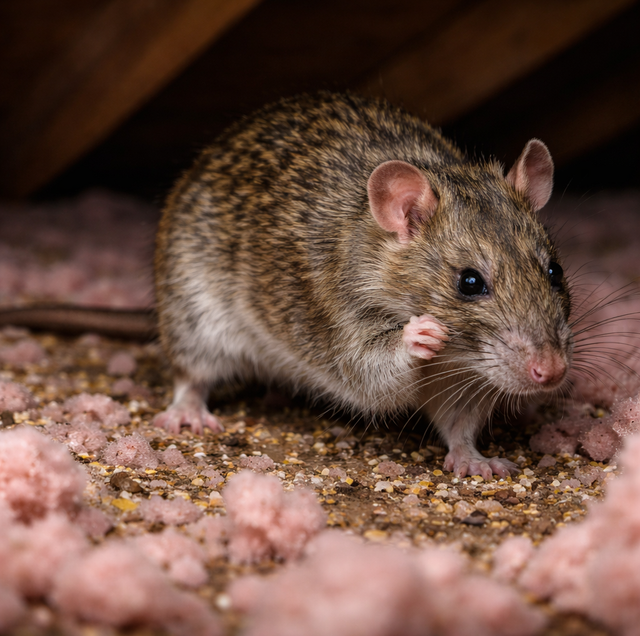
The house is dark, the room is quiet, and then it starts. A scratch directly overhead, a short scurry, a pause, then a soft rolling drag along the top of the ceiling. You lie still and track it from one side of the room toward the corner, and somewhere in there you start doing the math on how big something has to be to make that much noise a few feet above your face.
The sound is actually doing you a favor. When it happens, where it happens, and the texture of it usually name the animal before anyone sets foot in the attic. Three questions sort out almost every case: is it night or day, is it moving or standing still, and is it a light skitter or a heavy drag. In warm, humid regions full of tile roofs, the answers point one direction far more often than any other.
What Is Usually Making the Noise
The most common source of nighttime scratching overhead is the roof rat, also called the black rat or fruit rat. It earns the "roof" in its name honestly. Where a Norway rat burrows at ground level along a foundation, the roof rat is a climber that lives from the roofline down: attics, soffits, and the upper wall voids, rarely the floor. Its body is built for the job, a light frame and a long tail for balance on a wire or a branch.
It is also nocturnal, and that is the single biggest clue. Roof rats leave the nest around dusk, feed and travel hardest in the first few hours after dark, then have a second burst before dawn. That schedule lines up almost exactly with the two times most people notice the ceiling: right after the lights go off, and in the small hours when the house is silent enough to hear a claw on a joist. If the noise reliably arrives at night and fades by morning, a nocturnal rodent is the leading suspect, not the house and not a squirrel.
Telling It Apart From the Other Suspects
Not every overhead sound is a rat, and the wrong guess sends you buying the wrong fix. Sort by timing and texture first.
- Squirrels, the daytime version of the same noise: A squirrel is heavier and louder, runs in short bursts, and is busiest at first light and again in the late afternoon, going quiet at full dark. Scratching at ten in the morning is far more likely a squirrel than a rat. Squirrels are a nuisance-wildlife matter handled by a licensed trapper, not a rodent-control call, so getting the ID right decides who you should even phone.
- Mice, quieter and lower down: Mice make a fainter, higher skittering, and you tend to hear them in the walls near baseboards and outlets more than running the full span of the ceiling. Where a rat produces an audible drag, a mouse is closer to a soft, quick rustle.
- The house itself, expanding and contracting: Roof decking, trusses, and metal ductwork tick and pop as the temperature drops after sunset. Those sounds are rhythmic single ticks that stay in one place. They do not travel from one part of the room to another, and they have no direction. If the sound never moves across the space, you are probably hearing the structure cool, not an animal.
- Birds in the eave: Birds nesting at a soffit or gable make fluttering and chirping, but they work in daylight and quiet down at night, the reverse of a rat's pattern.
- Something larger, like a raccoon or opossum: These produce heavy, deliberate thumps and occasional vocal sounds, a different scale entirely from a rat's light patter. Like squirrels, they fall to a wildlife operator rather than a pest technician.
If it moves, travels a path, and runs at night, you have narrowed it to a rodent, and in a climbing, roofline-first pattern that means roof rats.
How Something Got Above Your Ceiling
Once the noise says rat, the next question is the one that actually matters for stopping it: how it got up there. Roof rats do not gnaw their way in from scratch when the roof already offers openings, and most roofs do.
The main door is the soffit-fascia gap. Where the horizontal soffit under the eave meets the vertical fascia board, construction often leaves a gap, and a roof rat can pass through an opening only about half an inch wide because its skull and ribs flex more than its outline suggests. Tile roofs add openings of their own at the open ends of each tile course, along valleys, and around every roof penetration. Plumbing-vent boots, exhaust collars, and off-ridge or gable vents are all common entry points where the flashing or screen has aged or was never sealed tight.
Getting from the yard to those openings takes a bridge, and trees and utility lines provide it. A rat runs a fence top or a power line, crosses an overhanging branch onto the roof, and follows the tile up to the eave. Once inside the attic, it travels the top chords of the trusses and drops into the wall voids to reach lower levels and water. That interior highway is why the sound seems to move around: you are hearing one animal run a framing member that happens to pass over your bedroom.
What the Different Sounds Are Telling You
The kind of noise carries information too, and it can tell you whether you have a passer-through or a settled-in nest.
- Light scratching and scurrying: Feet on a joist or truss chord, usually an animal on the move along a travel route.
- A rolling or dragging sound: Often a rat caching food or hauling nesting material, fallen fruit, seed, insulation, or shredded paper. Dragging tends to mean nesting, not just passing through.
- Gnawing or a steady grinding: A rodent's incisors grow continuously, so it gnaws to keep them worn down, working on wood, and sometimes on wiring insulation. Chewed wiring is why an unaddressed rodent problem is treated as an electrical concern, not just a nuisance.
- Concentrated squeaking or scuffling in one spot: Can indicate a nest with young rather than an animal that ranges across the attic.
- Silence for a night, then a return: Rarely means they left. Roof rats follow feeding cycles and weather, and a quiet night is usually a pause, not a move-out.
What to Do When You Hear It
Start with an inspection, not a trap from the hardware store. A technician traces the rub marks, droppings, and grease trails to find the travel routes, and uses a borescope, a small camera on a flexible cable, to see into soffit runs and wall voids without opening them up. That is how the actual entry points get located, which are usually in spots you cannot see from a ladder.
Removal comes next, working as snap-trap sets placed along the rub lines and checked on a cycle until the catch rate falls to nothing. The lasting part is exclusion: packing the soffit-fascia gaps with copper mesh and locking it in with a polyurethane sealant, and backing vents with quarter-inch galvanized hardware cloth so nothing can bite or bend its way back in. Copper is used because it does not rust apart in humid air the way steel wool does.
One thing to avoid: do not toss poison into the attic and wait. A poisoned rat often dies deep in a wall or ceiling void where you cannot reach it, which trades the scratching for a strong odor and flies for a week or more, and the open entry point stays open for the next rat down the same roofline. Bait has a limited role inside tamper-resistant exterior stations, but on its own in the attic it does not close the door it came through.
Frequently Asked Questions
A roof rat in the attic rarely drops into an occupied bedroom to bother a sleeping person; it is avoiding you, not seeking you. The real concerns are indirect: droppings and urine in the insulation, contamination of anything stored in the attic, and chewed wiring. So while a night's sleep is not the danger, the situation should not be left to run for weeks, because the damage accumulates out of sight even when the animal never shows itself.
They can gnaw drywall if strongly motivated, but they rarely bother, because a house hands them easier routes. Rats follow the paths already built into the structure: the gaps around recessed light fixtures, the chase cut for the air-conditioner lineset, plumbing penetrations, and open wall voids that connect the attic to the rooms below. If one appears indoors, it almost always used one of those openings rather than eating a new hole through the ceiling.
Roof rats are nocturnal, with activity peaks in the first hours after dark and again just before dawn, so a quiet daytime attic is normal. The exception is worth reading as its own signal: a sudden shift to daytime noise where there had been none often means the nest has grown overcrowded. Rats are foraging on an extended clock, or that their usual food source was cut off or disturbed and they are searching harder for a new one. The flip side is the useful tell: steady daytime scratching that goes silent at night points away from rats and toward a squirrel, which runs on the opposite schedule.
Very likely, yes. Roof rats enter high and then travel down through the wall voids to reach lower floors, the kitchen, and a water source, so the same colony that runs your attic will also move inside interior and exterior walls. Sound near an outlet or behind a cabinet at counter height is often a rat using the vertical stud bay as a stairwell between the attic and the ground.
Do not count on it. In a climate without a real hard freeze, roof rats stay active outdoors year-round rather than dying back or hibernating for a season. If anything, a cool snap or a drop in outdoor food can push more of them to move indoors for warmth and a meal, so the ceiling can get busier as the weather turns, not quieter. Treating it as a seasonal problem that will pass usually just gives the colony time to grow.
A pet can discourage rats at ground level, but it cannot reach the roofline, the soffit, or the attic where roof rats actually live and travel, so it does little about the animal overhead. There is even a mild downside: pet food and water bowls left out, especially on a lanai or in a garage, are a steady food source that makes the property more attractive to the rats in the first place.
Putting the Sounds Together
Nighttime scratching in the ceiling is not a mystery so much as a set of clues you can read. Night activity, a path that travels across the room, and a light patter with the occasional drag add up to a roof rat working the framing above you, while a daytime runner is more likely a squirrel and a rhythmic tick that never moves is just the house cooling off. Naming the animal first is the whole game, because a rat, a squirrel, and an expanding truss each call for a completely different response, and only one of them is a rodent-control job. Get the identification right, find the opening it used, and the ceiling can go quiet and stay that way.
Hearing it overhead and want to know what it is before it spreads — get a roofline inspection and a copper-mesh exclusion, not just a trap in the attic. Buggify Pest Solutions serves Boca Raton, West Boca, and communities across Palm Beach and northern Broward. Call Tyler: (561) 672-0200.
