

Rodent Exclusion after a New Roof: What Gets Missed
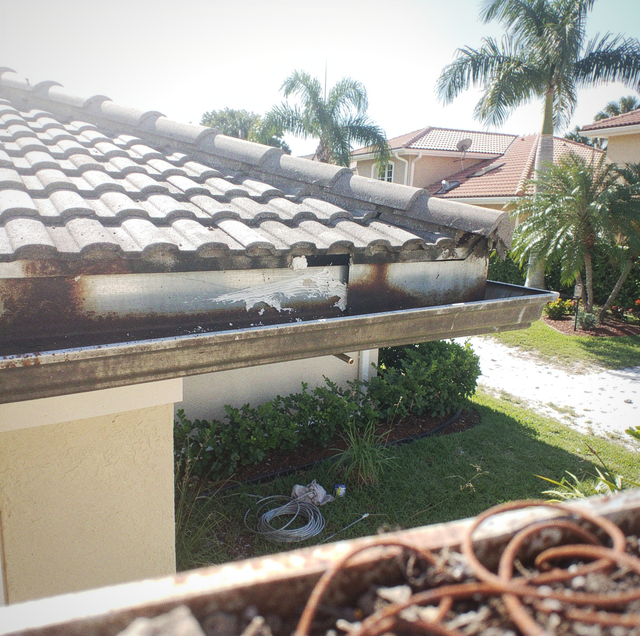
Quick Answer: A tear-off removes the existing closure at the eave, vents, and chimney chase, and a standard roofing scope does not install a rodent-rated version back. A finished roof can look complete with those routes still open.
The tile is uniform end to end, the ridge line is straight, and standing in the yard looking up at it, a homeowner has every reason to think the project swept up whatever had been getting into the attic along with the old material. A full tear-off and new roof reads as a clean slate. Then the scratching starts again in the same corner it always did, before the new roof has had any real time to prove itself, and the obvious question, how did it get back in after all that work, turns out to have a specific answer that has nothing to do with the quality of the roofing job.
What Comes Off with the Old Roof
A tear-off does not sort the old material by what it was doing. Tile, underlayment, closures, screening, and flashing come away together, and the details that had been keeping a rodent out are simply part of what got stripped. The list is short: the eave line, the lowest point on the roofline, where a separate closure piece bridges the first tile course and a straight fascia edge; the vent housings, where a throat sized for air movement passes through the deck; the collars and boots at plumbing stacks and other penetrations; and the chimney chase, which has one junction down at the tile line and another at the cap.
What goes back at each of those points is whatever detail the roofing crew installs as its standard. Anything fitted, tightened, or reinforced there before the job does not carry over on its own, because the new work starts from the roofing specification rather than from a record of what was in place. Nothing was stripped carelessly. It came off because the material it was fastened to came off.
How each of those points tends to fail on its own is a different question from the one a reroof raises. What a reroof does is disturb all of them at once and put them all back to one standard, so the house comes out of the job with its exclusion condition reset to that standard everywhere, whatever it had been before.
Two Standards Read at the Same Spot
Roofing work gets built and inspected against a specific standard: whether water is kept out, whether the assembly holds up under wind, whether the workmanship at each seam meets manufacturer requirements. A rodent standard is a different one, and no part of the roofing inspection references it.
That is the mismatch the whole subject turns on, and it is not a shortfall in the roofing work. A collar can be correctly fitted, correctly sealed, and passed on every check the job requires and still leave a seam wide enough to matter, because passing a water test and passing a rodent read are two separate measurements taken at the same spot. The same holds at a vent housing that moves air properly and sheds water properly, and at an eave detail that meets the wind requirement it was installed to meet. In each case, the first measurement was taken, recorded, and passed, and the second was never taken at all.
A roofer who installs a correctly detailed birdstop, boot, and flashing has done the job as scoped, and the finished roof is a good roof by the only standard anyone applied to it. The second measurement is taken when someone is asked to take it, and no one on the roofing job was.
A finished roof is not a homeowner inspection point. Reading a closure detail means being on the roof or in the attic, which is contractor territory, and nothing about a post-reroof check asks an owner to go up a ladder.
Where the Exclusion Visit Sits in the Sequence
Exclusion work and roofing work are sequenced, not simultaneous, and the order runs one way. A closure installed before the roofing job is finished sits on material the crew still has to lift, so it comes off again with everything else. The physical closure work belongs after sign-off, on the assembly that will remain there.
The read that precedes the work follows the same rule for a different reason. A check run while a job is still moving reads a condition that has not settled: a vent housing set but not finally seated, a chase cap staged for the next day, a run of tile still short of its terminations. Whatever gets recorded is a snapshot; the rest of the job will overwrite. Once the crew is finished, what is there is what the house has, and one read covers it.
Evidence turned up mid-job, while a section of deck happens to be open, is a different situation with its own sequencing and is handled on its own terms. This is the other case: a roof that is done, closed, and signed off, with nobody having asked the rodent question at any point along the way.
What Was in Scope, and What Was Reused as Found
"New roof" covers several different jobs. A repair that lifts a few courses disturbs a short run. A section replacement takes in whatever falls inside its own boundary and nothing outside it. A full tear-off takes the roof back to deck across the whole structure. The extent of the work determines which of the points above were disturbed at all, and a check that assumes the entire roof was changed will focus on details that were never touched.
Inside any of those, a second split matters more than it sounds. A component can be replaced outright or reset and reused as found, and the two produce different starting conditions. A vent housing lifted off, set aside while the tile field around it is rebuilt, and put back down is the same housing, with the same throat, in the same condition it was in before the job began. A housing swapped for a new unit carries whatever that unit came with instead. The same split applies at the chase cap and at the closure along the eave.
A finished roofline looks identical either way, which is why the extent of the work, and the replaced-or-reused status of each component within it, are worth establishing rather than assuming.
What a Post-Reroof Check Produces
A check run after a reroof is finished goes back over the same points that a roofing inspection already passed, with the same points read against a different question. Not whether the assembly sheds water, which has already been established by people qualified to do so, but whether what went back is closed to rodents or only closed to weather.
What that produces is a point-by-point answer where the house currently has none. Each place a tear-off disturbed gets a condition attached to it, closed or open, and where something is open, whether an animal is currently using it or it is simply there. Those two lead to different work, since an opening in use has to be handled in the right order rather than shut immediately.
It also produces a legitimate negative. A reroof can come out closed at every point that matters, and being told so against the right standard is a different thing from assuming it because the roof looks finished. A new roof and a house closed to rodents are two separate facts, and having one does not establish the other.
Frequently Asked Questions
It changes what the question can get you rather than whether you can ask it. While the crew is still mobilized, the people who did the work are on site, the material and packaging from what went in are usually still there, and the answer is about work someone present can point at. After demobilization and final payment, the same question becomes a request for a recollection about a finished job, answered from memory or paperwork rather than from the roof. The question is identical. The quality of the answer is not.
Before a tear-off, a worn or torn spot in old underlayment sometimes showed as discolored or degraded material visible from below, a tell that flagged where to look first. Continuous new underlayment removes that tell, since a fresh sheet looks uniform whether the seam under the tile above it is holding or not. That shifts what a later check is looking for away from a visibly worn patch and toward the transition lines and terminations where new material meets a fixture or an edge, since that is where a gap is more likely to form now.
A reroof that covers a single slope resets that slope's closures to the crew's standard detail, while an untouched slope keeps its birdstop, vent detail, and flashing exactly as they were before the job started. A check after a partial reroof must treat the finished and original slopes as two separate reads, since they are no longer on the same closure timeline, even though they belong to the same house.
A roofing warranty is a roofing document; what any particular one names is a question for the company that wrote it. What it does not do is establish anything about a rodent read, because no roofing inspection takes one. A roof can carry a clean warranty and a house can have an open route into the attic, and both statements can be true about the same building on the same day.
Before the first tile course goes down. The closure at the eave is installed under that course, so from the moment the first row of tile is set on that run, it is covered by finished roofing, and there is nothing to look at from above or from the ground. Everything after that point is inference. That timing is why the question of what went in there has to be raised while the crew is still on the job, rather than saved for the walkthrough at the end.
A vent re-screened to a rodent standard has hardware cloth fitted across the entire throat opening before the housing is set back in place, closing the same opening the vent needs for air movement. What typically goes back in during a routine vent swap is the manufacturer's standard louver or mesh insert, sized and rated for airflow and weather rather than for keeping a mouse or rat out, and it can pass every roofing and airflow check while leaving that opening usable.
Book a post-reroof exclusion check — find out whether the eave, vents, and chase came back closed, or just came back covered. Buggify Pest Solutions serves Boca Raton, West Boca, and communities across Palm Beach and northern Broward. Call Tyler: (561) 672-0200.
