

Spiders in the Woodpile? Why Your Shed Draws Them Too
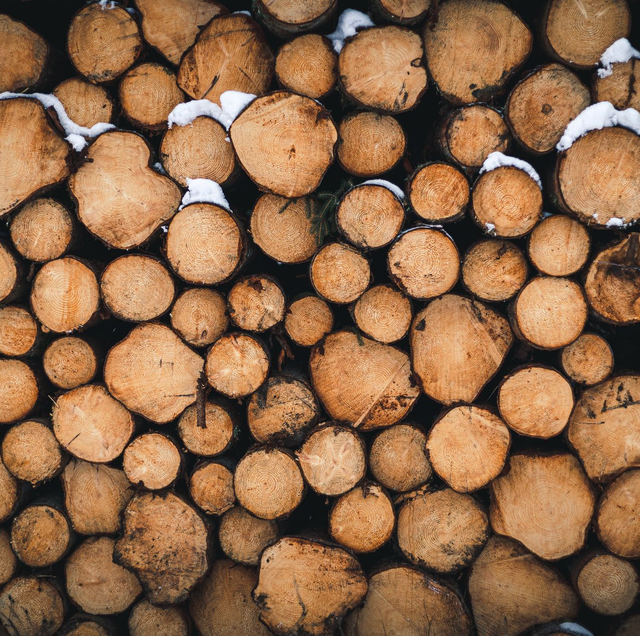
Quick Answer: A stacked woodpile or a cluttered shed rebuilds the bark gaps, ground contact, and undisturbed space that spiders use in the wild, holding a population that a yard-wide spray often misses. Both spots need their own direct inspection, not just perimeter treatment.
A woodpile and a shed corner don't look like habitat. They look like storage, something stacked and left alone between uses. Then a log shifts and a strand of web stretches across your knuckles, or something skitters off a shelf into the dark behind the fertilizer bags, and the illusion drops: whatever built that web or bolted for cover has been living there undisturbed for weeks, not minutes.
Firewood and shed clutter aren't accidental spider magnets. They rebuild, almost log for log, the exact conditions spiders look for outdoors: gaps under loose bark, contact with the ground, and space nobody disturbs for weeks at a stretch. A yard-wide treatment covers the foundation line, the eaves, the mulch beds closest to the house. It rarely reaches into the middle of a stacked pile or the back corner of a shed, which is a large part of why those two spots keep producing activity after everything else has settled down.
A Stacked Woodpile Rebuilds a Spider's Natural Hideout
Split or seasoned logs dry unevenly, and as they do, the bark separates just enough to leave a sealed, dark pocket behind it. That gap is not decoration. It's a close match for the underside of loose bark on a dead or dying tree in a wooded lot, which is one of the more common shelter spots ground-hunting and web-building spiders already use outdoors. Stack a dozen logs, and you've built a dozen small versions of that same pocket, on purpose, without meaning to.
Ground contact matters as much as the bark: Logs resting directly on soil or a bare paver base give ground-dwelling spiders a straight walk-on entrance, along with the moisture that keeps the bottom of the pile several degrees cooler and damper than the top. Wolf spiders in particular don't build webs to catch prey; they hunt on foot at night and shelter by day in exactly this kind of low, damp, debris-choked gap.
In South Florida, the species that most often turns up between split logs is the brown widow. It favors small, irregular voids over open dead space, which is why it settles into a bark gap or the corner where two logs meet far more readily than it would out in the open grass a few feet away. Because most firewood here gets bought for a fire pit or an occasional cooler evening rather than burned through a real heating season, a pile can sit untouched for a month or two between uses. That gap in handling is plenty of time for a female to settle in, spin an irregular tangle web, and attach an egg sac to the underside of a log without anything ever knocking it loose.
A stacked woodpile is, structurally, no different to a spider than a fallen, rotting log in a hardwood stand. The shape that shelters a hunting or web-building spider in the wild doesn't change just because a person stacked it on purpose in a side yard.
Before picking up a log by hand, tap the stack once with a boot or the end of a rake. It's enough to disturb anything sheltering in a bark gap, so you see movement before your fingers reach the same space.
Shed Clutter Builds the Same Voids in a Different Setting
A shed doesn't have loose bark or bare soil, but it offers the same two ingredients in a different form: dark, undisturbed space, and long stretches of time between anyone moving anything. Boxes stacked against a wall, tools leaning in a corner, holiday decorations pulled out once a year, all create gaps that behave exactly like a bark pocket on a log.
Vertical voids work the same way ground gaps do: The space behind a leaning ladder, or under a shelf where nothing gets moved between uses, is dark and still with no reason for anything to disturb it. House spiders and cellar spiders tend to claim these upper, drier corners and shelf undersides, spinning webs across the gap and largely staying put once they have. Wolf spiders, and in this part of Florida sometimes a huntsman, favor the floor level instead, especially near a door sweep gap or the seam where a concrete pad meets bare soil outside the threshold.
The difference from a woodpile is really about geometry, not motive. A log stack is horizontal, ground-level, and made of identical repeating gaps. A shed is vertical, has a floor and walls, and its gaps are shaped by whatever a homeowner happened to store and how long ago they last touched it. Both add up to the same outcome: a structure sitting a few feet from the house that nobody opens or reorganizes often enough to interrupt what's settling in.
Why a Yard-Wide Treatment Can Walk Past the Pile Entirely
A typical outdoor treatment targets the foundation perimeter, the eaves, lanai screening, and the mulch beds nearest the house because that's where most exterior pest pressure is concentrated. A woodpile stacked mid-yard or a shed set back from the house often sits outside that treated band, or gets only incidental overspray on its outer surface that never reaches the bark gaps or box interiors where the activity actually is.
Direct attention means something more specific than a wider spray radius: opening the shed, moving a section of the pile, and checking the gaps and corners a perimeter pass never touches. South Florida's climate keeps outdoor pest pressure active year-round rather than letting it die back over a cold winter, so a woodpile or shed left unchecked doesn't get a seasonal break the way it might in places with a real frost. A spray applied along the foundation line months ago has long since worn off in a space that's been sitting untouched since, which is exactly why the pile and the shed need their own look rather than a shared credit from the last perimeter pass.
Where the Woodpile Fits in a Property's Inspection Rhythm
A woodpile bought for an occasional fire pit, or a shed that gets opened twice a season, isn't neglected by accident. It's just not part of the daily traffic pattern of the yard, and that's precisely the condition spiders are built to take advantage of. The fix isn't a one-time clear-out. It's treating the pile and the shed as their own inspection points, the same way a new tear in lanai screening or a fresh mulch bed would get flagged, rather than assuming whatever was sprayed along the house line already reached them.
How the wood gets stacked also matters more than most people expect. A tight, parallel stack with logs pressed flush against each other creates more sealed pockets than a loose, crisscross log-cabin stack, where more of the interior stays open and visible. Neither eliminates the habitat completely, but one gives a spider fewer places to disappear into, and gives you an easier pile to actually see into the next time you're pulling logs for the evening.
Frequently Asked Questions
No. Most of what turns up in a stacked pile- wolf spiders, house spiders, cellar spiders- is not medically significant and mainly wants to be left alone. The one that matters in South Florida is the brown widow, identifiable by the orange-to-yellow hourglass marking on the underside of its abdomen, paler and less sharply defined than a black widow's solid red one. Juveniles look different from adults: young brown widows carry a banded tan-and-white pattern across the back that fades as they mature, so a lighter, patterned spider in a bark gap isn't automatically a different, harmless species.
Clearing webs off the logs you're about to burn doesn't clear the pile. Egg sacs are often anchored to the underside of bark on logs deeper in the stack, not just the ones on top, so a pile can keep producing new spiders year-round, from sacs deeper in the stack, even after the visible webbing on the outer logs is gone.
There's no fixed rule, but distance mainly reduces how easily activity bridges from the pile onto the siding, a door threshold, or the nearest mulch bed, not how much the pile itself attracts. Raising logs off bare ground on a rack or a few pallets removes the direct-soil contact that ground-hunting species like wolf spiders rely on, which does more for a woodpile specifically than moving it a few extra feet would.
Partly. A woodpile's ground-level, bark-gap structure favors ground hunters like wolf spiders, while a shed's vertical shelving and ceiling corners favor web builders like house and cellar spiders that anchor a web across a gap and wait. A shed with a concrete floor and a gap under the door sweep can host both at once, since the floor behaves like a mini woodpile and the shelves behave like a wall.
Yes, but stacking style is only part of it. Raising the pile on a rack or a few pallets off grade cuts off the direct soil contact ground-hunting spiders use to walk straight in, which changes more than switching from a tight stack to a loose one does. A tarp thrown over the top to keep rain off also traps moisture underneath if it isn't vented at the edges, and a damp, covered pile draws more activity than an open one left to dry out between rains. And once a pile has sat undisturbed for the month or two typical between fire-pit uses, an egg sac attached to a log's underside is a real possibility, not just a stacking-pattern question.
Occasionally, usually when the pile or shed gets disturbed, flooded, or torn apart, rather than as a normal course of business. Most of the species that settle in stacked wood or shed clutter, including the brown widow, are exterior specialists that rarely establish an indoor population as a German cockroach or a house mouse would. They're more likely to end up on a porch or in a garage after being displaced than to move into a bedroom on their own.
Get the woodpile and shed inspected — a technician checks bark gaps, ground contact points, and shed clutter for activity a quick glance misses, then folds it into your regular service. Buggify Pest Solutions serves Boca Raton, West Boca, and communities across Palm Beach and northern Broward. Call Tyler: (561) 672-0200.
